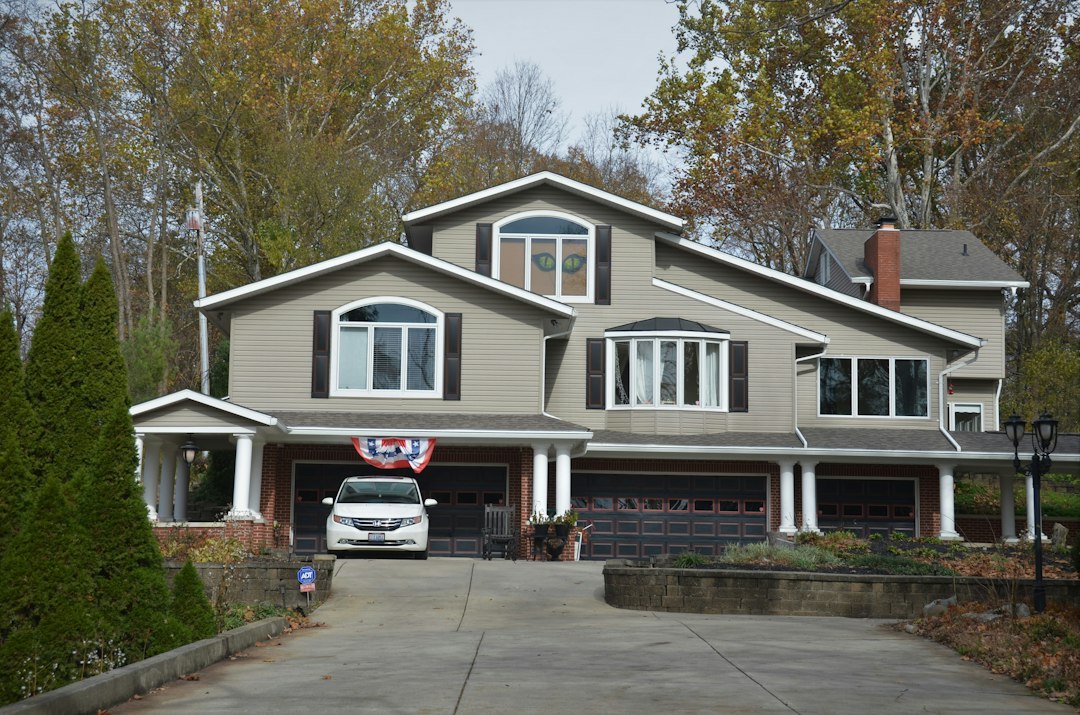
You’re looking at that $80,000 house, maybe a bit rundown, perhaps needing some serious elbow grease. It seems like a steal, right? A starter home, a fixer-upper dream, a way to get your foot in the door without taking out a second mortgage. But then you start to dig a little deeper, beyond the peeling paint and the overgrown lawn, and you realize that the sticker price isn’t the whole story. You discover that even a seemingly “cheap” house carries a significant cost, and that $80,000 isn’t just an arbitrary number. It’s a reflection of a complex web of factors, some obvious, some hidden, all contributing to the final price tag you see.
Let’s be clear: the cost of any house, regardless of its initial price point, is a multifaceted equation. It’s not just about the bricks and mortar, the land it sits on, or the basic structure. It’s about the environment it exists within, the services it relies on, the historical context it’s part of, and the very human desires and economic forces that shape the market. Even at $80,000, you’re not just buying a house; you’re buying into a neighborhood, a town, a region. And all of those things have a cost. So, why does an $80,000 house, which on the surface might appear to be a bargain, actually cost you more than you might initially think? Let’s break it down.
This is the oldest adage in real estate for a reason. It’s the bedrock upon which all other value is built. Even for an $80,000 house, its location is paramount and profoundly impacts its ultimate cost. You might find this house in a burgeoning city fringe, a quiet rural town, or an established but perhaps overlooked suburban area. Each of these scenarios carries different implications for what you’re actually paying for.
Proximity to Economic Hubs and Job Opportunities
The closer your $80,000 house is to a thriving job market, the more you’re indirectly paying for that accessibility. Even if you don’t work directly in the city, being within a reasonable commuting distance significantly increases the desirability of a property. This demand from commuters, even for less glamorous homes, drives up prices. Think about it: if a town is only a 30-minute drive from a major employment center, that convenience is a valuable commodity. People are willing to pay a premium for that saved time and reduced stress.
The Commuter Premium
This “commuter premium” is a silent addition to the price. It’s not a line item on the deed, but it’s factored into the buyer’s calculation and, subsequently, the seller’s asking price. Families, young professionals, and even retirees seeking access to amenities often prioritize locations that offer this blend of affordability and access. The $80,000 house, therefore, benefits from the broader economic health of the surrounding region, even if it doesn’t directly tap into that wealth.
Access to Amenities and Services
Beyond jobs, what else does the location offer? Is it near good schools, even if you don’t have children? Are there parks, shopping centers, healthcare facilities, and public transportation options readily available? These amenities contribute to a higher quality of life, making the area more attractive to a wider range of buyers. Even an $80,000 house in a well-serviced area will likely carry a higher price tag than an identical one in a location lacking these conveniences.
The Convenience Factor
The convenience factor is a powerful driver of value. Think about the time and money saved by not having to travel long distances for basic necessities or leisure activities. This convenience is baked into the price of the land and the property. A house that offers easy access to a grocery store, a doctor’s office, or a bus stop is inherently more valuable than one that requires a significant drive for these same services.
Desirability of the Neighborhood
Some neighborhoods, regardless of their current economic status, possess an intangible desirability. This can stem from historical significance, architectural charm, a strong sense of community, or simply a reputation for being a pleasant place to live. Even an $80,000 fixer-upper in a desirable neighborhood will command a higher price than a similar property in a less sought-after area.
The “X Factor” of Neighborhood Appeal
This “X factor” is hard to quantify but undeniable. It’s the feeling you get when you drive through a neighborhood, the pride of ownership evident in well-maintained homes, the presence of tree-lined streets. Buyers are willing to pay more for this ambiance and the potential for future appreciation that a desirable neighborhood often brings. An $80,000 house in such an area is not just a dwelling; it’s an entry point into a lifestyle that others aspire to.
The rising costs associated with an $80,000 house can be attributed to various factors, including inflation, increased demand for housing, and the overall economic climate. For a deeper understanding of how these elements contribute to the pricing of homes, you can read a related article that explores the dynamics of wealth and property value. Check it out here: How Wealth Grows.
The Hidden Costs of Infrastructure and Utilities
When you buy a house, you’re not just buying the structure; you’re buying into a system of services that keep it functioning and livable. These infrastructural and utility costs, while often not directly reflected in the purchase price of a low-cost home, are indirectly embedded in its value and the ongoing expenses you’ll incur.
The Price of Essential Services
The cost of providing water, sewer, electricity, and gas to even remote or less affluent areas is significant. These are essential services that require ongoing maintenance, upgrades, and the management of vast networks. While you might not see a specific “infrastructure fee” tacked onto the $80,000 sale price, the cost of maintaining these systems is reflected in property taxes and utility rates, which are directly tied to the value and location of your home.
Property Taxes: Funding the Community
Property taxes are a crucial component of homeownership costs. A portion of these taxes goes towards funding local infrastructure – roads, bridges, public utilities, and the like. Even if your $80,000 house is in an area with lower property values, the tax rate might be higher to compensate for the community’s infrastructure needs. Therefore, you’re indirectly paying for the infrastructure that supports your home.
Utility Rates and System Efficiency
Utility companies operate with their own set of costs for generation, transmission, and distribution. The efficiency and age of the local utility infrastructure can also play a role. In some cases, older, less efficient systems might lead to higher utility rates for all consumers in the area, including those living in less expensive homes.
The Burden of Aging Infrastructure
In older or less developed areas, the infrastructure might be aging and in need of significant upgrades. While the cost of these upgrades might not be immediately apparent in the $80,000 price tag, they often manifest as special assessments or increased future utility costs. The town might need to invest in new water mains, sewer lines, or electrical grids, and these expenses will eventually trickle down to homeowners.
Future Assessments and Capital Improvement Projects
You could be buying into an area where significant capital improvement projects are on the horizon. These projects, aimed at modernizing or repairing essential infrastructure, can result in special assessments levied on homeowners. These assessments, while not part of the initial purchase price, can add substantially to your long-term costs of homeownership.
Access to High-Speed Internet and Connectivity
In today’s world, reliable internet access is almost as essential as electricity. The availability and cost of high-speed internet can vary significantly depending on the location. If your $80,000 house is in an area with limited broadband infrastructure, you might face higher costs for slower speeds or have fewer options for providers, indirectly increasing the overall cost of your digital life, which is tied to your home.
The Digital Divide and Provider Costs
The “digital divide” is a real phenomenon. Areas with lower population density or less economic incentive for providers to invest in infrastructure may have higher prices for internet services or offer only basic dial-up options. This lack of competitive pricing or advanced service further embeds a hidden cost into homeownership in such locations.
The Weight of Regulations and Building Codes

Every house, regardless of its price, must comply with a multitude of regulations and building codes. These are designed to ensure safety, health, and environmental protection, but they also add to the overall cost of construction and, consequently, the resale value.
Safety and Health Standards
Building codes dictate everything from the type of wiring used to the structural integrity of the house. These codes are in place to protect you and your family from fire hazards, structural collapse, and exposure to harmful materials. While these are essential safety measures, they add to the material and labor costs of building and renovating.
Foundation and Structural Integrity
Even a basic foundation and framing must meet minimum standards for seismic activity, wind resistance, and load-bearing capacity. These requirements, while non-negotiable for safety, contribute to the cost of materials and skilled labor.
Electrical and Plumbing Systems
Modern electrical and plumbing systems must adhere to strict codes for safety and efficiency. This includes the type of wiring, the placement of outlets, the materials used for pipes, and the installation of safety features like GFCI outlets. These components, while crucial, represent an investment.
Environmental and Zoning Laws
Beyond basic safety, houses are subject to environmental regulations and zoning laws. These can dictate things like septic system requirements, stormwater management, and land use restrictions.
Septic Systems and Waste Management
In areas not connected to municipal sewer systems, the installation and maintenance of septic systems are a significant cost. These systems have specific design and installation requirements to prevent environmental contamination, and their upkeep is an ongoing expense.
Landscaping and Drainage Requirements
Some municipalities have regulations regarding landscaping and stormwater runoff. These can influence how you develop your property and may require specific drainage solutions, adding to the initial cost and ongoing maintenance.
Energy Efficiency Standards
Increasingly, building codes are incorporating energy efficiency standards. This might involve requirements for insulation levels, window types, and the inclusion of energy-efficient appliances. While these can lead to long-term savings on utility bills, they add to the upfront cost of construction or renovation.
Insulation and HVAC Systems
The quality and quantity of insulation, as well as the type of heating and cooling systems, are often subject to energy efficiency mandates. These features, while beneficial for long-term cost savings, increase the initial purchase price.
The Invisible Hand of the Market: Supply, Demand, and Economic Cycles
The price of any commodity, including housing, is ultimately dictated by the forces of supply and demand. Even an $80,000 house is subject to these powerful market dynamics, which can fluctuate and influence its perceived value.
The Balance of Available Housing Stock
If there’s a shortage of affordable housing in a particular area, even modest homes will see their prices rise. This is basic economics: when demand outstrips supply, sellers can command higher prices. An $80,000 house might seem like a bargain, but if it’s one of the few available homes in that price range, its price will be influenced by the competition among buyers.
Low Inventory and Bidding Wars
In markets with low housing inventory, even fixer-uppers can become the subject of bidding wars. Buyers, desperate to enter the market, may be willing to overlook minor flaws and pay more than the asking price, driving up the perceived value of such properties.
Local Economic Health and Job Growth
The overall economic health of a region plays a significant role in its housing market. Areas with strong job growth and a stable economy tend to have higher housing demand, which can push prices up across the board, even for less desirable properties.
Employment Opportunities and Population Influx
When a region experiences significant job growth, it often attracts new residents. This influx of people increases the demand for housing, putting upward pressure on prices, including those of lower-cost homes.
Interest Rates and Mortgage Affordability
Mortgage interest rates have a profound impact on housing affordability. When interest rates are low, buyers can afford to borrow more, which can lead to higher demand and increased prices. Conversely, higher interest rates can cool the market, but even in a cooler market, the underlying factors affecting supply and demand still influence the price of an $80,000 house.
The Power of Leverage
The ability to leverage a purchase with a mortgage means that changes in interest rates can significantly alter what a buyer can afford. Lower rates make more expensive homes accessible, and this ripple effect can push up prices even for the most affordable options as buyers compete for a limited supply.
The rising costs associated with an $80,000 house can often be attributed to various economic factors, including inflation and market demand. For a deeper understanding of how these elements influence housing prices, you can explore this insightful article on the topic. It highlights the complexities of real estate economics and provides valuable information for potential buyers. To learn more, check out the article here.
The Cost of Opportunity and Future Potential
| Factor | Description | Impact on Cost |
|---|---|---|
| Location | Proximity to city centers, schools, and amenities | Higher demand increases price |
| Property Size | Land area and house square footage | Larger properties cost more |
| Condition | Age of the house and need for repairs or renovations | Well-maintained homes have higher value |
| Market Trends | Current real estate market supply and demand | Seller’s market drives prices up |
| Interest Rates | Mortgage rates affecting buyer affordability | Lower rates can increase demand and prices |
| Property Taxes | Local tax rates based on property value | Higher taxes can increase overall cost |
| Neighborhood Quality | Safety, schools, and community services | Better neighborhoods command higher prices |
| Economic Factors | Employment rates and local economy health | Strong economy supports higher home prices |
When you pay $80,000 for a house, you’re not just paying for what it is today; you’re also paying for what it could be tomorrow. This includes the potential for appreciation, the opportunity to renovate and add value, and the inherent worth of owning a piece of real estate.
The Promise of Appreciation
Real estate is often viewed as an investment. Even an $80,000 house in a growing area has the potential to appreciate in value over time. This potential for future gains is factored into the current asking price by sellers and is a key consideration for buyers.
Long-Term Investment Strategy
For many, buying a home, even an affordable one, is a long-term investment strategy. The expectation of property value increasing over the years is a significant driver of market prices, and the $80,000 house is no exception.
The Value of Renovation and Customization
A fixer-upper at $80,000 presents an opportunity for buyers to put their own stamp on a property. The cost of materials, labor, and your own time invested in renovations can significantly increase the value of the home. This potential for value addition is an intrinsic part of the $80,000 price tag.
Sweat Equity and Value Enhancement
The concept of “sweat equity” – the increase in a property’s value due to your own labor in renovating or improving it – is a powerful incentive for buying fixer-uppers. The initial lower price allows for more room to invest in improvements and see a return on that investment.
The Tangible Asset of Land Ownership
Even if the house itself is modest, the land it sits on is a tangible asset with inherent value. Land is a finite resource, and its ownership provides stability and a sense of permanence. This underlying value of the land contributes significantly to the overall cost of the property.
Scarcity of Land
In many areas, land is becoming increasingly scarce. This scarcity drives up the price of the land component of a property, even if the house on it is relatively inexpensive. You are paying for the privilege of owning that piece of ground.
In conclusion, that $80,000 house isn’t just a price tag; it’s a complex equation influenced by location, infrastructure, regulations, market forces, and future potential. You’re not simply buying four walls and a roof; you’re buying into a community, a system of services, and a promise of future value. Understanding these underlying factors will help you truly appreciate why even a seemingly inexpensive home carries the cost it does.

The $80,000 House You’re Not Allowed to Put Anywhere
FAQs
1. Why does an $80,000 house cost more than its listed price?
An $80,000 house may end up costing more due to additional expenses such as closing costs, property taxes, homeowners insurance, and maintenance fees.
2. What are some common factors that contribute to the increased cost of an $80,000 house?
Factors that can contribute to the increased cost of an $80,000 house include location, size of the property, condition of the house, renovations or repairs needed, and market demand.
3. How do property taxes impact the overall cost of an $80,000 house?
Property taxes are calculated based on the assessed value of the property, which can vary depending on the location and local tax rates. Higher property taxes can significantly increase the overall cost of owning an $80,000 house.
4. What role does homeowners insurance play in the cost of an $80,000 house?
Homeowners insurance is essential for protecting the property and belongings in case of damage or theft. The cost of homeowners insurance can vary based on factors such as the location of the house, its age, and the coverage amount, adding to the overall cost of owning an $80,000 house.
5. Are there any hidden costs associated with buying an $80,000 house?
In addition to the purchase price, buyers should be aware of potential hidden costs such as home inspection fees, appraisal fees, title insurance, HOA fees, and ongoing maintenance and repair expenses. These additional costs can add up and make the total cost of an $80,000 house higher than expected.