The Deceptive Simplicity of Percentage Points
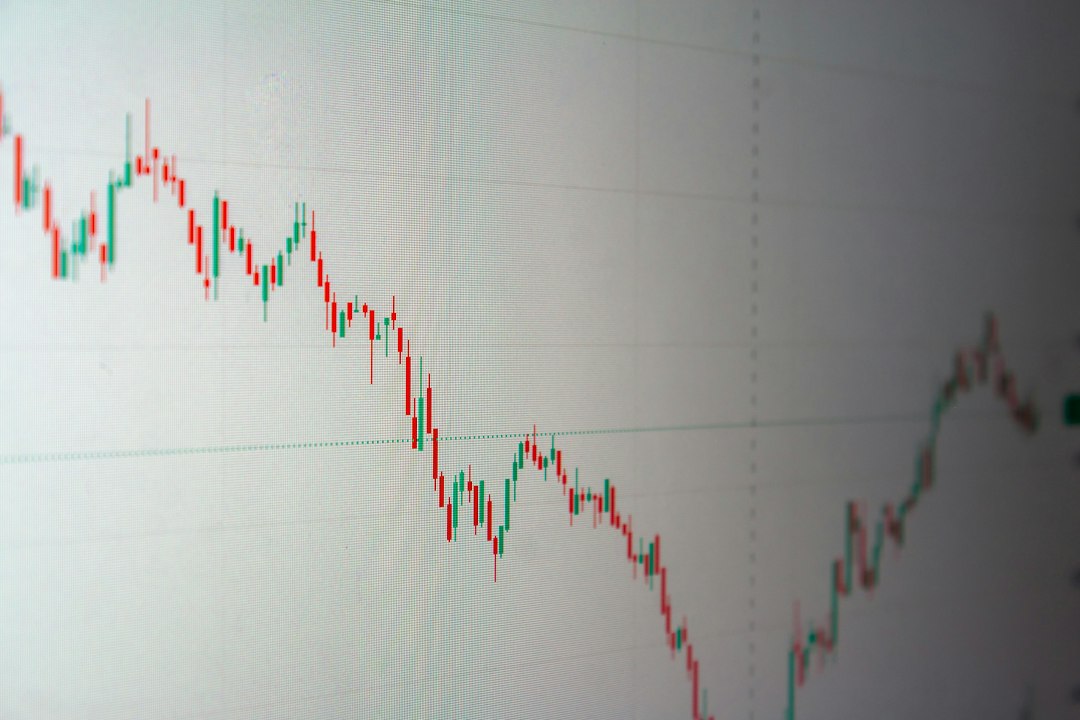
You’ve just experienced a gut-wrenching 20% loss on your investment portfolio. It stings, no doubt. Then, a glimmer of hope appears: the market rebounds, and your portfolio gains 20% back. You might think, “Great! I’m back where I started, or at least close to it.” This feeling of relief, however, is a dangerous illusion. The mathematics of investing, particularly when dealing with losses and subsequent gains, is not as straightforward as it seems. A 20% gain does not, in fact, erase a 20% loss. You’ll need a significantly larger positive return to recover from an initial downturn. Understanding this fundamental concept is crucial for managing your expectations, making sound investment decisions, and ultimately, achieving your long-term financial goals. The compounding nature of returns, or more accurately, losses, works against you in a way that a simple reversal of percentages fails to capture. This article will delve into why this is the case, illustrate it with clear examples, and equip you with the knowledge to navigate market volatility more effectively.
The core of the issue lies in the fact that percentages are relative. When you lose 20%, you are losing 20% of your original capital. When you then gain 20%, you are gaining 20% of the reduced capital. This seemingly small distinction has a profound impact on your overall wealth. Imagine your initial investment is \$100. A 20% loss reduces your capital to \$80 (\$100 – \$20). Now, a 20% gain on this \$80 is not \$20, but rather \$16 (\$80 * 0.20). Your portfolio now stands at \$96 (\$80 + \$16), which is still \$4 less than your original \$100. This shortfall is the direct consequence of the percentage being applied to a smaller base amount after the loss. This phenomenon is often overlooked by investors, leading to a false sense of security or an underestimation of the damage a downturn can inflict.
Understanding the nuances of investment gains and losses is crucial for any investor. A common misconception is that a twenty percent gain can simply offset a previous loss of the same percentage, but this is not the case due to the nature of percentage calculations. For instance, if an investment loses 20% of its value, it must then gain 25% to return to its original value. This principle is explored in detail in the article found at How Wealth Grows, which provides insights into the mathematics of investment returns and the importance of understanding percentage changes in financial decision-making.
The Mathematical Reality of Compounding Losses

At the heart of this misconception is the principle of compounding. While compounding is celebrated for its ability to accelerate wealth growth over time, it also magnifies the impact of losses. When you experience a loss, the base upon which future gains are calculated shrinks. This means that subsequent gains, even if they are of the same percentage magnitude, will be applied to a smaller principal, resulting in a lower absolute recovery.
The Declining Base Effect
Let’s break down the mechanics of this. Suppose you invest \$1,000.
- Initial Investment: \$1,000
- Scenario 1: A 20% Loss followed by a 20% Gain
- Step 1: The Loss: A 20% loss on \$1,000 is \$200 (\$1,000 * 0.20). Your portfolio is now worth \$800 (\$1,000 – \$200).
- Step 2: The Gain: A 20% gain on the reduced \$800 is \$160 (\$800 * 0.20). Your portfolio now stands at \$960 (\$800 + \$160).
- Result: You are \$40 short of your original investment, a net loss of 4% (\$40 / \$1,000).
- Scenario 2: A 20% Gain followed by a 20% Loss
- Step 1: The Gain: A 20% gain on \$1,000 is \$200 (\$1,000 * 0.20). Your portfolio is now worth \$1,200 (\$1,000 + \$200).
- Step 2: The Loss: A 20% loss on the increased \$1,200 is \$240 (\$1,200 * 0.20). Your portfolio now stands at \$960 (\$1,200 – \$240).
- Result: Again, you are \$40 short of your original investment, a net loss of 4%.
The order of operations doesn’t change the end result in this specific case of equal percentage gains and losses, but it highlights that the base value is critical. The key takeaway is that the shrinking base after a loss means you need a larger percentage gain to recover the absolute amount lost.
The Asymmetrical Nature of Percentage Recovery
To illustrate this further, let’s calculate the percentage gain required to recover from different loss percentages:
- To recover from a 10% loss: You need approximately an 11.11% gain. (If you lose \$100 from \$1,000, you have \$900. To get back to \$1,000, you need \$100 profit, which is \$100 / \$900 = 0.1111 or 11.11%).
- To recover from a 20% loss: You need a 25% gain. (If you lose \$200 from \$1,000, you have \$800. To get back to \$1,000, you need \$200 profit, which is \$200 / \$800 = 0.25 or 25%).
- To recover from a 50% loss: You need a 100% gain. (If you lose \$500 from \$1,000, you have \$500. To get back to \$1,000, you need \$500 profit, which is \$500 / \$500 = 1 or 100%).
- To recover from a 75% loss: You need a 300% gain. (If you lose \$750 from \$1,000, you have \$250. To get back to \$1,000, you need \$750 profit, which is \$750 / \$250 = 3 or 300%).
As you can see, the percentage required to recover from a loss increases exponentially as the magnitude of the loss grows. A 20% loss is significant, and while a 20% gain might feel like parity, it’s a mathematical illusion. You are still underwater, and the deeper the initial dive, the longer and more arduous the climb back to break-even becomes. This mathematical reality underscores the importance of risk management and avoiding substantial losses in the first place.
The Psychological Impact of Market Fluctuations

Beyond the cold, hard numbers, there’s a significant psychological component to how investors perceive gains and losses. The sting of a loss often feels more potent than the pleasure of an equivalent gain. This phenomenon, known as loss aversion, means that you’re more motivated to avoid a loss than to acquire an equivalent gain.
Experiencing the Pain of Red
When your portfolio shows a negative balance, it can trigger emotions like fear, anxiety, and regret. This emotional distress can lead to irrational decision-making. You might panic and sell your investments at the worst possible time, locking in losses and preventing any potential recovery. Conversely, you might hold onto losing investments for too long, hoping for a miraculous turnaround, only to see the losses deepen. The desire to “get back to zero” can become an overwhelming focus, clouding your judgment about rational investment strategies. You might chase risky opportunities to try and recoup losses quickly, putting your capital at even greater risk.
The Illusion of Recovery
When your portfolio bounces back by the same percentage you lost, there’s a natural inclination to feel a sense of relief and accomplishment. You might think, “Phew, that was close!” However, this feeling can be misleading. As we’ve established, you’re still not at your starting point. This false sense of recovery can lead to complacency. You might become less vigilant about risk management, assuming that the market will always bounce back as quickly as it fell. This can leave you vulnerable to future downturns. The emotional satisfaction of seeing a positive number, even if it’s not a true recovery, can be a powerful, yet deceptive, motivator. It’s important to remember that an investment’s performance should be measured against its original cost basis and its potential for future growth, not solely on the immediate recovery from a past dip.
Anchoring Bias and Mental Accounting
Investors often fall prey to cognitive biases, such as anchoring and mental accounting, which exacerbate the misunderstanding of percentage gains and losses. Anchoring bias refers to the tendency to rely too heavily on the first piece of information offered (the “anchor”) when making decisions. For many investors, their initial investment amount serves as an anchor. When they see a 20% loss followed by a 20% gain, their mental accounting might still be focused on the initial anchor, making them believe they are closer to their starting point than they actually are. Mental accounting further solidifies this by creating separate “accounts” in our minds for different financial transactions. A loss might be placed in a “painful losses” account, and the subsequent gain in a “recovery” account, leading to a subjective feeling of having balanced things out, even if the objective financial reality is different. Recognizing these psychological traps is as important as understanding the mathematical principles.
Real-World Implications for Your Portfolio
The mathematical and psychological realities of percentage gains and losses have tangible consequences for your investment portfolio and your long-term financial well-being. Understanding these implications can help you make more informed decisions and develop a more resilient investment strategy.
The Compounding Effect of Time and Losses
The longer you are invested, the more opportunities there are for both gains and losses to compound. A 20% loss in a short period might be recoverable, but if you experience multiple such downturns, or larger ones, over several years, the impact on your portfolio’s growth trajectory can be devastating. Imagine an investor who experiences a 20% loss and then takes years to recover through small, subsequent gains. Meanwhile, other investors who avoided significant losses or whose losses were smaller have had their capital working for them, benefiting from compound growth. This can lead to a significant divergence in portfolio values over time, even if the annual average returns appear similar on the surface. The impact of sequence of returns risk, where the order of returns significantly affects the outcome, is particularly pronounced when losses are involved.
The Importance of Diversification and Risk Management
This understanding highlights the critical importance of diversification and robust risk management strategies. Diversification, spreading your investments across different asset classes, industries, and geographies, can help mitigate the impact of a single investment’s poor performance. If one asset class experiences a significant downturn, others may hold steady or even rise, cushioning the overall blow to your portfolio. Risk management isn’t just about avoiding losses; it’s also about understanding the potential downside of any investment and having a plan in place to deal with it. This might involve setting stop-loss orders, rebalancing your portfolio regularly, or maintaining an appropriate asset allocation for your risk tolerance and time horizon. The goal is not to eliminate risk entirely, as that would also eliminate the potential for returns, but to manage it effectively.
The Long-Term Perspective: Patience and Discipline
Ultimately, achieving your financial goals requires a long-term perspective, patience, and discipline. Market volatility is a natural part of investing. Downturns are inevitable, but so are recoveries. The key is to not let short-term fluctuations derail your long-term plan. Instead of fixating on whether a 20% gain erases a 20% loss, focus on the overall growth of your portfolio over time, the consistency of your savings and investments, and the disciplined execution of your investment strategy. During periods of market stress, it’s crucial to resist the urge to make emotional decisions. Stick to your pre-determined investment plan, rebalance your portfolio when necessary, and continue to invest regularly, especially when the market is down, as this allows you to buy assets at lower prices. The power of compounding is most effective when given consistent time and allowed to work through market cycles without emotional interference.
Understanding the concept of percentage gains and losses is crucial for effective financial planning. A common misconception is that a twenty percent gain can simply offset a previous loss of the same percentage, but this is not the case. For instance, if an investment loses twenty percent of its value, it must gain twenty-five percent to return to its original value. This principle is explored in detail in a related article that discusses the mathematics behind gains and losses. You can read more about it here. By grasping these concepts, investors can make more informed decisions and better manage their portfolios.
Calculating Your True Recovery Needs
| Initial Value | Loss Percentage | Value After Loss | Gain Percentage | Value After Gain | Net Change (%) |
|---|---|---|---|---|---|
| 100 | 20% | 80 | 20% | 96 | -4% |
| 100 | 30% | 70 | 30% | 91 | -9% |
| 100 | 50% | 50 | 50% | 75 | -25% |
| 100 | 60% | 40 | 60% | 64 | -36% |
To truly grasp the math and avoid the deceptive comfort of a simple percentage reversal, you need to be able to calculate the actual percentage gain required to recover from any given loss. This is a fundamental skill for any serious investor. It allows you to set realistic expectations and understand the magnitude of the challenge after a downturn.
The Formula for Recovery
The formula to calculate the percentage gain needed to recover from a loss is:
Recovery Percentage = (1 / (1 – Loss Percentage)) – 1
Where “Loss Percentage” is expressed as a decimal (e.g., 20% loss is 0.20).
Let’s apply this formula to our previous examples:
- For a 10% loss (0.10):
Recovery Percentage = (1 / (1 – 0.10)) – 1
Recovery Percentage = (1 / 0.90) – 1
Recovery Percentage = 1.1111… – 1
Recovery Percentage = 0.1111… or approximately 11.11%
- For a 20% loss (0.20):
Recovery Percentage = (1 / (1 – 0.20)) – 1
Recovery Percentage = (1 / 0.80) – 1
Recovery Percentage = 1.25 – 1
Recovery Percentage = 0.25 or 25%
- For a 50% loss (0.50):
Recovery Percentage = (1 / (1 – 0.50)) – 1
Recovery Percentage = (1 / 0.50) – 1
Recovery Percentage = 2 – 1
Recovery Percentage = 1 or 100%
- For a 75% loss (0.75):
Recovery Percentage = (1 / (1 – 0.75)) – 1
Recovery Percentage = (1 / 0.25) – 1
Recovery Percentage = 4 – 1
Recovery Percentage = 3 or 300%
Practical Application for Investment Decisions
Armed with this formula, you can move beyond superficial percentage comparisons. When you see your portfolio drop by 20%, you now know precisely that you need a 25% gain just to get back to zero. This knowledge should inform your decision-making. It means that any subsequent gains are building towards a higher hurdle. This understanding can also help you appreciate the power of avoiding large losses. A smaller loss, say 5%, requires only a 5.26% gain to recover. The difference between needing a 25% gain and a 5.26% gain is substantial and illustrates why preserving capital is paramount. It also means that if you’re considering an investment with a higher potential for loss, you must also consider the subsequent recovery effort required and whether the potential reward justifies that increased risk. This calculation empowers you to engage with your investments more critically and strategically.
Beyond Simple Percentages: The Role of Absolute Value
While percentages are useful for comparing performance across different investment sizes, it’s also essential to consider the absolute value of gains and losses. A 20% gain on a \$100,000 portfolio is \$20,000, while a 20% gain on a \$1,000 portfolio is only \$200. The impact of a 20% loss followed by a 20% gain on the larger portfolio means you’ve lost \$20,000 and then gained \$16,000, leaving you with an absolute deficit of \$4,000. On the smaller portfolio, you’ve lost \$200 and gained \$160, for an absolute deficit of \$40. Understanding both the percentage and the absolute dollar amounts provides a more complete picture of your financial situation and the true impact of market movements. This holistic view prevents you from being misled by relative figures when absolute wealth is your ultimate concern.
Building Resilience: Strategies for Navigating Market Volatility
Understanding the mathematical disparity between losses and gains is the first step. The next, and arguably more critical, is to develop strategies that build resilience into your investment approach, enabling you to navigate market volatility without succumbing to its emotional and financial pitfalls.
The Power of Dollar-Cost Averaging
Dollar-cost averaging (DCA) is a strategy where you invest a fixed amount of money at regular intervals, regardless of market conditions. When the market is down, your fixed investment buys more shares. When the market is up, it buys fewer. This approach helps to smooth out the volatility of your investment costs over time. Instead of trying to time the market, which is notoriously difficult, DCA allows you to consistently participate in the market. When markets experience downturns, DCA becomes particularly beneficial because you are effectively buying assets at a lower average price, which can accelerate your recovery when the market inevitably rebounds. It’s a discipline that removes emotion and focuses on consistent, long-term investment.
Rebalancing for Strategic Adjustment
Regularly rebalancing your portfolio is another essential strategy. This involves periodically adjusting your asset allocation back to your target percentages. For example, if your target is 60% stocks and 40% bonds, and a significant market rally causes stocks to grow to 70% of your portfolio, you would sell some stocks and buy more bonds to bring it back to your target. Conversely, if stocks fall and become 50% of your portfolio, you would sell bonds and buy stocks. This process forces you to “sell high” and “buy low,” effectively capturing gains and reinvesting in assets that have become cheaper. Rebalancing ensures that your portfolio remains aligned with your risk tolerance and long-term goals, and it can also help you avoid having too much exposure to any single asset class that might be experiencing a prolonged downturn.
The Importance of an Emergency Fund and Long-Term Vision
Having a robust emergency fund is crucial. This fund, typically comprising 3-6 months of living expenses held in a readily accessible savings account, provides a safety net. It prevents you from having to sell your investments at an inopportune time to cover unexpected expenses. Knowing you have this buffer allows you to weather market downturns with greater peace of mind, confident that your long-term investments are not being jeopardized by short-term needs. Furthermore, maintaining a long-term vision is paramount. Remember why you are investing in the first place – for retirement, for a down payment on a house, or for future financial security. Market fluctuations are just that: fluctuations. They are temporary. Your long-term goals are the ultimate destination, and consistent, disciplined investing over time is the most reliable path to get there. By focusing on the horizon, you can better navigate the inevitable storms along the way.

The 4% Retirement Mistake That’s Secretly Costing You Thousands
FAQs
1. Why is a twenty percent gain not enough to undo a loss?
A twenty percent gain may not be enough to undo a loss because the percentage gain is calculated based on the current reduced value after the initial loss. For example, if an investment of $100 loses 50%, it will be reduced to $50. A twenty percent gain on $50 will only bring the value up to $60, still leaving a $40 loss from the initial investment.
2. Can a twenty percent gain be significant in certain contexts?
Yes, a twenty percent gain can be significant in certain contexts, especially in the stock market or investment scenarios. However, it may not always be enough to fully recover from a previous loss, depending on the extent of the initial loss.
3. How does the concept of compounding affect the ability to recover from a loss?
Compounding plays a crucial role in recovering from a loss. If an investment incurs a loss, the remaining capital is reduced, and any subsequent gains are calculated based on this reduced amount. Therefore, the higher the initial loss, the more challenging it becomes to recover through gains alone.
4. What other strategies can be employed to recover from a loss besides relying on percentage gains?
Aside from percentage gains, investors can employ strategies such as diversification, cost averaging, and risk management to mitigate losses and potentially recover from them. These strategies focus on spreading investments across different assets, averaging out costs over time, and minimizing risks to improve overall portfolio performance.
5. Is it important to consider the overall portfolio performance rather than just focusing on individual gains or losses?
Yes, it is crucial to consider the overall portfolio performance rather than just individual gains or losses. By looking at the bigger picture, investors can assess the effectiveness of their investment strategies, risk management techniques, and long-term financial goals, which can provide a more comprehensive view of their financial health and stability.