The Mystery of the Pending Transaction: What It Really Means for Your Bank Balance
You’ve just checked your bank account online, expecting to see a familiar number. Instead, you’re greeted with a figure that doesn’t quite add up. There are your recent purchases, and then there’s a section that says “Pending Transactions.” What exactly is going on? It’s a common point of confusion, and understanding pending transactions is crucial for managing your finances effectively. You’re not alone in feeling a bit bewildered by this invisible hold on your money. This article will demystify the concept of pending transactions, explaining what they are, why they appear, and how they can impact your ability to spend or withdraw cash. We’ll walk you through the lifecycle of a pending transaction, from the moment you swipe your card to when it finally clears, giving you the knowledge to navigate your bank balance with confidence.
If you’re curious about what “pending” means in the context of a bank account, you might find it helpful to read a related article that delves deeper into banking terminology and its implications for your finances. Understanding these terms can help you manage your money more effectively. For more insights, check out this informative piece at How Wealth Grows.
Why Your Money Isn’t Immediately Available: The Mechanics of Pending Transactions
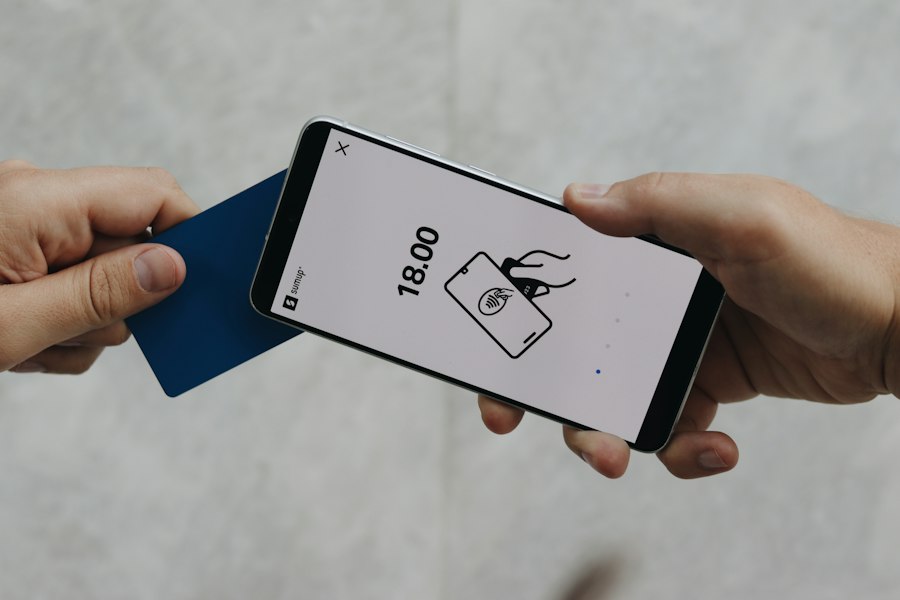
When you make a purchase using your debit card, credit card, or even an electronic transfer, the funds don’t immediately leave your account and become permanently inaccessible to you. Instead, they enter a temporary holding status. This is where the concept of a “pending transaction” comes into play. Think of it as a reservation for funds, a signal to your bank that a certain amount of money has been committed but not yet finalized. This delay is not arbitrary; it serves several important functions within the complex ecosystem of financial transactions. Understanding these mechanics will help you see why that money, while still appearing in your overall balance, isn’t truly yours to spend until the pending status is resolved.
The Initial Authorization: The First Step in the Chain
The moment you authorize a transaction, be it at a gas station, an online store, or a restaurant, a request is sent to your bank for approval. This request isn’t for the final transfer of funds itself, but rather for a confirmation that you have sufficient available funds to cover the purchase. Your bank checks your account balance, and if it’s adequate, it places a temporary hold on that amount. This hold is the pending transaction. It’s crucial to understand that this is an authorization, not a deduction. Your bank is essentially saying, “Yes, you can afford this,” and then earmarking that sum. This initial authorization is a critical step in preventing fraud and ensuring that merchants can be confident in accepting your payment. Without this pre-authorization, merchants would face a much higher risk of accepting payments for which funds were ultimately unavailable, leading to chargebacks and financial losses.
The Merchant’s Role: From Authorization to Settlement
After your bank authorizes the transaction, it’s then up to the merchant to “capture” those funds. This is the process of the merchant formally requesting the final payment. For many everyday transactions, this happens very quickly, sometimes within minutes or hours. However, in certain situations, there can be a delay. For instance, at a gas station, the initial authorization might be for a standard amount (e.g., $100), but the final charge will be for the actual amount you pumped. This difference is reconciled during the settlement process. Similarly, online retailers might authorize your card upon checkout but only capture the funds when the item is shipped. This delay is why a purchase you made days ago might still appear as pending. The merchant has initiated the process, but the final settlement with your bank is still in progress.
Why the Delay? Factors Influencing Settlement Time
Several factors can influence how long a transaction remains in a pending state. The type of merchant is a significant factor. Larger businesses with sophisticated payment processing systems tend to have faster settlement times than smaller businesses or those operating in industries with higher fraud risks. The banking systems themselves also play a role. While modern financial networks are incredibly efficient, there are still batch processing systems and interbank communication protocols that can introduce slight delays. Holidays and weekends can also impact settlement times, as financial institutions may not process transactions on non-business days. Furthermore, if there are any discrepancies or issues with the transaction details, it can prolong the pending period as the involved parties work to resolve them. For example, if a merchant incorrectly enters your card details, it might trigger a review process that keeps the transaction pending for longer.
Navigating Your Balance: The Impact of Pending Transactions
The most immediate and often most frustrating aspect of pending transactions is their effect on your available balance. While they might not be fully deducted from your account yet, they are effectively unavailable for you to spend. This can lead to some tricky situations if you’re not careful, potentially causing overdrafts or missed payments. Understanding how pending transactions reduce your spending power is key to avoiding financial headaches. It’s not just about the numbers you see in your statement; it’s about the real money you can actually access.
Available Balance vs. Actual Balance: A Crucial Distinction
This is where most confusion arises. Your bank account statement will typically show two key figures: your actual balance and your available balance. Your actual balance is the total amount of money that is in your account. Your available balance, however, is what you can actually spend or withdraw at that moment. Pending transactions are subtracted from your actual balance to calculate your available balance. So, even if your actual balance is $500, but you have a $100 pending transaction, your available balance is only $400. This means that if you try to make a purchase for $450, your bank might decline it because you only have $400 available, even though your actual balance is higher. It’s vital to always monitor your available balance, not just your actual balance, to get a true picture of your financial capacity.
When you see the term “pending” in your bank account, it typically refers to transactions that have been authorized but not yet fully processed. This can lead to confusion for many account holders who may wonder about the status of their funds. To gain a deeper understanding of how pending transactions work and their implications on your finances, you might find it helpful to read a related article that explores this topic in detail. For more information, check out this insightful piece on bank account transactions.
The Risk of Overdrafts and Insufficient Funds
The disconnect between your actual and available balance is a primary cause of overdrafts. If you make a purchase that, when combined with pending transactions, exceeds your available balance, your bank may charge you an overdraft fee. This can be a significant and unexpected expense. The same applies to automatic bill payments or scheduled transfers. If a pending transaction reduces your available balance below the amount needed for a scheduled payment, that payment could be returned as insufficient funds, potentially incurring additional fees from both your bank and the recipient of the payment. For example, if you have a $300 pending transaction for a hotel hold, and your available balance is $350, you only have $50 left for other expenses. If you then attempt to pay a $75 bill, it will likely be declined.
Planning Your Spending: Keeping Pending Transactions in Mind
To effectively manage your finances and avoid overdrafts, you need to actively consider pending transactions when planning your spending. Before making a new purchase or committing to an expense, take a moment to review your pending transactions. Subtract their total amount from your actual balance to determine your true available balance. This mental calculation or a quick note can save you from a lot of stress and unnecessary fees. Think of it as a proactive step in financial hygiene. If you know a large purchase is pending, it’s wise to hold off on other non-essential spending until that transaction clears. Many banking apps now provide a real-time view of your available balance, which includes pending transactions, making this process much easier.
The Lifecycle of a Pending Transaction: From Creation to Clearance
Understanding the journey a pending transaction takes from its inception to its final resolution can demystify the process and provide a clearer picture of when your funds will become truly accessible again. It’s not just a static hold; it’s a dynamic process with distinct stages. By tracking this lifecycle, you can better predict when that money will be back in your hands and available for other uses.
The Moment of Authorization: The Genesis of the Hold
As discussed, the pending transaction begins the moment you authorize a purchase with your card or through an electronic transfer. Your bank receives an authorization request and places a temporary hold on the estimated amount of the transaction. This initial hold is often an estimate, especially for transactions where the final amount isn’t immediately known, such as hotel stays or car rentals. For instance, a hotel might place a hold for $200 to cover potential incidentals, even if your room only costs $150. This authorization is the first crucial step in the pending process.
The Settlement Period: The Waiting Game
Following the authorization, the transaction enters the settlement period. This is the phase where the merchant officially submits the transaction for processing and your bank debits the funds from your account. The duration of the settlement period can vary significantly. For most debit card transactions, settlement typically occurs within 1-3 business days. Credit card transactions can sometimes take a bit longer, especially if they are international or involve specific types of merchants. During this period, the transaction will remain in a pending state on your account. You can see it listed, but the funds are still earmarked and not fully deducted.
Transaction Clearance: The Final Step
Once the settlement is complete, the pending transaction is cleared. This means the funds are officially deducted from your actual balance, and the hold is released. The pending transaction will then disappear from the pending section of your bank statement and will appear as a completed transaction in your transaction history. The time it takes for a transaction to clear can range from a few hours to several business days, depending on the factors mentioned earlier, such as the type of transaction, the merchant, and banking system processing times. Once cleared, the funds are no

Approved at Checkout… Fee the Next Morning? Why Banks Do This.
FAQs
What does “pending” mean in a bank account?
When a transaction is labeled as “pending” in your bank account, it means that the transaction has been authorized but has not been completed. The funds have been set aside for the transaction, but the final processing has not yet occurred.
How long do pending transactions typically last in a bank account?
The duration of a pending transaction can vary depending on the merchant and the type of transaction. In general, pending transactions can last anywhere from a few hours to several days before they are either completed or canceled.
Can I spend money that is marked as pending in my bank account?
It is not recommended to spend money that is marked as pending in your bank account. While the funds have been set aside for the transaction, they have not been officially deducted from your account yet. Spending this money could result in overdrawing your account once the transaction is completed.
Why do some transactions show as pending in my bank account and then disappear?
Transactions may show as pending in your bank account temporarily before disappearing if the merchant does not complete the transaction within a certain timeframe. In such cases, the pending transaction will eventually be removed from your account as if it never occurred.
Can I cancel a pending transaction in my bank account?
Unfortunately, you cannot cancel a pending transaction in your bank account. You will need to wait for the transaction to either be completed or canceled by the merchant before taking any further action.