
You’ve heard the whispers, the hushed tones of financial gurus and self-improvement experts alike: “compound growth,” “exponential progress.” It sounds like magic, a secret handshake to unlock a life of abundance and achievement. But is it truly some arcane knowledge, or is it a fundamental principle you can harness for your own benefit? This article is your guide to demystifying compound growth, the engine that can propel you towards your most ambitious goals, whether they lie in your finances, your career, your personal development, or any other area you choose to cultivate.
At its heart, compound growth isn’t complicated. It’s the process where growth is added to the original amount, and then the next period’s growth is calculated on this new, larger total. Think of it as a snowball rolling down a hill. It starts small, picking up a bit of snow. Then, as it rolls, it gathers more snow, becoming larger and heavier, and therefore picking up even more snow with each revolution. It’s not just about adding more; it’s about the rate at which you add, and how that rate is applied to an ever-increasing base.
The Simple vs. The Compound: A Tale of Two Paths
Imagine you decide to save $100 per month.
The Simple Path: Linear Addition
If you follow a simple savings plan, you’re essentially adding a fixed amount over time. After one year, you’d have $1200 ($100 x 12). After five years, you’d have $6000 ($100 x 60). While this is commendable and certainly better than not saving at all, the growth is predictable and linear. The amount you add each month is always the same. There’s no acceleration.
The Compound Path: Amplified Growth
Now, let’s introduce the magic of compounding. Let’s say you invest your $100 each month, and it earns an average annual return of 5%.
Month 1: Your Initial Investment
You invest $100.
Month 2: Earning on Your Earnings
At the end of month 2 (assuming monthly compounding for simplicity, though annual is more common for investments), your initial $100 might have earned a tiny fraction of a dollar. Let’s say it’s $0.42 (based on a rough monthly approximation of 5% annual). Now you have $100.42. You then add another $100, bringing your total to $100.42 + $100 = $200.42.
Month 3: The Cycle Continues
At the end of month 3, your $200.42 earns interest. This time, it’s slightly more than $0.42 because your base is larger. Let’s say it’s $0.84. Your new total is $200.42 + $0.84 + $100 = $300.84.
Notice the subtle difference? You’re still contributing $100 each month, but the growth component is slowly but surely increasing. This might seem insignificant in the early stages, but over time, the impact becomes profound.
The Role of Time: The Patient Gardener
Time is arguably the most crucial ingredient in the compound growth recipe. The longer your investment or effort has to compound, the more dramatic the results. This is why starting early, whether it’s with your finances, your skill development, or building a habit, is so powerful.
The Early Bird Gets the Worm (and the Interest)
Imagine two individuals, Alex and Ben, both investing $100 per month at a 7% annual return.
Alex: The Prudent Planner
Alex starts investing at age 25. By the time Alex retires at 65 (40 years), their investments would have grown significantly due to the long compounding period.
Ben: The Procrastinator
Ben decides to start investing at age 45. Even if Ben invests the same amount per month for the same 20 years until retirement at 65, the total accumulated amount will be considerably less than Alex’s. This isn’t because Ben isn’t diligent; it’s because Ben missed out on two decades of compounding. The power of time, when coupled with consistent effort, is undeniable.
The “Rule of 72” – A Quick Glance at Doubling Time
A handy mental shortcut to estimate how long it takes for an investment to double is the Rule of 72. Simply divide 72 by the annual rate of return.
- At a 6% annual return, your investment will double in approximately 12 years (72 / 6 = 12).
- At an 8% annual return, your investment will double in approximately 9 years (72 / 8 = 9).
- At a 10% annual return, your investment will double in approximately 7.2 years (72 / 10 = 7.2).
This rule highlights how higher rates of return, when applied over time, can dramatically accelerate your wealth accumulation.
Compound growth is a powerful financial concept that illustrates how investments can grow exponentially over time due to the effects of earning interest on both the initial principal and the accumulated interest. For a deeper understanding of this principle and its implications for wealth accumulation, you can explore a related article that provides valuable insights and examples. To learn more about how wealth grows through compound interest, visit this article.
Beyond the Bank Account: Compound Growth in All Areas of Your Life
While we often associate compound growth with financial investments, its principles extend far beyond the realm of money. You can, and should, apply these concepts to virtually every aspect of your life where you seek improvement and progress.
Personal Development: Building a Better You
Think about learning a new skill. If you dedicate 30 minutes each day to practicing guitar, you’re not just adding 30 minutes to your repertoire. Each practice session builds upon the knowledge and muscle memory from the previous ones. You become more proficient, more fluid, and you can tackle more complex pieces.
The Power of Consistent Learning
- Knowledge Acquisition: Every book you read, every podcast you listen to, every online course you complete adds to your existing knowledge base. This accumulated knowledge allows you to connect dots you couldn’t before, leading to deeper understanding and more innovative thinking.
- Skill Refinement: Like playing an instrument, practicing a craft like writing, coding, or public speaking involves compounding skills. Each hour spent honing your craft makes you more efficient, more creative, and more capable.
- Habit Formation: Building positive habits, whether it’s exercise, meditation, or healthy eating, is a perfect example of compound growth. Initially, it might feel like a struggle. But as you consistently engage in the habit, it becomes easier, more ingrained, and the positive effects compound. A consistent exercise routine leads to better health, which in turn gives you more energy to pursue other goals, creating a virtuous cycle.
Career Advancement: Climbing the Ladder of Success
Your career trajectory can also benefit immensely from the principles of compound growth.
Strategic Investment in Your Professional Capital
- Skill Specialization: As you gain expertise in a particular area, your value in the job market increases. Each new project that utilizes and enhances your specialized skills makes you a more sought-after professional.
- Networking: Building relationships is a form of compound growth. Each person you connect with can introduce you to others, opening up new opportunities. A strong professional network becomes a powerful asset, providing advice, support, and potential job leads.
- Building a Reputation: Your reputation is built brick by brick through consistent performance and ethical behavior. Over time, a positive reputation precedes you, opening doors and making people more willing to trust and invest in your capabilities. This compound effect of trust and recognition can lead to promotions, better projects, and increased influence.
Relationship Building: Nurturing Connections That Matter
Strong relationships are not built overnight; they are cultivated through consistent effort and genuine interaction.
The Compounding Returns of Connection
- Trust and Rapport: Every positive interaction with a friend, family member, or colleague adds to the reservoir of trust and rapport you share. These small investments of time and empathy compound over time, creating deep, resilient bonds.
- Shared Experiences: Creating memories together through shared activities and adventures strengthens your connection. Each shared experience becomes a building block for a richer, more intertwined relationship.
- Mutual Support: Being there for each other during challenging times and celebrating successes together creates a powerful sense of connection. This mutual support system acts as a form of emotional compounding, making your relationships more robust and fulfilling.
The Catalysts of Compounding: What Accelerates Your Growth?

While time is a fundamental element, several factors can act as catalysts, accelerating the power of compound growth in your life.
Consistency: The Unwavering Engine
Perhaps the most powerful catalyst is consistency. Sporadic efforts yield sporadic results. However, unwavering, consistent application of your energy and resources will always lead to more significant outcomes over time.
The Power of Small, Regular Actions
- Daily Habits: Whether it’s reading, journaling, exercising, or practicing a skill, dedicating a small amount of time consistently every day will yield far greater results than infrequent marathon sessions.
- Regular Contributions: In finance, this means regular savings or investment. In your career, it might mean consistently delivering high-quality work. In relationships, it’s regular communication and gestures of care.
Discipline: The Guardrail Against Detours
Discipline is the crucial element that allows you to maintain consistency, especially when motivation wanes. It’s about doing what you need to do, even when you don’t feel like it.
Mastering Your Inner Game
- Resisting Immediate Gratification: Compound growth often requires delayed gratification. You might have to forgo immediate pleasures for long-term gains. Discipline helps you make these tough choices.
- Overcoming Inertia: Getting started can be the hardest part. Discipline provides the push to overcome inertia and begin the compounding process.
- Sticking to the Plan: When faced with setbacks or distractions, discipline is what keeps you on track and prevents you from derailing your progress.
Compound Interest (Literally): The Financial Multiplier
When applied to your finances, the concept of compound interest is the most direct and literal manifestation of compound growth.
Making Your Money Work for You
- Reinvesting Earnings: The key to financial compounding is reinvesting your earnings (dividends, interest) back into the investment. This allows your capital to grow, and then your earnings on that larger capital to grow even further.
- Long-Term Investing: As discussed earlier, time is your greatest ally in financial compounding. The longer your money is invested and compounding, the more exponential the growth.
- Understanding Different Compounding Frequencies: Whether interest is compounded annually, semi-annually, quarterly, or monthly, the more frequent the compounding, the faster your money grows (though the differences become more pronounced with larger sums and longer time horizons).
Leverage: Magnifying Your Efforts
Leverage, in its various forms, can amplify the impact of your efforts and accelerate compound growth.
Using Your Resources Wisely
- Financial Leverage: Using borrowed money (like a mortgage or business loan) can magnify returns on investments. However, it also magnifies risk, so it must be used with caution and a solid understanding of the potential downsides.
- Knowledge Leverage: Learning from experts, reading books, and taking courses allows you to gain knowledge and insights that would take years to discover on your own. This leverages the experience and research of others to accelerate your learning.
- Team Leverage: In business and in life, building and collaborating with a team allows you to achieve more than you could alone. By leveraging the skills and efforts of others, you can multiply your output and impact.
The Pitfalls to Avoid: Why Some Snowballs Melt

While compound growth is a powerful force, it’s not a magic wand that guarantees success. There are common pitfalls that can halt or even reverse your progress. Understanding these is as crucial as understanding the principles themselves.
The Illusion of Instant Gratification: The Enemy of Long-Term Growth
Our society often emphasizes quick wins and immediate results. This can make the slow, steady, and often invisible early stages of compounding seem unimpressive, leading you to abandon your efforts prematurely.
Battling the Urge for Immediate Rewards
- Setting Realistic Expectations: Understand that true compound growth takes time. Don’t get discouraged if you don’t see dramatic results in the first few months or even years.
- Focusing on Process, Not Just Outcome: Celebrate the consistent actions you’re taking, rather than solely focusing on the eventual outcome. The process is what fuels the compounding.
- Delayed Gratification: Train yourself to resist the allure of immediate pleasures that detract from your long-term goals.
Inconsistency: The Thawing Process
The most common saboteur of compound growth is inconsistency. A strong start followed by sporadic effort will lead to stagnation.
The Erosion of Momentum
- Breaking the Chain: Missing a day or two of a habit might seem insignificant, but it can break the momentum and make it harder to restart.
- Loss of Compounding: In finance, missing investment contributions or withdrawing funds prematurely disrupts the compounding cycle.
- Stalled Progress: In skill development or personal growth, inconsistent effort means you’re not building upon previous learning, leading to a plateau.
Mismanaging Risk: The Avalanche Effect
While leverage can be a powerful accelerator, mishandling risk can lead to catastrophic setbacks that undo years of progress.
The Dangers of Overextension
- Financial Over-Leverage: Taking on too much debt without a clear plan for repayment can lead to bankruptcy, wiping out your accumulated wealth.
- Ignoring Due Diligence: Making impulsive decisions without thorough research or understanding of the potential consequences can lead to significant losses.
- Underestimating Competition: In business, failing to account for competitive pressures or market shifts can lead to the failure of even well-intentioned ventures.
Poor Planning and Lack of Strategy: Wandering Without a Map
Compound growth is most effective when it’s directed towards a clear objective. Without a plan, your efforts might be scattered and inefficient.
The Importance of a Well-Defined Path
- Unclear Goals: If you don’t know what you’re aiming for, it’s difficult to measure progress or make effective decisions.
- Lack of Actionable Steps: A vague goal without a roadmap of actionable steps will likely remain just a dream.
- No Review and Adjustment: Even the best plans need to be reviewed and adjusted based on feedback and changing circumstances. Without this, you might be compounding in the wrong direction.
Understanding compound growth is essential for anyone looking to build wealth over time. It allows individuals to see how their investments can grow exponentially, rather than just linearly. For a deeper dive into this concept, you can explore a related article that provides valuable insights and examples on the topic. Check it out here to enhance your knowledge about how wealth accumulates through the power of compounding.
Harnessing the Power: Your Action Plan for Exponential Progress
| Year | Initial Value | Final Value | Number of Periods | Compound Growth Rate |
|---|---|---|---|---|
| 1 | 100 | 110 | 1 | 10% |
| 2 | 110 | 121 | 1 | 10% |
| 3 | 121 | 133.1 | 1 | 10% |
Now that you understand the principles, catalysts, and pitfalls of compound growth, it’s time to put this knowledge into action. This isn’t about abstract theory; it’s about practical application to your life.
Step 1: Define Your Compounding Areas
Identify the key areas of your life where you want to see significant progress. These could be financial independence, mastering a new language, building a successful business, or improving your physical fitness. Be specific.
Identifying Your Growth Frontiers
- Financial Goals: Saving for retirement, down payment on a house, paying off debt.
- Career Aspirations: Promotion, skill acquisition, starting your own venture.
- Personal Development: Learning an instrument, becoming proficient in a new software, improving public speaking.
- Health and Wellness: Weight loss, muscle gain, stress management.
- Relationships: Strengthening family bonds, building a strong social network.
Step 2: Establish Consistent Habits
Once you’ve identified your areas, commit to small, consistent actions that will fuel their growth. This is the bedrock of compounding.
Building Your Daily Rituals
- Time Blocking: Allocate specific times in your day or week for these compounding activities.
- Habit Stacking: Link new habits to existing ones. For example, “After I brush my teeth, I will meditate for 5 minutes.”
- Accountability Partners: Find someone to share your goals with and hold each other accountable.
Step 3: Reinvest Your Returns (Literally and Figuratively)
This is where the magic truly happens. Continuously add to what’s already growing.
Amplifying Your Efforts
- Financial: Reinvest dividends, interest, and capital gains. Continue making regular contributions.
- Knowledge: Use what you learn to teach others, apply it to new projects, or build upon it with further study.
- Skills: Take on more challenging projects that utilize and expand your existing skills.
- Relationships: Invest more time and energy into the people who matter most.
Step 4: Embrace the Long Game and Practice Patience
Understand that significant progress takes time. Resist the urge for quick fixes and celebrate the journey.
Cultivating a Long-Term Mindset
- Track Your Progress (Beyond the Immediate): While short-term wins are motivating, focus on the long-term trajectory of your growth.
- Celebrate Milestones: Acknowledge and celebrate significant achievements along the way to maintain motivation.
- Learn from Setbacks: View challenges not as failures, but as opportunities to learn and adjust your strategy.
Step 5: Seek Knowledge and Leverage Opportunities
Continuously learn, adapt, and look for ways to amplify your efforts.
Strategic Growth Enhancement
- Read Widely and Deeply: Stay informed and learn from the experiences of others.
- Seek Mentorship: Learn from those who have achieved what you aspire to.
- Utilize Technology: Leverage tools and platforms that can automate, streamline, or enhance your efforts.
- Be Open to New Possibilities: Stay agile and adapt to changing circumstances, always looking for ways to optimize your compounding.
Compound growth isn’t a mystical force reserved for a select few. It’s a fundamental principle of how progress accrues over time. By understanding its mechanics, actively cultivating the catalysts, and diligently avoiding the pitfalls, you can harness its power to achieve exponential progress in every area of your life. Your journey to significant, lasting success begins not with a grand leap, but with a consistent, compounding step forward. The future you is waiting. Start compounding today.
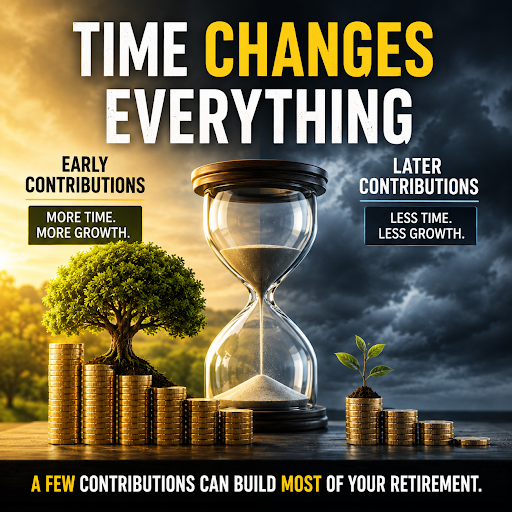
Only a Few 401(k) Contributions Build Most of Your Retirement
FAQs
What is compound growth?
Compound growth refers to the process of earning interest on both the initial principal and the accumulated interest from previous periods. This results in exponential growth over time.
How does compound growth work?
Compound growth works by reinvesting the interest earned on an investment or savings account, allowing the account balance to grow at an increasing rate over time.
What are the benefits of compound growth?
The main benefit of compound growth is that it allows for exponential growth of wealth over time, as the interest earned on the initial investment continues to compound.
What is the formula for compound growth?
The formula for compound growth is A = P(1 + r/n)^(nt), where A is the amount of money accumulated after n years, including interest, P is the principal amount, r is the annual interest rate, n is the number of times that interest is compounded per year, and t is the time the money is invested for.
How can I take advantage of compound growth?
To take advantage of compound growth, it is important to start investing or saving early, and to consistently reinvest any interest earned. Additionally, choosing investments with higher interest rates or compounding frequencies can further maximize the benefits of compound growth.