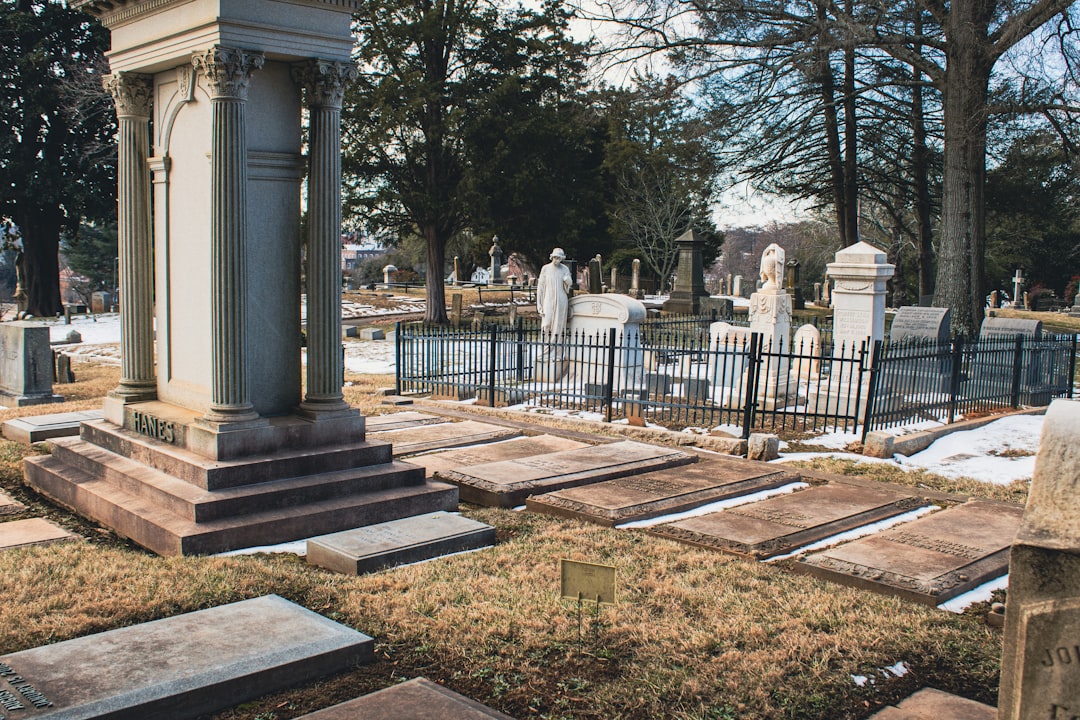
You’re considering a cemetery plot, a final resting place. Beyond the aesthetic of marble and manicured lawns, there’s a fundamental layer of financial responsibility that ensures this space remains dignified and cared for indefinitely. This is where the Cemetery Perpetual Care Fund Trust comes into play, and understanding its mathematics is crucial to grasping the value and sustainability of your investment. Think of it as a long-term insurance policy for the land that will eventually hold your legacy. It’s not just a donation; it’s a calculated commitment to perpetual maintenance, and its financial underpinnings are designed by a specific set of mathematical principles.
The Foundation of Perpetual Care: What is it and Why Does it Matter?
The concept of perpetual care in cemeteries is as old as organized burial grounds themselves. Historically, families would be responsible for the upkeep of their plots, often leading to neglect over time as descendants moved away or simply could not maintain the site. The Perpetual Care Fund Trust emerged as a solution to this enduring problem. It’s a legally defined trust established by a cemetery to collect funds that are then invested, with the generated income dedicated solely to the ongoing maintenance and preservation of the cemetery grounds. This includes everything from mowing the grass and pruning trees to repairing roads, maintaining fences, and ensuring the overall aesthetic integrity of the property. Without such a trust, a cemetery could easily devolve into disrepair, diminishing its solemnity and eroding its value as a final resting place.
The Legal Framework and its Influence
The legal structure of a perpetual care trust is paramount. Most jurisdictions have specific statutes governing how these funds must be established, managed, and disbursed. These laws often mandate that a certain percentage of the purchase price of cemetery property or services must be allocated to the trust. Furthermore, they dictate how the funds can be invested, typically requiring them to be placed in relatively safe, income-generating investments. Some regulations also stipulate that the principal of the trust cannot be invaded; only the earnings generated from the investments can be used. This ensures the fund’s longevity, acting as a continuous spring of resources rather than a finite well that eventually runs dry. Understanding these legal guardrails is the first step in appreciating the security these trusts are designed to provide.
The Role of the Trustee: Guardian of the Funds
Within this framework, a trustee plays a pivotal role. This could be an independent financial institution, a board of cemetery representatives, or a designated individual. The trustee is legally bound to manage the trust’s assets prudently, adhering to investment guidelines set by law and the cemetery’s own trust documents. Their primary objective is to generate consistent income while preserving the principal. This is where the “math” of perpetual care truly begins to manifest. The trustee’s decisions directly impact the fund’s ability to generate enough income to cover the ever-escalating costs of cemetery maintenance over decades, even centuries.
Understanding the intricacies of cemetery perpetual care fund trusts is essential for ensuring the long-term maintenance and sustainability of burial sites. For those interested in exploring the financial aspects and management strategies related to these funds, a related article can be found at How Wealth Grows. This resource provides valuable insights into the mathematics behind trust funds, helping cemetery administrators and families alike to grasp the importance of proper financial planning for perpetual care.
The Arithmetic of Growth: How the Trust Fund Accumulates
The Perpetual Care Fund Trust doesn’t simply sit idle; it’s designed to grow. This growth is driven by a combination of your initial contribution and the investment returns generated over time. The mathematical underpinning here is compound interest, a powerful force that, over extended periods, can significantly magnify the initial investment. Imagine a snowball rolling down a hill; it starts small but gathers more snow, becoming larger and faster with each rotation. The Perpetual Care Fund, through wise investments, aims to achieve a similar, albeit more controlled, form of growth.
Initial Contribution: The Seed Money
When you purchase a burial plot, interment right, or crypt, a portion of that cost is designated for the perpetual care fund. This is your initial contribution, the seed from which future care will grow. The percentage allocated varies by cemetery and location, but it’s a non-negotiable element to ensure the long-term viability of the cemetery. This initial sum is the bedrock upon which the entire perpetual care system is built.
Investment Strategies: Chasing Returns Prudently
The core of the trust’s growth lies in its investment strategy. The trustee will typically invest the corpus of the fund in a diversified portfolio of low-risk, income-producing assets. These might include government bonds, corporate bonds with strong credit ratings, dividend-paying stocks of stable companies, and real estate investment trusts (REITs). The goal is not to achieve speculative high returns that carry significant risk, but rather to generate a steady, predictable income stream. Think of it like tending a well-established orchard: you’re not looking for explosive growth with every sapling, but a consistent harvest of fruit year after year.
The Power of Compounding: Your Forever Dividend
Compound interest is the engine that drives the long-term sustainability of the perpetual care fund. When the trust earns interest or dividends, those earnings are reinvested back into the fund. This means that in the subsequent periods, you earn interest not only on your initial contribution but also on the accumulated interest. Over decades, this effect can be dramatic. A small initial contribution, compounded over 100 or 200 years, can grow into a substantial sum, capable of supporting the ongoing maintenance needs of the cemetery. This is the “forever dividend” that your initial contribution is designed to provide.
Decoding the Payout: How Income is Utilized
The annual income generated by the Perpetual Care Fund is the lifeblood of cemetery maintenance. This income is carefully managed and disbursed to cover the necessary operational costs. Understanding how this income is calculated and used provides insight into the tangible benefits of your perpetual care contribution. It’s the fruit of the orchard, harvested to keep the trees healthy and the harvest bountiful.
Calculating Annual Income: The Yield on Investment
The annual income is directly tied to the performance of the trust’s investments. If the fund generates a 4% annual return on a principal of $1,000,000, the annual income would be $40,000. This income is then available for specific authorized expenditures. The percentage yield can fluctuate based on market conditions, interest rates, and the overall performance of the investment portfolio. This is why prudent investment management is so critical.
Authorized Expenditures: The Costs of Perpetual Care
The income generated can only be used for specific, pre-defined purposes. These typically include:
- Groundskeeping: Mowing, trimming, planting flowers and shrubs, fertilizing.
- Maintenance and Repairs: Repairing pathways, fences, monuments (non-private), irrigation systems, and administrative buildings.
- Landscaping: Tree care, pest control, and general beautification of the cemetery grounds.
- Administrative Costs (Limited): A portion may be allocated for the administration and management of the trust itself, but this is usually strictly capped by regulations.
- Capital Improvements (Infrequent): In some cases, a small portion might be allowed for significant, essential capital improvements that directly enhance the long-term utility and preservation of the cemetery, but this is less common and usually requires specific authorization.
Inflationary Pressures: The Constant Battle
One of the biggest challenges the perpetual care fund faces is inflation. The cost of labor, materials, and equipment for cemetery maintenance will inevitably rise over time. A fund that generates a stable income today might struggle to keep pace with these rising costs in 50 or 100 years if its principal doesn’t grow sufficiently or if its investment strategy doesn’t account for inflation. This is a key reason why robust principal growth through compounding and judicious investment is essential. The math must account for the declining purchasing power of money over time.
The Math of Longevity: Ensuring Forever Care
The ultimate goal of the Perpetual Care Fund Trust is to provide care in perpetuity. This necessitates a mathematical approach that considers extremely long time horizons. It’s not about planning for tomorrow; it’s about planning for generations that haven’t even been born yet. This requires actuarial calculations and a deep understanding of how financial markets perform over extended periods.
Actuarial Projections: Forecasting Future Needs
Cemeteries often employ actuaries to project future maintenance costs and to ensure that the trust fund’s principal and projected earnings will be sufficient to meet those needs indefinitely. These projections consider factors like expected lifespan of infrastructure, replacement cycles for landscaping, and anticipated trends in labor and material costs. It’s akin to an engineer calculating the stress tolerances of a bridge for a century of heavy traffic.
The Longevity Factor: A Race Against Time
The mathematical challenge is to create a fund that grows fast enough to offset the depreciation of assets and the rising costs of services over an almost unfathomable period. This means that a cemetery’s perpetual care fund must be conservatively invested to preserve capital while still seeking modest, consistent growth. The real magic lies in the continuous cycle of reinvestment and compounding, ensuring that the fund’s capacity to generate income doesn’t diminish but rather ideally amplifies over time.
Breaking Even vs. Thriving: The Goal of Sustainabilty
The absolute minimum for perpetual care is to break even, meaning the income generated covers the maintenance costs. However, a well-managed fund aims to do more than just break even; it seeks to thrive. This allows for improvements, enhancements, and the ability to weather economic downturns without compromising care standards. The math of perpetual care is therefore not just about survival, but about ensuring a dignified and well-maintained final resting place for generations to come.
When considering the financial aspects of cemetery management, the importance of a perpetual care fund trust cannot be overstated. This fund ensures that cemeteries are maintained for future generations, providing a sustainable source of income for ongoing care. For those interested in understanding how these funds operate and grow over time, a related article offers valuable insights into the mathematics behind wealth accumulation in such trusts. You can explore more about this topic in the article found here.
What About My Contribution? Understanding Your Specific Trust
While the general principles of perpetual care fund math apply broadly, the specifics of your contribution and the resulting care are unique to the cemetery you choose. It’s essential to engage with the cemetery’s administration to understand precisely how their perpetual care system operates and what your individual contribution entails.
The Cemetery’s Disclosure: Transparency is Key
Reputable cemeteries will provide you with clear documentation outlining their perpetual care policies. This should detail the percentage of your payment allocated to the trust, the general nature of their investment strategy, and how the proceeds are utilized. Don’t hesitate to ask questions. Transparency is the cornerstone of trust, and understanding these financial details is part of ensuring your peace of mind.
The Trust Agreement: The Legal Blueprint
The trust agreement itself is the legal document that governs the perpetual care fund. While you may not receive a copy of the entire trust document, the cemetery should provide you with a summary or relevant sections that explain your rights and the fund’s purpose. This document is the blueprint for how your legacy of care will be managed.
Ongoing Oversight and Reporting: Keeping an Eye on the Orchard
Some cemeteries may provide annual reports on the performance of their perpetual care fund. While this might not be as detailed as a personal investment report, it can offer insights into the fund’s growth and how the income is being utilized. This ongoing oversight contributes to your confidence in the cemetery’s commitment to perpetual care.
The Long View: Why Perpetual Care Math Matters to You
Ultimately, understanding the math behind cemetery perpetual care funds is about appreciating the enduring value of your decision. It’s about recognizing that your investment is not a one-time expense but a contribution to a sustainable system designed to honor the past and maintain a place of peace for the future. It’s about securing the dignity of your final resting place, and the resting places of loved ones, for as long as the earth endures. By comprehending the financial architecture, you can make informed decisions and rest assured that the legacy you leave behind will be one of enduring care and respect. The mathematics, though seemingly complex, boils down to a simple, powerful promise: that the place of remembrance will remain, always.
FAQs
What is a cemetery perpetual care fund trust?
A cemetery perpetual care fund trust is a financial fund established to ensure the ongoing maintenance and care of a cemetery. The trust holds and manages funds, typically generated from the sale of burial plots, to provide a continuous source of income for upkeep and repairs.
How is the amount for a perpetual care fund calculated?
The amount for a perpetual care fund is calculated based on factors such as the size of the cemetery, expected maintenance costs, inflation rates, and the anticipated lifespan of the cemetery. Actuarial and financial models are often used to estimate the principal amount needed to generate sufficient income indefinitely.
Why is math important in managing a cemetery perpetual care fund?
Math is crucial in managing a cemetery perpetual care fund because it helps determine the appropriate principal amount to invest, estimate future maintenance costs, calculate expected returns on investments, and ensure the fund remains solvent over time to cover ongoing expenses.
What types of investments are typically used for perpetual care funds?
Perpetual care funds are usually invested in low-risk, income-generating assets such as government bonds, municipal bonds, or other fixed-income securities. The goal is to preserve the principal while generating steady income to fund cemetery maintenance.
Are there legal requirements for cemetery perpetual care fund trusts?
Yes, many jurisdictions have legal requirements governing cemetery perpetual care fund trusts. These laws often specify how funds must be managed, reporting requirements, minimum funding levels, and restrictions on how the funds can be used to ensure the cemetery is properly maintained in perpetuity.