
The rise and fall of Toys R Us is a complex narrative, deeply intertwined with the financial decisions and strategic shifts of its owners. Among the most pivotal and, for many, catastrophic, was the ownership period under Kohlberg Kravis Roberts & Co. (KKR). Their leveraged buyout in 2005 marked the beginning of a downward spiral that ultimately led to the iconic toy retailer’s demise. This article will delve into the profound impact of KKR’s ownership on Toys R Us, examining the financial engineering, operational challenges, and the human cost of their tenure.
The year 2005 witnessed a seismic shift in the landscape of retail with KKR’s acquisition of Toys R Us. This wasn’t a simple purchase; it was a leveraged buyout (LBO), a financial maneuver that relies heavily on borrowed money to acquire a company. The intent, as is often the case with LBOs, was to restructure, improve efficiency, and ultimately reap significant profits through subsequent sale or initial public offering. However, for Toys R Us, this strategy proved to be a double-edged sword, loading the company with substantial debt that would cast a long shadow over its future operations.
The Mechanics and Motivations Behind the LBO
KKR, a private equity firm with a reputation for executing large-scale LBOs, saw potential in Toys R Us. The company, despite its brand recognition and market presence, was perceived as undervalued and ripe for operational improvements. The motivation was straightforward: acquire the company at a relatively low price, inject capital for restructuring, trim costs, and then sell it at a higher valuation. This “buy, fix, and sell” model is a hallmark of private equity. The LBO structure itself allowed KKR to acquire Toys R Us with a relatively small equity investment, leveraging the company’s own assets and future earnings to secure the vast majority of the purchase price. This financial engineering, while lucrative for the acquirers, immediately placed a heavy burden of interest payments on Toys R Us.
The Immediate Financial Ramifications
The most immediate and impactful consequence of the LBO was the significant increase in Toys R Us’s debt load. The borrowed funds, used to finance the acquisition, had to be serviced through interest payments. This meant that a substantial portion of the company’s cash flow, which could have been reinvested in modernization, inventory, or marketing, was instead diverted to debt servicing. This created a constant financial pressure, limiting Toys R Us’s ability to adapt to the evolving retail environment, particularly the burgeoning threat of e-commerce. The sheer magnitude of the debt also made the company less agile and more vulnerable to economic downturns or competitive pressures.
Toys “R” Us, once a giant in the toy retail industry, faced significant challenges that led to its decline and eventual bankruptcy. An insightful article that delves into the financial strategies employed by KKR, the private equity firm that acquired Toys “R” Us, can be found at this link. The piece explores how KKR’s management decisions and the burden of debt influenced the fate of the beloved toy retailer, providing a comprehensive overview of the factors that contributed to its downfall.
The Debt Burden: A Sinking Ship of Interest Payments
The core of KKR’s impact on Toys R Us lies in the crippling debt they saddled the company with. This wasn’t a minor inconvenience; it was a fundamental constraint that dictated nearly every strategic decision, or rather, the lack thereof, in the years that followed. The interest payments alone became a monumental hurdle, diverting resources away from essential investments needed to compete in a rapidly changing market.
The Weight of Interest: How Debt Drained Resources
With billions of dollars in debt, Toys R Us found itself in a perpetual struggle to meet its financial obligations. The interest payments represented a fixed cost that absorbed a significant chunk of revenue. This left considerably less capital available for crucial investments in areas such as online infrastructure, store renovations, and innovative product development. Competitors like Amazon, unburdened by such debt, were able to pour resources into these areas, creating a widening gap in customer experience and accessibility. The debt effectively acted as a drag, slowing down any potential for innovation or adaptation.
The Impact on Operational Agility and Investment
The constant pressure to service debt meant that Toys R Us was often forced to make short-sighted decisions to generate quick cash. This could involve cutting corners on inventory, reducing marketing spend, or delaying essential store upgrades. The ability to make bold, long-term strategic investments was severely hampered. The company became less agile, less able to respond to emerging trends, and less equipped to invest in the digital transformation that was rapidly redefining retail. While competitors were building robust e-commerce platforms and sophisticated supply chains, Toys R Us was often constrained by its financial obligations.
Operational Stagnation: A Failure to Adapt and Innovate
While the financial strain imposed by KKR was significant, it also coincided with, and arguably exacerbated, a failure within Toys R Us itself to adapt to the changing retail landscape. The company, once a titan, found itself increasingly outmaneuvered by more nimble competitors, particularly in the digital realm. This operational stagnation, fueled by financial constraints, proved to be a fatal blow.
The Rise of E-commerce and the Digital Disruption
The early 2000s saw the undeniable ascent of e-commerce. Online retailers like Amazon offered convenience, wider selection, and often lower prices, directly challenging the brick-and-mortar model. Toys R Us, despite its brand recognition, was slow to embrace this shift. Its online presence was often clunky and lacked the seamless user experience that consumers were coming to expect. The debt burden likely contributed to the lack of investment in developing a truly competitive e-commerce platform, leaving them behind in a critical battleground.
Merchandising and Store Experience: Falling Behind the Curve
Beyond the digital sphere, the in-store experience at Toys R Us also began to feel dated. While competitors were investing in more engaging store designs, interactive displays, and personalized customer service, Toys R Us stores often lacked this vibrancy. The merchandising could feel overwhelming and disorganized, failing to capture the imagination of children and the attention of parents in the way it once did. The limited capital available for renovations and merchandising refreshes meant that stores often looked tired and uninspired, further eroding their competitive edge.
The Human Cost: Layoffs, Store Closures, and Lost Jobs
The financial engineering and operational struggles under KKR’s ownership had a profound and devastating human cost. For thousands of employees, from store associates to corporate staff, the consequences were job losses, uncertainty, and the closure of a beloved institution. This impact extended beyond the immediate workforce to the communities that relied on Toys R Us stores for employment and economic activity.
The Domino Effect of Store Closures
As the financial situation deteriorated and the company struggled to compete, store closures became an inevitable reality. Each closure represented not just a vacant retail space but also the loss of jobs for the employees who worked there. These weren’t just numbers; they were individuals and families whose livelihoods were directly impacted. The domino effect of these closures rippled through communities, affecting local economies and diminishing the presence of a once-iconic brand.
The Loss of a Retail Icon and Employee Devastation
The eventual bankruptcy and liquidation of Toys R Us in 2018 marked the end of an era. For many, it was the loss of a cherished childhood memory and a symbol of toy retail. For the employees, it was the devastating realization that their jobs were gone and their employer was no more. The liquidation process, while necessary to settle debts, often offered limited recourse for employees, adding to the sense of abandonment and hardship. The story of Toys R Us under KKR became a cautionary tale about the potential downsides of private equity ownership when not accompanied by genuine operational investment and a long-term vision.
Toys “R” Us, once a giant in the toy retail industry, faced significant challenges after being acquired by KKR and other investors, leading to its eventual bankruptcy in 2018. The impact of private equity on retail companies has been a topic of discussion, with many analyzing the long-term effects of such acquisitions. For a deeper understanding of how private equity firms like KKR influence the growth and decline of retail businesses, you can read this insightful article on wealth management and investment strategies. It provides a broader context on the financial mechanisms at play in the retail sector. To explore more, visit this article.
The Legacy of KKR’s Ownership: A Cautionary Tale
| Metric | Value | Notes |
|---|---|---|
| Acquisition Year | 2005 | Kohlberg Kravis Roberts & Co. (KKR) led the buyout |
| Acquisition Price | 6.6 billion | KKR, Bain Capital, and Vornado Realty Trust consortium |
| Bankruptcy Filing | 2017 | Filed for Chapter 11 bankruptcy protection |
| Number of Stores at Peak | Approximately 1,600 | Global presence including US, Canada, and other countries |
| KKR Ownership Duration | 2005 – 2018 | KKR exited after bankruptcy and asset sales |
| Revenue at Acquisition | Approx. 11 billion | Annual revenue around the time of buyout |
The period of KKR’s ownership of Toys R Us stands as a stark illustration of how financial engineering, when prioritized over operational health and long-term strategy, can lead to the downfall of even the most iconic brands. The leveraged buyout, intended to unlock value, ultimately shackled the company with debt, stifling its ability to adapt and innovate.
Lessons Learned for Private Equity and Retail
The Toys R Us saga offers critical lessons for both private equity firms and the retail industry. For private equity, it underscores the importance of not just financial restructuring but also a deep understanding of the operational realities of the businesses they acquire. A focus solely on debt reduction and short-term gains can be detrimental to long-term sustainability. For retailers, it serves as a reminder of the imperative to continuously adapt to evolving consumer behavior, embrace technological advancements, and invest in the customer experience. The ability to balance financial prudence with strategic investment is crucial for survival and growth in today’s competitive marketplace.
The Enduring Symbolism of a Lost Childhood Icon
The demise of Toys R Us, significantly influenced by KKR’s stewardship, has left an indelible mark on popular culture and the retail landscape. It represents the loss of a childhood icon for many, a place where generations of children experienced the wonder and excitement of toys. The story of its decline serves as a poignant reminder of the complex interplay between finance, business strategy, and the very tangible human impact of corporate decisions. While the brand has seen attempts at revival, the memory of its dominant presence and its ultimate struggle, heavily shaped by the KKR era, continues to resonate.
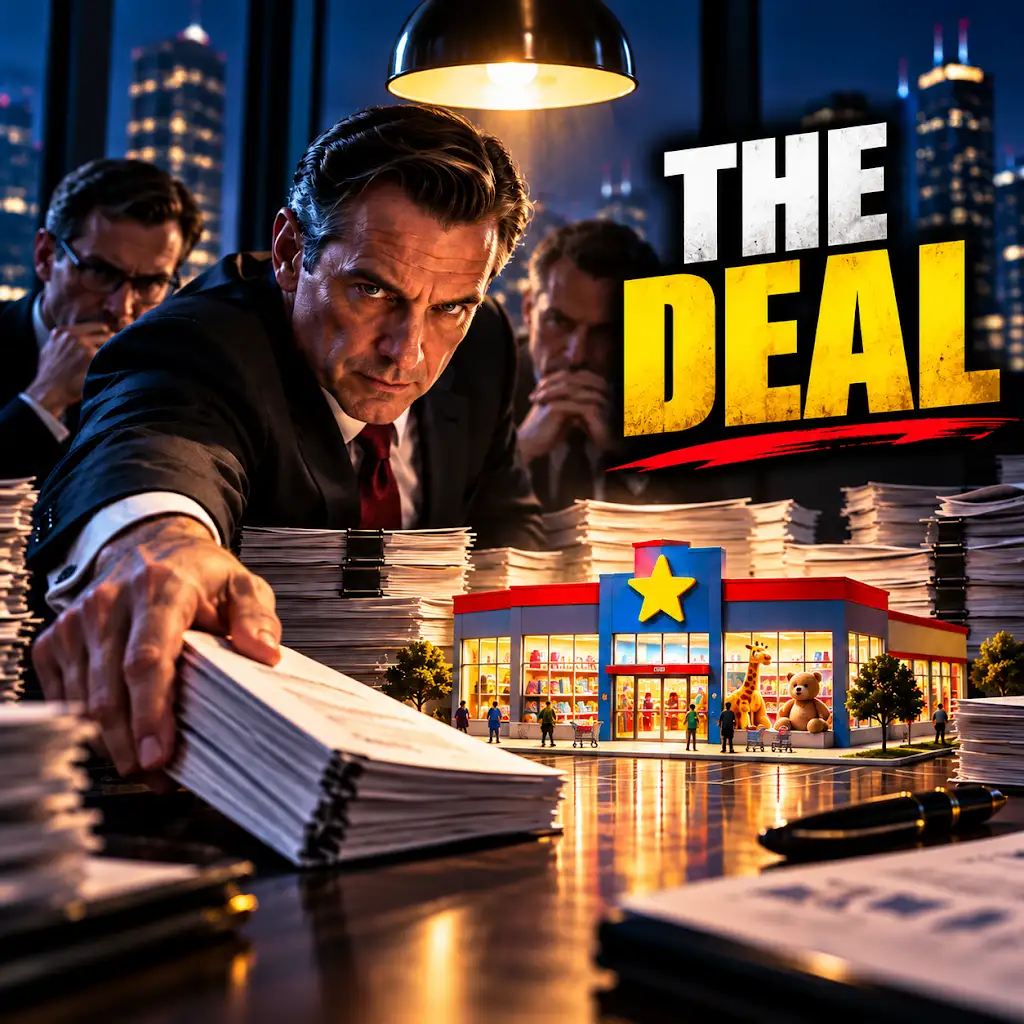
The $6.6 Billion Deal That Left Toys “R” Us Trapped
FAQs
What is KKR’s involvement with Toys R Us?
KKR, a global investment firm, acquired Toys R Us in a leveraged buyout in 2005. The acquisition was valued at approximately $6.6 billion.
What led to Toys R Us filing for bankruptcy?
Toys R Us filed for bankruptcy in 2017 due to a combination of factors, including increased competition from online retailers like Amazon, high levels of debt from the leveraged buyout, and changing consumer preferences.
Did KKR attempt to save Toys R Us from bankruptcy?
After Toys R Us filed for bankruptcy, KKR and other investors made efforts to restructure the company and keep it afloat. However, these efforts were ultimately unsuccessful, and Toys R Us announced the closure of all its US stores in 2018.
What impact did the Toys R Us bankruptcy have on the toy industry?
The bankruptcy of Toys R Us had a significant impact on the toy industry, leading to increased competition among remaining retailers, changes in toy distribution channels, and shifts in consumer shopping habits.
Is Toys R Us still in operation today?
Toys R Us has made a comeback in the United States under new ownership after emerging from bankruptcy in 2019. The company now operates a smaller number of stores and an e-commerce platform.