You’re standing at a crossroads, aren’t you? On one side, you see your hard-earned money sitting idly in your bank account, a quiet observer of inflation’s relentless march. On the other, a shimmering horizon of financial freedom, a future where your money works for you, not the other way around. The bridge connecting these two worlds? The incredible, often underestimated, power of investment compounding. It’s not magic, but it’s the closest thing you’ll find to a financial superpower. This article is your guide to understanding this potent force and harnessing it to build a wealthier future.
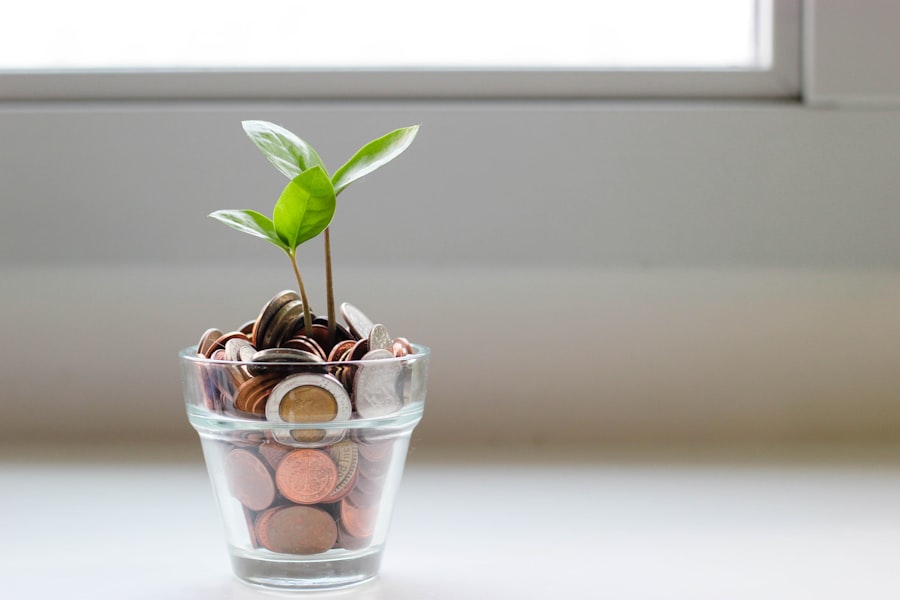
Before you can wield the power of compounding, you need to understand its fundamental mechanics. Think of it like planting a seed. You invest a sum of money, your initial principal, and that money, in turn, earns returns. These returns are like tiny sprouts. Now, here’s where the magic begins: those sprouts don’t just sit there; they start producing their own little sprouts. Compounding is the process of earning returns not only on your initial investment but also on the accumulated returns from previous periods. It’s a snowball effect, picking up speed and size as it rolls down a hill.
The Snowball Analogy: Visualizing Growth
Imagine you have a small snowball at the top of a snowy slope. You give it a gentle push. It rolls, picking up more snow. The bigger it gets, the more surface area it has, and the faster it accumulates more snow. Your initial investment is that small snowball. The returns it earns are the snow it picks up. As those returns themselves start earning returns, they are like the snowball getting bigger and gathering even more snow with each revolution. The longer you let that snowball roll, the more impressive its final size will be.
The Interest on Interest Phenomenon
At its core, compounding is about earning “interest on interest” or, more broadly, “returns on returns.” When you invest, say, $1,000 at a 10% annual return, in the first year, you earn $100. Your total is now $1,100. In the second year, you don’t just earn 10% on the original $1,000; you earn 10% on the entire $1,100. That’s $110 in returns, bringing your total to $1,210. It might seem like a small difference initially, but over time, this seemingly small difference amplifies dramatically.
The Role of Time and Rate of Return
Two crucial variables dictate the speed and magnitude of compounding: time and the rate of return. The longer your money is invested, the more cycles of compounding it can go through, leading to exponential growth. Similarly, a higher rate of return, while carrying its own risks, will accelerate the compounding process. You can’t always control the rate of return, as it depends on market performance and your investment choices, but you can control how long you allow your money to compound.
Understanding how investment compounding really works is crucial for anyone looking to grow their wealth over time. For a deeper dive into this topic, you can explore the article available at How Wealth Grows, which provides valuable insights into the mechanics of compounding interest and its long-term benefits. This resource can help you grasp the importance of starting your investment journey early and the impact of reinvesting returns to maximize your financial growth.
The Time Value of Money: Why Early Investment Matters
This is where your journey into compounding truly takes flight. The concept of the “time value of money” is inextricably linked to compounding. It posits that a dollar today is worth more than a dollar tomorrow. Why? Because a dollar today can be invested and grow, earning returns over time. The earlier you start investing, the more time your money has to benefit from the compounding effect, creating a significant advantage over those who delay.
The Power of Starting Early: A Tale of Two Investors
Let’s illustrate this with a classic example. Imagine two individuals, Alex and Ben. Alex, driven by the realization of compounding’s power, starts investing $5,000 per year at age 25, earning an average annual return of 8%. Ben, a bit more complacent, waits until age 35 to start investing the same $5,000 per year, also earning an 8% return.
- Alex: By age 65 (40 years of investing), Alex, having invested a total of $200,000, could have accumulated well over $1 million. The magic is in the compounding.
- Ben: By age 65 (30 years of investing), Ben, having invested a total of $150,000, might have accumulated significantly less, perhaps around $500,000-$600,000.
See the difference? Alex invested $50,000 more than Ben but ended up with potentially double the amount. This stark contrast highlights the immense advantage of starting early. The extra 10 years of compounding for Alex are invaluable.
The Cost of Delay: Missing Out on Growth
Delaying your investment journey is akin to leaving money on the table. Each year you wait, you are essentially giving up potential earnings that could have been generated by your money compounding. This lost potential growth can be substantial and difficult, if not impossible, to make up later on, even with larger contributions. The longer you wait, the steeper the hill you have to climb to reach your financial goals.
The Rule of 72: A Quick Estimator
To get a rough idea of how long it takes for your investment to double, you can use the Rule of 72. Simply divide 72 by your expected annual rate of return. For example, at an 8% return, your money would double in approximately 9 years (72 / 8 = 9). This rule is a powerful tool for quickly understanding the impact of different rates of return on your investment’s doubling time. A higher rate of return means your money doubles much faster.
The Mechanics of Investment Compounding: How it Works in Practice
Compounding isn’t just a theoretical concept; it’s a practical reality in various investment vehicles. Understanding how it manifests in different investment types will help you choose the right avenues for your money to grow.
Reinvesting Dividends and Interest
Many investments, such as stocks and bonds, can generate income in the form of dividends and interest payments. The power of compounding is unleashed when you choose to reinvest these payouts back into the same investment. Instead of taking the cash, you use it to buy more shares of stock or more bonds. This increases your principal, which then earns more dividends and interest in the future, perpetuating the compounding cycle.
Dividend Reinvestment Plans (DRIPs)
Dividend Reinvestment Plans (DRIPs) are a common way for investors to automatically reinvest dividends from stocks. This is a hands-off approach that can significantly boost your returns over the long term without requiring any extra effort on your part. You’re essentially buying more stock with your earnings, which then generates more earnings.
Bond Coupon Payments
Similarly, when you hold bonds, you receive periodic coupon payments (interest). If you reinvest these coupon payments to purchase more of the same bond or a similar one, you are effectively compounding your interest. This can be particularly effective with zero-coupon bonds where the entire return is realized at maturity, but for coupon-paying bonds, reinvesting those coupons is key.
Growth in Mutual Funds and ETFs
Mutual funds and Exchange-Traded Funds (ETFs) are popular investment vehicles that pool money from many investors to buy a diversified portfolio of stocks, bonds, or other securities. The returns generated by these underlying assets – be it capital appreciation, dividends, or interest – are then distributed to the fund’s shareholders. When you choose to reinvest these distributions, you are participating in the compounding growth of the fund.
Capital Gains Distributions
As the underlying assets within a mutual fund or ETF increase in value, they may be sold, realizing capital gains. These gains are often distributed to shareholders. Reinvesting these capital gains distributions means you’re buying more units or shares of the fund, allowing your investment to grow.
Compound Interest in Savings Accounts and CDs
While typically offering lower returns than stocks or bonds, even traditional savings accounts and Certificates of Deposit (CDs) allow you to benefit from compounding. The interest earned on your deposit is added to your principal, and subsequent interest calculations are based on this new, larger balance. The longer you leave your money in these accounts, the more it will grow through compounding, albeit at a slower pace.
Strategies to Maximize Compounding: Accelerating Your Growth
Understanding compounding is one thing; actively leveraging it to accelerate your financial growth is another. Here are some strategies you can employ to make compounding work harder for you.
Consistency is Key: Regular Contributions
As we saw with Alex and Ben, consistency is paramount. Regularly contributing to your investments, even small amounts, allows you to consistently add to your principal, providing more opportunities for compounding. Think of it as feeding the snowball regularly to keep it growing. This habit can be facilitated through automatic contributions from your paycheck or bank account.
Dollar-Cost Averaging (DCA)
Dollar-cost averaging is a strategy where you invest a fixed amount of money at regular intervals, regardless of market conditions. This means you buy more shares when prices are low and fewer shares when prices are high, averaging out your purchase cost over time. While not directly related to the mechanics of compounding, DCA ensures you are consistently investing, which feeds the compounding engine.
Diversification: Spreading Your Bets
While not directly impacting the calculation of compounding, diversification plays a crucial role in enabling long-term compounding by managing risk. By spreading your investments across different asset classes (stocks, bonds, real estate, etc.) and within those asset classes (different industries, geographies), you reduce the impact of any single investment’s poor performance on your overall portfolio. This stability allows your investments more time to grow and compound without the devastating setbacks that could occur with an overly concentrated portfolio.
Understanding Risk Tolerance
Your personal risk tolerance is a key factor in determining your diversification strategy. If you have a high-risk tolerance, you might allocate more to equities for potentially higher returns and faster compounding. If you are more risk-averse, a greater allocation to bonds can provide stability, allowing for steadier, albeit slower, compounding.
Long-Term Perspective: Riding Out Market Volatility
The stock market, and indeed most investment markets, can be volatile. There will be periods of decline. The true power of compounding is realized over long periods, often decades. It’s crucial to maintain a long-term perspective and resist the urge to panic and sell during downturns. By staying invested, you allow your portfolio to recover and continue compounding through the inevitable market cycles.
The Importance of Patience
Patience is a virtue in investing, especially when it comes to compounding. The exponential growth might not be visible in the early years. It’s during the later stages, as your principal grows, that the real acceleration of compounding becomes apparent. Don’t get discouraged by slow initial progress; trust the process.
Understanding how investment compounding really works can significantly impact your financial future. When you invest your money, the returns you earn can be reinvested, allowing your initial investment to grow exponentially over time. This concept is beautifully illustrated in a related article that delves deeper into the mechanics of compounding and its long-term benefits. You can read more about it in this insightful piece on how wealth grows, which provides practical examples and strategies to maximize your investment potential.
The Impact of Inflation and Taxes: Factors That Can Hinder Compounding
| Years | Initial Investment | Annual Interest Rate | Final Amount |
|---|---|---|---|
| 1 | 1000 | 5% | 1050 |
| 2 | 1050 | 5% | 1102.50 |
| 3 | 1102.50 | 5% | 1157.63 |
| 4 | 1157.63 | 5% | 1215.51 |
| 5 | 1215.51 | 5% | 1276.28 |
While compounding is a powerful force, it’s not immune to external factors. Inflation and taxes are two significant forces that can erode your purchasing power and hinder the effective growth of your investments.
Inflation: The Silent Wealth Killer
Inflation is the rate at which the general level of prices for goods and services is rising, and subsequently, purchasing power is falling. If your investment returns are lower than the rate of inflation, you are effectively losing money in real terms. For example, if your investments grow by 5% in a year, but inflation is 3%, your real return is only 2%. This means the purchasing power of your money hasn’t kept pace with the rising cost of living.
Real vs. Nominal Returns
It’s essential to distinguish between nominal returns (the stated return of your investment) and real returns (your nominal return minus the inflation rate). To truly benefit from compounding and increase your wealth, your investments need to outpace inflation.
Taxes: Your Share of the Gains
Taxes on investment gains can significantly impact your net returns. Depending on the type of investment and your tax jurisdiction, you may owe capital gains tax when you sell an asset for a profit, or income tax on dividends and interest. These taxes reduce the amount of money you can reinvest, thereby slowing down the compounding process.
Tax-Advantaged Accounts
Understanding and utilizing tax-advantaged accounts can be a powerful strategy to combat the effects of taxes on compounding.
Individual Retirement Accounts (IRAs) and 401(k)s
These retirement accounts offer tax benefits that allow your investments to grow more efficiently. Contributions to traditional IRAs and 401(k)s are often tax-deductible, and earnings grow tax-deferred until withdrawal in retirement. Roth IRAs and Roth 401(k)s offer tax-free growth and withdrawals in retirement, making them exceptionally powerful for long-term compounding.
Tax-Loss Harvesting
In taxable accounts, tax-loss harvesting is a strategy where you sell investments that have lost value to offset capital gains from investments that have appreciated. This can reduce your current tax liability, allowing you to keep more of your money invested and compounding.
Real-World Examples and Future Projections: Seeing Compounding in Action
To truly grasp the power of compounding, let’s look at some real-world scenarios and projections. These examples will solidify the abstract concepts into tangible outcomes.
The Long-Term Trajectory of a Moderate Investor
Consider an investor who starts with a modest $10,000 and contributes $200 per month to a diversified investment portfolio earning an average of 7% annually.
- After 10 years: You might have around $40,000 invested, with roughly $14,000 being growth from compounding.
- After 20 years: Your total investment could be around $86,000, with approximately $38,000 coming from compounding.
- After 30 years: This is where the magic truly happens. Your total investment might be around $170,000, with nearly $100,000 attributed to the power of compounding.
- After 40 years: Your total investment could reach a staggering $330,000, with an incredible $250,000 being the result of compounded growth.
This trajectory demonstrates how the growth in the later years far surpasses the growth in the earlier years, a hallmark of exponential compounding.
The Impact of Different Investment Goals
Your investment goals will also influence how you leverage compounding. Whether you’re saving for retirement, a down payment on a house, or your children’s education, the principles of compounding remain the same, but your timeline and risk tolerance might differ.
Retirement Planning: The Ultimate Compounding Goal
Retirement is perhaps the most significant application of compounding. The decades of consistent contributions and reinvested earnings in tax-advantaged accounts can create a substantial nest egg, providing financial security in your later years. The earlier you start and the more consistently you contribute, the less you’ll have to rely on working income in retirement.
Shorter-Term Goals: Balancing Risk and Return
For shorter-term goals, like saving for a down payment in five years, the focus might shift slightly. While compounding is still beneficial, the emphasis might be on preserving capital and achieving more stable, albeit potentially lower, returns. This could involve a more conservative allocation of assets. However, even a shorter period can benefit from compounding’s effect.
The Future You: Making Compounding Your Ally
Ultimately, the power of investment compounding is not just about numbers on a spreadsheet; it’s about shaping your future. It’s about having the financial freedom to pursue your passions, support your loved ones, and live life on your own terms. By understanding how your money grows through compounding and by implementing sound investment strategies, you are not just saving; you are actively building a more prosperous and secure tomorrow. Start today, and let the magic of compounding work for you. Your future self will thank you.

The First $100,000 Is Brutal. Then Everything Changes.
FAQs
What is investment compounding?
Investment compounding is the process of generating earnings on an asset’s reinvested earnings. In other words, compounding refers to generating earnings from previous earnings.
How does investment compounding work?
When you invest money, you earn a return on that investment. With compounding, those returns are reinvested, allowing you to earn returns on your returns, which can significantly increase your overall investment over time.
What are the benefits of investment compounding?
The main benefit of investment compounding is the potential for exponential growth of your investment over time. By reinvesting your earnings, you can take advantage of the power of compounding to grow your wealth.
What are some examples of investment compounding in action?
Examples of investment compounding include reinvesting dividends from stocks, allowing interest to compound in a savings account or CD, and reinvesting capital gains from mutual funds or ETFs.
What are some tips for maximizing the benefits of investment compounding?
To maximize the benefits of investment compounding, it’s important to start investing early, reinvest your earnings, and be patient. Additionally, regularly contributing to your investments can help accelerate the compounding process.