
You’ve heard it before: “Start investing early.” It’s a mantra whispered by financial gurus, printed in countless articles, and echoed by your more financially savvy friends. But what does that really mean? Why is this seemingly simple advice so crucial to your future financial well-being? It’s not just about having more money later; it’s about unlocking a powerful force that can transform your life. It’s about the silent, compounding magic of time, and the strategic advantage you gain by simply starting sooner.
You might be thinking, “I’m too young,” or “I don’t have enough money to make a difference.” These are common misconceptions that can hold you back. The truth is, the power of early investing lies in its ability to leverage time – your most abundant and valuable asset when you’re young. It’s about planting seeds now that will grow into a mighty forest later, providing shade and sustenance for your future self. This article will delve into precisely why beginning your investment journey early is not just beneficial, but fundamentally transformative for your financial destiny.
You’ve likely heard the term “compound interest” or “compounding” thrown around. It sounds almost mystical, doesn’t it? But it’s a very real and incredibly powerful financial engine. At its core, compounding is the process of earning returns not only on your initial investment but also on the accumulated earnings from previous periods. Think of it like a snowball rolling down a hill. It starts small, but as it gathers more snow, it grows larger and faster.
The Snowball Effect: How Your Money Grows Exponentially
Imagine you invest \$1,000 at an annual return of 7%. In the first year, you earn \$70 in interest. Your total investment is now \$1,070. The next year, you earn 7% on that \$1,070, which is \$74.90. Your total is now \$1,144.90. It might not seem like much initially, but let’s fast forward 30 years. That initial \$1,000, with consistent 7% annual returns and no further contributions (which we’ll discuss later), could grow to over \$7,600. That’s a nearly 660% return!
The Difference of a Few Years: Why Starting Sooner is Paramount
Now, let’s say your friend, who is the same age as you, decides to wait just five years to start investing. They invest the same \$1,000 at the same 7% annual return. In 25 years (instead of 30), their \$1,000 would grow to just over \$5,400. That’s a difference of over \$2,200, all because of a five-year head start. This illustrates the exponential nature of compounding. The longer your money has to grow, the more dramatic the effect becomes. Those early years are like the foundation of a skyscraper; they are absolutely critical for building something truly substantial.
The Power of Reinvesting: Fueling the Engine Further
The true power of compounding is unleashed when you reinvest your earnings. Instead of withdrawing the interest or dividends you receive, you put that money back into your investments. This means your principal balance grows even faster, and in turn, your future earnings become larger. This continuous cycle of earning and reinvesting is what transforms modest beginnings into significant wealth over time. You’re not just earning on your initial deposit; you’re earning on your earnings, and then earning on those earnings. It’s a virtuous cycle that can significantly accelerate your financial progress.
Early investing is crucial for building wealth over time, as it allows individuals to take advantage of compound interest and market growth. A related article that delves deeper into the importance of starting your investment journey early can be found at How Wealth Grows. This resource provides valuable insights and strategies for maximizing your financial future through timely investments.
Overcoming the Initial Hurdles: “I Don’t Have Enough to Start”
This is perhaps the most common excuse you’ll encounter – and perhaps one you’ve told yourself. The idea that you need a substantial lump sum to begin investing is a myth. The modern investment landscape is incredibly accessible, and even small, consistent contributions can pave the way for substantial future wealth. You don’t need to be a millionaire to become one; you just need to start.
The Rise of Micro-Investing: Small Contributions, Big Impact
Gone are the days when you needed thousands of dollars to open an investment account. Today, you have access to micro-investing apps that allow you to invest with as little as \$5. These platforms often round up your everyday purchases, investing the spare change into a diversified portfolio. Imagine buying a coffee for \$3.50. The app rounds it up to \$4.00, and \$0.50 is automatically invested. While it seems insignificant, over weeks and months, these small amounts add up.
Dollar-Cost Averaging: The Smart Way to Invest Consistently
Dollar-cost averaging (DCA) is a strategy where you invest a fixed amount of money at regular intervals, regardless of market conditions. For example, you might decide to invest \$100 every month. When the market is down, your fixed amount buys more shares. When the market is up, it buys fewer shares. Over time, this strategy can help smooth out market volatility and reduce the risk of investing a large sum right before a market downturn. It takes the emotion out of investing and instills a disciplined approach, which is crucial for long-term success.
Setting Realistic Goals: What “Enough” Really Means
Instead of focusing on a daunting lump sum, focus on what you can realistically set aside now. If that’s \$25 a week, or \$100 a month, that’s fantastic. The key is consistency. A small, regular investment will, over time, dwarf a large, infrequent one, especially when you factor in compounding. Think about your expenses. Are there subscriptions you can cancel, or small luxuries you can forgo? Redirecting even a small portion of your disposable income towards investments can have a profound impact on your future.
Building a Diversified Portfolio: Spreading Your Risk, Maximizing Your Returns
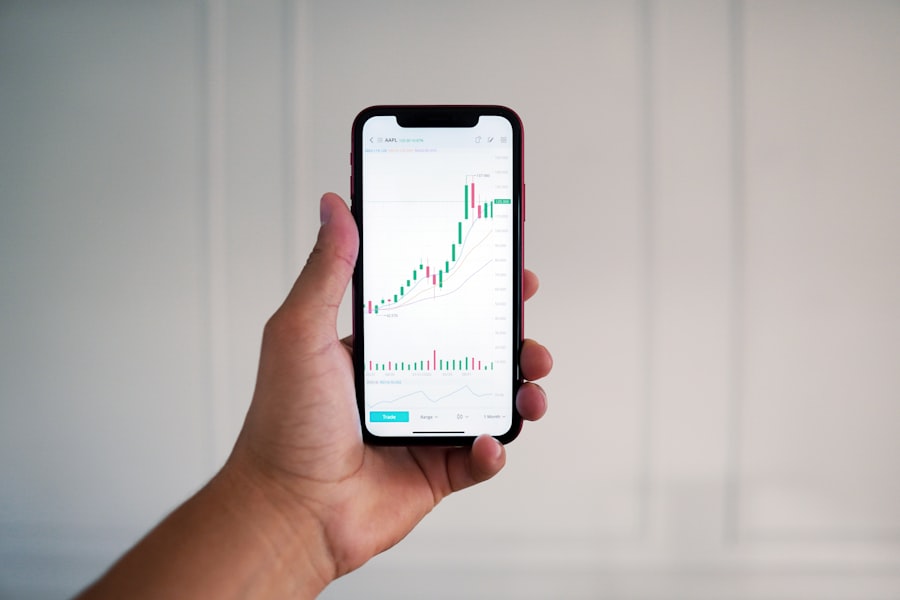
Once you start investing, the next crucial step is to ensure your investments are spread across different asset classes. This is the principle of diversification, and it’s your shield against the unpredictable nature of the market. Putting all your eggs in one basket is a recipe for disaster.
The Importance of Asset Allocation: Stocks, Bonds, and More
Diversification means investing in a mix of assets, such as stocks, bonds, real estate, and even commodities. Each asset class has different risk and return characteristics. Stocks, for example, generally offer higher potential returns but also come with higher volatility. Bonds are typically less volatile and provide a more stable income stream. By allocating your investments across these different categories, you can create a portfolio that aligns with your risk tolerance and financial goals.
Understanding Risk Tolerance: How Much Uncertainty Can You Handle?
Your risk tolerance is a measure of how comfortable you are with the possibility of losing money in exchange for potentially higher returns. When you’re young, you generally have a higher risk tolerance because you have more time to recover from any market downturns. This means you might lean more towards growth-oriented investments like stocks. As you get closer to retirement, you might shift towards more conservative investments like bonds to preserve your capital.
The Role of Index Funds and ETFs: Effortless Diversification
For many new investors, exchange-traded funds (ETFs) and index funds are the ideal way to achieve diversification. These are investment vehicles that hold a basket of securities, often tracking a specific market index like the S&P 500. By investing in a single ETF or index fund, you gain exposure to hundreds or even thousands of different companies, automatically diversifying your portfolio. This simplifies the investment process and is a cost-effective way to build a well-rounded investment strategy.
Investing for the Long Haul: Patience is a Virtue, Especially with Your Money

The most successful investors are not those who make a few lucky bets, but those who demonstrate patience and discipline over the long term. Investing is not a get-rich-quick scheme; it’s a marathon, not a sprint. Your early years are precisely when you have the luxury of time to be patient.
The Psychology of Investing: Avoiding Emotional Decisions
The stock market is inherently volatile. Prices go up and down, sometimes dramatically. It’s natural to feel anxious when your investments are declining. However, acting on fear by selling your investments during a downturn is often the worst possible decision you can make. Similarly, getting overly excited during a bull market and investing impulsively can lead to poor choices. Developing a disciplined approach, sticking to your investment plan, and avoiding emotional reactions are crucial for long-term success.
Staying the Course Through Market Volatility: The Test of Time
There will be times when the market experiences significant drops. These periods can be unsettling, but they are also opportunities. Historically, markets have always recovered and reached new highs. The investors who emerge the wealthiest are often those who remained invested through these downturns, allowing their portfolios to rebound and continue growing. Your younger self has the advantage of a longer time horizon to weather these storms.
Setting Financial Milestones: Tracking Your Progress
While patience is key, it doesn’t mean you shouldn’t track your progress. Setting clear financial milestones, such as reaching a certain net worth or having a specific amount saved for a down payment, can provide motivation and help you stay on track. Regularly reviewing your portfolio – perhaps annually – allows you to assess your performance, rebalance your assets if necessary, and make any adjustments to your strategy.
Early investing is crucial for building wealth over time, as it allows individuals to take advantage of compound interest and market growth. By starting to invest at a young age, individuals can significantly increase their financial security and achieve their long-term goals. For a deeper understanding of the benefits of early investing, you can explore this insightful article on the topic. It highlights various strategies and the importance of making informed decisions early on. To learn more, visit this article that discusses how wealth grows over time.
The Ultimate Reward: Financial Freedom and Future Security
| Reasons Why Early Investing Matters |
|---|
| Compound Interest |
| Long-term Growth Potential |
| Financial Security in Retirement |
| Ability to Take Advantage of Market Fluctuations |
| Opportunity to Build Wealth Over Time |
The power of early investing extends far beyond simply accumulating more money. It’s about unlocking the door to financial freedom, security, and the ability to live life on your own terms. By starting early, you’re giving yourself the gift of time and the opportunity to build a financial foundation that will support your dreams.
Achieving Financial Independence: The Power of Passive Income
As your investments grow, they can begin to generate passive income through dividends, interest, and capital gains. This passive income can eventually cover your living expenses, meaning you no longer have to actively work to earn money. This is the essence of financial independence, a state where your money works for you, providing you with the freedom to pursue your passions, travel the world, or simply enjoy your time without the constant pressure of earning a paycheck.
Planning for Life’s Major Events: Education, Retirement, and Beyond
Early investing provides the capital you’ll need for life’s significant events. Whether it’s funding your children’s education, purchasing a home, or enjoying a comfortable retirement, having a well-established investment portfolio makes these aspirations attainable. The earlier you start, the less pressure there will be to make massive contributions later in life to meet these important goals.
Leaving a Legacy: The Generosity of a Well-Planned Future
Beyond your own immediate needs, your early investment efforts can create a legacy for future generations. Whether you plan to leave behind an inheritance for your family or support causes you care about, a strong financial foundation built through early investing allows for acts of generosity and lasting impact.
In conclusion, the power of early investing is not an abstract concept; it’s a tangible force that can shape your financial future in profound ways. By understanding compounding, overcoming the initial hurdles of starting small, diversifying your portfolio, and exercising patience, you are setting yourself on a path towards financial freedom and security. The decision to start investing today, no matter how small, is one of the most impactful choices you can make for your future self. Don’t underestimate the magic of time and the snowball effect. Your future self will thank you for it.

Only a Few 401(k) Contributions Build Most of Your Retirement
FAQs
What is early investing?
Early investing refers to the practice of investing money at a young age, typically in one’s 20s or 30s, in order to take advantage of the power of compounding and potentially build significant wealth over time.
Why does early investing matter?
Early investing matters because it allows individuals to take advantage of the power of compounding. By investing early, individuals can potentially earn higher returns over time due to the longer time horizon for their investments to grow.
What are the benefits of early investing?
The benefits of early investing include the potential for higher returns due to compounding, the ability to build a larger investment portfolio over time, and the opportunity to achieve financial independence and security in the future.
What are some common early investment options?
Common early investment options include stocks, bonds, mutual funds, exchange-traded funds (ETFs), real estate, and retirement accounts such as 401(k)s and IRAs.
What are some tips for early investing success?
Some tips for early investing success include starting as soon as possible, diversifying investments, regularly contributing to investment accounts, and seeking professional financial advice when needed. Additionally, it’s important to stay informed about market trends and investment opportunities.