
You’ve got $100,000. That’s a significant sum, a powerful launchpad for your financial future. But what if I told you that with the magic of compound interest, this initial $100,000 could transform into something truly astonishing over time? You’re not just looking at a lump sum anymore; you’re staring at the potential for exponential growth, a snowball rolling down a hill, gathering more snow with every turn. This isn’t a get-rich-quick scheme; it’s a well-established financial principle that, when harnessed effectively, can reshape your financial destiny.
Let’s get down to the brass tacks of what makes compound interest so potent. At its core, compound interest is simply interest calculated on the initial principal, plus the accumulated interest from previous periods. It’s interest earning interest. Think of it like a plant. You plant a seed (your initial $100,000). That seed sprouts and grows, producing flowers (your initial interest). Then, those flowers produce more seeds, and the plant grows even larger, producing more flowers. The process repeats and amplifies.
The Simple Interest vs. Compound Interest Contrast
To truly appreciate the power of compounding, let’s draw a clear line between it and its simpler cousin, simple interest. Simple interest is calculated only on the original principal amount. If you invest $100,000 at a 5% simple interest rate, you earn $5,000 every year, consistently. After 10 years, you’d have $100,000 + ($5,000 x 10) = $150,000. It’s a decent return, but it lacks the explosive potential of compounding.
Compound interest, on the other hand, takes that $5,000 earned in the first year and adds it back to your principal. So, in year two, you’re earning 5% on $105,000, which is $5,250. This might seem like a small difference initially, but over extended periods, this seemingly minor difference compounds into a significant advantage. By the end of year 10, with compound interest, you’d have approximately $162,889. The gap widens with each passing year, demonstrating the accelerating nature of this growth.
The Magic of Reinvestment
The key to unlocking compound interest’s power is reinvestment. Whether it’s dividends from stocks, interest from bonds, or earnings from other investments, the decision to let these earnings accumulate and contribute to your principal is what fuels the compounding engine. If you withdraw your earnings, you’re essentially breaking the chain of compounding and limiting your growth potential. Your $100,000 isn’t just sitting there; it’s actively working for you, and its earnings are then put to work alongside it.
The Factors Influencing Compound Growth
While compound interest is inherently powerful, its ultimate impact is influenced by several critical factors. You can’t just set your money aside and expect miracles without considering these elements.
The Interest Rate: Your Growth Multiplier
The most direct driver of your compounded growth is the interest rate. A higher interest rate means your money grows faster. This is why seeking investments that offer competitive returns is crucial. However, it’s important to balance seeking higher returns with managing risk. A higher interest rate often comes with higher risk, and you need to be comfortable with that trade-off.
Understanding Different Investment Returns
Different asset classes offer varying potential returns. For instance, a savings account might offer a meager 1-2% annual return, while a diversified stock market index fund historically has averaged around 7-10% annually over the long term. Bonds typically fall somewhere in between. Your choice of investment vehicle directly dictates the rate at which your $100,000 will compound.
The Risk-Reward Spectrum
When you’re aiming for higher interest rates, you’re inevitably entering the realm of higher risk. A high-yield savings account is very safe but offers minimal growth. Investing in individual stocks or speculative ventures can offer high returns but carries the significant risk of losing your principal. Your personal risk tolerance should guide your investment decisions and, consequently, the potential compounding rate you can achieve.
The Time Horizon: The Unsung Hero
Time is arguably the most powerful, yet often overlooked, component of compound interest. The longer your money has to compound, the more dramatic the results. This is why starting early with your investments, even with smaller amounts, can be incredibly advantageous. Your initial $100,000 will have a much greater impact if left to grow for 30 years compared to 10 years.
The Power of Early Investment
The concept of “time in the market” is a well-worn cliché for a reason. If you start investing your $100,000 at age 30, with an average annual return of 8%, you’ll have significantly more by age 60 than if you started the same investment at age 50. The earlier you allow your money to benefit from compounding, the more dramatic the exponential growth will be.
The Impact of Compounding Periods
The frequency with which interest is compounded also plays a role. Interest compounded daily will grow slightly faster than interest compounded annually, though the difference becomes less pronounced with longer time horizons. Most investments offer at least annual compounding, but understanding this detail can offer a more nuanced view of growth.
The Initial Principal: Your Starting Fuel
While the initial $100,000 is a substantial amount, it’s important to recognize that a larger principal will naturally lead to larger absolute gains in dollar terms, assuming the same interest rate and time horizon. However, the percentage growth is what matters for compounding. Even a smaller initial investment can grow significantly over time with consistent compounding.
Illustrative Examples: Seeing the Growth in Action
Let’s put some numbers to it. Imagine you invest your $100,000 at an average annual rate of 7%.
Scenario 1: The 10-Year Journey
After 10 years, with your $100,000 compounding at 7% annually, you’ll have approximately $196,715. You’ve nearly doubled your money, and a significant portion of that growth is from the interest earned on your initial interest.
Scenario 2: The 20-Year Marathon
Fast forward to 20 years. Your $100,000, still growing at 7% annually, will have blossomed into an impressive $386,968. The growth in the second decade is substantially larger than in the first, a clear illustration of compounding’s accelerating power.
Scenario 3: The 30-Year Masterpiece
Now, let’s look at the long haul – 30 years. Your initial $100,000, with its relentless compounding at 7%, will have transformed into a staggering $761,226. This is over seven times your initial investment, a testament to the sheer force of time and consistent growth.
Understanding how compound interest works can significantly impact your financial decisions, especially when dealing with larger sums like $100,000. The power of compounding can turn this initial investment into a substantial amount over time, depending on the interest rate and the duration of the investment. For a deeper dive into this topic, you can read a related article that explains the intricacies of compound interest and its long-term benefits at How Wealth Grows.
Where Can Your $100k Work Harder? Investment Vehicles for Compounding
Knowing that compound interest is your ally is one thing; knowing where to deploy your $100,000 to benefit from it is another. The investment landscape offers a spectrum of options, each with its own risk-reward profile and potential for compounding. Your choice should align with your financial goals, risk tolerance, and time horizon.
Diversified Stock Market Investments
The stock market, while inherently volatile in the short term, has historically been a powerful engine for long-term wealth creation through compound growth. When you invest in stocks, you have the potential for both capital appreciation (the stock price going up) and dividend reinvestment, which fuels compounding.
Index Funds and ETFs: Broad Market Exposure
Index funds and Exchange Traded Funds (ETFs) offer a simple and effective way to gain diversified exposure to the stock market. By investing in an S&P 500 index fund, for example, you’re essentially buying a small piece of the 500 largest U.S. companies. This diversification significantly reduces your risk compared to picking individual stocks. The dividends paid by these companies can be reinvested, allowing your investment to compound.
The Power of Reinvested Dividends
When you hold stocks or ETFs that pay dividends, you have the option to automatically reinvest those dividends. This means the dividends are used to purchase more shares of the same stock or ETF. Over time, this increases your ownership stake and accelerates your compounding growth. You’re not just earning interest on your principal; you’re earning interest on your interest, and then more interest on that.
Individual Stocks: Higher Risk, Higher Potential Reward
Investing in individual stocks can offer the potential for higher returns, but it also comes with significantly higher risk. If you choose to invest in individual companies, thorough research and a deep understanding of the company’s fundamentals are crucial. Again, reinvesting dividends from these stocks is a key strategy for maximizing compound growth.
Bonds: A More Conservative Approach to Compounding
Bonds represent loans you make to governments or corporations. They typically offer more predictable income streams than stocks, making them a more conservative investment option. The interest payments from bonds can be reinvested to achieve compound growth.
Government Bonds: Safety and Stability
Government bonds, particularly those issued by stable governments, are generally considered very safe investments. While their returns may be lower than stocks, they offer a reliable way to earn interest that can be compounded over time.
Corporate Bonds: Seeking Higher Yields
Corporate bonds typically offer higher interest rates than government bonds to compensate investors for the increased risk of lending to a company. The compounding of these higher interest payments can lead to substantial growth over the long term, but you need to assess the creditworthiness of the issuing corporation.
Real Estate: Tangible Assets and Rental Income
Real estate can be another avenue for compound growth, albeit with a different mechanism. Your $100,000 could be used as a down payment on an investment property. The rental income generated by the property can be reinvested to pay down the mortgage faster, increasing your equity and, effectively, compounding your return.
Leveraging Rental Income for Growth
When you receive rental income, you can choose to use it to make additional principal payments on your mortgage. This reduces the outstanding loan balance, which in turn reduces the interest you pay over the life of the loan. The saved interest is money that stays in your pocket and can be considered a form of compounded return on your initial investment.
Property Appreciation: A Long-Term Compounding Effect
Beyond rental income, real estate typically appreciates in value over time. This appreciation is a form of capital gain that, when you eventually sell the property, contributes to your overall return. While not direct compounding interest, it’s a form of wealth accumulation that can be reinvested to generate further compound growth.
High-Yield Savings Accounts and Certificates of Deposit (CDs)
For those who prioritize safety above all else, high-yield savings accounts and Certificates of Deposit (CDs) offer a secure way to earn interest. While the interest rates are generally lower than other investment options, the principal is typically insured by the FDIC, protecting your $100,000. The interest earned can still compound, albeit at a slower pace.
The Trade-off: Safety vs. Growth Potential
The primary advantage of these accounts is their safety. Your $100,000 is protected. However, the downside is the lower growth potential. If your primary goal is aggressive wealth accumulation, these options might not be the most efficient for maximizing compound interest. They are best suited for short-term savings goals or as part of a broader, more diversified portfolio.
The Power of Time: Why Starting Early is Crucial

We’ve touched upon it, but the significance of time in compound interest cannot be overstated. Your $100,000 is a seed, and time is the fertile soil that allows it to grow into a mighty tree. The earlier you plant that seed, the more substantial the tree will become.
The Exponential Curve of Growth
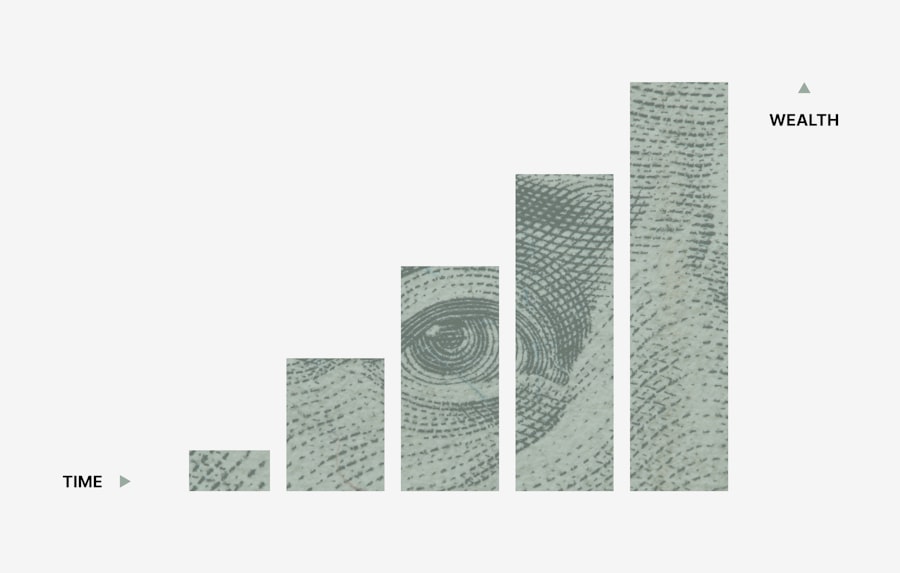
The growth of an investment subject to compound interest isn’t linear; it’s exponential. This means the growth rate itself increases over time. In the early years, the absolute dollar amount of interest earned might seem small. However, as your principal and accumulated interest grow, the interest earned in each subsequent period becomes significantly larger.
Visualizing the Acceleration
Imagine plotting the growth of your $100,000 on a graph. In the beginning, the curve will be relatively flat, representing slow, steady growth. As time progresses, the curve will begin to steepen dramatically, showcasing the accelerating power of compounding. This visual representation underscores why patience and a long-term perspective are essential.
The Cost of Delaying Your Investments
Conversely, delaying your investment decisions, even by a few years, can have a profound negative impact on your long-term wealth. The growth you miss out on in those initial years is often irreplaceable. You’re not just losing potential gains; you’re losing the compounding effect on those potential gains.
The Lost Opportunity Cost
Every year you delay investing your $100,000, you’re forfeiting the opportunity for it to earn returns and, more importantly, for those returns to generate their own returns. This “lost opportunity cost” can amount to tens or even hundreds of thousands of dollars over your lifetime, depending on the investment returns you could have achieved.
Strategies to Maximize Your Compound Growth
Simply understanding compound interest isn’t enough. You need to actively implement strategies that maximize its power. This involves a combination of smart investing, consistent saving, and disciplined financial habits.
Consistent Contributions: Adding Fuel to the Fire
While your initial $100,000 is a fantastic start, consistently adding to your investments can dramatically accelerate your compound growth. Even small, regular contributions can make a significant difference over time when combined with compounding.
The Dollar-Cost Averaging Advantage
Dollar-cost averaging involves investing a fixed amount of money at regular intervals, regardless of market conditions. This strategy helps to smooth out the impact of market volatility. When the market is down, your fixed investment buys more shares. When the market is up, it buys fewer. Over time, this can lead to a lower average cost per share and enhance your compounding returns.
Automating Your Savings and Investments
The easiest way to ensure consistent contributions is to automate them. Set up automatic transfers from your checking account to your investment accounts on a regular basis. This takes the discipline out of the equation and ensures your money is always working for you.
Minimizing Fees and Taxes: Keeping More of Your Growth
Fees and taxes are silent killers of compound growth. Even seemingly small percentages can erode your returns over time. Being mindful of these costs is crucial for maximizing the amount of your earnings that are reinvested.
Understanding Investment Fees
Investment accounts often come with various fees, such as management fees (expense ratios for funds), trading fees, and advisory fees. These fees directly reduce your investment returns. Opting for low-cost index funds and ETFs is a common strategy to minimize these expenses.
Tax-Efficient Investing Strategies
Taxes can also significantly impact your net returns. Understanding tax-advantaged accounts, such as IRAs and 401(k)s, can allow your investments to grow tax-deferred or even tax-free, depending on the account type. This allows more of your earnings to be reinvested and compound.
Rebalancing Your Portfolio: Staying on Track
As your investments grow, their allocation within your portfolio will naturally shift. Rebalancing involves periodically adjusting your portfolio to bring it back to your target asset allocation. This helps you maintain your desired risk level and ensures you aren’t over-concentrated in any one asset class.
The Discipline of Rebalancing
Rebalancing requires discipline. It often involves selling some assets that have performed well and buying more of those that have lagged. This can feel counterintuitive, but it’s a crucial step in maintaining a balanced and effective investment strategy that supports long-term compound growth.
Understanding how compound interest works after reaching $100k can significantly impact your financial planning. As your investment grows, the interest earned begins to generate its own interest, leading to exponential growth over time. For a deeper dive into this concept and to explore strategies for maximizing your wealth, you can read more in this insightful article on how wealth grows. This resource provides valuable information that can help you make informed decisions about your investments and savings.
The Long Game: Achieving Financial Freedom Through Compounding
| Year | Starting Balance | Interest Rate | Ending Balance |
|---|---|---|---|
| 1 | 100000 | 5% | 105000 |
| 2 | 105000 | 5% | 110250 |
| 3 | 110250 | 5% | 115762.50 |
| 4 | 115762.50 | 5% | 121550.63 |
| 5 | 121550.63 | 5% | 127628.16 |
Your initial $100,000, when coupled with the power of compound interest and a disciplined approach, is not just about accumulating wealth; it’s about building a foundation for financial freedom. It’s about creating a future where your money works tirelessly for you, generating passive income and enabling you to achieve your life goals.
Your $100k as a Springboard to Larger Financial Goals
Think of this $100,000 as the essential first step. As it grows through compounding, it becomes a more substantial asset that can be used to achieve even bigger financial milestones. Perhaps it’s a down payment on a home, funding your children’s education, or even providing the capital for your own business. The initial investment, amplified by compounding, opens up a world of possibilities.
The Psychology of Long-Term Investing
The journey of long-term investing can be challenging. There will be market downturns and periods of uncertainty. However, understanding and believing in the power of compound interest can provide the psychological fortitude to stay the course. It’s about focusing on the long-term growth trajectory rather than being swayed by short-term market noise.
Cultivating Patience and Discipline
Patience and discipline are the cornerstones of successful long-term investing. Compound interest rewards those who are willing to wait and stick to their plan. Resist the temptation to chase quick gains or make emotional investment decisions. Your $100,000 has the potential to grow exponentially, but only if you allow it the time and space to do so.
Defining Your Financial Freedom
What does financial freedom mean to you? Is it early retirement? The ability to pursue your passions without financial constraints? The security of knowing you can handle any unexpected expense? Your $100,000, through the consistent application of compound interest principles, can be the engine that drives you towards achieving that vision of financial freedom. It’s not just about the money; it’s about the life you can build with it. The power is in your hands, and compound interest is your most potent tool.

The First $100,000 Is Brutal. Then Everything Changes.
FAQs
1. What is compound interest?
Compound interest is the interest calculated on the initial principal and also on the accumulated interest of previous periods. This means that interest is earned on both the initial amount of money and on the interest that has been added to the principal.
2. How does compound interest work after $100k?
After reaching $100,000, compound interest continues to grow the principal amount at an accelerated rate. This means that the interest earned on the initial $100,000 will continue to compound, resulting in significant growth over time.
3. What are the benefits of compound interest after $100k?
The benefits of compound interest after reaching $100,000 include the potential for substantial growth of the principal amount over time. This can lead to significant wealth accumulation and financial security for the investor.
4. Are there any risks associated with compound interest after $100k?
While compound interest can lead to substantial growth, there are also risks associated with investing large sums of money. These risks include market fluctuations, inflation, and potential loss of principal if the investment does not perform as expected.
5. How can I take advantage of compound interest after $100k?
To take advantage of compound interest after reaching $100,000, individuals can consider investing in vehicles such as stocks, bonds, mutual funds, or retirement accounts. It’s important to consult with a financial advisor to determine the best investment strategy based on individual financial goals and risk tolerance.