
The once-ubiquitous aisles, bursting with colorful displays of plastic joy and plush companions, are now a stark reminder of a bygone era. Toys R Us, a name synonymous with childhood wonder for generations, met a tragic end, its once-mighty empire crumbling into bankruptcy. This is the story of how an icon of American retail, a place that sparked imaginations and fostered countless memories, ultimately succumbed to a complex interplay of economic forces, shifting consumer habits, and ultimately, a crushing debt burden.
For decades, Toys R Us was more than just a store; it was an experience. Stepping through its doors was an invitation into a world where anything seemed possible. The sheer scale of the inventory was breathtaking. Towers of action figures, sprawling dollhouses, and towering cardboard boxes filled with building blocks created a labyrinth of temptation, each aisle a treasure trove waiting to be explored.
The Rise of a Retail Giant
Founded in 1948 by Charles Lazarus, Toys R Us began as a baby furniture store. However, Lazarus soon recognized a burgeoning market for toys. By the 1950s, the focus shifted, and the “R” in Toys R Us, famously backward, became a playful emblem of its unique identity. The company’s early success was fueled by its innovative approach to retail. They understood the appeal of a dedicated toy store, a concept that was relatively novel at the time. Instead of finding toys scattered across various departments in general merchandise stores, parents and children could now flock to a single destination, a veritable wonderland of playthings.
The Geoffrey Effect: A Beloved Mascot
Central to Toys R Us’s brand identity was Geoffrey, the giraffe mascot. Introduced in 1960, Geoffrey became an enduring symbol of the brand, his friendly face gracing advertisements, in-store signage, and even plush toys. He embodied the joy and excitement associated with the store, making him an instantly recognizable and beloved figure for children and parents alike. Geoffrey’s presence created an emotional connection, transforming a shopping trip into a familiar and comforting ritual. Children would eagerly anticipate their visits, their excitement amplified by the anticipation of seeing Geoffrey’s image or even encountering him in plush form.
Dominating the Landscape: A Monopoly on Fun
By the 1980s and 1990s, Toys R Us had achieved a near-monopolistic grip on the toy retail market. They operated hundreds of large-format stores across the United States and expanded internationally, becoming a global phenomenon. Their “category killer” strategy meant that they offered a wider selection and often lower prices than traditional department stores or smaller independent toy shops. This dominance meant that for many families, a trip to Toys R Us was the default and often only option for purchasing toys. The sheer convenience and the unparalleled selection solidified their position as the undisputed king of toy retail.
The decline of Toys “R” Us serves as a cautionary tale for retailers in today’s rapidly evolving market. Factors such as increased competition from online retailers, changing consumer preferences, and significant debt contributed to the company’s downfall. For a deeper understanding of the financial dynamics that can lead to such outcomes, you can read a related article on wealth management and business strategies at How Wealth Grows. This article explores the importance of adapting to market trends and the financial pitfalls that can ensnare even the most iconic brands.
Cracks Begin to Show: The Seeds of Decline
While the golden age shone brightly, the seeds of Toys R Us’s eventual downfall were quietly being sown. A confluence of factors, both internal and external, began to erode its market share and financial stability. These early warning signs, often overlooked in the midst of continued success, would prove to be critical in the company’s eventual demise.
The Rise of the Big Box Retailers
The emergence of big box retailers like Walmart and Target posed a significant threat. These behemoths offered a wide range of products, including toys, at aggressively low prices. Their economies of scale allowed them to negotiate even better deals with manufacturers than Toys R Us, putting immense price pressure on the toy giant. While Toys R Us focused solely on toys, these competitors could absorb lower margins on toy sales by capitalizing on profits from other merchandise categories. This allowed them to offer “loss leader” toys, drawing customers in for other purchases.
The Internet Revolution: A Paradigm Shift
The advent of the internet and the rise of e-commerce presented an existential challenge that Toys R Us was slow to adequately address. Online retailers, most notably Amazon, began to offer an equally vast, if not wider, selection of toys, often at competitive prices, and with the added convenience of home delivery. Consumers increasingly gravitated towards the ease of online shopping, bypassing the need to physically visit a store. Toys R Us’s online presence, initially an afterthought, struggled to compete with the sophisticated platforms and logistical networks of pure-play e-commerce giants.
Shifting Consumer Habits: The Experience Economy
Beyond just price and convenience, consumer preferences began to evolve. The “experience economy” emerged, with shoppers seeking more than just transactional purchases. They desired engaging environments, personalized service, and a sense of community. Toys R Us, with its vast, often impersonal, big-box format, struggled to adapt to this shift. Smaller, curated toy stores and pop-up shops began to offer more specialized and interactive shopping experiences that resonated with a growing segment of consumers.
The Debt Burden: A Financial Albatross
Perhaps the most significant factor in Toys R Us’s bankruptcy was the overwhelming debt it accrued, largely as a result of a leveraged buyout. This financial strain crippled the company’s ability to invest in its future and adapt to the changing retail landscape.
The Leveraged Buyout of 2005
In 2005, Toys R Us was acquired by a consortium of private equity firms – KKR, Bain Capital, and Vornado Realty Trust – in a leveraged buyout (LBO) valued at approximately $6.6 billion. An LBO involves using a significant amount of borrowed money to finance the acquisition. While this can be a profitable strategy for investors, it places a massive debt burden on the acquired company. Toys R Us, already facing increasing competition, was now saddled with billions in debt, requiring substantial annual interest payments.
The Strain of Interest Payments
The annual interest payments on the debt incurred from the LBO were astronomical. These payments consumed a huge portion of Toys R Us’s operating revenue, leaving little capital for crucial investments. Money that could have been used to upgrade store technology, improve the online shopping experience, invest in marketing, or develop innovative in-store attractions was instead diverted to service the debt. This financial straitjacket severely hampered the company’s ability to innovate and compete effectively.
Limited Investment in Modernization
With its finances severely constrained, Toys R Us struggled to invest in modernizing its infrastructure and its shopping experience. Store renovations were often put on hold, and the digital infrastructure lagged behind competitors. The company found itself in a vicious cycle: declining sales meant less revenue to invest, and lack of investment led to further declines in sales. The once-gleaming stores began to look dated, and the online platform failed to keep pace with the user-friendly interfaces of its digital rivals.
The Inability to Adapt: A Failure to Evolve
Despite the mounting challenges, Toys R Us consistently struggled to adapt its business model to the evolving retail environment. Its core strengths – its vast selection and brand recognition – were no longer enough to overcome its fundamental weaknesses.
The “Showrooming” Problem
Toys R Us suffered significantly from the phenomenon known as “showrooming.” Customers would visit its stores to see and interact with toys, only to then purchase them online from competitors, often at a lower price. While this was a consequence of the broader retail shift, Toys R Us, with its high overhead costs associated with maintaining large physical stores, was particularly vulnerable to this trend. The company was essentially providing free product demonstrations for its online competitors.
Slow Response to Online Competition
As mentioned earlier, Toys R Us’s response to the rise of e-commerce was, at best, sluggish. Its online platform was often clunky and difficult to navigate, lacking the seamless user experience offered by Amazon. The company also struggled to integrate its online and in-store operations, missing opportunities for click-and-collect services and efficient inventory management across channels. This digital deficiency allowed competitors to gain a significant foothold in a rapidly growing market.
The Decline of the Physical Store Experience
In an era where consumers increasingly sought engaging and experiential retail, Toys R Us’s large, warehouse-like stores began to feel outdated. While they offered an unparalleled selection, they often lacked the personal touch, interactive elements, or specialized expertise that modern shoppers were beginning to crave. The magic of simply browsing aisles of toys, while once potent, lost its allure as more captivating retail concepts emerged.
The decline of Toys “R” Us serves as a cautionary tale for retailers in the evolving landscape of consumer preferences and online shopping. Factors such as mounting debt, increased competition from e-commerce giants, and a failure to adapt to changing market dynamics ultimately led to its downfall. For a deeper understanding of the financial challenges faced by traditional retailers, you can explore a related article that discusses the broader implications of such business failures. This insightful piece can be found here.
The Final Blow: Bankruptcy and Closure
| Metric | Value | Description |
|---|---|---|
| Year Founded | 1948 | The year Toys “R” Us was established. |
| Year Filed for Bankruptcy | 2017 | The year Toys “R” Us filed for Chapter 11 bankruptcy protection. |
| Year Closed US Stores | 2018 | The year Toys “R” Us announced closure of all US stores. |
| Debt at Bankruptcy | Over 5 billion | Amount of debt Toys “R” Us had when filing for bankruptcy. |
| Number of US Stores Closed | Approximately 800 | Number of Toys “R” Us stores closed in the US after bankruptcy. |
| Market Competition | High | Competition from online retailers like Amazon and big-box stores. |
| Online Sales Percentage | Less than 10% | Percentage of total sales coming from online channels before bankruptcy. |
| Revenue Decline | Declined for 5 consecutive years | Period of declining revenue leading up to bankruptcy. |
| Private Equity Buyout Year | 2005 | Year Toys “R” Us was acquired by private equity firms, increasing debt load. |
Facing insurmountable debt and a continually shrinking market share, Toys R Us eventually succumbed to bankruptcy. The closure of its stores marked the end of an era, leaving a void in the retail landscape and a sense of nostalgia for those who grew up with the iconic brand.
Chapter 11 Bankruptcy Filing
In September 2017, Toys R Us filed for Chapter 11 bankruptcy protection in the United States, a move that allowed the company to reorganize its debts while continuing to operate. However, the restructuring efforts proved insufficient to overcome the deep-seated issues plaguing the company. The financial burdens remained too heavy, and the competitive pressures too intense.
The Closure of U.S. Stores
In March 2018, the devastating news came: Toys R Us announced it would close all of its 735 U.S. stores. This decision led to the loss of thousands of jobs and marked the end of an era for many communities. The liquidation sales, often held with heavy hearts, saw the iconic stores emptied of their merchandise, leaving behind empty shelves and a palpable sense of loss.
The Global Impact and Legacy
The bankruptcy of Toys R Us was not confined to the United States. The company’s international operations also faced significant challenges, leading to closures in various countries. The downfall of such a globally recognized brand sent ripples through the retail industry, serving as a stark warning about the need for continuous adaptation and financial prudence in the face of evolving consumer behavior and technological advancements. The legacy of Toys R Us, however, endures in the cherished memories of generations who experienced the joy and wonder it brought to their childhoods. While the physical stores are gone, the magic of play and imagination that Toys R Us represented continues to live on.
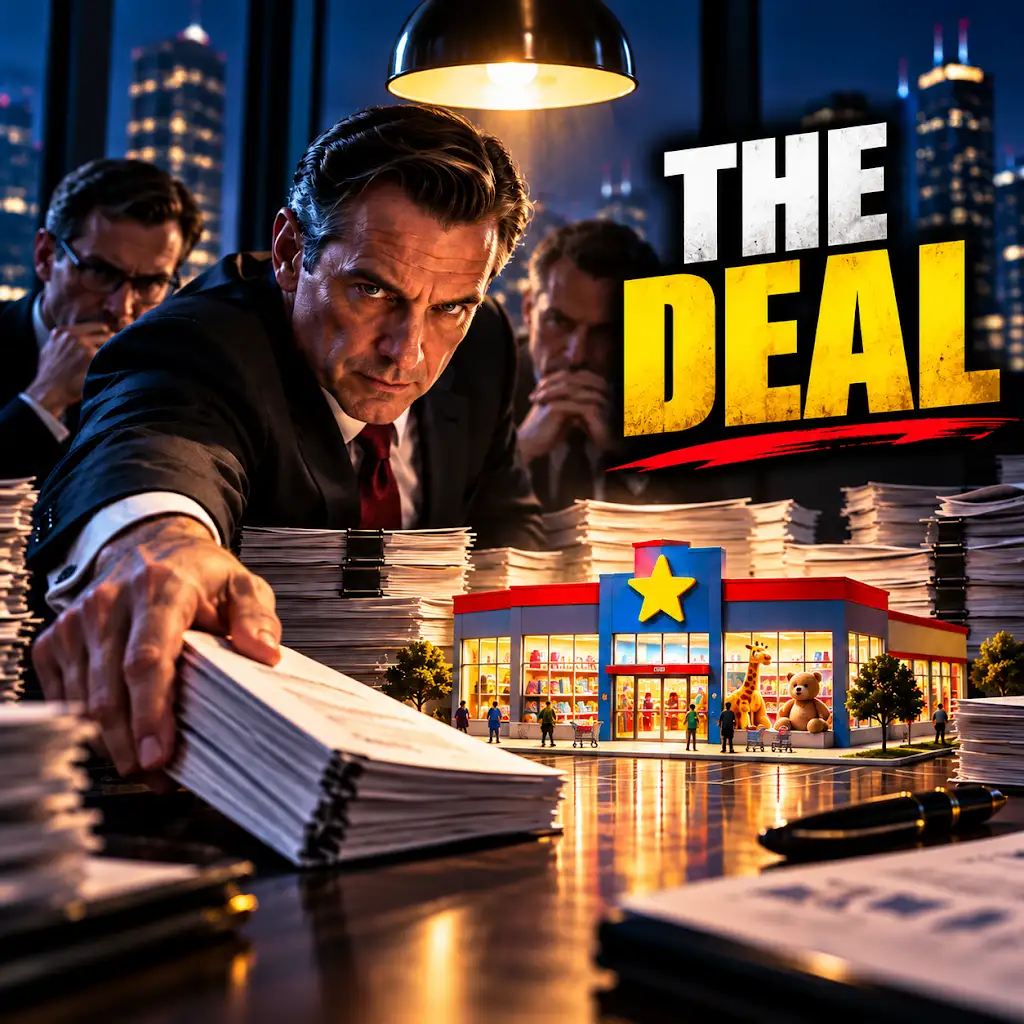
The $6.6 Billion Deal That Left Toys “R” Us Trapped
FAQs
1. What led to Toys R Us going out of business?
Toys R Us went out of business due to a combination of factors, including increased competition from online retailers like Amazon, changing consumer preferences towards online shopping, high levels of debt, and mismanagement.
2. When did Toys R Us officially close its stores?
Toys R Us officially closed its stores in the United States in June 2018 after filing for bankruptcy in September 2017. The company also closed its stores in other countries around the same time.
3. How did the closure of Toys R Us impact the toy industry?
The closure of Toys R Us had a significant impact on the toy industry, leading to a decline in overall toy sales and affecting toy manufacturers, suppliers, and other retailers who relied on Toys R Us for distribution.
4. Were there any efforts to save Toys R Us from going out of business?
There were efforts to save Toys R Us from going out of business, including attempts to restructure the company’s debt, find a buyer, or rebrand the stores. However, these efforts ultimately proved unsuccessful.
5. What lessons can be learned from the downfall of Toys R Us?
The downfall of Toys R Us serves as a cautionary tale for retailers about the importance of adapting to changing consumer preferences, managing debt responsibly, and staying competitive in the digital age. It also highlights the need for effective leadership and strategic decision-making in the face of industry disruptions.