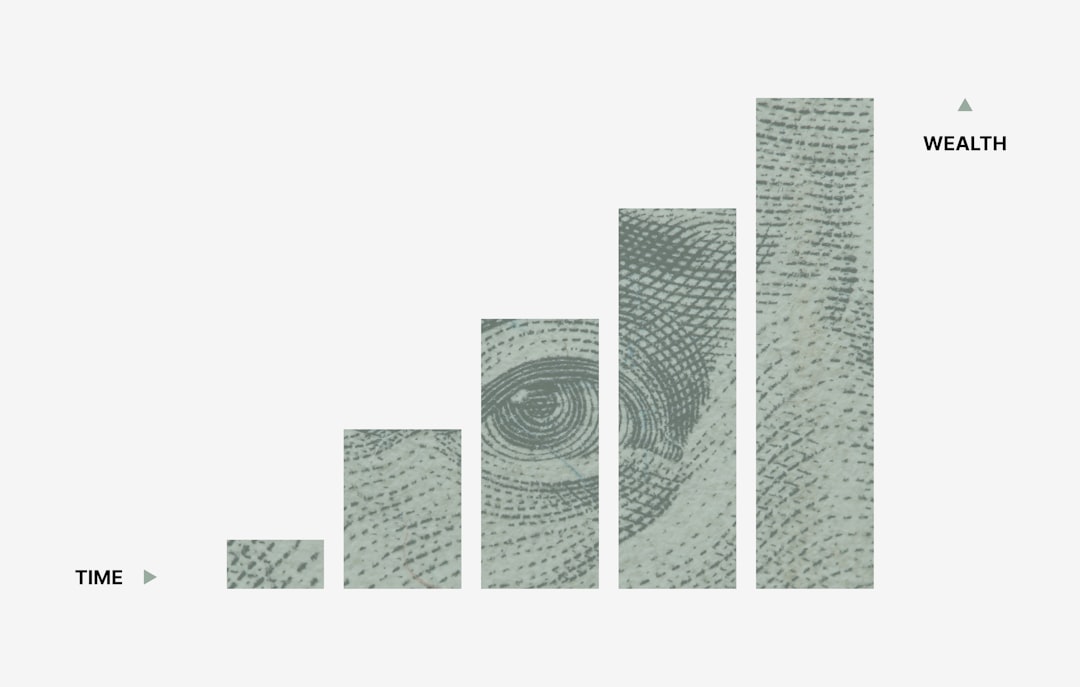
You’ve probably seen it. That one person who seems to effortlessly climb the ladder of success, accumulating wealth and influence as if by magic. They’re not just lucky; they’re masters of a principle that, once understood, can fundamentally reshape your own financial destiny. This principle is the compound effect, and when it comes to wealth, it’s the silent architect of extraordinary fortunes.
You might be thinking, “Compound effect? Isn’t that just for investing?” While investing is a prime example, the compound effect is far broader. It’s the principle that small, consistent efforts, applied over time, can lead to dramatic, exponential results. It’s the idea that today’s tiny decisions, compounded daily, become tomorrow’s monumental achievements. And when you apply this to your financial life, you unlock a powerful engine for wealth creation that transcends market fluctuations and overnight successes.
This isn’t about chasing get-rich-quick schemes. It’s about understanding a fundamental truth of how things grow, whether it’s a snowball rolling down a hill or a seed blossoming into a mighty oak. You have the power to harness this principle, to make it work for you, and to build the financial future you desire. It requires patience, discipline, and a deep understanding of how seemingly insignificant actions can accumulate into something truly substantial.
You might be tempted to dismiss the initial stages of building wealth as insignificant. After all, saving a few extra dollars or making a minor spending cut doesn’t feel like a game-changer. But this is precisely where the compound effect begins its subtle, yet powerful, work. Think of it like planting a tiny seed. It doesn’t look like much, but with the right care and time, it has the potential to grow into something immense.
The “One Percent Better” Mentality
You’ve likely heard the phrase “one percent better.” It’s a cornerstone of the compound effect philosophy. It’s not about drastic, unsustainable changes. It’s about finding ways to improve, even by the smallest margin, every single day. This applies to your income, your savings, your investments, and your financial knowledge.
Tracking Your Habits
Start by becoming acutely aware of your daily financial habits. Where does your money go? Are there small leaks you can plug? Perhaps it’s that daily coffee, that impulse online purchase, or that subscription you rarely use. Identifying these small drains is the first step to redirecting those funds towards growth. You don’t need to eliminate everything you enjoy, but simply becoming conscious of these patterns allows you to make informed choices.
Automating Your Progress
One of the most effective ways to implement the “one percent better” mentality is through automation. Set up automatic transfers from your checking account to your savings or investment accounts immediately after you get paid. This removes the temptation to spend the money and ensures consistent progress without you even having to think about it. Treat these automated transfers as a non-negotiable bill.
Educating Yourself Daily
Financial literacy isn’t a one-time course; it’s a lifelong journey. Dedicate a small amount of time each day to learning something new about personal finance. This could be reading an article, listening to a podcast, or watching an educational video. Even 15-20 minutes a day can lead to a profound understanding of how money works and how to make it work for you. Over time, this accumulated knowledge will equip you to make smarter financial decisions, leading to more effective compounding.
The Power of Delayed Gratification
In a world that often bombards you with instant gratification, practicing delayed gratification is a superpower. It’s the ability to forgo a small pleasure now for a greater reward in the future. This is directly linked to the compound effect because it allows your money to grow and work for you over a longer period.
Resisting the Urge to Spend
Think about the things you habitually buy without much thought. A new gadget, an extra meal out, or trendy clothing. Now, imagine pausing before each of those purchases and asking yourself: “Do I truly need this? Or can I redirect this money towards my future goals?” The act of simply pausing and considering can be transformative.
Investing in Your Future Self
Every dollar you choose not to spend today and instead invest or save is a dollar that will compound and grow. This means your future self will have more options, more security, and more freedom. This mental shift from immediate satisfaction to long-term benefit is crucial for harnessing the compound effect. You’re not depriving yourself; you’re investing in a more prosperous you.
Understanding how wealth grows is essential for anyone looking to improve their financial situation. A related article that delves deeper into this topic can be found at How Wealth Grows. This resource provides valuable insights into the principles of wealth accumulation, investment strategies, and the importance of financial literacy, making it a must-read for those eager to enhance their financial knowledge and build a prosperous future.
The Momentum of Compounding: When Small Becomes Significant
Once you’ve established the habit of consistent, small improvements and learned to delay gratification, the magic of compounding truly begins to take hold. This is where your initial efforts start to snowball, and you begin to see tangible, and eventually dramatic, results.
The Exponential Growth Curve
You’ve probably seen graphs depicting exponential growth. It starts slowly, almost imperceptibly, and then it curves upwards dramatically. This is the essence of compounding. Your initial savings or investments earn returns. Then, those returns begin to earn their own returns, and so on. The longer this process continues, the steeper the growth curve becomes.
Understanding the “Interest on Interest” Phenomenon
This is the heart of compounding. When you earn interest (or investment returns) on your initial principal, and then you earn interest on that interest, the growth accelerates. It’s like a snowball rolling down a hill. It picks up more snow, gets bigger, and then picks up even more snow at an increasing rate. The more time you give it, the more powerful this effect becomes.
The Role of Time and Rate of Return
While both are crucial, time is often the more dominant factor in the compound effect. Even a modest rate of return, when applied over a significant period, can lead to astonishing wealth. Conversely, a high rate of return with a short timeframe will yield far less dramatic results. This highlights the importance of starting early and staying consistent.
The Power of Reinvestment
The true power of compounding is unleashed when you consistently reinvest your earnings. This means you don’t take out the interest or profits generated by your investments. Instead, you let them sit and become part of your principal, ready to earn even more.
Making Compounding Work FOR You, Not Against You
Think about debt. High-interest debt is compounding working against you. The interest you owe grows, and if you only make minimum payments, you might be paying for years without making a dent in the principal. The same principle, applied to your savings and investments, works for you, building your wealth exponentially.
The Dividend Reinvestment Plan (DRIP)
For dividend-paying stocks, a Dividend Reinvestment Plan allows you to automatically use your dividend payments to buy more shares of the same stock. This is a powerful way to compound your returns without any extra effort on your part. You’re essentially buying more stock with the money your existing stock is generating.
Overcoming Inertia: The Discipline of Consistent Action
The biggest hurdle for most people is not a lack of knowledge, but a lack of consistent action. Inertia is a powerful force, and it can keep you stuck in the same financial patterns, preventing the compound effect from ever taking hold. Overcoming this requires discipline, a strong “why,” and strategic planning.
The “Set It and Forget It” Approach
While not entirely accurate, there’s a valuable lesson in the “set it and forget it” mentality when it comes to your financial strategy. Once you’ve established your savings and investment plan, automate as much of it as possible. This removes the daily decision-making and the potential for emotional impulses to derail your progress.
Building an Emergency Fund
Before you can truly embrace long-term compounding, you need a safety net. An emergency fund is crucial for covering unexpected expenses, such as job loss, medical bills, or home repairs. Without it, you risk having to dip into your investments, disrupting the compounding process and setting you back.
Diversification: Spreading Your Risk
While not directly about compounding, diversification is a crucial element of a sustainable compounding strategy. Spreading your investments across different asset classes (stocks, bonds, real estate, etc.) reduces your overall risk. This protects your principal, allowing it to continue compounding without the devastating impact of a single investment performing poorly.
The Power of a Strong “Why”
Discipline is easier to maintain when you have a clear and compelling reason for doing so. Your “why” could be financial independence, early retirement, leaving a legacy for your children, or simply the peace of mind that comes with financial security.
Defining Your Financial Goals
What do you want your money to do for you? Do you dream of owning a home, traveling the world, or starting a business? Clearly defining your financial goals provides the motivation you need to stay disciplined, even when faced with temptations or setbacks. Make your goals SMART: Specific, Measurable, Achievable, Relevant, and Time-bound.
Visualizing Your Future
Create a vision board or write down your financial aspirations. Regularly revisiting these visualizations can help reinforce your commitment and remind you of what you’re working towards. Imagine yourself living that financially secure future, and let that vision fuel your discipline.
The Long Game: Patience and Persistence in Wealth Building
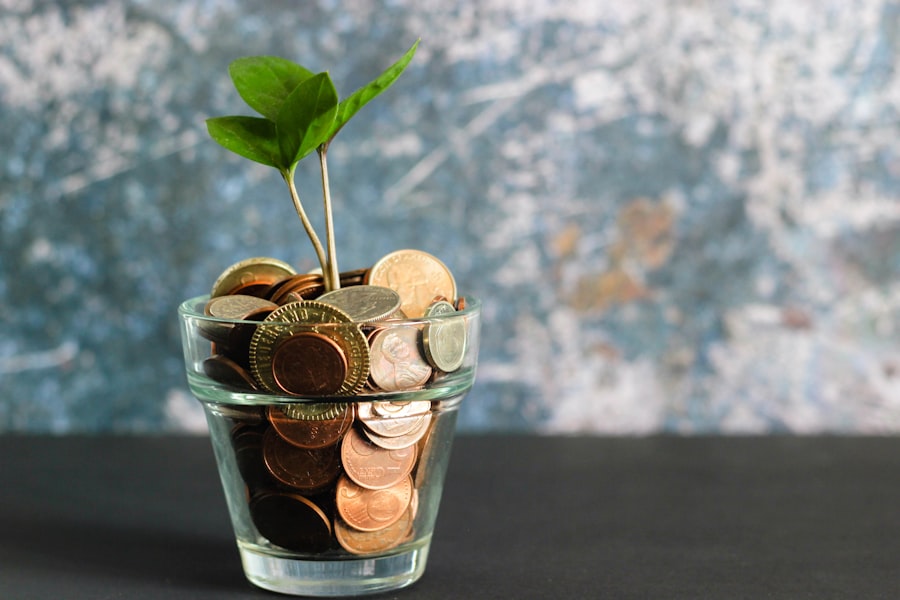
The compound effect is not a sprint; it’s a marathon. It requires patience and persistence, especially during market downturns or periods of slow growth. Those who understand the long-term nature of compounding are the ones who ultimately reap the greatest rewards.
Embracing Market Volatility
The stock market will fluctuate. There will be times of rapid growth and times of significant decline. It’s crucial to understand that these fluctuations are normal and are part of the investment landscape. Panic selling during a downturn is the quickest way to derail your compounding efforts.
The “Buy and Hold” Strategy
A cornerstone of long-term wealth building is the “buy and hold” strategy. This involves investing in quality assets and holding them for an extended period, allowing them to grow and compound over time. You’re not trying to time the market; you’re allowing the market to work for you.
Learning from Setbacks
Every investor experiences setbacks. The key is to learn from them. Analyze what went wrong, adjust your strategy if necessary, and move forward with renewed determination. These learning experiences are invaluable and contribute to your long-term financial wisdom.
The Importance of Regular Review and Adjustment
While automation is key, it’s also important to periodically review your financial strategy. Life circumstances change, economic conditions evolve, and your goals might shift. Regular reviews ensure your plan remains aligned with your current reality and future aspirations.
Annual Financial Check-ups
Just as you have annual physical check-ups, schedule annual financial check-ups. Review your budget, your investment performance, your savings rate, and your progress towards your goals. This is an opportunity to make necessary adjustments and ensure you’re staying on track.
Rebalancing Your Portfolio
Over time, the asset allocation of your investment portfolio can drift from your target. Rebalancing involves selling some of your best-performing assets and buying more of your underperforming assets to bring your portfolio back in line with your desired risk level. This is a disciplined way to manage risk and can actually enhance returns over the long term.
Understanding the dynamics of wealth accumulation is essential for anyone looking to improve their financial situation. A related article that delves deeper into this topic can be found at this link, where various strategies and insights are shared to help individuals navigate their financial journeys effectively. By exploring these concepts, readers can gain valuable knowledge on how to make informed decisions that contribute to their long-term financial growth.
Beyond Money: The Compound Effect in Other Areas of Your Life
| Time Period | Investment Return | Total Wealth |
|---|---|---|
| Year 1 | 5% | 105,000 |
| Year 2 | 7% | 112,350 |
| Year 3 | 10% | 123,585 |
| Year 4 | 8% | 133,678 |
| Year 5 | 6% | 141,856 |
While this article focuses on wealth, it’s important to recognize that the compound effect is a universal principle. The same discipline, consistency, and long-term perspective can be applied to virtually any area of your life, leading to remarkable transformations.
The Power of Habit Stacking
You can leverage the compound effect to build positive habits in other areas. Habit stacking involves linking a new habit to an existing one. For example, if you want to start meditating, you could stack it by saying, “After I brush my teeth, I will meditate for five minutes.” This makes it easier to remember and integrate into your routine.
Personal Growth and Skill Development
The skills you acquire today, through consistent learning and practice, will compound over time, making you more valuable in your career and more capable in your personal life. Think about learning a new language, mastering a musical instrument, or becoming proficient in a particular software. The initial effort might seem small, but the cumulative effect of consistent learning is immense.
Health and Well-being
Small, consistent choices related to diet, exercise, and sleep compound to create significant improvements in your overall health and well-being. A daily walk, choosing water over soda, or getting an extra hour of sleep might not seem like much individually, but over months and years, they contribute to a healthier, more energetic you.
The ripple effect of your actions
Your consistent actions, even those that seem small, can create a ripple effect that extends beyond yourself. When you demonstrate financial discipline, you might inspire friends and family to do the same. When you prioritize your health, you might encourage others to adopt healthier lifestyles.
Becoming a Role Model
By consistently applying the principles of the compound effect in your own life, you naturally become a role model for others. Your success, built on discipline and patience, can be a powerful motivator for those around you.
Building a Legacy of Financial Prudence
The financial habits you cultivate today will have a lasting impact on your family and future generations. By teaching your children about the compound effect and instilling in them a sense of financial responsibility, you are building a legacy of financial prudence that can benefit them for years to come.
In conclusion, you have the power to harness the compound effect and transform your financial future. It’s not about grand gestures or overnight windfalls. It’s about the small, consistent, and disciplined choices you make every single day. Embrace the power of “one percent better,” practice delayed gratification, and commit to the long game. The wealth you build over time, through the silent, exponential force of compounding, will be a testament to your patience, your discipline, and your understanding of this fundamental principle of growth. The journey begins with a single step, compounded daily, towards the financial freedom you deserve.
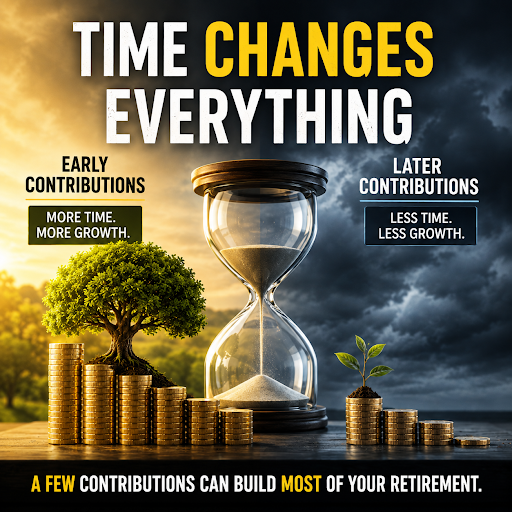
Only a Few 401(k) Contributions Build Most of Your Retirement
FAQs
What is wealth growth?
Wealth growth refers to the increase in the value of assets and investments over time. This can include the appreciation of real estate, stocks, bonds, and other financial instruments.
What are some common ways wealth grows?
Some common ways wealth grows include investing in the stock market, real estate, and other financial assets. Additionally, wealth can grow through the accumulation of interest, dividends, and capital gains.
What are some strategies for growing wealth?
Some strategies for growing wealth include regular saving and investing, diversifying investments, and taking advantage of compound interest. It’s also important to have a long-term perspective and to seek professional financial advice.
What are some factors that can impact wealth growth?
Factors that can impact wealth growth include economic conditions, market volatility, inflation, and changes in government policies. Additionally, individual factors such as risk tolerance, investment knowledge, and financial discipline can also play a role.
Why is wealth growth important?
Wealth growth is important because it can provide financial security, opportunities for future generations, and the ability to achieve long-term financial goals such as retirement and education funding. Additionally, wealth growth can contribute to overall economic growth and prosperity.