You’ve seen the ads. They’re everywhere. “Buy Now, Pay Later.” Slick, easy, and often presented as a lifeline for your immediate desires. But have you ever stopped to think about why these services are so effective? It’s not just about spreading out payments; it’s a masterclass in behavioral economics, designed to tap into your deepest psychological triggers and nudge you towards spending.
The core of Buy Now, Pay Later’s (BNPL) appeal lies in its potent exploitation of a fundamental human tendency: hyperbolic discounting. This concept, a cornerstone of behavioral economics, describes our inclination to overvalue immediate rewards compared to future rewards, even if the future reward is objectively larger.
When “Now” Trumps “Later”
Imagine you’re offered $100 today or $110 a week from now. Many people would choose the $100, even though waiting a week yields a better outcome. This isn’t necessarily irrational; it’s a deeply ingrained cognitive bias. Your brain is wired to prioritize immediate pleasure and avoid immediate pain or effort. BNPL services directly leverage this. Instead of facing the “pain” of parting with a significant sum of money upfront, you’re offered the “pleasure” of possessing the item now. The financial pain is deferred, making the immediate gratification incredibly powerful.
The Illusion of Affordability
BNPL effectively creates an illusion of affordability. That $500 television suddenly feels manageable when it’s presented as four payments of $125. Your brain doesn’t immediately perform the mental arithmetic of the total cost; it focuses on the smaller, more digestible payment. This “chunking” of expenses makes larger purchases seem less daunting, chipping away at the mental barrier that a single, large payment might erect. You might not have $500 readily available, but $125 feels achievable, even if you have to stretch your budget slightly.
The Emotional Driver of “Want”
Beyond pure financial logic, BNPL taps into the emotional drivers of desire. The thrill of unboxing a new gadget, the confidence boost from a new outfit – these immediate emotional payoffs are amplified when the financial burden is softened. The anticipation of these feelings, combined with the reduced immediate cost, creates a potent cocktail that can override more rational decision-making. You want it now, and BNPL makes it feel like you can have it now.
The rise of “Buy Now, Pay Later” (BNPL) services has sparked significant interest in the field of behavioral economics, particularly regarding consumer decision-making and spending habits. A related article that delves into the psychological factors influencing BNPL usage can be found on How Wealth Grows. This resource explores how the convenience of deferred payments can lead to impulsive buying behaviors and the potential long-term financial implications for consumers. For more insights, you can read the article here: How Wealth Grows.
The Anchoring Effect and Price Perception
BNPL services skillfully employ the anchoring effect, another powerful cognitive bias. An anchor is a piece of information that influences subsequent judgments. In the context of BNPL, the initial price of the item acts as an anchor, and the installment payments become the way you perceive that anchor.
Setting the Initial Benchmark
When you see a product priced at $500, that’s your initial anchor. BNPL then presents this $500 as “just $125 per month.” This framing shifts your perception. Instead of thinking about the $500 you’re committing to, you’re now thinking about the more manageable $125. The original anchor of $500 is still there, but its impact is diminished by the subsequent, smaller figures.
The “Deal” Framing
Often, BNPL is presented as a “deal” or a way to “save money” by spreading out costs. While not always true, this framing is incredibly persuasive. It suggests you’re getting something beneficial by using the service, further reinforcing the idea that the purchase is a good decision. The anchoring effect here is subtle; the “deal” narrative subtly anchors your perception of the overall transaction as positive.
The Comparison Trap
Furthermore, the comparison between a lump-sum payment and installment payments can be misleading. If a store offers a discount for paying in full upfront, BNPL might seem less appealing. However, without such a direct comparison, the installment option often appears more attractive simply because it’s presented as a series of smaller, less impactful payments. You’re anchored to the idea of manageable installments rather than the full price.
The Scarcity and Urgency Heuristic: Fear of Missing Out (FOMO)
While not explicitly part of every BNPL offer, the underlying psychology of scarcity and urgency often plays a significant role in driving impulse purchases facilitated by these services. The fear of missing out (FOMO) is a powerful motivator.
“Limited Time Offer” Mentality
Even if the BNPL offer itself isn’t time-bound, the desire to acquire the product now often is. Retailers frequently use phrases like “limited stock” or “offer ends soon” to create a sense of urgency. BNPL makes it easier to act on this urgency, as the financial barrier to immediate acquisition is lowered. You feel pressured to buy before the item is gone, and BNPL removes a major obstacle to succumbing to that pressure.
The “Now or Never” Decision
The combination of a desirable product, a perceived scarcity, and the ease of BNPL can lead to a “now or never” decision-making process. Your rational brain might tell you to wait, to save up, to compare prices. But the emotional brain, fueled by FOMO and the immediate availability of the product, urges you to act. BNPL provides the frictionless pathway to that impulsive action.
The Social Comparison Aspect
FOMO can also be driven by social comparison. Seeing others with desirable items can trigger a desire to keep up. BNPL allows you to participate in this social consumption without the immediate financial strain, further amplifying the urge to purchase to avoid feeling left out.
The Endowment Effect and Ownership Bias

Once you’ve agreed to a BNPL plan and have the product in your possession, the endowment effect and ownership bias kick in, making it harder to return the item even if you regret the purchase.
The “Mine” Phenomenon
The endowment effect describes our tendency to overvalue something simply because we own it. Once the item is yours, it feels more valuable than it did when it was merely a potential purchase. This psychological attachment makes it harder to part with, even if you’re struggling to make the payments. The emotional cost of returning an owned item can feel higher than the financial cost of keeping it.
The Inertia of Ownership
Ownership also breeds inertia. The process of returning an item, especially after you’ve incorporated it into your life, can feel like a significant effort. BNPL, by making the purchase seem less consequential initially, can contribute to this inertia. You might think, “It’s just a few more payments,” rather than confronting the reality of the financial commitment and the potential hassle of returning the item.
The Rationalization of the Purchase
To further solidify ownership and reduce cognitive dissonance (the mental discomfort of holding contradictory beliefs or values), you might begin to rationalize the purchase. You’ll focus on the positive aspects of the item and downplay any negatives or financial strains. BNPL can make it easier to fall into this trap because the initial commitment felt less significant, making the subsequent rationalization less of a stretch.
The rise of buy now pay later (BNPL) services has sparked significant interest in the field of behavioral economics, particularly regarding consumer decision-making and spending habits. A fascinating article that delves into this topic is available at How Wealth Grows, where the psychological factors influencing consumers’ choices to opt for BNPL options are explored. This analysis sheds light on how these services can lead to impulsive purchases and potential debt accumulation, emphasizing the need for consumers to be aware of their spending behaviors.
The Loss Aversion and Sunk Cost Fallacy
| Metric | Description | Behavioral Economics Insight | Typical Value/Range |
|---|---|---|---|
| Impulse Purchase Rate | Percentage of purchases made impulsively using BNPL | BNPL reduces immediate financial pain, increasing impulsivity | 30% – 50% |
| Perceived Affordability | Consumer perception of how affordable a product is when using BNPL | Payment splitting lowers perceived cost, encouraging higher spending | Increases perceived affordability by 20% – 40% |
| Default Rate | Percentage of BNPL users who fail to make payments on time | Present bias and over-optimism contribute to missed payments | 5% – 15% |
| Average Order Value (AOV) Increase | Increase in average purchase amount when BNPL is offered | Reduced immediate cost leads to higher spending | 20% – 40% increase |
| Time Discounting Effect | Degree to which consumers undervalue future payments | Consumers prefer immediate gratification, discounting future costs | Discount rates often exceed 10% monthly |
| Repeat Usage Rate | Percentage of consumers who use BNPL multiple times | Habit formation and ease of use encourage repeated BNPL use | 40% – 60% |
| Financial Stress Impact | Effect of BNPL on consumer financial stress levels | Short-term relief but potential long-term stress due to debt accumulation | Mixed; 25% report increased stress over time |
When you start making payments on a BNPL plan, loss aversion and the sunk cost fallacy can trap you in a cycle of continued spending, even if it’s detrimental.
The Fear of “Losing” What You’ve Paid
Loss aversion is the principle that the pain of losing something is psychologically about twice as powerful as the pleasure of gaining something. Once you’ve made several payments on a BNPL plan, the money you’ve already spent feels like a loss if you were to return the item. This fear of “losing” the money you’ve already paid can prevent you from returning an item you no longer want or can afford.
The Sunk Cost Effect in Action
The sunk cost fallacy dictates that we continue a behavior or endeavor as a result of previously invested resources (time, money, or effort), even when it’s clear that continuing is not the best decision. If you’ve paid half of your BNPL installments, you might feel compelled to continue paying the rest, rather than cutting your losses by returning the item and stopping further payments. The money already spent becomes a “sunk cost,” and your brain tricks you into thinking you need to see it through to somehow “recover” that investment, even if it means overspending.
The Escalation of Commitment
This can lead to an escalation of commitment, where you continue to invest more resources (in this case, money) into a losing proposition. The initial ease of BNPL can mask the long-term implications, and once you’re invested, the psychological biases make it harder to disengage, even when the financial consequences become apparent. You might find yourself making multiple BNPL purchases, each contributing to a growing debt that’s harder and harder to escape due to these ingrained behavioral patterns.
In conclusion, Buy Now, Pay Later is not just a financial tool; it’s a sophisticated psychological mechanism. By understanding these behavioral economics principles – from the allure of immediate gratification and the anchoring effect to the power of FOMO, ownership bias, and the trap of sunk costs – you can better equip yourself to navigate the enticing world of BNPL and make more informed, rational financial decisions. The convenience is undeniable, but so are the cognitive biases it exploits. Being aware is your first and most powerful line of defense.
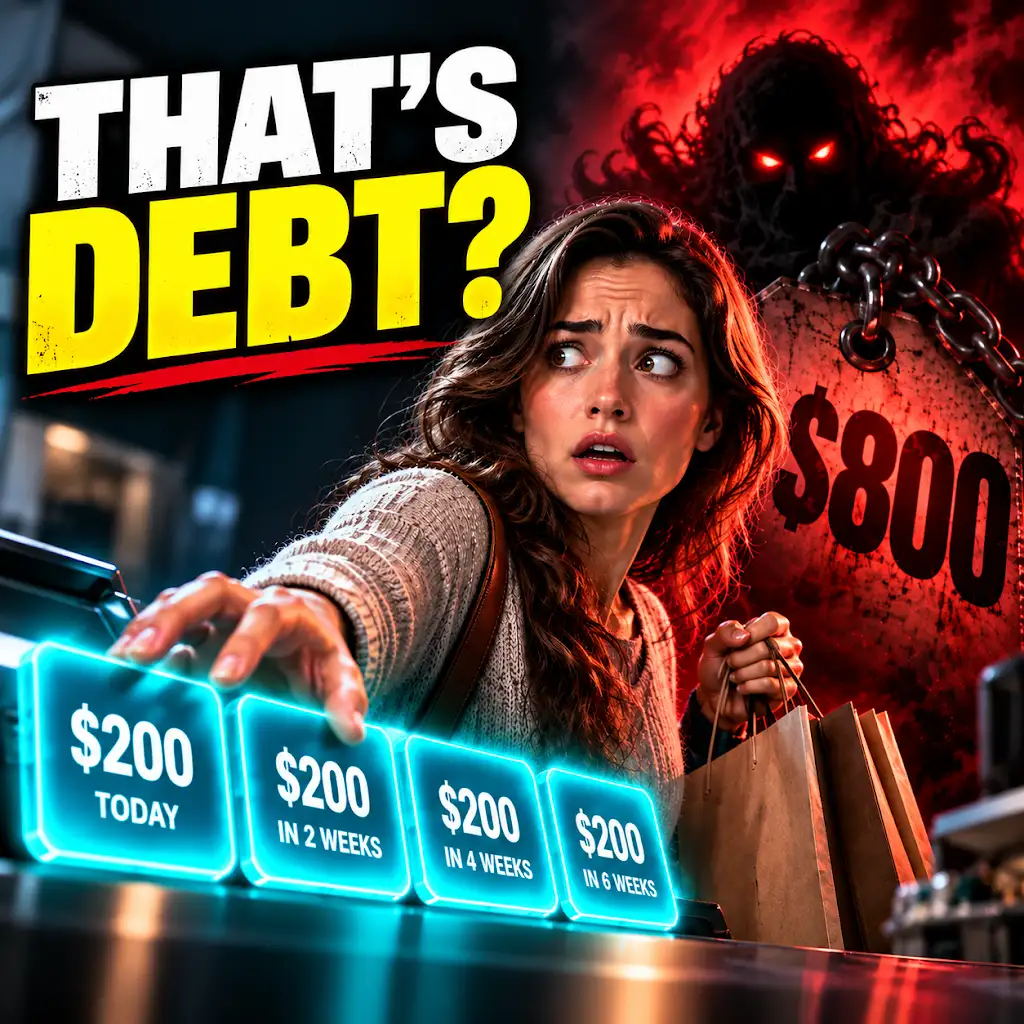
Why $800 Doesn’t Feel Like $800 Anymore
FAQs
What is behavioral economics?
Behavioral economics is a field of study that combines insights from psychology and economics to understand how individuals make decisions. It focuses on the cognitive, emotional, and social factors that influence economic choices.
What is buy now pay later (BNPL) and how does it work?
Buy now pay later (BNPL) is a payment option that allows consumers to make a purchase and pay for it in installments over time, typically with no interest. It is often offered by online retailers and payment platforms as an alternative to traditional credit cards.
How does behavioral economics play a role in buy now pay later services?
Behavioral economics plays a significant role in buy now pay later services by influencing consumer behavior and decision-making. For example, the availability of BNPL options can lead to increased spending due to the psychological effect of delayed payment and the perception of affordability.
What are some common behavioral biases that can impact buy now pay later decisions?
Some common behavioral biases that can impact buy now pay later decisions include present bias (preferring immediate gratification over long-term consequences), loss aversion (fearing losses more than valuing gains), and social proof (being influenced by others’ actions).
What are some potential risks associated with using buy now pay later services?
Some potential risks associated with using buy now pay later services include overspending, accumulating debt, missing payments and incurring late fees, damaging credit scores, and falling into a cycle of debt due to the ease of access to credit. It is important for consumers to carefully consider their financial situation and ability to repay before using BNPL services.