
You are about to embark on a journey into the intricate world of systems thinking, a powerful lens through which to view and optimize your product strategy and operational redesign efforts. This article will equip you with a foundational understanding of its core principles and demonstrate its practical application, guiding you towards more robust and resilient product development and execution.
Before you can effectively leverage systems thinking, you must first grasp its fundamental premise. Imagine your product, or even your entire organization, not as a collection of isolated parts, but as a complex, dynamic organism. Each component, from a single software module to a marketing campaign, is intimately connected to and influences every other component. Systems thinking is the discipline of seeing these wholes, discerning the patterns of interrelationships, and understanding how these patterns drive behavior over time. It moves beyond linear cause-and-effect thinking to embrace circular causality, feedback loops, and emergent properties.
Beyond the Isolated Component: The Whole is More Than the Sum of Its Parts
You might be inclined to troubleshoot a specific product bug by focusing solely on the malfunctioning code. While this is a necessary step, systems thinking compels you to ask deeper questions: What upstream processes contributed to this bug’s introduction? How does this bug impact user behavior downstream? What organizational structures or communication gaps might be perpetuating this type of error? By considering the broader context, you transition from fixing symptoms to addressing root causes. Think of it like repairing a dam. You can patch a leak, but if you don’t understand the hydraulic pressures and geological instability causing the leak, you’re merely delaying the inevitable.
Identifying Feedback Loops: The Engine of Change
Central to systems thinking are feedback loops. You’ll encounter two primary types:
- Reinforcing (Positive) Feedback Loops: These amplify change. A small input leads to an even larger output, driving exponential growth or decay. Consider a viral marketing campaign – a few early adopters spread the word, attracting more users, who then spread the word further, creating a self-sustaining cycle of growth. Conversely, a negative customer experience can trigger a cascade of bad reviews, leading to fewer sales and ultimately, a decline in product viability. You must learn to identify and leverage reinforcing loops that drive positive outcomes and mitigate those that lead to degradation.
- Balancing (Negative) Feedback Loops: These aim to maintain equilibrium, either by correcting deviations or resisting change. Imagine a thermostat in your home. When the temperature drops below the set point, the furnace kicks in, raising the temperature until it reaches the desired level, at which point it shuts off. This is a balancing loop in action, constantly working to keep the system within a desired range. In product development, user testing provides a balancing loop: feedback identifies issues, leading to adjustments that bring the product closer to user expectations. Understanding these loops allows you to anticipate system behavior and design interventions that steer it towards desired states.
For product strategists and those involved in operations redesign, understanding systems thinking is crucial for creating effective and sustainable solutions. A related article that delves into this topic can be found at How Wealth Grows, which explores the interconnectedness of various components within a system and how this perspective can enhance strategic decision-making and operational efficiency. By applying systems thinking, professionals can better anticipate challenges and opportunities, leading to more innovative and resilient product strategies.
Applying Systems Thinking to Product Strategy: Shaping the Future
When you develop your product strategy, you are not merely listing features; you are designing a system. Systems thinking empowers you to forge a strategy that is not only innovative but also resilient and adaptable. You move beyond merely reacting to market shifts to proactively shaping your product’s trajectory within its ecosystem.
Unveiling the Product Ecosystem: Beyond Your Direct Competitors
Your product doesn’t exist in a vacuum. It’s part of a larger ecosystem comprising users, competitors, partners, regulatory bodies, complementary products, and even societal trends. A systems thinking approach compels you to map out this ecosystem. Who are the key players? How do they interact? What are the dependencies? For instance, a new payment gateway might significantly impact a product’s user experience, even if it’s not a direct competitor. You must consider the ripple effects of your strategic decisions across this entire landscape. This mapping process is akin to charting a complex ocean, revealing currents, hazards, and potential trade winds that will impact your voyage.
Identifying Leverage Points: Where Small Changes Yield Big Results
In a complex system, not all interventions are equally effective. Systems thinking helps you identify “leverage points” – places where a small, well-placed effort can produce significant, lasting change. These are often not the most obvious places. For example, rather than simply adding more features to your product to increase user engagement, a systems thinker might analyze the onboarding process. Improving this single touchpoint could create a reinforcing feedback loop of user satisfaction, increased engagement, and organic growth, proving far more impactful than a standalone feature addition. Think of it as finding the fulcrum on a lever; a small force applied at the right point can lift a heavy load.
Scenario Planning and Resilience: Preparing for the Unforeseen
The future is inherently uncertain. Systems thinking encourages you to move beyond single-point predictions and embrace scenario planning. By identifying key uncertainties and potential feedback loops, you can construct multiple plausible future scenarios for your product. How would your product fare if a major competitor launched a disruptive technology? What if a key regulatory change occurred? By exploring these “what-if” scenarios, you can design a product strategy that is robust, adaptable, and resilient to a range of potential futures. This proactive approach allows you to anticipate threats and opportunities, rather than merely reacting to them. You are building not just a product, but a system that can absorb shocks and adapt to new conditions.
Redesigning Operations with a Systems Lens: Efficiency and Flow
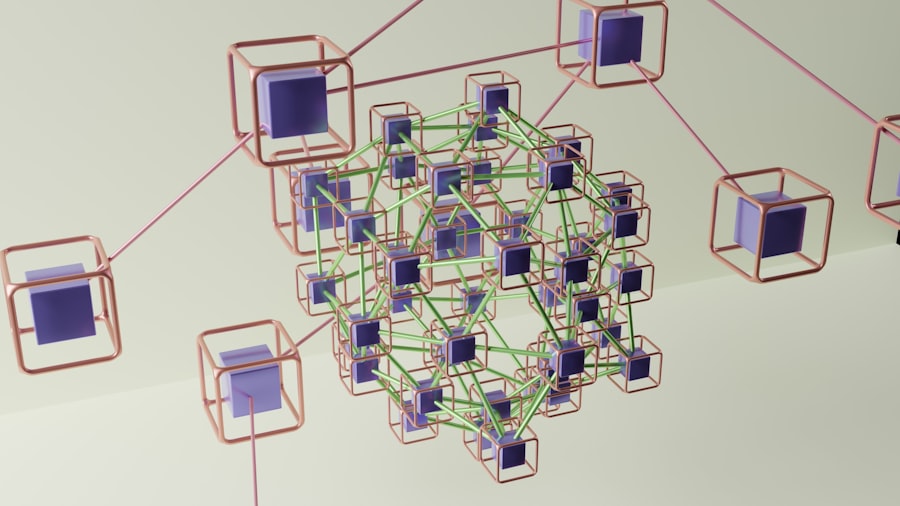
Operational redesign, when approached through a systems thinking framework, transforms from a piecemeal optimization exercise to a holistic re-engineering of work. You shift your focus from individual tasks to the flow of work, information, and value throughout your organization.
Mapping Value Streams: Following the Path of Creation
You must visualize how value is created and delivered to your customers. This involves mapping your entire value stream, from initial idea conception to product delivery and ongoing support. Where are the handoffs? Where do bottlenecks occur? Where is rework happening? By identifying these friction points, you can streamline processes, reduce waste, and accelerate your product development lifecycle. Imagine your product as a river, and your operations as the riverbed. A systems approach allows you to identify blockages, diversions, and areas of erosion, enabling you to design a clear and efficient course for the water to flow.
Uncovering Hidden Dependencies: The Invisible Threads of Your Organization
Often, inefficiencies in operations stem from unacknowledged or poorly understood dependencies between teams, processes, and tools. A systems perspective forces you to expose these hidden connections. For instance, a delay in the testing phase might not be due to the testing team’s performance, but rather an upstream dependency on a development team that consistently delivers incomplete code. By making these dependencies explicit, you can design collaborative solutions that address the root causes of delays and improve overall flow. These are the invisible strings that, when pulled, can unexpectedly move other parts of your organization.
Optimizing for Flow, Not Just Utilization: The Throughput Advantage
Traditional operational metrics often focus on individual resource utilization (e.g., how busy is each team member?). However, systems thinking emphasizes optimizing for “flow” – the speed at which value moves through the entire system. A team that is 100% busy might actually be causing bottlenecks downstream if they are not aligned with overall product priorities. By focusing on reducing lead times, accelerating cycle times, and minimizing work-in-progress (WIP), you can significantly improve your operational efficiency and responsiveness. It’s like managing traffic: you want cars to move smoothly and quickly through the entire road network, not just ensure that every lane is always packed.
The Human Element: People as Integral System Components

You cannot effectively apply systems thinking to product strategy and operations redesign without acknowledging the central role of people. Individuals are not just cogs in a machine; they are intelligent, adaptive agents who contribute to and are influenced by the system’s behavior.
Fostering Psychological Safety: The Foundation of Learning Systems
A robust system is a learning system. For an organization to learn and adapt, its members must feel safe to raise concerns, admit mistakes, and experiment without fear of reprisal. Psychological safety is paramount. When people feel safe, feedback loops function more effectively, problems are identified earlier, and innovation thrives. As a leader, you play a crucial role in cultivating this environment, transforming your organization into a collective intelligence that can address complex challenges. Without psychological safety, critical information gets suppressed, and the system loses its ability to self-correct.
Designing for Human-System Interaction: Usability and Experience
Whether you’re developing a product for external customers or internal operational tools, the human-system interface is a critical leverage point. A systems thinker considers how humans interact with technology, processes, and other individuals within the system. Are the tools intuitive? Are the processes clear? Does the organizational structure facilitate effective communication and collaboration? By designing for optimal human interaction, you can exponentially enhance both product adoption and operational efficiency. You are not just designing components, but also the interactions that define the user experience.
Cultivating a Systems Mindset: Shifting Organizational Culture
Ultimately, implementing systems thinking requires a cultural shift. You must encourage your teams to look beyond their immediate responsibilities and consider the broader context. This involves training, coaching, and consistently reinforcing the principles of interconnectedness, feedback loops, and emergent behavior. It’s about empowering everyone to become a systems thinker, thereby transforming your organization into a more adaptive, resilient, and intelligent entity. This is an ongoing process, a continuous cultivation of a new way of seeing and understanding.
For product strategists and those involved in operations redesign, understanding systems thinking can be crucial for creating effective solutions. A related article that delves into this concept can be found at this link, where it explores how interconnected components within a system can influence overall performance. By applying these principles, teams can better align their strategies with the complex dynamics of their projects, ultimately leading to more sustainable outcomes.
Challenges and Considerations: Navigating the Complexities
| Metric | Description | Relevance to Systems Thinking | Typical Value/Range | Impact on Product Strategy & Ops Redesign |
|---|---|---|---|---|
| Feedback Loop Efficiency | Speed and quality of feedback integration from users and internal teams | Measures how well the system adapts and evolves based on inputs | Cycle time: 1-4 weeks | Improves iterative product improvements and operational responsiveness |
| Interdependency Mapping Completeness | Percentage of identified and documented system interdependencies | Reflects understanding of complex relationships within product and operations | 80-100% | Reduces unintended consequences and enhances coordinated decision-making |
| Cross-Functional Collaboration Index | Frequency and quality of collaboration across teams | Indicates integration of diverse perspectives in system design | High (weekly meetings, shared KPIs) | Enables holistic problem solving and alignment on strategic goals |
| Systemic Risk Identification Rate | Number of potential systemic risks identified per project phase | Measures proactive identification of risks affecting the whole system | 3-5 risks per phase | Mitigates cascading failures and supports resilient product and ops design |
| Process Cycle Time Reduction | Percentage decrease in time to complete key operational processes | Reflects efficiency gains from system redesign | 10-30% reduction | Enhances speed to market and operational agility |
| Customer Journey Integration Score | Degree to which customer touchpoints are integrated into system design | Shows alignment of product and operations with user experience | 75-95% | Improves customer satisfaction and retention through seamless experiences |
| Resource Utilization Efficiency | Ratio of output to input resources across product and operations | Indicates optimization of system components working together | 85-95% | Reduces waste and maximizes value delivery |
While the benefits of systems thinking are substantial, you will undoubtedly encounter challenges in its application. It is not a panacea, but rather a powerful framework that requires diligence and perseverance.
Overcoming Reductionist Tendencies: The Comfort of Simplicity
Humans are naturally inclined towards reductionism – breaking down complex problems into smaller, more manageable parts. While useful for specific tasks, this tendency can hinder a holistic understanding of a system. You must consciously resist the urge to oversimplify and continuously force yourself to consider the broader context and interdependencies, even when it feels uncomfortable. It’s like trying to understand an orchestra by only listening to individual instruments; you need to hear the whole score.
Data Collection and Interpretation: Understanding the Indicators
Effectively applying systems thinking requires relevant data. You need to identify the right metrics to monitor system behavior, including leading indicators, lagging indicators, and metrics that reveal the health of your feedback loops. However, data alone is not enough; you must also develop the capability to interpret this data through a systems lens, discerning patterns and inferring causality beyond superficial correlations. This is about more than just collecting numbers; it’s about understanding the story those numbers tell about your system.
The Long Game: Patience and Persistence
Shifting to a systems thinking approach is rarely a quick fix. It requires patience, persistence, and a willingness to embrace iterative learning. You will encounter setbacks and resistance. However, by consistently applying the principles outlined in this article, you will gradually build a more robust product strategy and create more efficient and adaptable operations, ultimately leading to sustained success in an increasingly complex world. You are not building a sprint, but running a marathon, with each step strengthening your understanding and capability.
FAQs
What is systems thinking in the context of product strategy?
Systems thinking is an approach that views a product and its development environment as an interconnected whole. It helps product strategists understand how different components, stakeholders, and processes interact, enabling more effective decision-making and long-term planning.
How can systems thinking improve operations redesign?
By applying systems thinking, organizations can identify root causes of inefficiencies and understand the relationships between various operational elements. This holistic perspective supports redesigning processes to optimize workflows, reduce bottlenecks, and enhance overall performance.
What are the key benefits of using systems thinking for product strategists?
Key benefits include improved problem-solving by considering multiple factors simultaneously, better alignment between product goals and organizational capabilities, enhanced ability to anticipate unintended consequences, and fostering collaboration across teams.
Which tools or methods are commonly used in systems thinking for product and operations?
Common tools include causal loop diagrams, system maps, feedback loops analysis, and scenario planning. These methods help visualize complex relationships and dynamics within product ecosystems and operational processes.
Can systems thinking be applied to both new product development and existing product improvement?
Yes, systems thinking is valuable for both creating new products and improving existing ones. It enables strategists to design products that fit well within the broader system and to identify opportunities for enhancement by understanding how current products interact with users, markets, and internal processes.