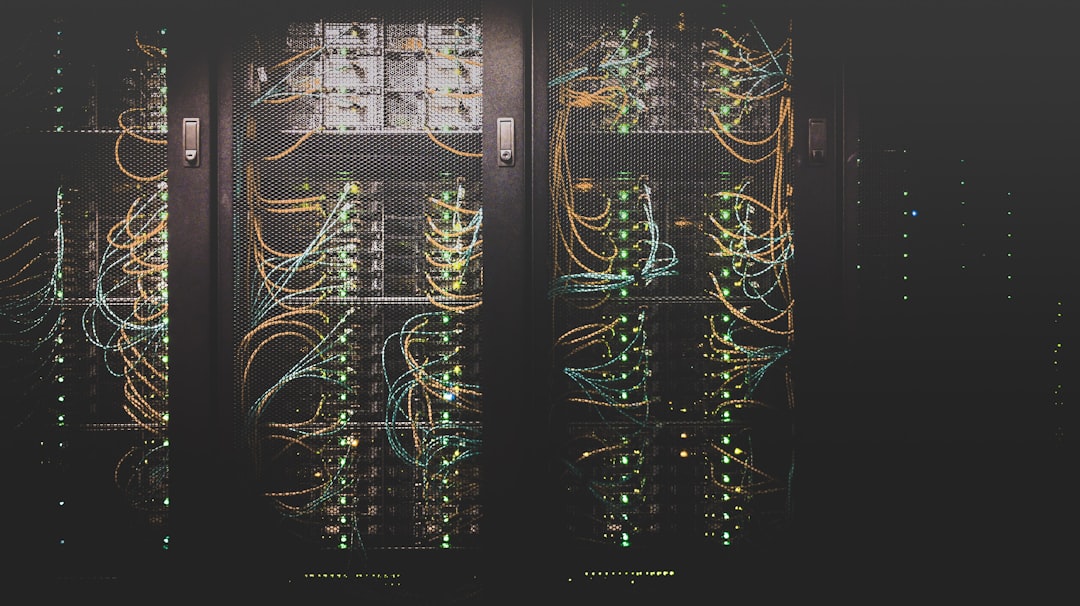
You’re witnessing a seismic shift in the digital landscape, and its reverberations are being felt most acutely in the humming, climate-controlled sanctuaries of data centers. You might not see them every day, but these colossal facilities are the unsung heroes of your online existence, powering everything from your social media scrolls to your critical business operations. And right now, the demand for their services is exploding. This surge isn’t a gentle ripple; it’s a tsunami, and it’s fundamentally reshaping the economics of the digital infrastructure you rely on. You’re seeing capacity prices for data center space and services climb, a direct consequence of this unprecedented demand.
The Unsustainable Ascent: Understanding the Drivers of Skyrocketing Demand
You’ve probably heard about the burgeoning digital world, but the sheer scale of its growth is often underestimated. The way you consume information, work, and entertain yourself has fundamentally transformed, placing an immense burden on the physical infrastructure that makes it all possible. This isn’t a fad; it’s a paradigm shift, and it’s happening at a pace that’s frankly astonishing. The consequences are cascading, impacting everything from the smallest startup to the largest enterprise.
The AI Revolution: A Data-Hungry Beast
Artificial intelligence (AI) is no longer a futuristic concept; it’s here, and it’s fundamentally changing how we interact with technology. The training and deployment of AI models require immense computational power, and this power resides within data centers. You’re not just talking about a few servers anymore; you’re talking about vast clusters of high-performance computing (HPC) units, GPUs, and specialized AI accelerators that consume enormous amounts of electricity and generate significant heat.
The Training Epoch: A Computational Marathon
Imagine training a large language model like the one you’re interacting with now. This process isn’t like running a simple app on your phone. It involves sifting through trillions of data points, performing complex calculations, and iteratively refining algorithms. Each iteration, each parameter adjustment, demands a significant chunk of processing power. For the developers and researchers pushing the boundaries of AI, access to this raw compute is paramount. And where does this compute live? In the data center, consuming space, power, and cooling.
The Inference Phase: Real-Time Intelligence Demands Constant Power
Once an AI model is trained, it needs to be deployed to provide real-time services. This is known as inference. Think about the AI features you use daily: personalized recommendations, voice assistants, image recognition in your photos, fraud detection in your financial transactions. All of these rely on AI models performing inferences constantly. This sustained demand for processing power, while less intensive per query than training, is continuous and widespread, adding another layer to the data center’s workload. You’re not just building for the training boom; you’re building for the ongoing AI-powered experience.
The Cloud Imperative: Ubiquitous Connectivity and Scalability
The rise of cloud computing has been a defining trend of the past decade, and its momentum shows no signs of abating. Businesses of all sizes are migrating their IT infrastructure to the cloud, drawn by its promises of scalability, flexibility, and cost-effectiveness. This migration directly translates to a greater demand for data center capacity.
Public Cloud Expansion: The Dominant Force
Major cloud providers like Amazon Web Services (AWS), Microsoft Azure, and Google Cloud are continuously expanding their global footprint. They are building colossal data centers in strategic locations to serve their ever-growing customer base. This relentless expansion is a primary driver of demand, as these hyperscalers consume massive amounts of space and power. You can see their influence in the sheer scale of new data center constructions appearing on the horizon.
Private and Hybrid Cloud Growth: A Tailored Approach
While public cloud dominates, private and hybrid cloud deployments are also contributing to the demand. Businesses that require more control over their data, enhanced security, or specific performance characteristics opt for private clouds. Hybrid cloud strategies, which blend on-premises infrastructure with public cloud services, offer a balanced approach. Both of these models still require physical data center space, whether it’s in a colocation facility or a company’s own dedicated infrastructure. You’re not just looking at one type of cloud; you’re looking at a spectrum of cloud adoption, all of which needs physical housing.
The Data Deluge: A Never-Ending Stream of Information
The sheer volume of data being generated globally is staggering and shows no signs of slowing down. Every interaction you have online, every sensor you encounter, every transaction you make contributes to this ever-expanding digital ocean. Data centers are the repositories for this information, and the need to store, process, and analyze it is driving significant capacity requirements.
IoT Expansion: Connecting Everything, Collecting Everything
The Internet of Things (IoT) is rapidly expanding, with billions of devices now connected to the internet. From smart home appliances to industrial sensors and wearable technology, these devices are constantly collecting and transmitting data. This torrent of data needs to be ingested, stored, and analyzed, placing a considerable strain on data center resources. You’re not just dealing with personal devices; you’re looking at an industrial-scale data generation phenomenon.
Big Data Analytics: Extracting Value from the Noise
The ability to analyze vast datasets to uncover trends, insights, and actionable intelligence is a critical advantage for businesses. Big data analytics platforms require significant processing power and storage, further fueling the demand for data center capacity. Businesses are investing heavily in these capabilities to gain a competitive edge, and the infrastructure to support them is in high demand. You’re not just storing data; you’re actively trying to extract value from it, which requires robust computing power.
The increasing demand for data centers has led to significant fluctuations in capacity prices, a topic that is explored in detail in a related article. As businesses continue to rely on cloud services and digital infrastructure, understanding the dynamics of data center pricing becomes crucial for strategic planning. For more insights on this subject, you can read the article at How Wealth Grows.
The Capacity Crunch: Supply Struggles to Keep Pace
While demand is soaring, the supply of data center capacity is not growing at the same accelerated rate. Building new data centers is a complex, capital-intensive, and time-consuming undertaking, leading to a significant imbalance.
The Long Lead Times of Construction: Building for Tomorrow, Today
Constructing a modern data center is not a quick endeavor. From site selection and permitting to construction, equipment installation, and commissioning, the entire process can take years. This inherent lead time means that even if developers were to ramp up construction significantly, it would take considerable time to bring new capacity online, exacerbating the current supply-demand gap. You’re not talking about assembling furniture; you’re talking about complex engineering and logistical feats that take time.
Land Acquisition and Zoning: The First Hurdles
Finding suitable locations for data centers is a challenge in itself. Proximity to reliable power grids, fiber optic networks, and cooling sources are critical. Furthermore, zoning regulations and community acceptance can add significant delays to the land acquisition process. You’re not just buying land; you’re navigating a complex regulatory and community landscape.
Power Availability and Grid Constraints: The Lifeblood of the Data Center
Data centers are massive power consumers. Securing sufficient and reliable power is a paramount concern. Many desirable locations already have strained power grids, requiring substantial investment from utilities to upgrade infrastructure. This can be a bottleneck, limiting where new data centers can be built and how quickly they can be powered up. You’re not just plugging into the wall; you’re demanding a significant portion of the local power supply.
Skilled Labor Shortages: The Human Element of Infrastructure
Building and operating data centers requires a highly skilled workforce, from construction engineers and electricians to IT technicians and cooling specialists. The industry is facing a shortage of qualified personnel, further hindering the pace of development and expansion. You need more than just concrete and fiber; you need the right people to bring it all to life and keep it running.
The Equipment Bottleneck: The Global Semiconductor Scarcity
The digital revolution is powered by semiconductors, and the global shortage of these critical components has had a profound impact on the data center industry. The devices that power servers, networking equipment, and cooling systems are all reliant on the availability of these chips.
Server and Network Gear Production: A Cascading Effect
The limited supply of semiconductors directly affects the production capacity of server manufacturers and network equipment providers. This bottleneck means that even when data center space is available, equipping it with the necessary hardware can be a lengthy and challenging process. You’re not just waiting for a building; you’re waiting for the components that make it functional.
Specialized AI Hardware: The Most Sought-After Components
The demand for GPUs and other specialized AI hardware has outstripped supply to an unprecedented degree. These are the workhorses of AI training and inference, and their scarcity is a major contributor to the capacity crunch. Companies are facing long lead times and intense competition to secure these vital components, further driving up costs. You’re seeing the sharpest edge of the chip shortage where the most demanding applications reside.
The Impact on Capacity Prices: A Seller’s Market Emerges
The confluence of surging demand and constrained supply has created a classic seller’s market for data center capacity. This imbalance is inevitably leading to increased prices across the board.
Colocation Space: The Premium for Prime Real Estate
Colocation facilities, where multiple tenants share space and infrastructure, are experiencing significant price hikes. Businesses that need to house their servers and network equipment are facing higher rental costs for rack space, power, and cooling.
Rental Rates Skyrocket: The Basic Economics of Supply and Demand
As more companies vie for limited space, colocation providers are able to command higher rental rates. This is particularly true in highly desirable markets with strong connectivity and power infrastructure. You’re not just paying for square footage; you’re paying for access to critical digital infrastructure.
Power and Cooling as Premium Services: The True Cost of Operation
Beyond just the physical space, the cost of power and cooling is a significant factor in data center operations. As electricity prices fluctuate and the demand for efficient cooling increases, these components are becoming more expensive. Many colocation providers are now unbundling these services, allowing them to charge a premium for guaranteed power and advanced cooling solutions. You’re seeing the underlying operational costs become more transparent and more expensive.
Cloud Services: The Ripple Effect of Underlying Infrastructure Costs
The pricing of cloud services is intrinsically linked to the cost of the underlying data center infrastructure. As data center capacity becomes more expensive, cloud providers are inevitably passing those costs on to their customers.
Compute and Storage Price Increases: A Direct Transfer of Costs
You’re seeing an upward trend in the pricing of cloud compute instances and storage. While cloud providers strive for efficiency, the increased cost of acquiring and operating data center capacity means that the days of perpetually cheap cloud services are likely behind us. You’re not getting a discount on the hardware; you’re paying the going rate for the resources.
Networking and Bandwidth: The Ever-Increasing Data Flow
The cost of networking and bandwidth is also influenced by data center demand. As more data flows through these facilities, the demand for high-speed, reliable network connections increases, contributing to higher costs. You’re not just paying for access to the internet; you’re paying for the robust connections that data centers provide.
Specialized Services: The AI Premium
The burgeoning demand for AI-specific workloads is creating a premium for specialized hardware and the environments that can support it. This is leading to higher prices for services that are geared towards AI development and deployment.
GPU-Equipped Instances: The Most Coveted Resources
Access to GPUs, the backbone of AI, is in extremely high demand. Cloud providers and colocation facilities that offer GPU-accelerated instances are able to charge a significant premium for these resources. You’re not just renting a server; you’re renting a high-performance engine for AI.
High-Performance Computing Clusters: The Elite of the Data Center World
For organizations requiring massive computational power for complex AI research or simulations, dedicated HPC clusters are the solution. These are the most expensive offerings in the data center market, reflecting the specialized hardware, intricate cooling, and dedicated support required. You’re looking at the pinnacle of data center capability, and it comes with a commensurate price tag.
Navigating the New Landscape: Strategies for Businesses
The current environment demands a strategic and proactive approach from businesses that rely on data center capacity. Simply continuing with business as usual is no longer a viable option.
Optimizing Existing Infrastructure: Getting More Out of What You Have
Before seeking new capacity, it’s crucial to ensure you’re maximizing the efficiency of your current data center resources. This can involve a range of strategies that reduce waste and improve performance.
Server Virtualization and Consolidation: Maximizing Utilization
Virtualization allows you to run multiple virtual servers on a single physical server, significantly increasing hardware utilization. Consolidating workloads onto fewer, more powerful machines reduces the number of physical servers required, saving space, power, and cooling. You’re not just buying more; you’re making better use of what you already possess.
Power and Cooling Efficiency Improvements: Reducing Operational Costs
Implementing advanced power management techniques and optimizing cooling systems can lead to significant cost savings. This can include upgrading to more energy-efficient hardware, implementing intelligent cooling solutions, and ensuring proper airflow management. You’re looking at ways to reduce your energy footprint and your bills.
Software Optimization: Streamlining Applications
Optimizing your software applications can reduce their resource requirements. This might involve rewriting inefficient code, implementing caching strategies, or leveraging more efficient algorithms. You’re not just focused on the hardware; you’re looking at how your software interacts with it.
Rethinking Cloud Strategies: Strategic Deployment and Cost Management
The cloud remains a powerful tool, but its deployment needs to be more strategic than ever. Understanding your workload requirements and negotiating effectively are key.
Right-Sizing Cloud Instances: Avoiding Over-Provisioning
Many organizations over-provision their cloud instances, paying for more capacity than they actually need. Regularly reviewing your cloud resource utilization and right-sizing your instances can lead to significant cost savings. You’re not just signing up for the biggest instance; you’re making sure it’s the right fit.
Multi-Cloud and Hybrid Cloud Adoption: Diversifying and Optimizing
Leveraging a multi-cloud or hybrid cloud strategy can offer advantages in terms of cost, performance, and resilience. By distributing workloads across different cloud providers and your own infrastructure, you can take advantage of competitive pricing and specialized services. You’re not putting all your eggs in one basket; you’re building a resilient and cost-effective ecosystem.
Negotiating Cloud Contracts: Diligence and Leverage
As a consumer of cloud services, you have more leverage than you might think. Diligently reviewing contracts, understanding pricing models, and negotiating terms can lead to more favorable pricing. You’re not just accepting the sticker price; you’re actively engaging in the negotiation process.
Exploring Emerging Technologies and Architectures: The Future of Data Processing
The rapidly evolving technological landscape offers new opportunities for optimizing data processing and managing capacity.
Edge Computing: Decentralizing Processing Power
Edge computing involves processing data closer to its source, rather than sending it all back to a central data center. This can reduce latency, improve performance for certain applications, and decrease the burden on core data centers. You’re distributing the processing, not concentrating it all in one place.
Serverless Computing: Abstracting Away Infrastructure Management
Serverless computing allows you to run code without provisioning or managing servers. The cloud provider handles the underlying infrastructure, scaling resources automatically based on demand. This can be a highly cost-effective solution for event-driven workloads. You’re focusing on your code, not the machines it runs on.
Liquid Cooling and Advanced Infrastructure: The Next Generation of Data Centers
As power densities increase, traditional air cooling methods become less effective. Emerging technologies like liquid cooling offer more efficient and effective heat dissipation, enabling higher-density deployments and potentially reducing operational costs in the long run. You’re looking at more advanced solutions for more demanding environments.
As the demand for data centers continues to surge, understanding the factors influencing capacity prices becomes increasingly important for investors and businesses alike. A recent article explores the intricate relationship between rising data center demand and fluctuating capacity prices, shedding light on how market dynamics are shaping the industry. For a deeper insight into this topic, you can read more in this informative piece on data center trends.
The Future Outlook: A Tight Market with Evolving Dynamics
The current trajectory suggests that the demand for data center capacity will continue to grow, fueled by ongoing technological advancements and the increasing digitization of our world. While the immediate future points towards a tight market and elevated prices, there are factors that could influence the long-term dynamics.
Continued Investment and Innovation: The Supply Side Responds
The significant price increases are a strong incentive for investment in new data center construction. You’re likely to see continued development of new facilities and the adoption of more efficient construction and operational technologies. This will, over time, help to alleviate some of the supply constraints.
Shifting Power Demands: A Focus on Sustainability and Efficiency
As the global focus on sustainability intensifies, data center operators will increasingly prioritize energy efficiency and the use of renewable energy sources. This could influence site selection and operational strategies, potentially leading to lower long-term power costs for more sustainable facilities. You’re seeing a growing awareness of the environmental impact and a push for greener solutions.
The Evolution of AI and Computing Paradigms: Adapting to New Needs
The ongoing evolution of AI and the development of new computing paradigms could also shape data center demand. Breakthroughs in areas like quantum computing or neuromorphic computing could create new types of workloads and necessitate different infrastructure requirements, altering the demand landscape once again. You’re witnessing a continuous cycle of innovation that will redefine the needs of the data center.
You are living through a pivotal moment in the evolution of digital infrastructure. The insatiable appetite for data, driven by AI, cloud computing, and the ever-expanding IoT, has created a capacity crunch that is directly translating into higher prices. For businesses and individuals alike, understanding these forces and adapting your strategies is no longer optional – it’s essential for navigating the increasingly complex and expensive digital landscape you inhabit. You’re not just a user of technology; you’re part of the ecosystem that powers it, and its economics are shifting before your eyes.

Is AI About to Make Your Electric Bill Even Higher?
FAQs
What is data center demand and capacity prices?
Data center demand refers to the amount of resources and services required by businesses and organizations to store, process, and manage their data. Capacity prices refer to the cost associated with the amount of resources and services provided by data centers to meet this demand.
What factors contribute to data center demand and capacity prices?
Factors that contribute to data center demand and capacity prices include the growth of digital data, increasing reliance on cloud computing, expansion of internet-connected devices, and the need for data storage and processing capabilities for various industries.
How are data center demand and capacity prices determined?
Data center demand and capacity prices are determined based on factors such as the amount of storage and processing power required, the level of security and reliability needed, the location of the data center, and the specific services and features offered by the data center provider.
What are the current trends in data center demand and capacity prices?
Current trends in data center demand and capacity prices include the increasing demand for edge computing, the growing importance of sustainability and energy efficiency in data centers, and the rise of hybrid and multi-cloud strategies among businesses.
How do data center demand and capacity prices impact businesses and organizations?
Data center demand and capacity prices can impact businesses and organizations by influencing their operational costs, scalability, and ability to meet the growing demands for data storage and processing. It is important for businesses to carefully consider these factors when planning their data center strategies.