
You’re thinking about early retirement, aren’t you? That dream of freedom, of trading alarm clocks for adventures, of reclaiming your time for passions and people. It’s a powerful vision, and for many, it’s more achievable than you might think. The key, however, lies not in luck, but in strategic, consistent action, particularly when it comes to maximizing your early retirement savings. This isn’t about deprivation; it’s about intelligent choices and a disciplined approach that sets you on a clear path to financial independence. Let’s explore how you can build a nest egg that allows you to exit the workforce on your own terms, sooner rather than later.
Before you can effectively maximize your savings, you need to know what you’re saving for. Early retirement isn’t a one-size-fits-all concept. Your ideal retirement might look drastically different from someone else’s. Defining your goal is the foundational step in building a robust savings strategy. It provides the motivation and the benchmarks against which you’ll measure your progress.
Defining Your “Early”
What does “early” truly mean to you? Is it 50? 45? Even 40? This number will significantly impact how much you need to save and the timeline you have to achieve it.
- The Impact of Age: Consider the ramifications of retiring even five years earlier. This means fewer years of earning, but also a longer period of drawing down your savings.
- Lifestyle Considerations: Are you picturing a life of travel and leisure, or a more modest, home-based existence? Your desired lifestyle is a direct driver of your retirement expenses.
Estimating Your Retirement Expenses
This is arguably the most crucial, yet often overlooked, aspect of early retirement planning. Many people drastically underestimate how much they’ll need. Don’t just guess; create a detailed budget.
- Current Spending as a Baseline: Start by analyzing your current spending habits. This gives you a realistic picture of where your money goes now.
- Adjusting for Retirement: Think about how your expenses will change. Will your mortgage be paid off? Will you have more time for hobbies that cost money? Will healthcare costs increase significantly?
- Inflation’s Silent Erosion: Remember that the cost of living will increase over time due to inflation. Your savings need to outpace this.
- The 4% Rule (and its Limitations): While a common guideline, understand the nuances of withdrawal rates. The 4% rule suggests you can safely withdraw 4% of your portfolio each year. However, for early retirees, a more conservative rate (e.g., 3% or 3.5%) might be prudent given the longer time horizon.
Calculating Your FIRE Number
Once you have a clear picture of your estimated annual retirement expenses, you can calculate your Financial Independence, Retire Early (FIRE) number.
- The Simple Calculation: The most common method is to multiply your estimated annual expenses by 25 (assuming a 4% withdrawal rate). For example, if you estimate needing $60,000 per year in retirement, your FIRE number would be $1,500,000.
- Refining the Calculation: As mentioned, consider adjusting the multiplier for a more conservative withdrawal rate if you’re planning for a very early retirement.
- Accounting for Taxes and Fees: Don’t forget to factor in taxes on your withdrawals and any investment management fees.
Early retirement savings is a crucial topic for anyone looking to secure their financial future. For those interested in exploring effective strategies and tips for building a robust retirement fund, a related article can be found at How Wealth Grows. This resource provides valuable insights into various savings plans and investment options that can help individuals achieve their early retirement goals.
Maximizing Your Income Streams
Saving is only half the equation; the other half is earning. To maximize your savings for early retirement, you need to actively work on increasing your income, both now and by creating passive income streams.
Boosting Your Current Earning Potential
Your primary income source is likely your biggest lever for increasing savings.
- Negotiate Your Salary: Don’t be afraid to advocate for yourself. Research industry standards and highlight your contributions to your employer.
- Acquire New Skills: Invest in training, certifications, or further education that makes you more valuable in your field or opens up new opportunities.
- Seek Promotions: Actively pursue opportunities for advancement within your current company.
- Side Hustles and Freelancing: Explore opportunities to earn extra income outside your primary job. This could be leveraging existing skills or developing new ones.
Developing Passive Income Streams
Passive income allows your money to work for you, even while you sleep. This is a game-changer for early retirement.
- Dividend-Paying Stocks: Invest in companies that regularly distribute a portion of their profits to shareholders.
- Real Estate Investments: Rental properties can provide a consistent cash flow and potential for appreciation.
- Peer-to-Peer Lending: Lend money to individuals or businesses through online platforms and earn interest.
- Creating Digital Products: Develop and sell e-books, online courses, software, or other digital assets.
- Affiliate Marketing: Promote products or services on your blog or website and earn a commission on sales.
Strategic Use of Bonuses and Windfalls
When unexpected income arrives, resist the urge to spend it impulsively.
- Dedicated Savings Account: Have a specific account designated for bonuses, tax refunds, or inheritances, ready to be deployed into your retirement savings.
- Aggressive Debt Reduction: If you have high-interest debt, using windfalls to eliminate it can be a smart move, freeing up more of your future income for savings.
- Lump Sum Investments: Consider making larger, lump-sum contributions to your retirement accounts when these windfalls occur.
Optimizing Your Savings Vehicles

Where you save your money matters. Different accounts offer varying tax advantages and withdrawal rules, which can significantly impact the growth and accessibility of your retirement funds.
Leveraging Tax-Advantaged Retirement Accounts
These accounts are specifically designed to help you save for retirement with tax benefits.
- 401(k) and 403(b) Plans: If your employer offers these, maximize your contributions, especially if there’s an employer match. This is essentially free money.
- Understanding Employer Match: Treat the employer match as a guaranteed return on your investment. Contribute at least enough to get the full match.
- Catch-Up Contributions: Once you reach a certain age (usually 50), you can make additional “catch-up” contributions to these accounts, further accelerating your savings.
- Individual Retirement Arrangements (IRAs):
- Traditional IRA: Contributions may be tax-deductible, and earnings grow tax-deferred. You pay taxes on withdrawals in retirement.
- Roth IRA: Contributions are made with after-tax dollars, but earnings grow tax-free, and qualified withdrawals in retirement are also tax-free. This can be incredibly powerful for early retirees who anticipate being in a higher tax bracket later.
- Roth Conversion Ladder: For those who have Roth 401(k)s or other pre-tax retirement funds, a Roth conversion strategy can make funds accessible before age 59.5 without penalty, though taxes will be due at the time of conversion.
- Health Savings Accounts (HSAs): If you have a high-deductible health plan, an HSA offers a triple tax advantage: tax-deductible contributions, tax-free growth, and tax-free withdrawals for qualified medical expenses. Unused funds can be invested and used for retirement income later.
Taxable Brokerage Accounts for Additional Savings
Once you’ve maxed out your tax-advantaged accounts, a taxable brokerage account is your next step.
- Tax-Efficient Investing: Focus on investments that are more tax-efficient, such as index funds and ETFs, which tend to generate fewer taxable events.
- Long-Term Capital Gains: Hold investments for longer than a year to benefit from lower long-term capital gains tax rates.
- Strategic Withdrawal Planning: When you eventually retire, you’ll need a plan for withdrawing from taxable accounts to minimize your tax liability.
Understanding Withdrawal Rules and Penalties
Early retirement means you’ll likely need to access funds before the traditional retirement age of 59.5.
- Rule of 55: If you leave your employer at age 55 or older, you can typically withdraw from your 401(k) or 403(b) without penalty, though regular income taxes will still apply.
- Substantially Equal Periodic Payments (SEPP) – Rule 72(t): This allows you to take penalty-free withdrawals from retirement accounts before 59.5 if you commit to a series of payments based on an IRS-approved calculation. This is a complex strategy and requires strict adherence to the rules.
- Early Withdrawal Penalties: Be aware that most early withdrawals from retirement accounts before age 59.5 (unless an exception applies) will incur a 10% federal penalty on top of ordinary income taxes.
Implementing a High Savings Rate

The most significant factor in achieving early retirement is your savings rate – the percentage of your income that you save. To retire early, this rate needs to be substantially higher than what is typically recommended for traditional retirement.
The Power of an Aggressive Savings Rate
Even a small increase in your savings rate can dramatically shorten your retirement timeline.
- Aiming for 50% or More: While challenging, a savings rate of 50% or higher is common among those pursuing early retirement. This means living on half of your income and saving the other half.
- The Impact on Time: A higher savings rate means less time spent working. For instance, saving 10% of your income might mean working 40 years, while saving 50% could mean working as little as 15-20 years.
- Automate Your Savings: Make saving a non-negotiable habit. Set up automatic transfers from your checking account to your savings and investment accounts immediately after you get paid.
Mindful Spending and Frugality
Achieving a high savings rate often requires a conscious effort to reduce unnecessary expenses.
- Track Your Expenses Relentlessly: Understand where every dollar is going. Use budgeting apps or spreadsheets to gain clarity.
- Identify “Wants” vs. “Needs”: Differentiate between essential expenses and discretionary spending. Be honest with yourself about what you truly need.
- The Big Three: Focus on reducing costs in your biggest spending areas: housing, transportation, and food.
- Housing: Consider downsizing, moving to a lower-cost area, or exploring alternative living arrangements.
- Transportation: Opt for fuel-efficient vehicles, public transport, cycling, or walking. Consider carpooling or reducing the number of cars you own.
- Food: Cook at home more often, plan your meals, buy in bulk, and reduce food waste.
- Embrace a Frugal Mindset: Frugality isn’t about deprivation; it’s about making conscious choices that align with your long-term goals. Find joy in simple pleasures rather than consumerism.
The “Save More Tomorrow” Strategy
This is a behavioral economics concept that can be applied to increase your savings rate over time.
- Commit to Future Increases: Commit today to increasing your savings rate by a small percentage (e.g., 1-2%) each time you receive a raise or bonus.
- Automatic Adjustments: If your employer offers this feature in your 401(k), it can automatically increase your contribution rate annually.
If you’re considering early retirement, understanding the importance of savings is crucial for achieving your financial goals. A related article that provides valuable insights on this topic can be found at How Wealth Grows, where you can explore strategies to maximize your retirement savings and make informed decisions for a secure future. By planning ahead and utilizing the right resources, you can pave the way for a comfortable and fulfilling retirement.
Investing for Growth and Preservation
| Age | Annual Savings | Total Savings |
|---|---|---|
| 25 | 5000 | 50000 |
| 30 | 6000 | 90000 |
| 35 | 7000 | 130000 |
| 40 | 8000 | 180000 |
Saving is only one part of the puzzle; how you invest that money is equally critical for maximizing your early retirement savings. You need your investments to grow sufficiently to meet your goals, but also to be managed in a way that preserves your capital.
Understanding Investment Risk and Return
Higher potential returns usually come with higher risk. It’s a balancing act.
- Your Risk Tolerance: Assess your comfort level with market volatility. This will influence your asset allocation.
- Diversification is Key: Don’t put all your eggs in one basket. Spread your investments across different asset classes (stocks, bonds, real estate, etc.) to mitigate risk.
- Long-Term Perspective: For early retirement, you’ll likely have a long investment horizon, which allows you to ride out short-term market fluctuations.
Choosing the Right Investment Vehicles
The specific investments you choose will depend on your risk tolerance, time horizon, and goals.
- Low-Cost Index Funds and ETFs: These are often recommended for their diversification and low fees, which are crucial for maximizing returns over the long term.
- Growth Stocks: Companies with strong earnings growth potential can offer higher returns, but also carry more risk.
- Bonds and Fixed Income: These are generally considered less risky and can provide a steady income stream and capital preservation, especially as you get closer to retirement.
- Real Estate: As mentioned, rental properties can provide both income and potential appreciation.
Rebalancing Your Portfolio
As your investments grow and market conditions change, your asset allocation can drift from your target.
- Periodic Review: Regularly review your portfolio (e.g., annually or semi-annually) to ensure it still aligns with your desired asset allocation.
- Selling Winners, Buying Losers: Rebalancing involves selling assets that have performed exceptionally well and buying assets that have lagged. This helps to manage risk and maintain your target allocation.
- Automated Rebalancing: Some brokerage platforms offer automated rebalancing, which can simplify the process.
The Importance of Compound Interest
Compound interest is the eighth wonder of the world, especially when you’re saving for early retirement.
- Earning Interest on Interest: Compound interest means that your earnings also start earning interest, creating a snowball effect that accelerates wealth accumulation.
- The Earlier You Start, the Better: The longer your money has to compound, the more significant the impact. This is why maximizing early savings is so powerful.
- Consistency is Crucial: Consistent contributions and allowing your investments to grow over time are the most effective ways to harness the power of compounding.
By understanding your early retirement goals, maximizing your income, optimizing your savings vehicles, implementing a high savings rate, and investing wisely, you can significantly increase your chances of achieving financial independence and enjoying your early retirement on your own terms. It’s a journey that requires dedication and strategic thinking, but the reward of reclaiming your time is immeasurable.
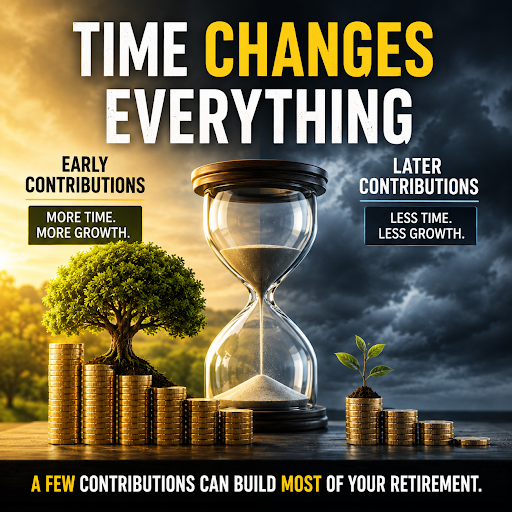
Only a Few 401(k) Contributions Build Most of Your Retirement
FAQs
What is early retirement savings?
Early retirement savings refers to the process of setting aside money and assets during one’s working years in order to achieve financial independence and retire earlier than the traditional retirement age.
Why is early retirement savings important?
Early retirement savings is important because it allows individuals to have the financial freedom to retire early and pursue their passions, hobbies, and interests without being dependent on a regular paycheck.
What are some common strategies for early retirement savings?
Common strategies for early retirement savings include maximizing contributions to retirement accounts such as 401(k)s and IRAs, investing in low-cost index funds, minimizing expenses, and creating multiple streams of income.
What are the potential benefits of early retirement savings?
The potential benefits of early retirement savings include having more time to pursue personal interests, travel, spend time with family, and enjoy a higher quality of life without the constraints of a traditional work schedule.
What are some challenges associated with early retirement savings?
Challenges associated with early retirement savings may include the need to save a larger percentage of income, potential market volatility, and the risk of outliving one’s savings. It’s important to carefully plan and manage early retirement savings to mitigate these challenges.