
You’ve earned it. You’ve worked hard, put in the hours, and now a well-deserved break is on the horizon. But before you can truly relax and disconnect, there’s a crucial step: understanding your pay stub. It’s not just about the money you take home; it’s a treasure trove of information about your vacation time, how much you’ve accrued, and how much you can use. Don’t let those little boxes and cryptic codes intimidate you. This guide is here to demystify your pay stub and empower you to confidently navigate your vacation benefits.
Understanding the Basics of Vacation Accrual
Before diving into your specific pay stub, it’s essential to grasp the fundamental concepts of how vacation time is typically earned. Most employers operate on an accrual system, meaning you earn a certain amount of vacation time with each pay period, or after a certain period of employment. This isn’t a lump sum given to you at the start of the year; rather, it’s a gradual accumulation that grows over time. Think of it like saving money in a bank account – each deposit adds to your balance.
How Vacation Time is Typically Earned
Your employer’s policy will dictate the specifics of your vacation accrual. Common methods include:
- Per Pay Period: This is a very common method. For example, you might earn 3.08 hours of vacation for every 40 hours worked. This translates to roughly two weeks of vacation per year if you work consistently. The exact number of hours earned per pay period will be detailed in your employee handbook or HR policy. Your pay stub will reflect this accrual, showing the hours earned in the current period.
- Monthly or Annual Accrual: Some employers might grant vacation time on a monthly or annual basis. While less common for actual tracking on a pay stub, it still forms the basis of your overall entitlement. The pay stub will then simply show the running balance, reflecting the continuous earning.
- Based on Years of Service: Your vacation entitlement often increases as you gain seniority with a company. For instance, after one year, you might get 10 days, but after five years, it could jump to 15 days. While your pay stub won’t necessarily show the “years of service” factor directly, it will reflect the result of that factor in your accumulated balance. If your accrual rate changes after a certain anniversary, your pay stub will begin to show the updated accrual.
Decoding Common Accrual Terms
You’ll encounter specific terminology on your pay stub related to vacation time. Familiarizing yourself with these terms will make the process much smoother:
- Accrued Vacation: This refers to the total amount of vacation time you have earned and have available to use. It’s your current balance.
- Earned Vacation: This is the amount of vacation time you have accumulated within the current pay period. It’s the incremental addition to your accrued balance.
- Used Vacation: This is the amount of vacation time you have already taken and deducted from your accrued balance.
- Available Vacation: This is often synonymous with accrued vacation, but it might also take into account any limitations or caps on how much vacation can be carried over from year to year. Some companies have a “use it or lose it” policy, so understanding your available balance is crucial.
- Carryover: This refers to any vacation time that you did not use within the calendar or fiscal year and that is allowed to be carried over into the next year. Your pay stub might show a “previous year balance” or a “carryover amount.”
Understanding your pay stub is essential for managing your finances, especially when planning for vacations. To gain insights into how to effectively read your pay stub, you can refer to this informative article that breaks down the key components and helps you track your earnings and deductions. For more detailed guidance, check out this related article on vacation budgeting and financial planning at How Wealth Grows.
Pinpointing Vacation Details on Your Pay Stub

Your pay stub, while sometimes looking like a puzzle, contains specific sections dedicated to tracking your leave balances, including vacation. Learning to locate and interpret these sections is key to understanding your vacation benefits. It’s not always a prominent, standalone section; sometimes it’s integrated with other leave types.
Locating the Leave Balances Section
Most pay stubs will have a section dedicated to displaying various leave balances. This might be a separate table or a series of lines within a broader benefits summary. Look for headings that say “Leave Balances,” “Time Off,” “Vacation Accrual,” “Paid Time Off (PTO),” or similar. If you don’t see an obvious section, check the entire stub carefully, as it could be a less prominent line item. Some systems might even have a separate online portal where you can view more detailed leave information, but your pay stub will generally provide a snapshot.
Identifying Vacation-Specific Line Items
Once you’ve found the leave balances section, you’ll need to identify the specific line item that pertains to your vacation time. This will usually be clearly labeled.
- “Vacation” or “Vacation Time”: This is the most straightforward label. It will typically show your current accrued balance.
- “PTO” (Paid Time Off): Many companies combine vacation, sick leave, and personal days into a single “PTO” bucket. If your company uses PTO, this line item will represent your total available time for all types of leave, including vacation. You’ll need to refer to your company policy to understand how much of that PTO is specifically designated for vacation.
- “Annual Leave” or “Holiday Pay”: These terms might also be used, though “annual leave” is often a broader term that can encompass vacation.
Understanding the Numbers: Accrued vs. Used vs. Available
Within these line items, you’ll see figures that represent your vacation balance. It’s crucial to understand what each number signifies:
- Beginning Balance: This might be shown at the start of the pay period, representing what you had before any new accruals or usage.
- Earned This Period: This is the amount of vacation time you’ve accumulated during the current pay cycle. It’s the incremental increase to your balance.
- Used This Period: If you’ve taken vacation days during this pay period, this is where it will be reflected.
- Ending Balance / Current Balance / Accrued Balance: This is the most important number for you. It represents your total accumulated vacation time available to use as of the date of the pay stub. This is the figure you’ll rely on when planning your time off.
- Carryover: Sometimes, a separate line might indicate how much vacation time has been carried over from the previous year, especially if there are limits on carryover.
Calculating Your Vacation Earn Rate

Knowing how much vacation you’re earning per pay period is essential for planning and ensuring accuracy. This “earn rate” is usually determined by your company’s policy and your length of service. Your pay stub can often help you verify this rate.
Deducing Your Earn Rate from Pay Stub Data
While your pay stub might not explicitly state your “earn rate per hour/pay period,” you can often deduce it by comparing the “Earned This Period” amount to your hours worked.
- Method 1: Using Hours Worked: If your pay stub shows your total hours worked for the period and the amount of vacation earned during that period, you can calculate your earn rate. For example, if you worked 80 hours in a two-week pay period and the stub shows you earned 6.16 hours of vacation, your earn rate is 6.16 hours / 80 hours = 0.077 hours of vacation per hour worked.
- Method 2: Using Pay Period Accrual: If your company accrues vacation on a per-pay-period basis (e.g., 3.08 hours per 40-hour week), you can cross-reference this with what’s shown on your stub. If you consistently see a certain amount of vacation earned each pay period (assuming consistent work hours), you can be confident in that accrual rate.
Recognizing Variations in Earn Rates
It’s important to remember that your earn rate might not be static. As mentioned earlier, many companies offer increased vacation accrual based on your tenure.
- Length of Service Milestones: Your pay stub should reflect any changes in your earn rate after you reach a specific employment anniversary. If you’ve just hit a milestone, double-check your latest pay stub to ensure the earned vacation amount has increased accordingly.
- Full-Time vs. Part-Time: If you’re a part-time employee, your vacation accrual will likely be prorated. Your earn rate might be lower per hour worked compared to a full-time employee, or you might earn vacation only for hours worked up to a certain threshold.
Understanding Vacation Balances and Limits
Your pay stub provides a snapshot of your vacation balance, but it’s crucial to understand the policies that govern how you can use and carry over this time. Ignoring these limits can lead to disappointment or a loss of earned benefits.
Deciphering Carryover Policies
Many employers have policies regarding how much vacation time you can carry over from one year to the next. This is often a critical piece of information that your pay stub might hint at but not fully explain.
- “Use It or Lose It” Scenarios: Some companies have a strict “use it or lose it” policy, meaning any vacation time not used by a specific date (usually the end of the calendar or fiscal year) is forfeited. Your pay stub might show a “Use By” date for accrued vacation, or a dwindling balance if you haven’t taken time off.
- Annual Carryover Limits: More commonly, companies allow you to carry over a certain number of vacation days. For instance, you might be allowed to carry over a maximum of 40 hours (5 days) of unused vacation. Any amount above this limit will be forfeited. Your pay stub might show a separate “Carryover” line, or you might need to infer it by comparing your current year’s ending balance to your previous year’s ending balance and accounting for the earned vacation during the current year.
- “Grandfathered” Time: In some rare cases, if a company policy changes regarding vacation accrual or carryover, existing employees might be “grandfathered” under the old policy. This is usually outlined in your employment contract or company policy documents.
The Impact of Different Leave Types
If your company uses a combined Paid Time Off (PTO) system, understanding how it works is vital. Your pay stub will show a single PTO balance, but the underlying allocation of that balance might be important.
- PTO vs. Separate Vacation/Sick: If your stub clearly distinguishes between “Vacation” and “Sick” time, you’ll know exactly how much is dedicated to each. If it only shows “PTO,” you’ll need to refer to your employee handbook to understand the breakdown or how much of that PTO can be used for vacation purposes. Some PTO policies might require you to designate the type of leave when you request it.
- Vacation Accrual within PTO: Even within a PTO system, your vacation accrual might be calculated differently from your sick time accrual. Your pay stub might reflect this underlying calculation in the “Earned This Period” section for PTO, even if it doesn’t break it down further on the stub itself.
Understanding your pay stub is essential for managing your finances, especially when planning for vacation. Many people overlook the details that can impact their savings for a getaway, such as deductions and benefits. To gain a clearer insight into how to read your pay stub effectively, you might find this informative article helpful. It provides valuable tips and examples that can guide you through the process. For more information, check out this related article that breaks down the components of your pay stub and how they relate to your vacation planning.
Planning Your Vacation with Confidence
| Pay Stub Section | Description | Vacation-Related Metric | How to Read |
|---|---|---|---|
| Employee Information | Basic details about the employee | Vacation Accrual Rate | Check if the rate of vacation hours earned per pay period is listed here |
| Earnings | Breakdown of wages and bonuses | Vacation Pay | Look for any vacation pay earned or paid out during this pay period |
| Deductions | Amounts subtracted from gross pay | Vacation Advance or Deductions | Identify if any vacation time has been advanced or deducted from pay |
| Accrued Time Off | Summary of earned and used leave | Vacation Hours Accrued | Review total vacation hours earned to date |
| Accrued Time Off | Summary of earned and used leave | Vacation Hours Used | Check how many vacation hours have been taken or used |
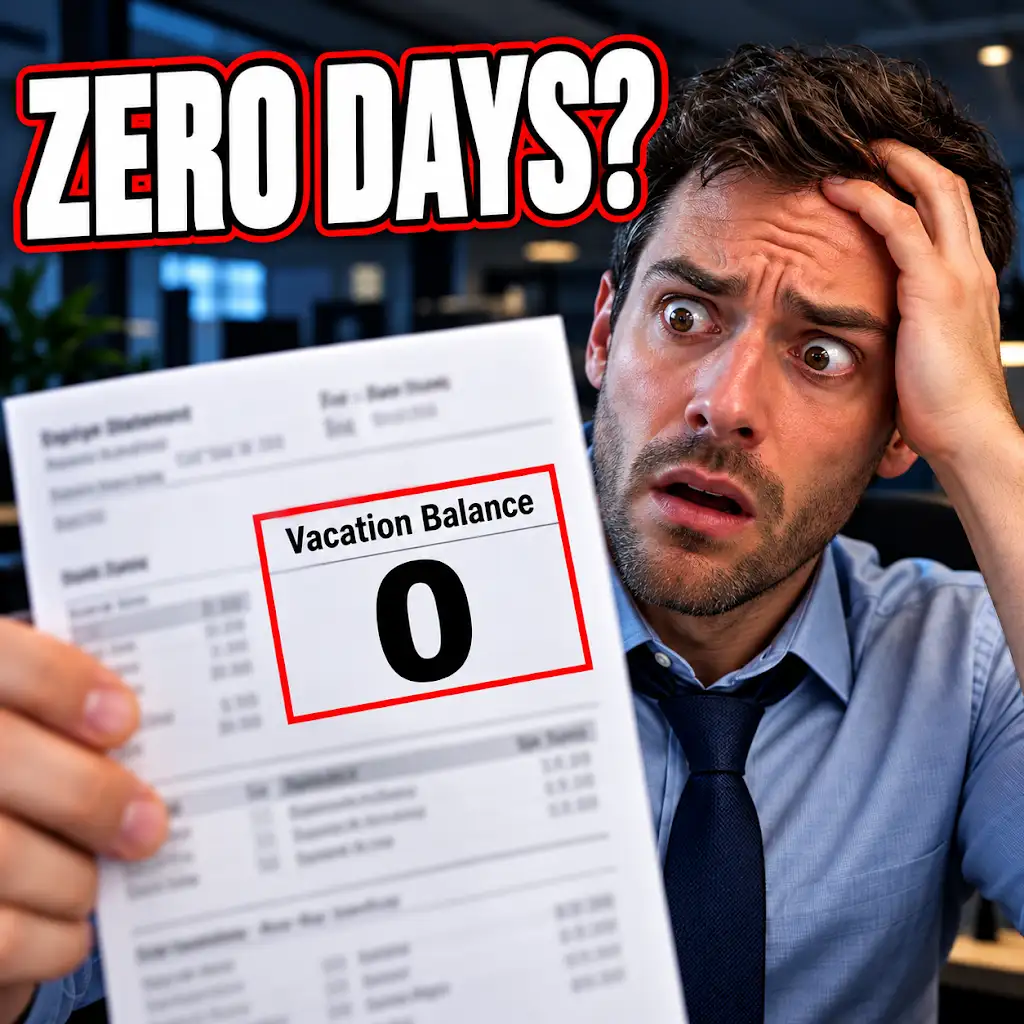
| Accrued Time Off | Summary of earned and used leave | Vacation Balance | Look for the remaining vacation hours available for use |
| Pay Period Dates | Start and end dates of the pay period | Vacation Time Taken During Period | Confirm if vacation was taken during this pay period by checking dates |
Now that you’re armed with the knowledge to read your pay stub, you can confidently plan your well-deserved breaks. This involves understanding your available time, coordinating with your employer, and making informed decisions about when to take your vacation.
Verifying Your Available Vacation Time for Planning
Your pay stub is your primary tool for knowing exactly how much vacation you have at your disposal.
- Reviewing Your Ending Balance: Before you even start thinking about destinations, take a close look at the “Ending Balance” or “Accrued Vacation” on your most recent pay stub. This is your starting point.
- Accounting for Future Accruals: If you’re planning a vacation several weeks or months in the future, you can estimate how much more vacation you’ll accrue by the time you want to leave. Multiply your per-pay-period accrual by the number of pay periods until your planned vacation. This gives you a more accurate picture of your total available time.
- Considering Pending Accruals: Be aware that your pay stub reflects the balance as of the pay period’s end date. If you submit a vacation request that spans across pay periods, ensure you factor in the vacation you’ll earn during that time.
Navigating the Vacation Request Process
Understanding your pay stub empowers you to initiate and navigate the vacation request process smoothly.
- Knowing When to Request: Once you have a clear idea of your available vacation and potential future accruals, you can confidently propose vacation dates. It’s generally a good practice to request time off as far in advance as possible, especially for longer vacations, to allow your employer sufficient time to approve it and arrange for coverage.
- Communicating with Your Manager: Your pay stub gives you the concrete data to discuss your vacation plans with your manager. You can confidently state, “Based on my pay stub, I have X hours of vacation available, and I’d like to request Y days off from [start date] to [end date].” This demonstrates you’ve done your homework and are prepared.
- Ensuring Accurate Deductions: After your vacation, always check your subsequent pay stub to confirm that the correct amount of vacation time has been deducted from your balance. Mistakes can happen, and being able to spot them quickly will save you potential headaches.
By taking the time to understand your pay stub, you’re not just ensuring you’re being paid correctly; you’re also gaining valuable insight into your earned benefits, including your precious vacation time. This knowledge empowers you to plan your breaks with confidence, take advantage of your hard-earned time off, and truly enjoy those moments of relaxation. So, the next time you receive your pay stub, don’t just skim it – dive in and unlock the secrets of your vacation entitlements.
Unlimited PTO Sounds Generous—Until You Leave the Job
FAQs
What information should I look for on my pay stub regarding vacation time?
On your pay stub, you should look for details such as the amount of vacation time you have accrued, the rate at which you earn vacation time, any vacation time used during the pay period, and the remaining balance of vacation time.
How can I calculate the value of my vacation time on my pay stub?
To calculate the value of your vacation time on your pay stub, multiply your hourly rate by the number of vacation hours used during the pay period. This will give you the amount deducted from your paycheck for using vacation time.
What should I do if I notice an error in the vacation time information on my pay stub?
If you notice an error in the vacation time information on your pay stub, you should immediately bring it to the attention of your HR department or payroll administrator. They will be able to investigate the issue and make any necessary corrections.
Can I request a printed copy of my pay stub for vacation time if I receive electronic pay stubs?
Yes, you can request a printed copy of your pay stub specifically for vacation time if you receive electronic pay stubs. Your HR department or payroll administrator should be able to provide you with a printed copy upon request.
Is it important to keep track of my vacation time information on my pay stub?
Yes, it is important to keep track of your vacation time information on your pay stub to ensure accuracy in the amount of vacation time you have accrued, used, and have remaining. This will help you plan your time off effectively and address any discrepancies promptly.