The Silent Saboteur: Understanding Cash Drag
You’ve worked hard, saved diligently, and now you have a sum of money set aside for the future. Perhaps it’s for retirement, a down payment on a home, or to build generational wealth. Whatever your goal, you’re faced with a fundamental decision about how to deploy those funds. One of the most significant, yet often overlooked, challenges you’ll encounter is what financial advisors call “cash drag.” This isn’t a dramatic market crash or a sudden economic downturn; it’s a far more insidious force that silently erodes your long-term growth potential.
Cash drag occurs when a significant portion of your investment portfolio is held in low-yielding assets, most commonly cash or cash equivalents like money market funds or short-term government bonds. While these assets offer safety and liquidity, their returns are typically minimal, often failing to keep pace with inflation. In essence, you’re holding onto “dry powder” that, while seemingly prudent, is actively hindering your ability to achieve your financial aspirations. The longer you hold onto this cash, the more opportunities for growth you miss out on, and the greater the compounded gains you forfeit.
Think of it like this: imagine you have a seed you want to plant to grow a mighty oak tree. You could keep the seed in a perfectly safe, climate-controlled box indefinitely. It would remain protected, unchanged, and readily available. However, it would never sprout, never grow, and certainly never become that magnificent tree. Investing your capital in low-yield assets is akin to keeping your investment seed in that protective box. It’s safe, yes, but it’s also stagnant. The potential for exponential growth, for that seed to transform into a robust tree, is entirely unrealized.
The allure of cash is understandable. It represents security. In times of uncertainty, the instinct to hoard cash is powerful. You might feel a sense of control knowing that your money is readily accessible, free from the volatility of the stock market. This psychological comfort is a significant driver of cash drag. However, this comfort comes at a substantial cost over the long term. Inflation, the silent thief of purchasing power, steadily diminishes the real value of your cash holdings. If your cash is earning 1% and inflation is running at 3%, you’re effectively losing 2% of your purchasing power each year. Over a decade or more, this erosion can be substantial, leaving you with less real wealth than you started with, even if the nominal amount of cash appears to have grown.
Understanding the concept of opportunity cost is crucial in grasping the full impact of cash drag. Every dollar held in a low-yield asset is a dollar not invested in assets with the potential for higher returns. The stock market, despite its inherent risks, has historically delivered significantly higher returns than cash over extended periods. By keeping too much in cash, you are consciously choosing not to participate in that growth. This missed opportunity can compound over time, creating a widening gap between your actual portfolio performance and what it could have achieved.
The Hidden Costs of Stagnant Capital
While the headline figures for interest rates on savings accounts or money market funds might seem appealing in certain environments, their long-term impact when compared to equities is stark. Let’s consider a hypothetical scenario. Suppose you have $100,000 to invest. If you keep this in a savings account earning 1% annually, after 10 years, you’ll have approximately $110,462. While this represents a gain, it’s a modest one. Now, consider if that same $100,000 were invested in an equity fund that, over the same 10 years, achieved an average annual return of 8%. Your investment would grow to approximately $215,892. The difference is staggering – over $105,000 more in your portfolio, simply by choosing an asset class with a higher growth potential.
This disparity becomes even more pronounced over longer investment horizons. For a 30-year period, the $100,000 invested at 1% would grow to roughly $134,785. The same $100,000 invested at 8% in equities would balloon to approximately $1,006,266. The difference here is nearly $871,000. This illustrates the power of compounding, but more importantly, the destructive force of cash drag. Your cash isn’t just sitting there; it’s actively working against your long-term wealth accumulation.
The psychological aspect of cash drag cannot be overstated. In the face of market volatility, the temptation to retreat to the perceived safety of cash is immense. News headlines often amplify fear, leading investors to make decisions based on short-term emotions rather than long-term financial strategies. This emotional response can lead to a pattern of selling during downturns and holding onto cash, only to miss the subsequent recovery and growth. This “buy high, sell low” behavior, often driven by a fear of further losses, is a direct consequence of succumbing to cash drag.
Furthermore, many investors misunderstand the role of cash in a portfolio. While a small emergency fund and a strategic allocation for short-term goals are essential, holding substantial amounts of cash for long-term growth objectives is a fundamental misallocation of capital. Your investment capital should be working for you, not languishing in a low-yield environment. The key lies in understanding the distinction between liquidity needs and growth objectives, and aligning your asset allocation accordingly.
Investors often grapple with the long-term growth potential of equities compared to the cash drag associated with holding liquid assets. A related article that delves into this topic is available at How Wealth Grows, where the author discusses the historical performance of stock markets and the implications of inflation on cash holdings. The insights provided in this piece can help investors make informed decisions about balancing their portfolios to optimize growth while minimizing the risks associated with cash drag.
The Compelling Case for Equities
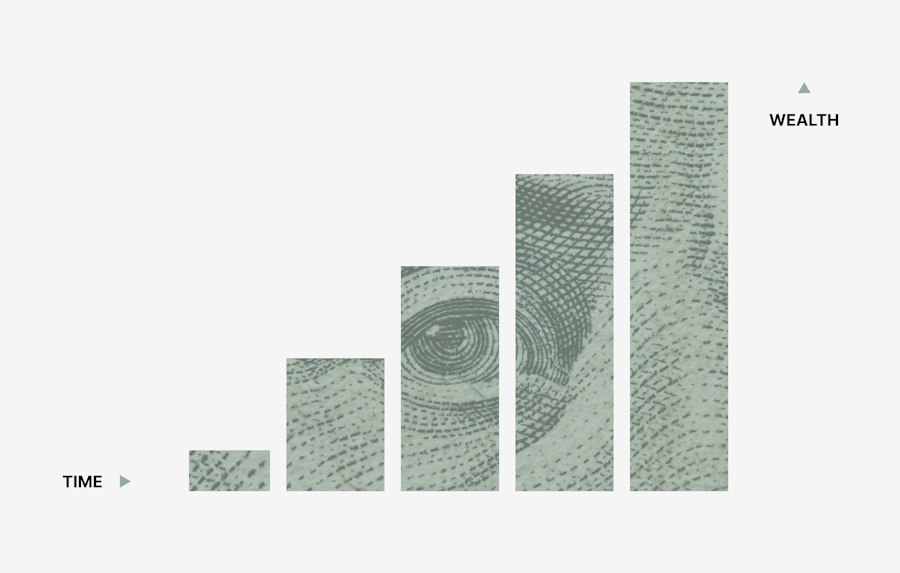
Equities, or stocks, represent ownership in publicly traded companies. When you invest in equities, you are essentially buying a piece of a business. This ownership gives you a claim on the company’s assets and earnings. Historically, equities have been a powerful engine for wealth creation, driven by several key factors that contribute to their long-term growth potential.
The fundamental driver of equity returns is the growth of the underlying businesses. As companies innovate, expand, and become more profitable, their value increases. This increase in value is reflected in their stock price. Companies that consistently grow their earnings, expand their market share, and generate strong returns on their investments tend to see their stock prices appreciate over time. This appreciation, coupled with dividends (a portion of profits distributed to shareholders), forms the basis of equity returns.
Consider the innovation and technological advancements that have occurred over the past century. Companies that have been at the forefront of these changes, from the industrial revolution to the digital age, have seen their stock prices soar. Investing in these companies, or in companies that benefit from these broader trends, allows you to participate in their success. The growth of the global economy itself is also a significant tailwind for equities. As populations grow and economies develop, consumer spending increases, driving demand for goods and services, which in turn benefits the companies that provide them.
Dividends also play a crucial role in the long-term performance of equities. Many established companies distribute a portion of their profits to shareholders in the form of dividends. These dividends can provide a steady stream of income, which can be reinvested to purchase more shares, thereby accelerating the compounding effect of your investment. Over decades, reinvested dividends can contribute a significant portion of your overall portfolio returns, further enhancing the growth potential of your equity holdings.
Navigating Market Volatility with a Long-Term Lens
The most common argument against equities is their perceived volatility. It’s true that stock markets can fluctuate significantly in the short term. Prices can rise and fall on a daily basis due to a multitude of factors, including economic news, company-specific events, geopolitical developments, and investor sentiment. This volatility can be unnerving, and it’s the primary reason many investors shy away from equities.
However, when you adopt a long-term perspective, the impact of short-term volatility diminishes considerably. The stock market has a well-documented history of recovering from downturns and reaching new highs. The key is to not let short-term price movements dictate your investment decisions. Instead, focus on the underlying fundamentals of the companies you invest in and the long-term growth prospects of the market as a whole.
Think of it as a marathon runner. They don’t sprint every step of the way. There are challenging hills and periods of fatigue, but they maintain a steady pace, focusing on the finish line. Similarly, as an equity investor, you will encounter market downturns (the hills), but by staying invested and focusing on your long-term financial goals (the finish line), you can weather these periods and ultimately benefit from the market’s upward trend.
Diversification is another critical strategy for managing equity risk. Instead of investing all your money in a single stock or industry, spreading your investments across various sectors, geographies, and asset classes can help mitigate the impact of any single investment performing poorly. This is where mutual funds and exchange-traded funds (ETFs) become invaluable. They offer instant diversification, allowing you to own a basket of stocks with a single investment.
The power of compounding in equities is undeniable. When you reinvest your dividends and benefit from capital appreciation, your returns start to generate their own returns. This snowball effect is most potent over extended periods. By consistently investing in equities and allowing your investments to grow, you harness the full power of compounding, which is a key differentiator between static cash holdings and dynamic equity investments.
The Strategic Allocation: Finding Your Balance

The decision isn’t necessarily an all-or-nothing proposition between equities and cash. The optimal strategy for you involves finding a strategic allocation that balances your need for growth with your tolerance for risk and your specific financial goals. This balance is unique to each individual and can evolve over time.
Your time horizon is a critical factor in determining your asset allocation. If you have a long time horizon, say 20-30 years until retirement, you can afford to take on more risk and allocate a larger portion of your portfolio to equities. This allows your investments ample time to recover from any short-term market downturns and benefit from long-term growth. Conversely, if your financial goal is short-term, such as saving for a down payment on a house in the next 2-3 years, holding a significant portion of your funds in cash or very conservative investments is more appropriate. The risk of losing principal in a volatile market would be too great given your short time frame.
Your risk tolerance is another paramount consideration. How comfortable are you with the idea of your investment portfolio fluctuating in value? Some individuals are naturally more risk-averse and prefer the stability of lower-return assets, even if it means sacrificing some growth potential. Others are more comfortable with volatility, understanding that it’s often a necessary component of higher returns. Your risk tolerance should be a guiding principle in determining the proportion of equities versus cash in your portfolio. Be honest with yourself about your emotional response to market declines; understanding this will help you construct a portfolio you can stick with.
Building an Emergency Fund: The Prudent Foundation
Before you even consider allocating capital to growth-oriented assets like equities, you absolutely must have a robust emergency fund. This is your financial safety net, designed to cover unexpected expenses without derailing your long-term investment plans or forcing you to sell investments at an inopportune time. Typically, an emergency fund should cover 3-6 months of essential living expenses. This includes rent or mortgage payments, utilities, groceries, insurance premiums, and any other non-discretionary spending.
The primary purpose of an emergency fund is to provide liquidity and peace of mind. It ensures that you can handle unforeseen events like job loss, medical emergencies, or major home repairs without having to tap into your investments. Holding this fund in easily accessible, low-risk accounts like high-yield savings accounts or money market funds is crucial. The goal here is safety and accessibility, not growth. The returns on these accounts are secondary to their ability to be readily available when you need them.
While an emergency fund is essential, it’s also important to recognize that it’s a separate entity from your long-term investment portfolio. Once your emergency fund is adequately funded, any additional savings should be directed towards assets that can generate growth. Continuing to hoard excessive amounts of cash beyond your emergency fund needs will lead to the cash drag we’ve discussed, hindering your ability to achieve your longer-term financial objectives. It’s about having enough cash for emergencies, not all the cash you can muster for perceived safety.
Rebalancing: Maintaining Your Ideal Mix
Once you’ve established your target asset allocation, it’s not a set-it-and-forget-it strategy. Market performance will inevitably cause your portfolio’s allocation to drift. For instance, if equities perform exceptionally well, they might grow to represent a larger percentage of your portfolio than you initially intended. Conversely, if a particular sector underperforms, its weight in your portfolio might shrink. This drift can lead to your portfolio becoming more aggressive or more conservative than your risk tolerance dictates.
This is where rebalancing comes in. Rebalancing is the process of periodically adjusting your portfolio to bring it back to your target asset allocation. This typically involves selling some of the assets that have grown beyond their target allocation and buying more of the assets that have fallen below their target. For example, if your target is 70% equities and 30% bonds, and equities have surged to 80% of your portfolio, you would sell 10% of your equity holdings and use the proceeds to buy more bonds.
The frequency of rebalancing depends on your individual circumstances and market conditions, but it’s commonly done on an annual or semi-annual basis. Rebalancing forces you to “sell high” (assets that have performed well) and “buy low” (assets that have underperformed), which is a disciplined investment strategy that can enhance long-term returns. It also helps to manage risk by ensuring that your portfolio doesn’t become overly concentrated in any one asset class. Think of it as a regular tune-up for your financial engine, ensuring it’s running optimally according to your design.
The Long Game: Investing for Future Generations
The impact of your investment decisions extends far beyond your own lifetime. By making informed choices today, you have the power to build wealth that can benefit future generations, providing them with opportunities and financial security. Understanding how to harness the power of equities and avoid the pitfalls of cash drag is a crucial step in this process.
When you invest in equities for the long term, you are not just growing your own wealth; you are contributing to the economic growth of businesses and, by extension, society as a whole. The capital you invest can fund innovation, create jobs, and drive progress. This ripple effect can have a profound and lasting impact. By choosing to grow your wealth rather than letting it stagnate, you are setting a positive example and creating a legacy of financial prudence.
Furthermore, a well-managed and growing investment portfolio can provide future generations with a head start. It can fund their education, help them start their own businesses, or provide a safety net during challenging times. This proactive approach to wealth building ensures that your financial legacy is a source of strength and opportunity, rather than a burden. The compounding effect of consistent, long-term equity investments can create a significant pool of capital that can be passed down through generations, multiplying its impact over time.
The Power of Compounding: Your Wealth Multiplier
We’ve touched upon compounding multiple times, but its significance in long-term wealth building cannot be overstated. Compounding is the process by which your investment earnings generate their own earnings. It’s like a snowball rolling down a hill, picking up more snow and growing larger with each rotation. In financial terms, this means that your initial investment, plus all the accumulated interest and dividends, begins to earn returns.
The longer your money is invested, the more powerful compounding becomes. This is precisely why starting early is so crucial. Even small, consistent investments made early in your career can grow into substantial sums over decades, thanks to the magic of compounding. Cash drag, by its very nature, actively suppresses this effect. When your money is sitting in a low-yield account, the earnings are minimal, and therefore, the snowball effect of compounding is significantly diminished or even non-existent.
Consider the difference between earning simple interest and compound interest. Simple interest is calculated only on the principal amount. Compound interest, on the other hand, is calculated on the principal amount plus any accumulated interest. Over the long term, this difference is enormous. By choosing equities, you are opting for an asset class that has historically provided the fuel – higher returns – for compounding to work its magic.
Passing on Financial Literacy and Legacy
Beyond the tangible assets, passing on financial literacy and a sound approach to investing is arguably one of the most valuable legacies you can bestow upon future generations. Educating them about the importance of saving, the power of compounding, the risks and rewards of different asset classes, and the dangers of cash drag will equip them with the knowledge to make sound financial decisions throughout their lives.
Your investment decisions today can create the foundation for their financial well-being. By demonstrating a disciplined approach to wealth building, you can inspire them to adopt similar habits. Sharing your knowledge and experiences, and perhaps even involving them in the planning process as they mature, can be incredibly empowering. This holistic approach to legacy building ensures that your financial prudence extends beyond the numbers on a balance sheet, shaping a more secure and prosperous future for those who follow.
Investors often grapple with the long-term growth potential of equities compared to the cash drag associated with holding liquid assets. A recent article discusses how equities can significantly outpace cash over extended periods, highlighting the importance of understanding market dynamics and the power of compound growth. For those interested in exploring this topic further, you can read more about it in this insightful piece on wealth accumulation strategies at How Wealth Grows. This resource provides valuable insights into making informed investment decisions that can enhance financial growth over time.
Taking Action: Your Path to Unlocking Growth
| Metric | Equities | Cash | Notes |
|---|---|---|---|
| Average Annual Return (10-20 years) | 7% – 10% | 1% – 3% | Equities generally outperform cash over long periods |
| Inflation Adjustment | Returns typically exceed inflation | Returns often below inflation | Cash can lose purchasing power over time |
| Volatility (Standard Deviation) | 15% – 20% | 0.5% – 2% | Equities are more volatile but offer higher growth |
| Liquidity | High | Very High | Both are liquid, but cash is immediately accessible |
| Risk of Capital Loss | Moderate to High | Very Low | Cash preserves capital but grows slowly |
| Opportunity Cost (Cash Drag) | Low | High | Holding cash can reduce overall portfolio growth |
| Suitability for Long-Term Growth | High | Low | Equities preferred for wealth accumulation |
The journey from understanding cash drag and the potential of equities to actually implementing a growth-oriented strategy is one that requires careful planning and decisive action. It’s about moving from passive observation to active participation in your financial future.
The first and most crucial step is to conduct an honest assessment of your current financial situation. This involves understanding your income, expenses, debts, and most importantly, the current allocation of your savings and investments. Where is your money currently deployed? How much is in low-yield accounts, and what is your ultimate goal for these funds? This self-assessment will be the bedrock upon which you build your investment strategy.
Creating Your Personalized Investment Plan
Once you have a clear picture of your current financial standing, it’s time to develop a personalized investment plan. This plan should outline your financial goals, your time horizon for each goal, and your risk tolerance. Based on these factors, you can then determine your target asset allocation – the ideal mix of equities, bonds, and other asset classes that aligns with your objectives.
This plan should be a living document, reviewed and potentially adjusted periodically as your circumstances change, your goals evolve, or as you gain more experience with investing. Don’t be afraid to seek professional guidance if you feel overwhelmed or unsure about how to create an effective plan. A qualified financial advisor can provide invaluable expertise in tailoring a strategy that’s right for you.
Embracing Long-Term Investing with Discipline
The transition to a more equity-focused investment strategy requires discipline and a commitment to the long term. Resist the urge to react to short-term market fluctuations. Focus on your predetermined plan and trust in the historical performance of equities to drive your long-term growth.
This means establishing a consistent investment cadence, whether through regular contributions to your investment accounts or by reinvesting dividends. It also means avoiding the temptation to time the market, which is notoriously difficult and often leads to suboptimal results. By sticking to your plan, you harness the power of dollar-cost averaging, which involves investing a fixed amount of money at regular intervals, regardless of market conditions. This strategy can help reduce risk and improve returns over time.
Ultimately, the goal is to shift your mindset from one that prioritizes perceived safety above all else to one that embraces calculated risk in pursuit of substantial long-term growth. By actively managing cash drag and strategically allocating your capital to equities, you are not just investing your money; you are investing in your future, unlocking your potential for wealth creation, and building a more secure and prosperous tomorrow for yourself and potentially for generations to come. Your financial future is within your control; it’s time to take the reins and let your capital work for you.

The 4% Retirement Mistake That’s Secretly Costing You Thousands
FAQs
What is the long-term growth potential of equities compared to cash drag?
Equities have historically shown higher long-term growth potential compared to cash drag. While cash drag may provide stability and liquidity, equities have the potential to generate higher returns over time due to their exposure to the stock market.
How does cash drag impact investment returns?
Cash drag refers to the portion of an investment portfolio that is held in cash or cash equivalents, earning minimal returns. This can lower the overall return of the portfolio, especially during periods of market growth when equities outperform cash holdings.
What are the factors that contribute to the growth potential of equities?
The growth potential of equities is influenced by various factors such as economic conditions, company performance, market trends, and investor sentiment. Diversification, time horizon, and risk tolerance also play a significant role in determining the growth potential of equities.
How can investors mitigate the impact of cash drag on their portfolio?
Investors can mitigate the impact of cash drag by carefully balancing their allocation between equities and cash holdings. Maintaining a diversified portfolio, regularly rebalancing, and staying invested for the long term can help reduce the negative effects of cash drag on investment returns.
What are the risks associated with investing in equities for long-term growth?
Investing in equities for long-term growth comes with risks such as market volatility, economic downturns, company-specific risks, and inflation. It is important for investors to assess their risk tolerance and investment goals before allocating a significant portion of their portfolio to equities.