Understanding Bond Fund Price Fluctuations
You’re invested in a bond fund, and lately, you’ve noticed its value ticking up and down. Perhaps it’s even dipped when you were expecting stability. This can be unsettling, especially if you’ve always associated bonds with predictable, steady returns. The culprit behind these movements, particularly in the current economic climate, is often a symphony of rising interest rates. Understanding how these rates interact with your bond fund is crucial to navigating your investment journey with confidence.
When interest rates rise, it’s not just about borrowing costs becoming more expensive. It has a direct and inverse relationship with the price of existing bonds. Imagine you bought a bond a year ago when interest rates were lower. That bond pays a fixed coupon, let’s say 3%. Now, new bonds are being issued with a coupon of, say, 4%, reflecting the higher prevailing interest rates. Why would an investor buy your older, lower-yielding 3% bond when they can get a brand-new one offering 4%? To make your older bond attractive, its price must fall. This price drop effectively increases its yield to maturity, bringing it closer to the current market rate.
Your bond fund, being a basket of many such bonds with varying maturities and coupon rates, experiences the collective impact of these price adjustments. When interest rates rise, the prices of the bonds within your fund generally decline, leading to a decrease in the fund’s net asset value (NAV), which is the price you see quoted for your fund shares. Conversely, when interest rates fall, the prices of existing bonds with higher coupon rates become more attractive, and their prices tend to rise, boosting your fund’s NAV. This inverse relationship is a fundamental concept in fixed-income investing and is key to understanding the volatility you might be witnessing.
Bond fund price fluctuations during rising interest rates can significantly impact investors’ portfolios, making it essential to stay informed about market trends. For a deeper understanding of this topic, you can explore a related article that discusses the dynamics of bond funds in the context of interest rate changes. This resource provides valuable insights into how rising rates affect bond prices and offers strategies for navigating these fluctuations. To read more, visit this article.
The Mechanics of Interest Rate Sensitivity

At the heart of your bond fund’s price fluctuations lies the concept of interest rate sensitivity, often measured by a metric called “duration.” You might have seen this term mentioned in fund prospectuses or financial news. Duration isn’t simply the average maturity of the bonds in the fund; it’s a more sophisticated measure that accounts for the timing of all cash flows from a bond (coupon payments and principal repayment) and how sensitive its price is to changes in interest rates.
Duration: A Measure of Price Sensitivity
Think of duration as the “interest rate elasticity” of a bond. A bond with a higher duration is more sensitive to interest rate changes. If interest rates rise by 1%, a bond with a duration of 5 years might see its price fall by approximately 5%. Conversely, if interest rates fall by 1%, its price might rise by approximately 5%. This relationship is not perfectly linear, especially for larger rate changes, but it provides a good general understanding.
Several factors influence a bond’s duration. The most significant is its maturity. Longer-maturity bonds generally have higher durations because their principal is repaid far in the future, making their present value more susceptible to discounting at different interest rates. Another factor is the coupon rate. Bonds with lower coupon rates tend to have higher durations than those with higher coupon rates, assuming the same maturity. This is because a larger portion of the bond’s total return comes from the principal repayment at maturity, rather than from periodic coupon payments.
Your bond fund’s duration is essentially a weighted average of the durations of all the individual bonds it holds. Therefore, a fund that invests primarily in long-term bonds will have a higher overall duration and thus be more sensitive to interest rate movements. If you’re experiencing significant price swings in your bond fund, it’s a good indication that the fund likely holds bonds with longer maturities or lower coupon rates, contributing to a higher overall duration. Understanding this metric can help you choose funds that align with your risk tolerance and investment horizon, especially in an environment where interest rates are expected to change.
The Yield Curve’s Influence
Beyond individual bond characteristics, the shape of the yield curve also plays a role in how your bond fund’s price reacts. The yield curve is a graphical representation of the yields of bonds with different maturities, typically at a single point in time. You’ll often hear about it being “flat,” “inverted,” or “upward-sloping.” Each shape carries implications for bond prices and, by extension, your bond fund.
An upward-sloping yield curve, which is the most common, indicates that longer-term bonds offer higher yields than shorter-term bonds. This is because investors typically demand higher compensation for locking up their money for longer periods, given the increased risks associated with inflation and interest rate changes over time. In this scenario, a diversified bond fund might see its NAV influenced by a mix of these maturities.
An inverted yield curve, where shorter-term bonds have higher yields than longer-term bonds, is often seen as a predictor of an economic slowdown or recession. In such an environment, investors may flock to the perceived safety of long-term bonds, driving their prices up and yields down. This can create opportunities for bond funds holding longer-term debt.
A flat yield curve suggests that investors expect interest rates to remain relatively stable. In this environment, the impact of maturity on bond yields is minimal. The overall sensitivity of your bond fund to rate changes will then be more heavily influenced by the specific credit quality and coupon rates of the bonds it holds. The yield curve provides a broader macroeconomic context, helping you understand the forces driving the yields of bonds across different time horizons, and consequently, influencing the overall performance of your bond fund.
The Role of Inflation and Central Bank Policy
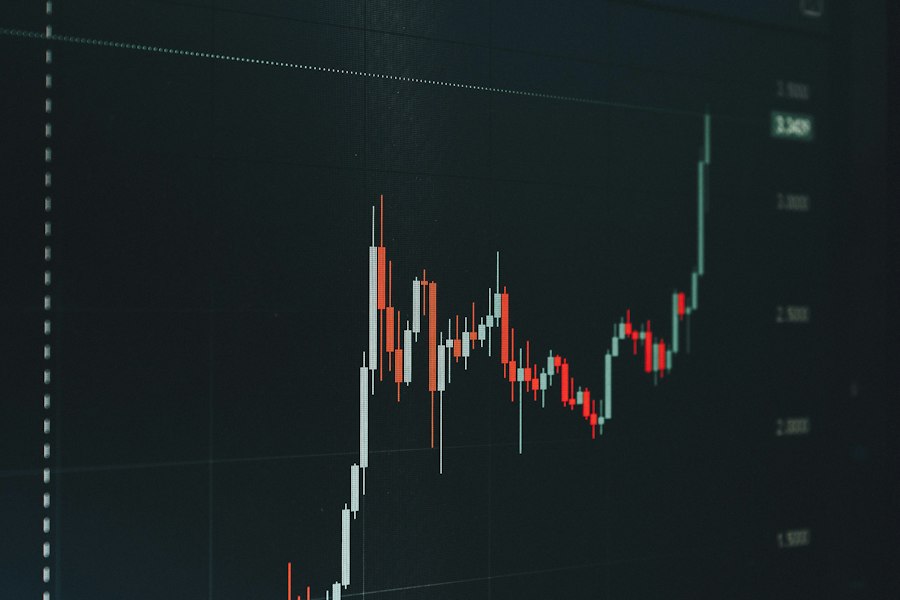
The forces driving interest rate changes are multifaceted, but two of the most significant are inflation and the actions of central banks, like the Federal Reserve in the United States. You might hear these terms frequently in economic discussions, and they are directly linked to the interest rate environment that impacts your bond fund.
Inflation’s Erosion of Purchasing Power
Inflation, in its simplest terms, is the rate at which the general level of prices for goods and services is rising, and subsequently, purchasing power is falling. When inflation is high, the fixed coupon payments from your bond and the principal you receive at maturity will buy less in the future than they do today. This erodes the real return on your investment.
To compensate for this erosion of purchasing power, investors demand higher yields on newly issued bonds. This is where the connection to rising interest rates becomes clear. Central banks often raise interest rates as a primary tool to combat inflation. By making borrowing more expensive, they aim to slow down economic activity, reduce demand, and thereby curb price increases.
If your bond fund holds bonds with fixed coupon payments, and inflation is rising, the real value of those payments diminishes. This makes existing bonds less attractive compared to newer bonds that will be issued with higher coupon rates to account for the inflation. Consequently, the prices of the bonds in your fund are likely to fall as investors seek out investments that offer better protection against rising prices. Understanding the inflation outlook is therefore crucial for anticipating potential interest rate movements and their impact on your bond holdings.
Central Banks as Interest Rate Architects
Central banks, such as the Federal Reserve, play a pivotal role in shaping the interest rate landscape. Their primary mandate often includes maintaining price stability (controlling inflation) and promoting maximum employment. To achieve these goals, they wield the powerful tool of monetary policy, which directly influences short-term interest rates.
When a central bank decides to raise interest rates, it typically does so by adjusting its target for the federal funds rate (in the US), which is the rate at which banks lend reserves to each other overnight. This action ripples through the financial system, influencing other interest rates, including those for mortgages, car loans, and importantly, newly issued bonds.
Conversely, if a central bank aims to stimulate economic growth or combat deflation, it will lower interest rates. This makes borrowing cheaper, encouraging spending and investment, and generally leads to a decrease in bond yields and an increase in bond prices.
Your bond fund’s performance is, therefore, intricately linked to the pronouncements and actions of central bankers. When you hear about a central bank “hiking rates,” it’s a signal that the cost of borrowing is increasing, and the prices of existing bonds, including those in your fund, are likely to face downward pressure. Conversely, a “rate cut” is generally good news for bond prices. Staying informed about central bank policy decisions and their outlook is essential for anticipating market movements and making informed decisions about your bond fund investments.
Different Bond Funds, Different Sensitivities
It’s important to remember that not all bond funds are created equal, and their sensitivity to rising interest rates can vary significantly. The specific types of bonds held within a fund, their maturities, and their credit quality all contribute to its overall risk profile and how it will react to a changing interest rate environment.
Short-Term vs. Long-Term Bond Funds
The most direct way to manage interest rate risk within your bond fund portfolio is by considering the maturity of the underlying bonds. Short-term bond funds, as their name suggests, invest in bonds with maturities typically ranging from one to five years. These funds are generally less sensitive to interest rate changes because their shorter time horizons mean that their principal is repaid sooner.
For example, if interest rates rise by 1%, a short-term bond fund might see its NAV decline by a smaller percentage compared to a long-term bond fund. This is because the impact of the higher discount rate on future cash flows is less pronounced over a shorter period. While short-term bond funds typically offer lower yields than their long-term counterparts, they provide greater stability and capital preservation in a rising rate environment.
Long-term bond funds, on the other hand, invest in bonds with maturities of 10 years or more, and sometimes even 30 years. These funds have higher durations and are therefore much more susceptible to price declines when interest rates rise. The inverse is also true: in a falling rate environment, long-term bond funds can offer more significant price appreciation. If you are investing in a long-term bond fund, you are essentially taking on more interest rate risk in exchange for potentially higher yields. It’s a trade-off that requires careful consideration of your investment goals and risk tolerance.
Government vs. Corporate Bond Funds
The credit quality of the bonds held within a fund also influences its sensitivity to interest rate movements, although the primary driver of price fluctuation in rising rate environments is still duration. Government bond funds, which primarily invest in debt issued by national governments (like U.S. Treasury bonds), are generally considered to be among the safest investments. Their prices are primarily driven by interest rate changes.
Corporate bond funds, however, invest in debt issued by companies. While interest rate risk is still a factor, these funds also carry credit risk – the risk that the issuer may default on its debt obligations. When interest rates rise, the prices of both government and corporate bonds tend to fall. However, in times of economic uncertainty, the credit risk associated with corporate bonds can become more pronounced. Investors may become more risk-averse, demanding higher yields on corporate bonds to compensate for the increased possibility of default. This can lead to a wider spread between the yields of corporate bonds and government bonds, further impacting the prices of corporate bond funds.
The type of corporate bond fund also matters. Investment-grade corporate bonds are issued by companies with strong financial health and a lower risk of default, while high-yield (or “junk”) bonds are issued by companies with weaker financial profiles and a higher risk of default. High-yield bonds typically have higher coupon rates to compensate for this increased risk, and they can be more volatile, not only due to interest rate changes but also due to fluctuations in credit quality and economic conditions. Therefore, when considering a bond fund, understanding whether it holds government bonds, investment-grade corporate bonds, or high-yield bonds is crucial for assessing its potential price fluctuations.
Inflation-Protected Securities Funds
In response to concerns about inflation, you might also encounter bond funds that invest in inflation-protected securities (IPS), such as Treasury Inflation-Protected Securities (TIPS) in the United States. These are specifically designed to shield investors from the erosive effects of inflation.
The principal value of TIPS, for example, is adjusted periodically based on changes in the Consumer Price Index (CPI), a common measure of inflation. When inflation rises, the principal value of the TIPS increases, and consequently, the coupon payments (which are a fixed percentage of the adjusted principal) also increase. This feature makes TIPS and funds that hold them relatively less sensitive to rising inflation and the associated upward pressure on interest rates.
However, it’s important to note that TIPS are not entirely immune to interest rate risk. Their prices can still fluctuate with changes in “real” interest rates (nominal interest rates minus expected inflation). If real interest rates rise, the price of TIPS can still fall, although typically less so than comparable nominal bonds. Investing in an IPS fund can be a strategic move when you anticipate significant inflation, as it provides a built-in hedge against its purchasing power erosion. However, you should still be aware of the potential for price volatility driven by real interest rate movements.
As investors navigate the complexities of the bond market, understanding the impact of rising interest rates on bond fund price fluctuations becomes crucial. A recent article delves into this topic, highlighting how bond prices typically fall when interest rates increase, which can significantly affect investment strategies. For a deeper insight into this phenomenon and its implications for your portfolio, you can read more in this informative piece found here.
Strategies for Navigating Rising Rates
| Metric | Description | Typical Impact During Rising Interest Rates | Example Data |
|---|---|---|---|
| Bond Fund Price | Market price per share of the bond fund | Generally decreases as interest rates rise | Down 3% to 7% over 6 months |
| Yield to Maturity (YTM) | Expected annual return if bonds held to maturity | Increases as new bonds offer higher rates | Increased from 2.5% to 3.5% |
| Duration | Measure of bond fund’s sensitivity to interest rate changes (years) | Higher duration means greater price volatility | Average duration: 6.5 years |
| Net Asset Value (NAV) | Value of fund’s assets minus liabilities per share | Declines as bond prices fall with rising rates | Reduced from 25.00 to 23.50 |
| Monthly Price Fluctuation | Percentage change in fund price month-over-month | Negative fluctuations common during rate hikes | -1.2%, -0.8%, -1.5% over 3 months |
Witnessing your bond fund’s value fluctuate can be a cause for concern, but it doesn’t mean you need to panic or abandon your fixed-income investments. Instead, it calls for a strategic approach to managing your portfolio in a rising interest rate environment. Understanding the forces at play and implementing prudent strategies can help you mitigate potential losses and even capitalize on certain opportunities.
Adjusting Portfolio Allocation and Duration
One of the most direct ways to respond to a rising interest rate environment is by adjusting your portfolio’s overall allocation to fixed income and, within that allocation, by modifying the duration of your bond holdings. If you’re heavily invested in long-duration bond funds and anticipate further rate hikes, you might consider reducing your exposure to these funds. This could involve selling some of your holdings and reallocating those assets to asset classes that are less sensitive to interest rates, such as cash equivalents, short-term bond funds, or even equities, depending on your risk tolerance and overall investment strategy.
Alternatively, within your bond allocation, you could shift towards funds with shorter durations. As discussed earlier, short-term bond funds tend to be more resilient in a rising rate environment. This doesn’t necessarily mean abandoning your bond holdings altogether, but rather rebalancing them to better align with the current economic landscape. Some investors may even find opportunities in actively managed bond funds where managers have the flexibility to adjust portfolio duration based on their interest rate forecasts.
Diversification Across Bond Types
As highlighted in previous sections, diversification is a cornerstone of sound investment strategy, and it’s particularly relevant when navigating a rising interest rate environment. Don’t put all your eggs in one bond basket. Diversifying across different types of bond funds can help smooth out your returns and reduce the impact of any single factor.
Consider spreading your investments across funds that hold a mix of government bonds, investment-grade corporate bonds, and potentially a small allocation to high-yield bonds if your risk tolerance allows. You might also look at funds that focus on different maturity segments, such as a combination of short-term and intermediate-term bond funds. Furthermore, incorporating inflation-protected securities funds can provide a valuable hedge against inflationary pressures that often accompany rising rates. By spreading your risk across various bond types and maturities, you can create a more robust portfolio that is better equipped to withstand the challenges of a dynamic interest rate environment.
The Long-Term Perspective and Reinvestment Opportunities
It’s crucial to remember that bond funds, and bonds in general, are often viewed as long-term investments. While short-term fluctuations can be unsettling, a consistently rising interest rate environment also presents opportunities. As older, lower-yielding bonds mature or are sold, the capital can be reinvested in newer bonds that offer higher coupon rates. This means that over time, as you continue to hold your bond fund or reinvest distributions, the overall yield of your portfolio is likely to increase, reflecting the higher prevailing interest rates.
Therefore, maintaining a long-term perspective is vital. Instead of reacting impulsively to short-term price dips, focus on the potential for enhanced income generation in the future. This is particularly true for investors who are still accumulating wealth and reinvesting their returns. The reinvestment of coupon payments and maturing principal at higher rates can significantly boost your overall return over the long haul. It’s a patient approach, but one that can yield substantial rewards in a rising rate scenario. Understanding this dynamic allows you to view market volatility not just as a risk, but also as a potential precursor to higher future income from your fixed-income investments.

The 4% Retirement Mistake That’s Secretly Costing You Thousands
FAQs
Why do bond fund prices fluctuate during rising interest rates?
Bond fund prices fluctuate during rising interest rates because as rates increase, the fixed interest payments on existing bonds become less attractive compared to new bonds issued at higher rates. This causes the prices of existing bonds to decrease to make them more competitive in the market.
How do different types of bonds react to rising interest rates?
Generally, long-term bonds are more sensitive to interest rate changes than short-term bonds. Long-term bonds have a higher duration, meaning their prices are more affected by interest rate fluctuations. Short-term bonds, on the other hand, are less impacted by rising rates due to their shorter duration.
What is the impact of rising interest rates on bond fund yields?
Rising interest rates typically lead to lower bond fund yields. As bond prices decrease in response to higher rates, the yield on those bonds increases to attract investors. This inverse relationship between bond prices and yields is important to consider when interest rates are on the rise.
How can investors protect their bond fund investments during periods of rising interest rates?
Investors can protect their bond fund investments during rising interest rates by diversifying their bond holdings. By holding a mix of short-term and long-term bonds, investors can mitigate the impact of interest rate fluctuations on their overall portfolio. Additionally, actively managed bond funds may adjust their holdings in response to changing interest rates.
Are there any benefits to bond fund price fluctuations during rising interest rates?
While bond fund price fluctuations during rising interest rates can lead to short-term losses for investors, there are potential benefits as well. For example, investors who reinvest their interest payments at higher rates can benefit from increased future returns. Additionally, bond fund price fluctuations can present buying opportunities for investors looking to purchase bonds at lower prices.