
As you embark on the journey of understanding space mechanics, you are stepping into a realm that combines physics, engineering, and astronomy. Space mechanics, often referred to as astrodynamics, is the study of the motion of objects in space under the influence of gravitational forces. This field is crucial for the design and operation of spacecraft, satellites, and interplanetary missions.
It encompasses a variety of principles that govern how celestial bodies interact and how human-made objects navigate through the cosmos. In this vast expanse, you will discover that space mechanics is not merely an academic pursuit; it has practical implications for space exploration and satellite deployment. The principles you learn will help you appreciate the complexities involved in sending a spacecraft to another planet or maintaining a satellite in orbit.
As you delve deeper into this subject, you will uncover the intricate dance of forces and motions that define our universe, providing a foundation for future innovations in space travel and exploration.
Key Takeaways
- Space mechanics applies fundamental physics to understand and control motion in the space environment.
- Kepler’s laws and gravitational forces govern the behavior of objects in orbit around celestial bodies.
- Propulsion and attitude control systems are critical for maneuvering spacecraft in the vacuum of space.
- Gravity assists enable efficient interplanetary travel by leveraging planetary gravitational fields.
- Managing space debris and advancing propulsion technologies are key challenges for the future of space exploration.
The Laws of Motion in Space
At the heart of space mechanics lie the laws of motion, primarily articulated by Sir Isaac Newton. You may already be familiar with Newton’s three laws, which describe how objects behave when subjected to forces. The first law states that an object at rest will remain at rest, and an object in motion will continue in motion at a constant velocity unless acted upon by an external force.
This principle is particularly relevant in the vacuum of space, where friction is virtually nonexistent, allowing spacecraft to coast indefinitely once they reach a certain speed. The second law introduces the concept of acceleration, stating that the force acting on an object is equal to its mass multiplied by its acceleration (F=ma). In space, this means that even small forces can lead to significant changes in velocity over time, especially for lightweight spacecraft.
The third law emphasizes action and reaction; for every action, there is an equal and opposite reaction. This principle is fundamental to propulsion systems, where expelling gas in one direction propels the spacecraft in the opposite direction. Understanding these laws is essential for anyone looking to navigate the complexities of space travel.
Orbital Mechanics and Kepler’s Laws
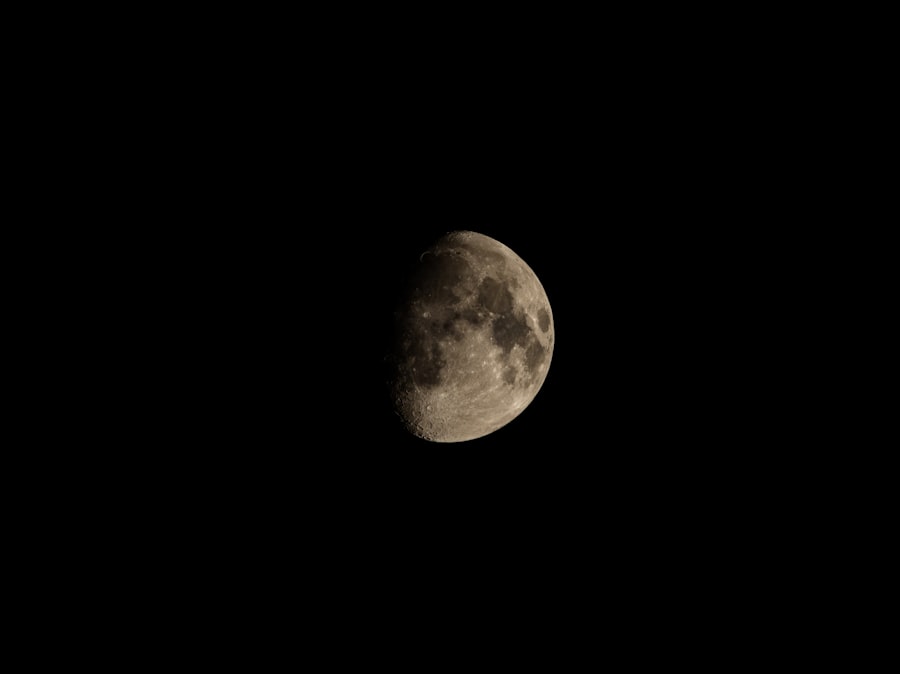
As you explore orbital mechanics, you will encounter Johannes Kepler’s laws of planetary motion, which describe how celestial bodies move in elliptical orbits around a central mass. The first law states that planets move in ellipses with the sun at one focus, which may seem counterintuitive at first. However, this elliptical motion is crucial for understanding how satellites orbit Earth and how spacecraft travel to other planets.
Kepler’s second law introduces the concept of areas swept out by a planet as it orbits; a line segment joining a planet and the sun sweeps out equal areas during equal intervals of time. This means that a planet moves faster when it is closer to the sun and slower when it is farther away. This principle has practical applications in mission planning, as it helps you determine optimal launch windows and trajectories for spacecraft.
Finally, Kepler’s third law relates the orbital period of a planet to its distance from the sun, providing a mathematical framework for predicting orbital behavior.
Understanding Gravitational Forces in Space
Gravitational forces play a pivotal role in space mechanics, dictating how objects interact with one another. You may recall that gravity is not just a force; it is a fundamental interaction that governs the motion of celestial bodies. The strength of gravitational attraction between two objects depends on their masses and the distance between them, as described by Newton’s law of universal gravitation.
This relationship is crucial for understanding how planets, moons, and artificial satellites maintain their orbits. In your exploration of gravitational forces, you will also encounter concepts such as gravitational wells and escape velocity. A gravitational well represents the potential energy landscape created by a massive body; the deeper the well, the stronger the gravitational pull.
Escape velocity is the minimum speed required for an object to break free from a gravitational field without further propulsion. Understanding these concepts will enhance your ability to design missions that effectively utilize gravitational forces for maneuvers and trajectory adjustments.
The Challenges of Propulsion in Space
| Metric | Description | Example/Value |
|---|---|---|
| Mass | Amount of matter in an object, affecting inertia and gravitational force | 5 kg (example object) |
| Force | Interaction that changes an object’s motion, measured in Newtons (N) | 10 N (applied force) |
| Acceleration | Rate of change of velocity, caused by force | 2 m/s² |
| Velocity | Speed with direction of an object | 15 m/s east |
| Momentum | Product of mass and velocity, indicating motion quantity | 75 kg·m/s |
| Newton’s First Law | Object remains at rest or in uniform motion unless acted upon by a force | Inertia concept |
| Newton’s Second Law | Force equals mass times acceleration (F = ma) | 10 N = 5 kg × 2 m/s² |
| Newton’s Third Law | For every action, there is an equal and opposite reaction | Rocket propulsion |
| Work | Force applied over a distance | 50 Joules |
| Energy | Capacity to do work, kinetic or potential | 100 Joules (kinetic) |
Propulsion systems are vital for maneuvering spacecraft through the vastness of space, yet they present unique challenges due to the absence of atmospheric resistance and varying gravitational influences. As you delve into propulsion technologies, you will discover that traditional rocket engines rely on chemical reactions to produce thrust. However, these systems have limitations regarding efficiency and fuel consumption, making them less than ideal for long-duration missions.
You will also learn about alternative propulsion methods such as ion drives and solar sails. Ion propulsion systems utilize electric fields to accelerate ions, providing a highly efficient means of propulsion over extended periods. Solar sails harness the pressure exerted by sunlight to propel spacecraft without relying on conventional fuel sources.
These innovative technologies represent the future of space travel, allowing for longer missions with reduced reliance on finite resources.
Navigating in the Vacuum of Space

Navigating through space requires precise calculations and an understanding of various factors that influence a spacecraft’s trajectory. Unlike navigation on Earth, where landmarks and GPS systems guide your way, space navigation relies heavily on mathematical models and real-time data from onboard sensors. You will need to consider gravitational influences from celestial bodies, solar radiation pressure, and even relativistic effects when plotting a course.
One critical aspect of navigation is determining a spacecraft’s position and velocity relative to other objects in space. This process often involves using techniques such as triangulation or Doppler measurements to ascertain your location accurately. As you gain proficiency in these methods, you will appreciate how they enable mission planners to execute complex maneuvers and ensure successful rendezvous with other spacecraft or celestial bodies.
Spacecraft Attitude Control and Maneuvering
Maintaining a spacecraft’s orientation—its attitude—is essential for ensuring that instruments function correctly and communication systems remain aligned with Earth. You will discover that attitude control systems employ various methods to achieve this stability, including reaction wheels, gyroscopes, and thrusters. Each system has its advantages and limitations, making it crucial to select the appropriate technology based on mission requirements.
As you explore maneuvering techniques, you will learn about different types of maneuvers such as pitch, yaw, and roll adjustments. These maneuvers allow spacecraft to change their orientation or trajectory without altering their speed significantly. Understanding how to execute these maneuvers effectively is vital for tasks such as aligning antennas with ground stations or orienting scientific instruments toward specific targets.
The Role of Thrusters and Reaction Control Systems
Thrusters are integral components of spacecraft propulsion systems, providing precise control over movement and orientation. You will find that there are various types of thrusters available, including monopropellant and bipropellant systems, each with unique characteristics suited for different applications. Monopropellant thrusters use a single propellant that decomposes upon contact with a catalyst, while bipropellant systems combine two substances to create thrust through combustion.
Reaction control systems (RCS) utilize small thrusters strategically placed around a spacecraft to facilitate attitude adjustments and minor trajectory corrections. These systems are particularly important during critical phases of flight such as docking maneuvers or orbital insertion. By mastering the principles behind thrusters and RCS technology, you will gain insight into how spacecraft maintain stability and execute complex operations in space.
Interplanetary Trajectories and Gravity Assists
When planning interplanetary missions, understanding trajectories becomes paramount. You will learn about Hohmann transfer orbits—an efficient method for traveling between two orbits using minimal energy. This technique involves launching a spacecraft into an elliptical orbit that intersects both the departure and destination orbits at specific points in time.
By flying close to a planet or moon, a spacecraft can gain additional speed without expending fuel—essentially “slingshotting” around the celestial body. This technique has been employed successfully in numerous missions, allowing spacecraft to reach distant destinations more efficiently than would otherwise be possible.
Space Debris and Collision Avoidance
As humanity continues to explore space, the issue of space debris has become increasingly pressing. You may be surprised to learn that thousands of defunct satellites, spent rocket stages, and fragments from collisions orbit Earth at high speeds. This debris poses significant risks to operational spacecraft and satellites, making collision avoidance strategies essential for mission success.
To mitigate these risks, mission planners employ various techniques such as tracking debris using ground-based radar systems and predicting potential collision courses well in advance. You will also discover emerging technologies aimed at debris removal, including robotic arms designed to capture defunct satellites or lasers intended to nudge debris into lower orbits where it will eventually burn up upon re-entry into Earth’s atmosphere.
Future Developments in Space Mechanics
As you look toward the future of space mechanics, exciting developments are on the horizon that promise to revolutionize our understanding of space travel. Advances in propulsion technologies—such as nuclear thermal propulsion or advanced electric propulsion—could significantly reduce travel times within our solar system and beyond. These innovations may enable crewed missions to Mars or even further destinations within your lifetime.
As AI becomes more integrated into mission planning and execution, you can expect more autonomous spacecraft capable of adapting to unforeseen challenges during their journeys. In conclusion, your exploration of space mechanics reveals a complex interplay of physical laws governing motion in the cosmos.
From understanding gravitational forces to navigating interplanetary trajectories, each aspect contributes to our ability to explore beyond our planet’s boundaries. As technology continues to evolve, so too will our capacity for discovery—opening new frontiers in our quest to understand the universe we inhabit.
For those interested in a deeper understanding of space mechanics, you might find the article on the fundamentals of gravitational forces particularly enlightening. It provides a comprehensive overview of how these forces influence the motion of celestial bodies. You can read more about it in this related article: Gravitational Forces in Space Mechanics.
FAQs
What is SPAC mechanics?
SPAC mechanics refer to the fundamental principles and processes involved in the formation, operation, and completion of a Special Purpose Acquisition Company (SPAC). This includes how SPACs raise capital through an initial public offering (IPO), identify and merge with a target company, and ultimately take that company public.
How does a SPAC raise money?
A SPAC raises money by conducting an IPO, where it sells units typically consisting of shares and warrants to public investors. The funds raised are placed in a trust account and are used later to acquire a private company.
What happens after a SPAC raises funds?
After raising funds, the SPAC’s management team searches for a suitable private company to merge with or acquire. This process usually has a deadline of 18 to 24 months. If a deal is found and approved by shareholders, the merger takes place, and the private company becomes publicly traded.
What is the role of SPAC sponsors?
SPAC sponsors are the founders or management team who create the SPAC. They are responsible for identifying acquisition targets and negotiating deals. Sponsors typically receive a “promote,” which is a percentage of the SPAC’s shares, as compensation for their efforts.
What happens if a SPAC does not complete an acquisition?
If a SPAC fails to complete an acquisition within the specified timeframe, it must liquidate and return the funds held in trust to the public shareholders, usually with interest. The SPAC then ceases to exist.
What are the benefits of SPACs for private companies?
SPACs offer private companies a faster and potentially less complex route to going public compared to traditional IPOs. They also provide greater certainty regarding valuation and capital raised.
Are there risks associated with investing in SPACs?
Yes, investing in SPACs carries risks such as uncertainty about the acquisition target, potential dilution from warrants and sponsor shares, and the possibility that the merger may not create shareholder value.
How do shareholders vote on a SPAC merger?
Once a SPAC identifies a target company, shareholders are given the opportunity to vote on the proposed merger. They can approve the deal, reject it, or redeem their shares for their pro-rata share of the trust account funds.
What is the difference between a SPAC and a traditional IPO?
A traditional IPO involves a private company directly offering its shares to the public, while a SPAC IPO involves raising funds through a blank-check company that later merges with a private company to take it public.
Can SPACs be used in all industries?
Yes, SPACs can be formed to acquire companies in virtually any industry, although some sectors like technology, healthcare, and consumer goods have been particularly popular targets.