
You might assume that with the installation of brand new power lines, the immediate dangers of tree-related power outages are minimized, if not entirely eliminated. This assumption, however, often proves to be a costly oversight, both in terms of financial burden and public safety. When you consider the long-term integrity of your power infrastructure and the reliability of your electricity supply, the importance of proactive tree trimming—even around newly installed power lines—becomes unequivocally clear.
When you witness a crew installing pristine, taut power lines, perhaps replacing an aging network or extending service to a new development, a sense of security can easily settle in. The new poles stand tall, the conductors gleam, and the surrounding vegetation appears, for the moment, adequately cleared. However, this initial state of clearance is a snapshot in time, a momentary alignment of infrastructure and environment. You must recognize that nature, in its relentless pursuit of growth, does not pause for human infrastructure projects.
The Lifecycle of Vegetation Around New Developments
Imagine a newly paved road. Initially, it’s smooth and pristine. But over time, cracks appear, potholes form, and weeds begin to sprout through the asphalt. Your new power lines are no different. When a new development is carved out, or an existing area undergoes infrastructure upgrades, the surrounding landscape is temporarily altered. Excavation, construction, and the sheer presence of human activity can temporarily suppress plant growth. However, this suppression is fleeting.
- Dormant Seeds: The soil itself is a vast reservoir of dormant seeds. Construction activities can unearth these seeds, bringing them closer to the surface where they are exposed to sunlight and moisture, ready to germinate.
- Rapid Regrowth: Many pioneering plant species, often the first to colonize disturbed areas, exhibit rapid growth rates. They are adept at taking advantage of newly exposed soil and sunlight.
- Undeclared Heights: While initial clearings might seem sufficient, the long-term growth potential of saplings and shrubs is often underestimated. A seemingly innocuous sapling today could be a power line hazard in just a few years.
The “Set It and Forget It” Fallacy
You might be tempted to think that once new power lines are operational, further tree maintenance is a concern for the distant future. This perspective is akin to believing that a newly built house will never require roof repairs simply because it’s recently constructed. Just as a new house requires ongoing maintenance to preserve its integrity, new power lines demand continuous vigilance concerning their arboreal surroundings. The initial investment in a modern power grid is significant; neglecting its protection from vegetation encroachment is an Achilles’ heel.
Tree trimming is often overlooked when it comes to the installation of new power lines, primarily due to budget constraints and the prioritization of immediate project completion over long-term maintenance. Many utility companies focus on getting power lines up and running quickly, neglecting the necessary trimming that could prevent future outages caused by falling branches. For a deeper understanding of the financial implications and the importance of proper tree management in relation to power lines, you can read a related article at How Wealth Grows.
Mitigating Future Outages and Safety Hazards
The most immediate and obvious benefit of proactive tree trimming around new power lines is the drastic reduction in future power outages. Imagine a new power line, a resilient artery delivering power to your home. Without proper tree trimming, this artery becomes vulnerable to slow constriction and sudden blockages, much like a neglected garden hose in a thorny bush.
Preventing “Green Infrastructure” Conflicts
The term “green infrastructure” usually refers to environmentally beneficial natural systems. However, in the context of power lines, unchecked green infrastructure—trees and vegetation—can become an adversarial element, creating conflicts with your electrical infrastructure. Trees grow, and unless their growth is managed, they will inevitably infringe upon the clearance zones designed to keep power lines safe.
- Branch-to-Wire Contact: Even a new line can experience contact from rapidly growing branches during high winds or storms. This contact can lead to arc flashes, short circuits, and localized outages.
- Falling Branches: Strong winds, heavy snow, or ice can cause tree limbs to break and fall onto power lines, regardless of the line’s age. The impact can snap conductors, damage poles, and create widespread power disruptions.
- Whole Tree Failures: In extreme weather events, or with trees suffering from disease, an entire tree can fall, bringing down multiple sections of power line. This is a far more severe event than a single branch contact, requiring extensive repairs.
Reducing the Risk of Wildfires
You live in an era where the threat of wildfires, particularly in many regions, is escalating. The nexus between vegetation and power lines is a critical point of ignition. While new power lines might incorporate modern safety features, such as insulated conductors, the fundamental principle remains: sustained contact between vegetation and energized lines can generate sufficient heat to spark a fire.
- Arcing and Sparking: When a branch repeatedly brushes against an energized conductor, it can create electrical arcing, which releases intense heat and showers of sparks. These sparks can easily ignite dry leaves, grass, or other combustible materials on the ground.
- Fault Currents: A sustained short circuit caused by vegetation contact can lead to excessively high fault currents. These currents create immense heat in the conductor, potentially melting it or causing it to ignite surrounding vegetation.
- The Chain Reaction: A small, localized fire ignited by a power line can quickly spread, especially in dry, windy conditions, evolving into a much larger and more destructive wildfire. Proactive tree trimming is a vital preventative measure that you cannot afford to overlook.
Protecting Your Investment: Long-Term Infrastructure Integrity
Think of new power lines as a significant financial investment, much like a new vehicle or a new home. Just as you wouldn’t drive a new car without performing regular oil changes or neglect necessary repairs on a new house, you shouldn’t neglect the ongoing maintenance of new power infrastructure. Tree trimming, even around recently installed lines, is not an expense; it’s a critical investment in preserving the longevity and functionality of your electrical grid.
Preventing Premature Degradation and Wear
While new power lines are designed for durability, constant rubbing from tree branches can introduce unnecessary stress and wear. You might envision the line as a robust cable, impervious to such minor contact. However, sustained abrasion is a relentless force.
- Conductor Abrasion: Over time, the repeated rubbing of branches against power lines can abrade the outer insulation or even the conductor itself. This compromises the integrity of the line, making it more susceptible to faults.
- Fatigue and Stress: Constant minor impacts from branches, especially during windy conditions, can induce fatigue in the conductors and connectors. This unseen stress can eventually lead to weaknesses and failures that would otherwise not occur for many more years.
- Insulator Damage: Tree branches can also impact insulators, leading to chips, cracks, or contamination. Damaged insulators reduce the effectiveness of the insulation, potentially leading to flashovers and outages.
Reducing Emergency Repair Costs
You know that adage, “an ounce of prevention is worth a pound of cure.” This rings particularly true in the realm of power line maintenance. Proactive tree trimming, even on new lines, falls squarely into the “ounce of prevention” category. The cost of a planned tree trimming operation, while not insignificant, pales in comparison to the expenses associated with emergency repairs.
- Outage-Related Penalties: Power companies often face regulatory fines and penalties for widespread or prolonged outages, costs that are ultimately borne by consumers.
- Manpower and Equipment Mobilization: Responding to an emergency outage requires rapid deployment of crews, specialized equipment (bucket trucks, cranes, etc.), and often overtime pay. This is a significantly more expensive endeavor than scheduled maintenance.
- Infrastructure Replacement: In severe cases, emergency repairs might involve replacing entire sections of line, poles, or transformers, further escalating the financial burden. You are, in essence, paying more to react than to anticipate.
Ensuring Public and Worker Safety
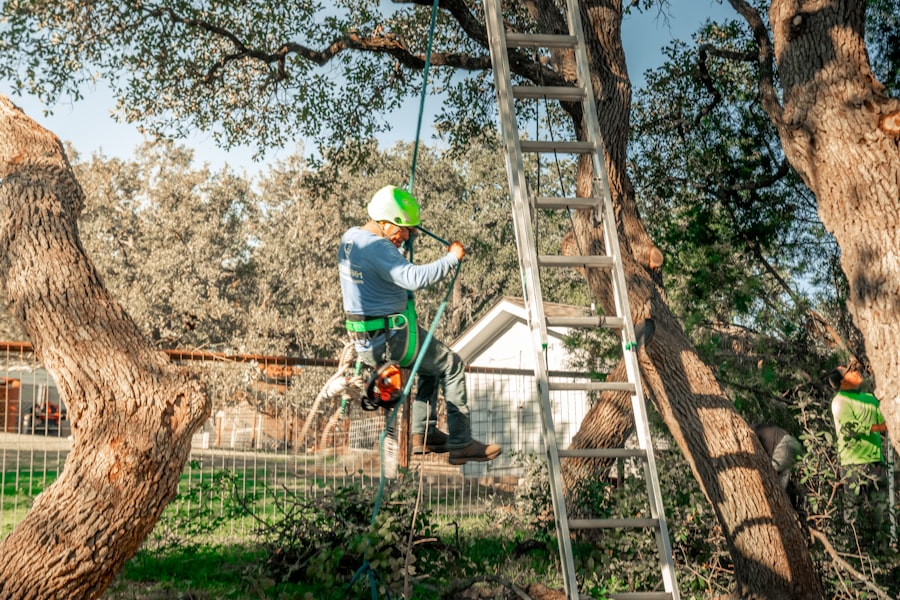
Beyond reliability and financial considerations, the paramount concern surrounding power lines is safety. Unmanaged vegetation around new power lines introduces significant risks for both the public and the utility workers who maintain the system. You must understand that electricity is a silent, invisible force, and unauthorized contact can be lethal.
Preventing Accidental Contact by the Public
Children, in particular, may not fully appreciate the dangers of power lines. Imagine a newly installed power line running through an area where children play. If nearby trees are left unchecked, they can provide a deceptive “bridge” to the power lines, inviting dangerous curiosity.
- Climbing Hazards: Trees with branches growing close to power lines present an irresistible temptation for children to climb. This can lead to electrocution or severe falls.
- Falling Objects: Children playing in trees near power lines might inadvertently drop objects that land on or tangle with the lines, creating a hazard.
- Kite Flying and Drones: Trees can obscure power lines, making them less visible and increasing the risk of objects like kites or drones getting entangled, which can then pull down live wires.
Enhancing Safety for Utility Crews
Utility workers face inherent risks every day. Their job is already dangerous; you should ensure that vegetation doesn’t heighten those risks unnecessarily. When tree trimming is neglected around new power lines, it creates a more hazardous environment for the very people responsible for keeping your lights on.
- Live Line Work Complications: When lines are surrounded by dense vegetation, it becomes significantly more challenging and dangerous for crews to access and perform maintenance or repairs on energized lines.
- Increased Risk of Electrocution: Untrimmed trees can act as conductors themselves, or cause branches to swing into contact with live wires, making it unpredictable where current might flow.
- Impeded Emergency Response: In an emergency, such as a downed line, dense tree growth can obstruct access for emergency vehicles and personnel, delaying critical response times. You are, in effect, making their jobs harder and more perilous.
Tree trimming is often overlooked when new power lines are installed, leading to potential hazards and power outages. Many utility companies prioritize the installation of infrastructure over the necessary maintenance of surrounding vegetation, which can create dangerous situations during storms or high winds. For a deeper understanding of the implications of neglecting tree trimming in relation to power lines, you can read more in this insightful article on the topic. This issue not only affects the reliability of power supply but also poses risks to safety and property. To explore further, check out this related article.
Regulatory Compliance and Best Practices
| Reason | Description | Impact on Power Lines | Frequency of Occurrence |
|---|---|---|---|
| Initial Cost Savings | Skipping tree trimming reduces upfront expenses during power line installation. | Increased risk of outages due to tree contact. | High |
| Underestimation of Tree Growth | Planners often underestimate how quickly trees will grow and interfere with lines. | Unexpected maintenance needs and outages. | Medium |
| Regulatory Gaps | Lack of strict regulations mandating tree trimming for new lines. | Inconsistent trimming practices leading to safety hazards. | Medium |
| Limited Maintenance Budgets | Ongoing trimming is deprioritized due to budget constraints. | Deferred maintenance increases outage risk. | High |
| Environmental Concerns | Concerns about harming wildlife or trees lead to trimming avoidance. | Potential for increased vegetation encroachment. | Low |
| Lack of Awareness | Stakeholders may not fully understand the importance of early trimming. | Delayed intervention causes higher long-term costs. | Medium |
Power utility companies operate under a stringent framework of regulations designed to ensure safety and reliability. You, as a consumer, benefit from these regulations, even if you are not directly involved in their enforcement. Proactive tree trimming around new power lines is not merely a suggestion; it’s often a legal and industry-mandated requirement.
Adhering to Clearance Standards
Regulatory bodies, such as the North American Electric Reliability Corporation (NERC) in North America, mandate specific clearance distances between power lines and vegetation. These standards are not arbitrary; they are based on extensive research and incident analysis. When new power lines are installed, you might assume they meet these clearances. However, nature quickly erodes these initial compliance levels.
- Minimum Approach Distances (MAD): These are calculated distances based on voltage and other factors, dictating how close vegetation, personnel, or equipment can safely come to energized conductors. Neglecting tree growth around new lines quickly violates these MADs.
- Voltage-Specific Requirements: Higher voltage lines require significantly larger clearance zones. Even a small amount of growth infringing on these zones can create a serious safety and reliability risk.
- Dynamic Clearances: The actual clearance between a power line and a tree branch can change based on temperature (lines sag more in heat) and wind (lines sway). These dynamic factors necessitate a more generous initial clearance through trimming.
Integrating Vegetation Management into Project Planning
The most effective approach you can take is to embed robust vegetation management plans into the very fabric of new power line projects from their inception. This isn’t an afterthought; it’s a foundational component.
- Initial Clearing Specifications: When new lines are designed, the initial clearing width and methodology should account for projected growth rates of surrounding vegetation. This means specifying a wider initial clear-cut or incorporating immediate follow-up trimming.
- Scheduled Trimming Cycles: A proactive long-term trimming schedule should be established for all new power line corridors. This schedule should account for regional climate, specific vegetation types, and typical growth rates.
- Right-of-Way Management: You must consider the entire right-of-way (ROW) as part of the vegetation management strategy. This includes not only direct trimming but also potentially the use of herbicides (selectively and safely applied) or growth retardants to manage regrowth more effectively.
In conclusion, the temptation to overlook tree trimming around new power lines is understandable, given the fresh appearance of the infrastructure. However, you must resist this short-sighted perspective. The immediate safety provided by a new installation is a temporal truth, quickly challenged by the relentless growth of the natural world. By embracing proactive tree trimming, even for newly energized lines, you are not simply performing a utility task; you are making a critical investment in grid reliability, public safety, infrastructure longevity, and regulatory compliance. It is an acknowledgment that your power supply, like any vital system, demands continuous stewardship to thrive.

WATCH NOW ▶️ WARNING: Why You’ll Never Have Cheap Power Again
FAQs
Why is tree trimming important for new power lines?
Tree trimming is essential for new power lines to prevent branches from coming into contact with the wires, which can cause power outages, fires, and safety hazards. Proper clearance ensures reliable electricity delivery and reduces maintenance costs.
Why is tree trimming often ignored during the installation of new power lines?
Tree trimming may be ignored due to budget constraints, lack of coordination between utility companies and local authorities, or underestimation of future tree growth. Sometimes, the focus is primarily on the installation itself, delaying vegetation management.
What risks are associated with neglecting tree trimming near new power lines?
Neglecting tree trimming can lead to power outages, electrical fires, damage to infrastructure, and increased safety risks for the public and utility workers. Overgrown trees can also cause costly emergency repairs and service interruptions.
Who is responsible for tree trimming around new power lines?
Typically, utility companies are responsible for maintaining safe clearances around power lines, including tree trimming. However, property owners may also have obligations depending on local regulations and agreements.
How can the issue of ignored tree trimming for new power lines be addressed?
Improving communication between utility companies, local governments, and property owners, allocating sufficient budgets for vegetation management, and implementing regular maintenance schedules can help ensure tree trimming is not overlooked during and after power line installation.