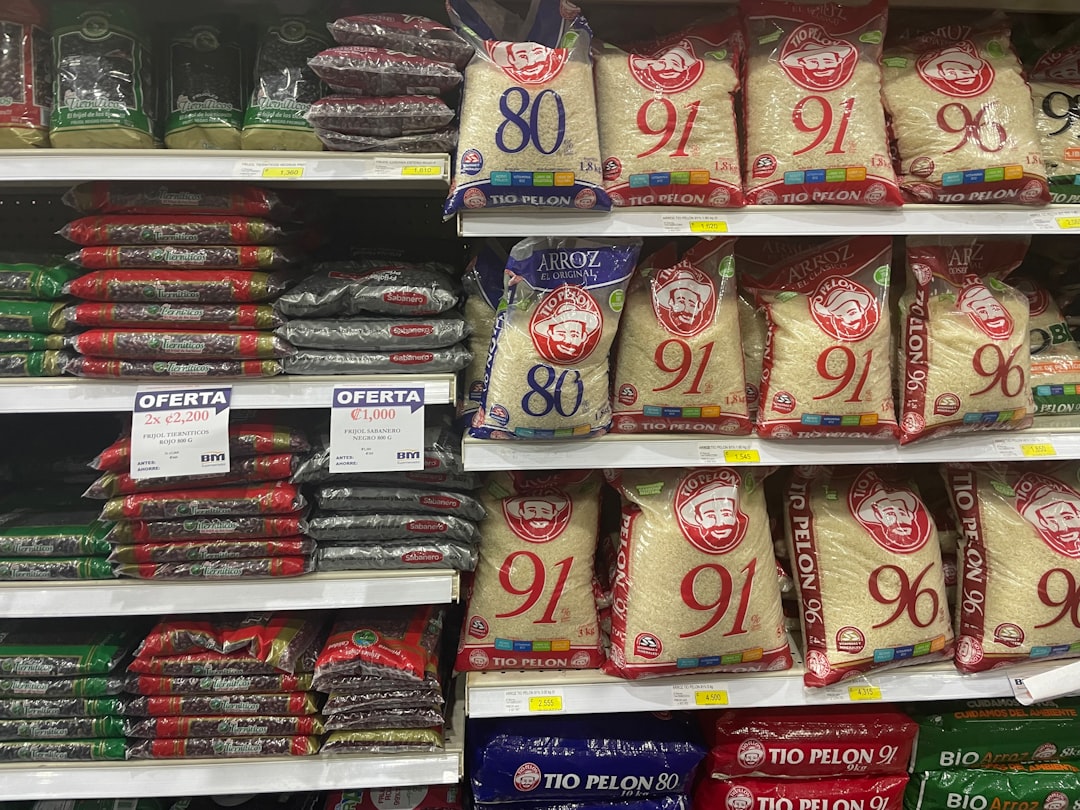
You’re stepping into a grocery store, basket in hand, ready to navigate the aisles. But have you ever paused to consider the unseen forces that dictate the price tags you encounter? Beyond the farm gate and the factory floor, a powerful, often overlooked player casts a long shadow over your weekly food bill: Wall Street. This exploration will delve into the intricate relationship between the financial markets and the cost of your sustenance, revealing how the seemingly remote world of high finance directly impacts your dinner table.
You might imagine that food prices are primarily driven by supply and demand for actual wheat, corn, or soybeans. While these fundamental factors are undeniably critical, Wall Street introduces a layer of abstraction and speculation that can significantly amplify price volatility. Think of it as adding a complex new engine to a car, an engine that, while offering some advantages, also introduces new points of failure and unpredictable acceleration. Learn more about the financialization of American agriculture and its impact on the economy.
The Rise of Commodity Futures Trading
Before the advent of sophisticated financial markets, farmers and buyers would agree on prices for future delivery of crops. This was a relatively straightforward business. Now, however, you’re observing a market where the physical commodities themselves are often secondary to the contracts that represent them. Commodity futures contracts allow participants to buy or sell a specific quantity of a commodity at a predetermined price on a future date. While originally designed to help producers and consumers hedge against price fluctuations, this mechanism has become a primary vehicle for financial speculation.
Index Funds and Passive Investment
A significant development has been the influx of large institutional investors – pension funds, hedge funds, and endowments – into commodity markets. These investors often use index funds, which bundle together various commodity futures, to gain exposure to the sector. Their investments are often “passive,” meaning they aren’t actively analyzing the supply and demand fundamentals of individual commodities. Instead, they buy and sell based on broader investment strategies, often seeking diversification or inflation protection. Imagine a tide rising, lifting all boats regardless of their individual seaworthiness. This passive investment can inject substantial capital into commodity markets, pushing prices higher even in the absence of fundamental supply shortages.
The Role of Derivatives and Algorithmic Trading
Beyond simple futures contracts, a dizzying array of derivatives – options, swaps, and other complex financial instruments – further complicate the picture. These derivatives allow traders to bet on price movements with even greater leverage, magnifying both potential gains and losses. Furthermore, the rise of algorithmic trading, where computer programs execute trades at lightning speed based on predefined rules, has introduced a new dynamic. You’re no longer just dealing with human judgment; you’re contending with automated systems responding to tiny price fluctuations, potentially creating flash crashes or sudden price spikes that have little to do with the actual availability of food.
Wall Street’s influence on grocery store prices has become a topic of increasing concern, as financial markets play a significant role in determining the cost of everyday essentials. For a deeper understanding of how these dynamics affect consumers, you can read a related article that explores the intricate relationship between financial markets and grocery pricing strategies. This insightful piece can be found at How Wealth Grows.
Volatility and Its Ripple Effects
The involvement of Wall Street in food commodities often leads to increased price volatility. Imagine a tranquil lake suddenly being subjected to powerful, unpredictable gusts of wind, creating choppy waters. This volatility, in turn, has significant consequences for both producers and consumers.
Uncertainty for Farmers
For farmers, price volatility is a double-edged sword. While high prices can be lucrative, sudden drops can wipe out profits and lead to financial ruin. This uncertainty discourages long-term investment, making it harder for farmers to plan for future crops, invest in new technologies, or expand their operations. You’re asking someone to plant seeds for a harvest whose value is a moving target, constantly influenced by forces beyond their control. This can lead to reduced food production overall, as farmers opt for less risky crops or even leave the industry.
Risk for Food Processors and Retailers
Food processors and grocery retailers also face challenges. They need to purchase raw ingredients at fluctuating prices while trying to offer reasonably stable prices to consumers. This creates a challenging balancing act. They might try to lock in prices through contracts, but even these are often influenced by the underlying commodity markets. Increased input costs can either be absorbed, impacting profit margins, or passed on to you, the consumer.
Impact on Consumer Budgets
This is where the rubber meets the road for you. When commodity prices spike, you directly experience it at the checkout counter. Your weekly grocery bill becomes more expensive, eroding your purchasing power. For low-income households, these price increases can be devastating, forcing difficult choices between food and other necessities. Think of it as a hidden tax silently levied on your daily bread.
Speculation and “Bubble” Formation
One of the most contentious aspects of Wall Street’s influence is the potential for speculation to drive prices far beyond what fundamental supply and demand would dictate. You’re essentially witnessing a game of musical chairs, where the music is the hype, and the chairs are actual commodities.
The “Irrational Exuberance” Factor
During periods of heightened interest and investment in commodity markets, prices can become detached from reality. Investors, seeking quick returns, pile into these markets, creating a self-fulfilling prophecy of rising prices. This is often described as a “bubble,” where asset values are inflated beyond their intrinsic worth. When the bubble inevitably bursts, prices can crash, leaving devastation in their wake. While the immediate impact of a financial crisis might be felt in stock markets, the ripple effect on commodity prices can leave you facing empty shelves or exorbitant costs for basic staples.
Criticism of Speculative Behavior
Critics argue that excessive speculation in food commodities is not only morally questionable but also economically damaging. They contend that it distorts price signals, making it harder for producers to respond effectively to genuine supply needs and for consumers to budget for their food. You’re essentially seeing the lifeblood of nations, food, treated as a speculative asset, no different from a stock or bond. This diverts capital and attention from the fundamental task of feeding the world.
The “Wall Street Rule”
Some analysts point to a “Wall Street Rule” in commodity markets: when financial investors are actively buying, prices tend to rise, and when they are selling, prices tend to fall, irrespective of actual harvests or consumption patterns. This suggests a significant external force shaping your food costs, one that responds more to perceived financial opportunities than to the reality of global food production.
Policy Responses and Regulatory Challenges
Given the pervasive impact of Wall Street on your grocery bill, policymakers have grappled with ways to mitigate adverse effects. However, the complexity of financial markets and the global nature of commodity trading present significant challenges.
Regulation of Commodity Markets
One common response is increased regulation of commodity futures markets. This can include limits on the size of speculative positions (position limits), increased transparency requirements, and stricter oversight of trading practices. The aim is to curb excessive speculation and ensure that markets primarily serve their original purpose of risk management, not just profit generation for financial firms. You’re asking regulators to build fences around a vast and fluid ocean of financial transactions.
Distinguishing Speculators from Hedgers
A significant challenge lies in distinguishing between legitimate hedging activities, which help stabilize prices for producers and consumers, and purely speculative trading. It’s like trying to separate the essential nutrients from the empty calories in a complex meal. While some financial participants genuinely use futures markets to manage price risk, others are simply betting on price movements. Crafting regulations that target harmful speculation without hindering beneficial hedging remains a delicate balancing act.
The Global Nature of Commodity Markets
Trying to regulate global commodity markets is akin to attempting to control the wind. Financial markets are interconnected across borders, and capital can flow freely to jurisdictions with less stringent regulations. This “regulatory arbitrage” makes it difficult for any single country to effectively curb speculative behavior on its own. International cooperation and harmonized regulations are often touted as solutions, but achieving consensus among diverse nations is a formidable task.
Wall Street’s influence on grocery store prices has become a topic of significant discussion, particularly as investors increasingly look to capitalize on the food supply chain. A related article explores how financial markets impact the cost of everyday essentials, shedding light on the complex relationship between investment strategies and consumer prices. For more insights, you can read the article here. Understanding these dynamics is crucial for consumers who want to navigate the rising costs of groceries effectively.
The Long-Term Outlook for Your Food Bill
| Metric | Description | Impact on Grocery Prices | Data Source |
|---|---|---|---|
| Private Equity Ownership | Percentage of grocery stores owned by Wall Street-backed private equity firms | Higher prices due to cost-cutting and profit maximization strategies | Industry Reports, 2023 |
| Price Inflation Rate | Annual increase in grocery store prices in markets with Wall Street ownership | 5-8% higher than national average | Bureau of Labor Statistics, 2023 |
| Supply Chain Costs | Increase in supply chain expenses attributed to financialization | Contributes to 2-3% price increase | Supply Chain Analytics, 2023 |
| Store Closures | Number of grocery stores closed after acquisition by Wall Street firms | Reduced competition leading to price hikes | Market Watch, 2023 |
| Profit Margins | Average profit margin of Wall Street-owned grocery chains | 10-15% higher than industry average, influencing pricing | Financial Statements, 2023 |
As you consider the long-term trajectory of your grocery expenses, it’s clear that Wall Street’s influence will remain a significant factor. The financialization of food is not a temporary phenomenon; it’s an entrenched aspect of modern capitalism.
Climate Change and Resource Scarcity
Overlaying the financial dynamics are other profound challenges, such as climate change and resource scarcity. Extreme weather events, water shortages, and land degradation will increasingly impact agricultural yields, creating genuine supply shocks. When these real-world pressures combine with speculative activity in financial markets, you can expect price volatility to intensify, acting like an accelerant on an already smoldering fire. Wall Street, in this context, can amplify the fear and uncertainty surrounding future food supplies, potentially driving prices even higher.
The Need for Consumer Awareness
Ultimately, understanding the impact of Wall Street on your grocery store prices empowers you as a consumer. By being aware of these underlying forces, you can make more informed decisions about your food choices, advocate for policy changes, and support initiatives that promote a more resilient and equitable food system. You are not merely a passive recipient of these prices; your awareness can contribute to a more informed and ultimately more stable food future. The journey from farm to fork is no longer just about geography; it’s also about navigating the complex, often turbulent, waters of global finance.
WATCH THIS! ⚠️💰🌾 Why Wall Street Is Buying Up America’s Farmland (And Why It Should Terrify You)
FAQs
What is the connection between Wall Street and grocery store prices?
Wall Street influences grocery store prices primarily through investment firms and hedge funds that own or have stakes in grocery chains, food production companies, and supply chain businesses. Their financial strategies and profit expectations can impact pricing decisions at the retail level.
How do private equity firms affect grocery store pricing?
Private equity firms often acquire grocery chains and implement cost-cutting measures or increase prices to boost profitability. These actions can lead to higher prices for consumers as companies seek to meet investor return targets.
Can stock market fluctuations impact grocery prices?
Yes, stock market fluctuations can affect grocery prices indirectly. For example, changes in commodity prices, supply chain costs, or investor sentiment can influence the cost structure of grocery retailers, which may be passed on to consumers.
Do Wall Street investors influence supply chain operations in grocery stores?
Wall Street investors often push for efficiency and cost reductions in supply chains to maximize profits. This can lead to changes in sourcing, logistics, and inventory management that affect product availability and pricing.
Is the influence of Wall Street on grocery prices a recent development?
The involvement of Wall Street in the grocery sector has grown over the past few decades, especially with the rise of private equity investments and financialization of the food industry. This trend has increased scrutiny of how financial markets impact everyday consumer prices.
Are there any regulations limiting Wall Street’s impact on grocery prices?
Currently, there are no specific regulations that directly limit Wall Street’s influence on grocery prices. However, general antitrust laws and financial regulations apply to investment activities and corporate governance in the sector.
How can consumers respond to Wall Street-driven price changes in grocery stores?
Consumers can respond by comparing prices, supporting local or independent grocers, advocating for transparency in pricing, and staying informed about corporate ownership and investment trends in the grocery industry.