
The landscape of landownership and its management has undergone a profound metamorphosis, a grand unfolding of principles and practices that began with significant force in the 18th century and continues to shape our world today. This evolution, far from being a gentle breeze, has often been a tempest, reshaping the very fabric of rural life and, by extension, societal structures. Examining this historical trajectory offers a window into how power, economics, and social dynamics have converged to define who controls the land and for what purpose.
The 18th century in Britain marked a pivotal turning point, a period where the ancient communal systems of land management began to crumble under the weight of emerging capitalist ideals and a burgeoning population. Before this era, much of the land, particularly in rural areas, was characterized by open fields and common lands. These were not inert spaces but vibrant ecosystems of shared use, where farmers could graze their livestock, gather fuel, and glean the remnants of harvests. This was a system built on tradition and mutual reliance, a communal tapestry woven over centuries.
The Economic Impetus: Efficiency and Profit Drive Change
The driving force behind this shift was intrinsically economic. As agricultural techniques began to advance, spurred by the nascent scientific revolution and a growing understanding of crop rotation and land management, a desire for greater efficiency and profitability emerged. The open-field system, with its scattered strips of land and shared responsibilities, was seen as inherently inefficient. It hindered innovation, prevented the consolidation of land for more systematic cultivation, and limited the potential for large-scale agricultural production. Entrepreneurs, often landowners with ambitions beyond subsistence farming, saw the potential for immense wealth if they could control larger, contiguous blocks of land and manage them according to modern economic principles. This was the seed of a new agricultural paradigm, one where individual ownership and maximization of yield became paramount.
The Legal Framework: Acts of Parliament Forge New Realities
The transformation from communal to private ownership was not a spontaneous uprising but a carefully orchestrated legal process. The British Parliament became the architect of this new agrarian order. Through a series of Enclosure Acts, often referred to as Private Acts, parcels of common land and open fields were legally redefined and redistributed. These acts, while presented as a means to improve agriculture and provide for the nation’s growing needs, effectively dismantled the traditional rights of commoners. The process was often complex and fraught with inequity, leading to significant displacement and hardship for those who relied on common lands for their livelihoods. It was as if the old rules of the game were suddenly rewritten, and not everyone could afford to play by the new ones.
The Social Fallout: Dispossession and the Rise of the Landless Laborer
The social consequences of enclosure were profound and, for many, devastating. As common lands were enclosed, the traditional pathways for sustenance and survival for many rural communities were severed. Smallholders who lacked the financial means to claim their allocated plots or to purchase land found themselves dispossessed. The picturesque villages, once sustained by a network of interconnected rights and responsibilities, began to empty as people were forced to seek work in the burgeoning industrial centers. This created a new class of landless laborers, dependent on wages for survival and often living in precarious conditions. The enclosure movement, therefore, was not just an agricultural reform but a fundamental restructuring of rural society, laying the groundwork for future class divisions.
The history of land enclosure from the 18th century to today is a significant aspect of agricultural and economic development, reflecting changes in land ownership and usage. For a deeper understanding of how these historical shifts have influenced wealth accumulation and social structures, you can explore the article available at How Wealth Grows. This resource provides insights into the impact of land enclosure on both rural communities and broader economic trends, highlighting its relevance in contemporary discussions about land rights and resource distribution.
The Long Shadow of Enclosure: Industrialization and Colonial Expansion
The principles and practices that took root during the 18th-century enclosure movement in Britain did not remain confined to the island. Their influence rippled outwards, shaping agricultural practices and land tenure systems across the globe, particularly within the British Empire. The concept of private property, efficiency, and centralized control, honed through enclosure, became a powerful export.
The Replicating Model: Colonies and the Imposition of Western Land Law
As Britain expanded its colonial reach, it often carried with it its established legal and economic frameworks, including models of land ownership. In North America, Australia, New Zealand, and parts of Africa, the concept of individual land ownership, as opposed to communal or indigenous forms of land tenure, was systematically introduced and enforced. This often involved the surveying and division of land into private parcels, mirroring the enclosure process back home. Indigenous populations, who often held land in a communal or stewardship-based manner, found their traditional rights and practices disregarded, leading to dispossession and conflict. These land acts, imposed from afar, were like planting a foreign seed in native soil, often choking out the existing flora.
The Industrial Revolution’s Appetite: Food for a Growing Workforce
The enclosure movement in Britain, by consolidating land and increasing agricultural output, played a crucial role in fueling the Industrial Revolution. A more efficient agricultural sector could produce more food with fewer laborers, freeing up a workforce to migrate to urban centers and factories. This created a symbiotic, albeit often brutal, relationship: enclosure fed the factories, and the factories, in turn, drove further demand for agricultural products. The increased efficiency also meant that landowners could generate greater profits, which could then be reinvested in industry or other ventures, further accelerating economic growth. The landscape was being reshaped not just for the sake of agriculture, but for the insatiable hunger of an industrializing world.
The Concept of “Wasted” Lands: Justifying Further Appropriation
The enclosure movement fostered a particular way of viewing land: as a resource to be exploited and improved for maximum economic gain. Lands that were not actively cultivated or managed in a manner deemed “productive” were often labeled as “wasted” or “underutilized.” This perception provided a powerful justification for further appropriation. Common lands, wetlands, forests, and other natural areas that were not part of the private agricultural matrix were seen as ripe for enclosure and development. This mindset, born from the enclosure era, has continued to influence land use policies and practices, often prioritizing economic development over conservation or traditional uses.
Enclosure in the Modern Era: Shifting Paradigms and Persistent Legacies
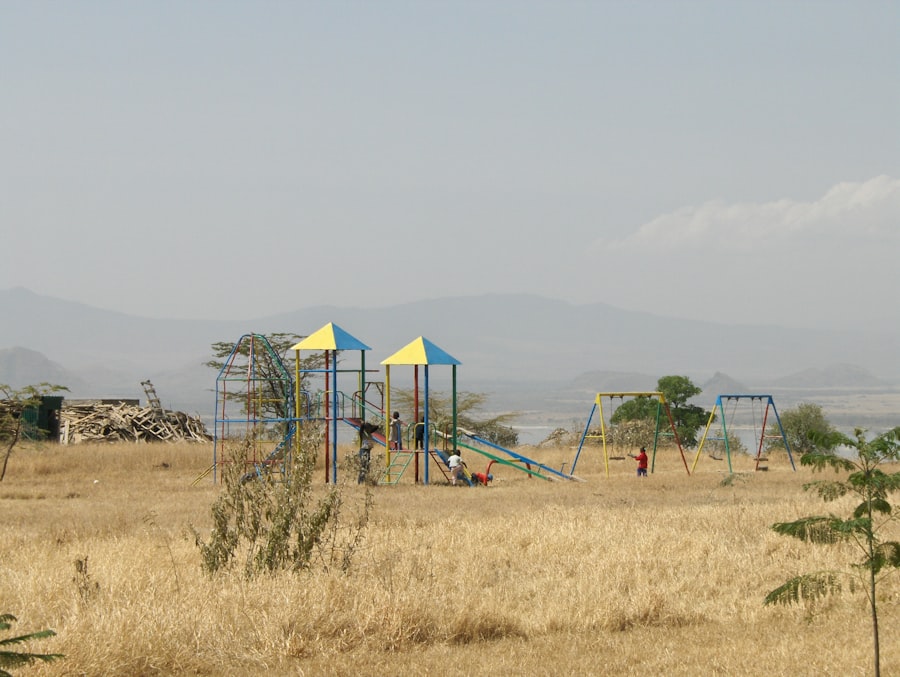
The echoes of the 18th-century enclosure movement continue to resonate today, though the methods and actors have evolved. The concept of controlling and privatizing resources, once primarily focused on land, has expanded to encompass a broader range of valuable assets.
The Urban Landscape: Planning, Zoning, and Private Development
While the historical focus of enclosure was firmly on agrarian landscapes, its underlying principles of control and privatization can be observed in urban contexts. Modern urban planning, zoning laws, and the dominance of private real estate development represent a form of enclosure of urban space. Access and use of urban areas are heavily regulated through property rights, building codes, and designated zones, often driven by economic considerations and the pursuit of profit. The ability to shape and control urban environments, to determine who can build where and for what purpose, shares a conceptual lineage with the historical enclosure of rural lands. It’s a different kind of parceling, a grid of ownership and regulation.
Resource Enclosure: Water, Minerals, and Intellectual Property
The drive to control and privatize valuable resources has extended far beyond land. In the modern era, we witness the “enclosure” of water rights, with corporations and individuals securing control over vital freshwater sources. The extraction of minerals and fossil fuels involves a process of claiming and exploiting subsurface “property.” Even intangible assets, such as data and intellectual property, are now subjected to forms of enclosure through patents, copyrights, and proprietary algorithms. This expansion of the enclosure concept highlights a persistent human tendency to define, control, and profit from scarce or valuable resources. The fences are now often invisible, built of legal contracts and technological barriers.
The Global Land Grab: A New Wave of Enclosure
In recent decades, a phenomenon known as the “global land grab” has emerged, representing a contemporary manifestation of enclosure on a massive scale. Large corporations, investment funds, and even foreign governments are acquiring vast tracts of land, particularly in developing countries, for purposes such as industrial agriculture, resource extraction, and speculative investment. This often occurs with little regard for the rights of local communities, who may be displaced or lose access to the land that has sustained them for generations. This new wave of enclosure is driven by global economic forces and a continued emphasis on profit maximization, with profound implications for food security, environmental sustainability, and social justice. It is a historical replay, with global players and larger stakes.
Contemporary Debates and Challenges: The Enduring Controversy of Land Control
The legacy of land enclosure remains a subject of intense debate and ongoing challenges. The historical injustices and the persistent inequalities stemming from this process continue to shape present-day discussions about land rights, development, and environmental stewardship.
Land Reform and Restitution: Addressing Historical Wrongs
In many parts of the world, calls for land reform and restitution are a direct consequence of historical enclosure. These movements aim to address the dispossession of indigenous peoples, small farmers, and marginalized communities, seeking to reclaim ancestral lands or obtain fair compensation. Land reform initiatives often involve redistributive measures, aimed at creating more equitable land ownership patterns and empowering those who have been historically excluded. Such efforts represent a conscious attempt to mend the fractured tapestry of land rights, to reweave in the threads that were torn out centuries ago.
Environmental Stewardship vs. Economic Exploitation: A Balancing Act
The ongoing tension between economic exploitation and environmental stewardship is a central theme in contemporary land debates, a direct descendant of the enclosure mindset. The drive to maximize profit through land use often clashes with the imperative to protect ecosystems, conserve biodiversity, and mitigate climate change. Enclosed private lands, while sometimes managed sustainably, can also be sites of intensive industrial agriculture, deforestation, or other environmentally damaging practices. Conversely, the management of common lands and protected areas raises questions about access, public benefit, and the potential for unintended consequences when human intervention is absent or poorly managed. This is a delicate dance between the hand that profits and the hand that protects.
The Future of Land: Public Access, Community Ownership, and Sustainable Use
Looking forward, discussions about the future of land are increasingly exploring alternatives to traditional models of private ownership and exploitation. Concepts such as community land trusts, co-housing initiatives, and collaborative land management models are gaining traction. These approaches aim to foster more equitable access to land, promote sustainable use, and ensure that land-based resources benefit a wider community. The future of land may involve a move away from purely individualistic notions of ownership towards more collective and stewardship-oriented frameworks. It is a quest for a new chapter in the story of land, one where shared responsibility and communal well-being are woven into the very foundation.
The history of land enclosure, which began in the 18th century, has significantly shaped agricultural practices and land ownership patterns up to the present day. This transformation not only altered the landscape but also had profound social implications, as common lands were privatized and traditional farming communities were displaced. For a deeper understanding of how these changes have influenced wealth distribution and societal structures, you can explore a related article that delves into these themes further. To read more, visit this insightful piece.
The Enduring Impact: A World Shaped by Enclosure
| Period | Key Developments | Impact on Land Use | Social/Economic Effects |
|---|---|---|---|
| 18th Century (1700-1799) |
– Enclosure Acts passed in Britain – Common lands consolidated into private ownership – Parliamentary Enclosures increased |
– Shift from open fields to enclosed farms – Increased agricultural efficiency and productivity |
– Displacement of small farmers and commoners – Rise of tenant farming and rural wage labor |
| 19th Century (1800-1899) |
– Continued Parliamentary Enclosures – Mechanization of agriculture begins – Expansion of enclosed land in England and Wales |
– Further reduction of common land – Larger, more efficient farms dominate |
– Increased rural to urban migration – Growth of industrial workforce |
| 20th Century (1900-1999) |
– Decline of formal enclosure acts – Land reforms in some countries – Rise of state and corporate ownership of land |
– Mixed land use: agriculture, urbanization, conservation – Some reversion of enclosed land to public or communal use |
– Urban expansion reduces agricultural land – Increased focus on land rights and environmental concerns |
| 21st Century (2000-Present) |
– Modern land privatization and development – Emphasis on sustainable land management – Digital mapping and land registration technologies |
– Balancing development with conservation – Increased land value and speculation |
– Ongoing debates on land access and indigenous rights – Urban sprawl and environmental impact concerns |
The evolution of land enclosure, from its forceful beginnings in the 18th century to its multifaceted manifestations today, has fundamentally shaped our world. It is a story of transformation, of economic ambition, legal maneuvering, and profound social upheaval. The act of drawing lines on maps, of redefining ownership, and of reassigning access has had ripple effects that continue to influence economies, societies, and the very environment we inhabit.
From Open Fields to Global Markets: A Continuum of Control
The journey from communal open fields, where rights were fluid and shared, to the highly privatized and globally interconnected land markets of today, represents a continuum of control. The principles that fueled the early enclosure movement – the pursuit of efficiency, profitability, and centralized authority – have been amplified and adapted to new contexts. Whether it is the consolidation of agricultural estates, the acquisition of resource-rich territories, or the digital enclosure of information, the underlying drive to define, control, and exploit remains a powerful force. The seeds sown in the 18th century have grown into a complex forest of ownership and access.
Inequality and Social Justice: The Lingering Scars
The enduring impact of enclosure is acutely felt in issues of inequality and social justice. The historical dispossession of commoners and indigenous populations has created enduring disparities in wealth and access to resources. The legacy of enclosure continues to fuel land conflicts, displacement, and social unrest in many regions. Addressing these challenges requires a critical understanding of how land ownership and control have been historically constituted and a commitment to creating more equitable and just systems for the future. The ghost of the dispossessed still walks the land, and its presence demands attention.
The Responsibility of Ownership: A Shifting Paradigm
As we navigate the complexities of contemporary land use, the concept of the “responsibility of ownership” is undergoing a significant shift. The traditional, largely unfettered right to use and profit from land is increasingly being balanced against ecological imperatives, social equity, and intergenerational sustainability. The future of land management hinges on our ability to move beyond a purely extractive and individualistic model towards one that recognizes land as a shared inheritance, requiring careful stewardship and a commitment to the well-being of both people and planet. The very definition of what it means to “own” land is being rewritten, one stewardship agreement at a time.
FAQs
What was land enclosure in the 18th century?
Land enclosure in the 18th century was the legal process in England of consolidating small landholdings into larger farms. Once enclosed, these lands were privately owned and fenced off, ending the traditional open-field system where villagers had shared rights to use common land.
Why did land enclosure become widespread during the 18th century?
Enclosure became widespread due to agricultural improvements and the desire to increase productivity. Landowners sought to implement new farming techniques and crop rotations that were easier to manage on enclosed, consolidated plots, leading to increased efficiency and profits.
How did land enclosure affect rural communities?
Enclosure often displaced small farmers and commoners who relied on shared lands for grazing and cultivation. Many lost access to common resources, leading to social upheaval, migration to urban areas, and changes in rural demographics and economies.
Has land enclosure continued beyond the 18th century?
While the major period of enclosure in England was between the 18th and 19th centuries, land consolidation and privatization have continued in various forms worldwide. Modern land reforms and property laws still impact land ownership and use, though the historical enclosure movement is distinct in its scale and impact.
What is the legacy of the land enclosure movement today?
The enclosure movement significantly shaped modern agricultural practices, land ownership patterns, and rural society. It contributed to the rise of capitalist farming, altered social structures, and influenced debates on land rights and rural development that continue in contemporary policy discussions.