You’ve likely noticed the news, or perhaps heard anecdotes from friends and family in agricultural regions: farmland prices are skyrocketing. This isn’t a localized phenomenon; it’s a trend that reverberates across continents, impacting everyone from small family farms to large multinational agricultural corporations. To truly grasp the complexity of this upward trajectory, you must delve into a multitude of interconnected factors, each exerting its own gravitational pull on the value of arable land. Think of it not as a single wave, but as a confluence of powerful currents, each pushing the market higher.
The most fundamental driver of farmland appreciation is the insatiable global demand for food. As populations grow, particularly in developing nations, and as dietary preferences shift towards more resource-intensive foods (such as meat and dairy), the pressure on agricultural land intensifies. You are, in essence, witnessing a race between population growth and agricultural output. Learn more about the financialization of American agriculture and its impact on the economy.
Population Growth and Changing Dietary Habits
- Demographic Pressures: Consider the sheer numbers. The world population is projected to reach nearly 10 billion by 2050. Each additional person represents an additional mouth to feed, requiring more calories, which, in turn, demands more land for cultivation.
- The Protein Paradox: As economies develop, per capita income often rises, leading to increased consumption of animal proteins. Producing one kilogram of beef, for example, requires significantly more land, water, and feed than producing one kilogram of grains or vegetables. This dietary evolution acts as a multiplier on land demand, like a magnifying glass focusing sunlight onto a dry leaf.
The Biofuel Mandate and Its Land Footprint
- Ethanol and Biodiesel’s Hunger: Many governments worldwide have implemented mandates for biofuel inclusion in transportation fuels, primarily to reduce greenhouse gas emissions and enhance energy independence. You’ve seen this in corn-based ethanol in the United States and biodiesel from palm oil or rapeseed in Europe and Asia.
- The Food vs. Fuel Debate: This policy, while well-intentioned, creates a direct competition for land between food production and energy production. When arable land is diverted to grow crops for fuel, it reduces the area available for food, pushing up the price of both the land itself and the commodities it produces. You are effectively choosing between filling your stomach and filling your gas tank.
In recent months, farmland prices have been soaring, driven by various factors including increased demand for agricultural products and rising inflation. This trend has significant implications for both investors and farmers alike. For a deeper understanding of the dynamics behind these rising prices, you can read a related article that explores the various influences on farmland valuation and investment opportunities. Check it out here: Farmland Prices Soaring Explained.
The Scarcity Principle: Land as a Finite Resource
Unlike many commodities, land is finite. You cannot simply create more of it, at least not with current technology and at a scalable cost. This inherent scarcity is a foundational element in understanding its escalating value.
Disappearing Farmland: Urban Sprawl and Degradation
- The March of Concrete: Urbanization is an unstoppable force. As cities expand to accommodate growing populations and economic activity, they frequently encroach upon fertile agricultural land on their outskirts. You’ve seen this firsthand in the outward creep of housing developments and commercial zones, slowly swallowing up fields that once grew crops.
- The Silent Erosion: Land degradation, caused by unsustainable farming practices, climate change, and pollution, renders once-productive land infertile or less productive. This effectively shrinks the supply of usable farmland, even if its physical acreage remains the same. Think of it as a slow leak in a valuable asset.
Regulatory Hurdles and Conversion Restrictions
- Preserving Green Belts: Many governments have implemented policies to protect agricultural land from conversion to other uses, such as urban development or industrial parks. While these policies aim to safeguard food security and environmental integrity, they also restrict the supply of land available for sale, thus increasing the value of the land that is available. You are operating within a framework that limits your options.
- Environmental Regulations: Stringent environmental regulations, aimed at protecting ecosystems and water quality, can also limit the intensification of existing farmland or the development of new agricultural areas, further constraining supply.
Investment Magnet: Farmland as a Hedge and Asset Class
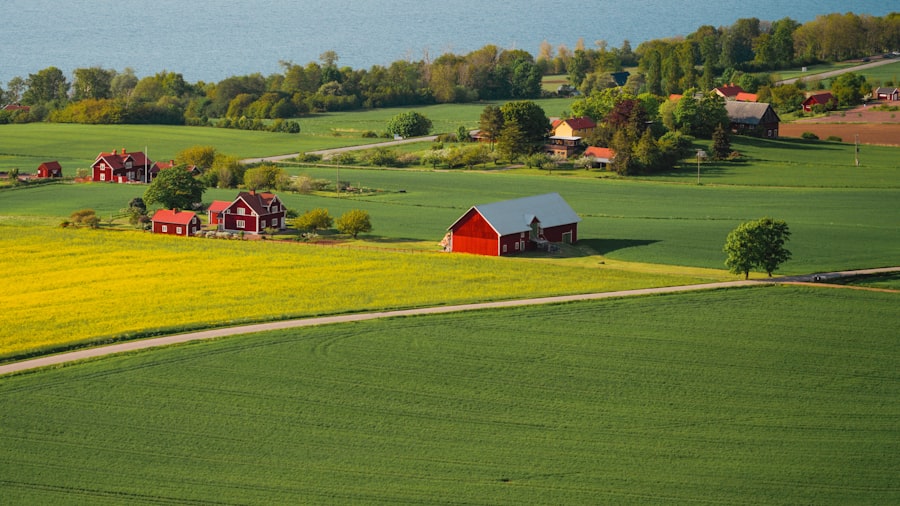
Beyond its intrinsic value for food production, farmland has increasingly caught the eye of investors, transforming it into a sought-after asset class. You are witnessing a shift where institutional money, once focused solely on stocks and bonds, is now recognizing the unique appeal of fertile ground.
Inflation Hedge and Tangible Asset
- The Golden Earth: In times of economic uncertainty and rising inflation, investors often seek tangible assets that retain their value or even appreciate. Farmland, with its inherent utility and limited supply, acts as an excellent hedge against inflation. You are buying a piece of the earth, something that has always held value and likely always will.
- Real Asset Security: Unlike abstract financial instruments, farmland is a physical asset that cannot vanish overnight due to market crashes or digital glitches. This tangible security appeals to investors looking for stability in turbulent economic waters.
Institutional Investors and Sovereign Wealth Funds
- The Giants Arrive: Large institutional investors – pension funds, insurance companies, and private equity firms – are increasingly allocating portions of their portfolios to farmland. Their massive capital injections can significantly inflate demand and prices, often outcompeting individual farmers. You’re no longer just competing with your neighbor; you’re competing with global financial powerhouses.
- Beyond Borders: Sovereign wealth funds, with vast sums of state-owned capital, are also active players, often seeking to secure long-term food supplies for their respective nations or simply diversify their national wealth. This international demand adds another layer of complexity to local markets.
Yield Enhancement and Technological Advancements

While scarcity and demand are significant forces, improvements in agricultural productivity also play a role in pushing up land values. You are not just buying dirt; you are buying the potential for greater yield and efficiency.
Precision Agriculture and Smart Farming
- Data-Driven Decisions: The advent of precision agriculture, utilizing GPS, drones, sensors, and big data analysis, allows farmers to optimize inputs (water, fertilizer, pesticides) and maximize yields. This technology makes existing land more productive, thereby increasing its inherent value. You are turning a simple field into a data-rich production factory.
- Robotics and Automation: Automation in farming, from autonomous tractors to robotic harvesters, promises to reduce labor costs and increase efficiency. As these technologies become more widespread, the potential profitability of farmland increases, making it a more attractive investment.
Genetically Modified Organisms (GMOs) and Improved Crop Varieties
- Resilience and Yields: The development of genetically modified crops and other improved varieties offers increased yields, enhanced resistance to pests and diseases, and better adaptation to challenging environmental conditions. This technological edge means a given parcel of land can produce more, thus raising its value. You are leveraging science to extract more from the same plot.
- Climate Change Adaptation: As climate patterns become more erratic, drought-resistant or flood-tolerant crop varieties become increasingly valuable. Land capable of growing these resilient crops commands a premium, as it represents a more secure investment in the face of environmental uncertainty.
As farmland prices continue to soar, many investors are looking for insights into the factors driving this trend. A related article that delves into the intricacies of agricultural investments can be found at How Wealth Grows. This resource provides valuable information on the economic conditions and market dynamics that are influencing the rising value of farmland, making it essential reading for anyone interested in understanding this booming sector.
Government Policies and Subsidies
| Metric | Value | Explanation |
|---|---|---|
| Average Farmland Price Increase (Year-over-Year) | 15% | Reflects the annual growth rate in farmland prices due to increased demand and limited supply. |
| Current Average Price per Acre | 8,500 | Represents the typical cost to purchase one acre of farmland in prime agricultural regions. |
| Demand Drivers | Biofuel Production, Food Security, Investment Interest | Key factors pushing up farmland prices as more land is needed for crops and as farmland becomes an investment asset. |
| Supply Constraints | Limited Available Land, Zoning Restrictions | Factors limiting the expansion of farmland, contributing to price increases. |
| Impact of Interest Rates | Low Interest Rates | Encourages borrowing and investment in farmland, driving prices higher. |
| Farmland Price to Income Ratio | 35 | Indicates how many years of farm income are needed to pay for farmland, showing affordability trends. |
Government interventions, often intended to support agricultural sectors or address societal needs, can inadvertently contribute to rising farmland prices. You are operating within a policy landscape that actively shapes market dynamics.
Agricultural Subsidies and Price Supports
- Safety Net or Price Inflator? Many governments provide direct payments, crop insurance, and price supports to farmers. While these policies aim to stabilize farmer incomes and ensure food security, they can also insulate farmers from market downturns, allowing them to bid higher for land or retain land that might otherwise be sold. You are playing a game with built-in financial cushions.
- Incentives for Production: Subsidies linked to production, even if not directly tied to acreage, can indirectly encourage expansion and intensify demand for land. When farming becomes more financially viable due to government support, investment in land naturally follows.
Land Use Planning and Zoning Regulations
- The Invisible Hand of Regulation: Government regulations on land use, while crucial for orderly development and environmental protection, can create artificial scarcities. Restrictive zoning that prevents the conversion of agricultural land to other uses, or that designates certain areas exclusively for farming, inadvertently drives up the value of that protected land. You are navigating a map where certain territories are off-limits.
- Infrastructure Development: Government investment in rural infrastructure, such as irrigation projects, transportation networks, and communication technologies, can significantly enhance the productivity and accessibility of farmland, thereby increasing its market value. Your land’s value can be uplifted by public works projects.
Low-Interest Rates and Cheap Credit
The broader macroeconomic environment, particularly the cost of borrowing money, plays a significant role in determining how much investors and farmers are willing to pay for land. You’re effectively in an environment where money is cheaper, making big purchases more feasible.
Facilitating Leverage and Investment
- The Borrowing Bonanza: Historically low interest rates in many developed economies have made borrowing money for large capital expenditures, such as land purchases, much more affordable. This cheap credit allows individuals and institutions to leverage their investments, bidding up prices. Think of it as a financial tailwind pushing land values higher.
- Alternative Investment Scarcity: When interest rates on traditional savings accounts or bonds are low, investors seek higher returns elsewhere. Farmland, with its potential for both capital appreciation and rental income, becomes an attractive alternative, particularly for those looking for stable, long-term investments. You are part of a broader exodus from low-yield assets.
Impact on Farm Expansion and Intergenerational Transfers
- Growth Through Acquisition: For existing farmers, low interest rates facilitate farm expansion through land acquisitions, further consolidating agricultural holdings and reducing the amount of land available on the open market. This makes it harder for new entrants.
- Passing the Torch: Low interest rates can also influence intergenerational land transfers, making it easier for younger generations to buy out older family members’ shares or for current owners to hold onto their land rather than selling it. This effectively keeps land off the market, contributing to scarcity.
In understanding the escalating price of farmland, you must adopt a multi-faceted perspective, acknowledging that no single factor operates in isolation. It’s a complex interplay of global demographics, finite resources, shifting investment paradigms, technological advancements, governmental policies, and the prevailing economic climate. As you evaluate this trend, remember that you are observing a fundamental asset increasingly valued for its power to feed populations, secure investment portfolios, and represent a finite claim on the very earth beneath our feet.
WATCH THIS! ⚠️💰🌾 Why Wall Street Is Buying Up America’s Farmland (And Why It Should Terrify You)
FAQs
What factors are driving the increase in farmland prices?
Several factors contribute to rising farmland prices, including increased demand for agricultural products, limited availability of arable land, low interest rates, and investment interest from institutional buyers and individuals seeking stable assets.
How does farmland price growth impact farmers?
Rising farmland prices can benefit current landowners by increasing their asset value, but they may also make it more difficult for new or smaller farmers to purchase land due to higher costs, potentially leading to increased leasing or consolidation.
Are farmland prices rising uniformly across all regions?
No, farmland price increases vary by region depending on factors such as soil quality, climate conditions, local demand for crops, and proximity to markets or infrastructure.
What role do government policies play in farmland prices?
Government policies, including subsidies, tax incentives, zoning regulations, and conservation programs, can influence farmland values by affecting profitability and land use restrictions.
Is farmland considered a good investment compared to other asset classes?
Farmland is often viewed as a stable, long-term investment that can provide income through crop production and potential appreciation, making it attractive during periods of market volatility or inflation.
How do commodity prices affect farmland values?
Higher commodity prices can increase farm income potential, which tends to drive up farmland values as the land becomes more profitable to operate.
What impact does urbanization have on farmland prices?
Urban expansion can increase farmland prices near metropolitan areas due to development potential, but it may also reduce available agricultural land, contributing to overall price increases in rural areas.
Can environmental factors influence farmland prices?
Yes, factors such as soil health, water availability, climate change, and susceptibility to natural disasters can affect the productivity and desirability of farmland, thereby impacting its price.