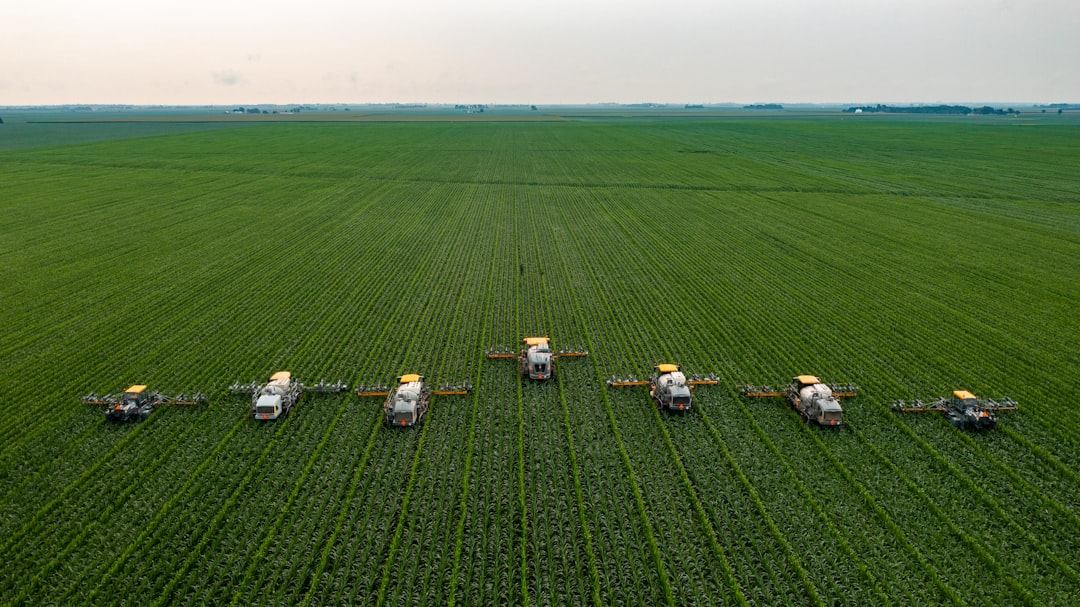
You stand at a crossroads in the agricultural landscape, witnessing a slow,
but relentless, transformation. The quaint image of the family farm, Learn more about corporate control by watching this insightful video corporate control.
a cornerstone of countless communities and the very fabric of our food
supply, is increasingly under siege. This is not a sudden storm but a
gradual erosion, a process driven by the ascendance of corporate
farming – a phenomenon that, while promising efficiency and scale,
casts a long and ominous shadow over the livelihoods of small farmers.
As you delve into this complex issue, you will discover that the dynamics
at play are far more intricate than a simple dichotomy between big and
small, with profound implications for food security, environmental
sustainability, and social equity.
You might envision “corporate farming” as vast, monochromatic industrial
landscapes, devoid of the human touch, but its definition is nuanced.
At its core, corporate farming refers to large-scale agricultural
operations owned or controlled by corporations or large business entities,
rather than individual families or small partnerships. These entities
prioritize financial returns and often employ industrial production methods
to achieve economies of scale.
The Business Model of Scale
Think of it this way: a corporate farm operates less like a traditional
family enterprise nurturing the land and more like a manufacturing plant
producing a commodity. You’re looking at significant capital investment,
often from distant shareholders, and a highly formalized management
structure. Decisions are driven by profit margins, market trends, and
supply chain optimization, rather than by generational knowledge or
community ties.
Beyond the Field: Processing and Distribution Integration
It’s crucial to understand that corporate farming isn’t just about
planting and harvesting. Many of these entities are deeply integrated
vertically, meaning they control not only the farming process but also
the processing, packaging, and distribution of agricultural products.
Imagine a river: not only does the corporation control the source (the
farm), but also the currents (processing plants) and the destination
(retail shelves). This complete control allows them to dictate terms
across the entire food chain.
Corporate farming has increasingly become a significant concern for small farmers, as it often leads to monopolistic practices that undermine local agriculture. A related article that delves into the impact of corporate farming on small farmers can be found at How Wealth Grows. This article discusses the challenges small farmers face in competing with large agribusinesses, including issues related to pricing, access to resources, and market share, highlighting the broader implications for rural communities and food security.
The Economic Squeeze: How Corporate Power Drains Small Farmers
You, as a small farmer, face an uphill battle against the sheer economic
might of corporate competitors. The landscape is tilted, and the rules of
engagement often favor the behemoths.
Pricing Power and Market Domination
Consider the marketplace as a vast ocean. Small farmers are like individual
fishing boats, each with a modest catch. Corporate farms, however, are
super-trawlers, capable of hauling in enormous volumes. This volume
translates directly into pricing power. They can afford to sell at lower
prices, sometimes even below the cost of production for smaller farms,
to gain market share. You, with your limited output, struggle to compete
on price, often finding your produce undervalued. This isn’t just a
matter of competition; it’s a structural disadvantage.
Access to Capital and Technology
Access to capital is the lifeblood of any business, and farming is no
exception. Corporate farms, with their robust financial backing and
established credit lines, can invest heavily in cutting-edge technology,
mechanization, and patented seeds. Imagine them with the latest, most
efficient machinery, while you, a small farmer, might be working with less
advanced equipment, or even struggling to secure a loan for an essential
tractor repair. This technological gap widens the productivity chasm,
making it harder for you to keep pace.
The Contract Farming Conundrum
Many corporate farms engage in contract farming, where they provide inputs
(seeds, fertilizers, technical advice) to smaller farmers in exchange for
a guaranteed purchase of their harvest at a predetermined price. While
this might seem appealing, offering a semblance of security, you often
discover it’s a Faustian bargain. You become a cog in their machine,
bound by stringent quality controls, production quotas, and often
unfavorable pricing terms. You might own the land, but you effectively
lose autonomy over your operations, becoming subject to the corporation’s
demands.
Environmental Ramifications: The Unseen Costs of Industrial Agriculture

You might think of farming as inherently benevolent, a process of nurturing
life. However, the corporate model, driven by efficiency and yield, often
comes with significant environmental costs that you, as someone invested
in the land, recognize as unsustainable.
Monoculture and Biodiversity Loss
Corporate farms often specialize in monoculture – the cultivation of
a single crop over vast areas. This approach, while efficient for large-scale
harvesting, is a biodiversity desert. Imagine a vibrant rainforest replaced
by a single species of tree; that’s the ecological equivalent. It makes
the land more susceptible to pests and diseases, requiring increased
reliance on chemical pesticides and herbicides, which in turn harm beneficial
insects and soil organisms. You, with your diverse crop rotations and
intercropping, provide a sanctuary for biodiversity that industrial farms
cannot replicate.
Excessive Chemical Use and Soil Degradation
To maintain high yields in monoculture systems, corporate farms frequently
rely on heavy applications of synthetic fertilizers and chemical pesticides.
Think of it as an addiction: the soil, stripped of its natural resilience,
becomes dependent on external inputs. This aggressive approach degrades
soil health over time, depleting organic matter, reducing water retention,
and harming the intricate microbial life essential for nutrient cycling.
You, a small farmer, understand implicitly that healthy soil is the
foundation of healthy food and a sustainable future; corporate practices
often undermine this very foundation.
Water Depletion and Pollution
Large-scale irrigation, often necessary for corporate monocultures, can
lead to significant depletion of groundwater reserves. Furthermore, the
runoff from fields laden with pesticides and fertilizers can contaminate
nearby water sources, posing risks to aquatic ecosystems and human health.
You, who rely on pristine water for your crops and livestock, witness
the downstream effects of such practices with growing alarm.
Social Erosion: The Human Toll on Rural Communities

Beyond the economic and environmental impacts, corporate farming carves
away at the social fabric of rural communities, leaving scars that are
difficult to heal. You, as a member of such a community, feel these
changes deeply.
Displacement and Rural Exodus
When small farms fail or are bought out by larger corporations, the
people who lived and worked on them often have nowhere to go. This leads
to a rural exodus, as families seek employment elsewhere. Imagine the heart
of a village, once bustling with families and local businesses, slowly
emptying out like a leaky bucket. Schools close, local shops struggle,
and the vital social connections that bind a community together fray. Your
neighbors, your friends, are forced to leave, and a part of your community’s
soul departs with them.
Loss of Local Food Systems and Food Security
The consolidation of agriculture into the hands of a few corporations
paradoxically undermines local food security. When you buy from a small
local farm, you know where your food comes from, and you support your
community directly. Corporate farming, with its long supply chains and
focus on distant markets, disconnects consumers from their food sources.
If disaster strikes a major corporate farm or its distribution network,
the ripple effect on food availability can be vast. You understand that
a diversified, localized food system is more resilient, a network of
many small threads rather than a single, vulnerable rope.
Deterioration of Working Conditions
The romantic image of the farmer toiling under the sun often obscures the
harsh realities for many agricultural laborers on large corporate farms.
You might expect fair wages and decent conditions, but the drive for
profit maximization often leads to low wages, precarious employment,
and sometimes even exploitative practices for farmworkers. Imagine a highly
pressurized, industrial environment where human labor is treated as merely
another input cost. This stark reality is a far cry from the familial
atmosphere of a small farm where everyone contributes and benefits more
directly from the fruits of their labor.
Corporate farming has increasingly become a significant concern for small farmers, as large agribusinesses dominate the market, often leading to unfair competition and reduced profitability for local producers. A related article discusses the various ways in which these practices impact small-scale agriculture and the communities that rely on it. For more insights on this pressing issue, you can read the article here: how corporate farming affects small farmers. This ongoing trend raises questions about sustainability and the future of food production, highlighting the need for policies that support small agricultural enterprises.
The Path Forward: Supporting a Resilient Agricultural Future
| Metric | Impact on Small Farmers | Explanation |
|---|---|---|
| Market Share Loss | Up to 70% decrease | Corporate farms dominate markets, reducing small farmers’ access to buyers. |
| Price Pressure | 20-30% lower prices for small farmers | Corporate farms’ economies of scale drive down prices, squeezing small farmers’ profits. |
| Access to Credit | 50% fewer loans approved | Small farmers face difficulty obtaining financing compared to large corporate farms. |
| Land Ownership | Decline by 15% annually | Small farmers lose land due to buyouts and inability to compete with corporate farms. |
| Input Costs | 10-25% higher | Small farmers pay more for seeds, fertilizers, and equipment without bulk discounts. |
| Employment | Reduction by 40% | Corporate farms use mechanization, reducing labor opportunities for small farm workers. |
You are not powerless in the face of these challenges. Recognizing the
threat is the first step towards building a more resilient and equitable
agricultural system.
Policy Interventions and Anti-Monopoly Measures
Governments have a critical role to play in leveling the playing field.
This includes implementing robust anti-monopoly laws to prevent further
consolidation in the agricultural sector. Imagine a game where one team
holds all the cards; you need rules to ensure fair play. Policies that
provide financial support, technical assistance, and preferential market
access for small and medium-sized farms can help them compete. Land grant
institutions can re-focus their research and extension efforts to serve
the needs of diverse, sustainable farm operations, rather than solely
catering to large-scale industrial practices.
Consumer Choices and Local Food Movements
Your choices, as a consumer, are powerful. By consciously opting for
locally grown, sustainably produced food, you cast a vote for small
farmers. Farmers’ markets, Community Supported Agriculture (CSA) programs,
and direct-to-consumer sales channels bypass the corporate supply chain,
allowing more of your food dollar to reach the farmer directly. Think
of it as investing in your local economy and its agricultural stewards.
This direct connection fosters trust, transparency, and a healthier food
ecosystem for everyone.
Cultivating Agricultural Diversity and Innovation
Encouraging biodiverse farming practices, permaculture, agroecology,
and other sustainable agricultural models can offer viable alternatives
to the industrial monoculture approach. You understand that innovation isn’t
just about bigger machines; it’s about smarter, more harmonious ways of
working with nature. Supporting research and development in these areas,
and facilitating knowledge sharing among small farmers, is crucial for
building a future where agriculture is both productive and respectful of
the environment and human well-being. By empowering small farmers to
innovate and diversify, you help cultivate a food system that is truly
future-proof, rather than merely profit-driven.
FAQs
What is corporate farming?
Corporate farming refers to large-scale agricultural operations owned and managed by corporations rather than individual farmers or family-owned farms. These farms often use advanced technology, extensive resources, and economies of scale to produce crops and livestock.
How does corporate farming impact small farmers?
Corporate farming can negatively impact small farmers by creating intense competition. Large corporations often have greater access to capital, technology, and markets, which can drive down prices and make it difficult for small farmers to compete and sustain their operations.
Why do small farmers struggle to compete with corporate farms?
Small farmers typically have limited resources, less access to advanced technology, and smaller production scales. Corporate farms benefit from economies of scale, bulk purchasing, and more efficient distribution networks, giving them a competitive advantage in pricing and market reach.
Does corporate farming affect local communities?
Yes, corporate farming can affect local communities by reducing the number of small farms, which may lead to fewer local jobs and less economic diversity. It can also impact local food systems and reduce the availability of locally grown produce.
Are there environmental concerns related to corporate farming?
Corporate farming often involves intensive use of chemicals, monoculture practices, and large-scale land use, which can lead to soil degradation, water pollution, and loss of biodiversity. These environmental impacts can also affect small farmers who rely on healthy ecosystems.
Can small farmers survive alongside corporate farms?
While challenging, some small farmers survive by focusing on niche markets, organic or specialty products, direct-to-consumer sales, and sustainable farming practices. Support from local communities and policies favoring small-scale agriculture can also help.
What policies can help protect small farmers?
Policies that provide financial support, access to markets, land preservation, and technical assistance can help small farmers. Regulations that promote fair competition and limit the dominance of large corporate farms also play a role in protecting small-scale agriculture.
Is corporate farming the only threat to small farmers?
No, small farmers also face challenges from factors such as climate change, fluctuating market prices, land access issues, and changing consumer preferences. Corporate farming is one of several pressures impacting their viability.