
The food on your plate, a seemingly simple outcome of nature and human effort, is in reality the culmination of an intricate and often opaque journey. You are not merely consuming sustenance; you are participating in a global economic system, one increasingly characterized by the pervasive influence of corporate power. This article will dissect the mechanisms and implications of corporate dominance within food supply chains, revealing how a handful of entities exert significant control over what you eat, how it’s produced, and at what cost.
Consider the journey of a single grain of wheat from field to flour, or a vegetable from farm to grocer. At each critical juncture, you encounter the indelible mark of corporate influence. This isn’t a recent phenomenon, but a trend that has accelerated dramatically in recent decades, driven by economic liberalization, technological advancements, and a relentless pursuit of economies of scale. Learn more about corporate control by watching this insightful video corporate control.
From Seed to Supermarket Shelf: The Vertical Integration Strategy
You might assume that a farmer chooses their seeds freely, cultivates their land independently, and sells their produce on an open market. The reality is far more nuanced. Many farmers operate within a tightly woven web of corporate contracts and dependencies.
- Seed Oligopolies: The seeds you plant are likely produced and patented by a handful of multinational corporations. These companies invest heavily in research and development, acquiring smaller seed companies and consolidating market share. This gives them immense power over plant genetics, influencing yield, disease resistance, and even the varieties available to farmers. Your choices are often predetermined by the options these corporations offer.
- Agrochemical Dominance: Alongside seeds, the fertilizers, pesticides, and herbicides essential for modern agriculture are often supplied by the same corporate giants. This creates a powerful synergy, as farmers become reliant on specific input packages designed to work optimally with the proprietary seeds they’ve purchased. You are witnessing a self-reinforcing cycle of dependence.
- Processor Gatekeepers: Once harvested, your produce faces another hurdle: processing. Whether it’s turning grain into flour, milk into cheese, or vegetables into frozen meals, a relatively small number of large-scale processors handle the vast majority of agricultural commodities. These companies possess the infrastructure, technology, and market access that individual farmers often lack. They act as gatekeepers, determining what gets processed, how it’s processed, and at what price.
- Retail Giants: Finally, your food reaches its ultimate destination: the supermarket. Here, you encounter the immense buying power of a few dominant retail chains. These retailers dictate terms to their suppliers, often demanding lower prices, longer payment terms, and exclusive distribution rights. Your choices on the grocery aisle are, to a significant degree, shaped by the purchasing decisions and negotiating leverage of these behemoths.
The Acquisition Spree: Swallowing the Competition
The consolidation of power is not merely an organic process; it is often driven by a deliberate strategy of mergers and acquisitions. You have likely witnessed this trend firsthand, perhaps without fully appreciating its implications for your food system. Larger corporations acquire smaller, innovative companies, eliminating potential competitors and expanding their market reach. This often leads to reduced competition, stifled innovation, and a narrower range of choices for consumers.
In recent discussions about corporate control over the food supply chain, it’s essential to consider the implications of such dominance on both consumers and small producers. A related article that delves into these issues can be found at How Wealth Grows, where the complexities of corporate influence and its effects on food security and sustainability are explored in detail. This examination sheds light on the challenges faced by local farmers and the potential risks associated with a concentrated food system.
The Invisible Hand, and the Visible String: Corporate Influence on Policy and Standards
You might believe that government regulations and international standards exist to safeguard your interests and ensure fair practices within the food system. While this is their stated purpose, corporate influence often acts as a powerful counterforce, subtly shaping these frameworks to serve their own objectives.
Lobbying and Political Donations: A Direct Line to Power
Corporations are not passive observers of policy-making; they are active participants. You should be aware of the extensive lobbying efforts undertaken by large food and agricultural companies. These efforts target legislators, policymakers, and regulatory bodies at local, national, and international levels.
- Shaping Regulations: Lobbyists advocate for policies that favor their business models, such as relaxed environmental standards, decreased labor protections, or subsidies for specific crops. Conversely, they actively oppose regulations that might increase their costs or limit their profits. You are experiencing the downstream effects of these often-unseen negotiations.
- Influencing Trade Agreements: International trade agreements significantly impact global food flows. Corporate lobbying plays a crucial role in shaping the terms of these agreements, often advocating for reduced tariffs, harmonized standards (which can sometimes favor larger producers), and mechanisms for dispute resolution that protect corporate interests. When you see a global array of food in your supermarket, remember that trade agreements, heavily influenced by corporate advocacy, are part of the story.
- Funding Think Tanks and Research: Corporations also fund think tanks, academic institutions, and research initiatives that produce studies and reports aligned with their interests. This can create a seemingly objective body of evidence that supports particular policy positions, further influencing public discourse and decision-making. You are encountering an ecosystem of information often curated to reinforce existing narratives.
Setting the Standards: From Farm to Fork
Beyond direct policy influence, corporations also play a significant role in establishing the very standards that govern food production, processing, and distribution. These standards, while often framed as safeguards, can also be used to create barriers to entry for smaller producers and consolidate corporate control.
- Voluntary Certification Schemes: Many food products carry voluntary certifications related to sustainability, ethical sourcing, or organic production. While these can be beneficial, they often involve complex and costly auditing processes that are easier for larger corporations to navigate. For smaller producers, obtaining and maintaining these certifications can be a significant hurdle, effectively locking them out of premium markets. You are seeing a system where compliance can be monetized.
- Technology and Infrastructure Requirements: Modern food supply chains are increasingly reliant on advanced technologies for traceability, logistics, and quality control. These technologies often require substantial capital investment and technical expertise, again favoring larger players. Furthermore, the development and ownership of these technologies are often concentrated within a few dominant corporations, creating further dependencies. You are participating in a system where technological advancement can be a double-edged sword, both enabling efficiency and consolidating power.
The Price of Plenty: Economic and Social Ramifications
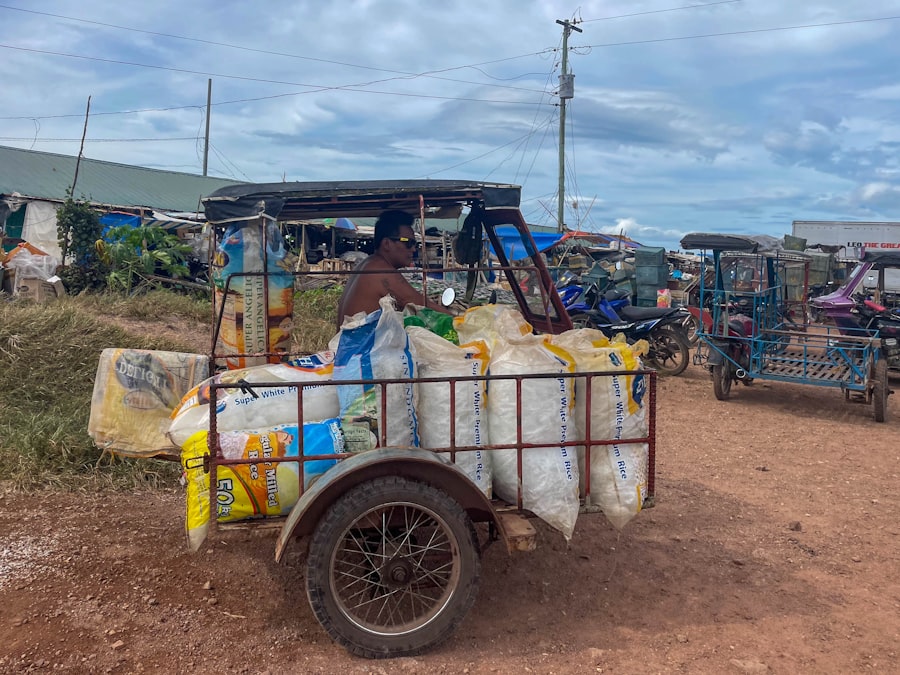
While corporate dominance can bring about efficiencies of scale and a wide array of products, you must also confront its profound economic and social costs. The seemingly low prices you encounter in the supermarket often mask a deeper system of exploitation and disenfranchisement.
Squeezing the Farmer: A Raw Deal for Producers
The concentrated buying power of large processors and retailers gives them immense leverage over farmers. You might assume that market forces dictate prices, but often, it’s a “take it or leave it” proposition for producers.
- Price Compression: Farmers, particularly those dealing with undifferentiated commodities, face constant pressure to lower their prices. Large buyers can easily switch suppliers or even import from other regions, leaving farmers with limited bargaining power. You are observing a system where the primary producers are often at the bottom of the economic food chain.
- Contract Farming and Indebtedness: Many farmers enter into contract farming arrangements with large corporations. While these contracts offer a guaranteed buyer, they often come with stringent requirements regarding inputs, production methods, and delivery schedules. Farmers can become locked into these contracts, highly dependent on the corporation for their livelihood, and vulnerable to changes in contract terms or market conditions. This is a subtle form of leverage that can border on economic servitude.
- Loss of Farm Autonomy: The increasing standardization demanded by corporate buyers can erode the traditional knowledge and autonomy of farmers. They lose the ability to experiment with different crops, adapt to local conditions, or pursue diversified farming strategies. You are witnessing the homogenization of agricultural practices driven by corporate demand for uniformity.
Impact on Food Security and Access: Unequal Distribution
Corporate dominance can have uneven effects on food security. While large-scale production can theoretically increase overall food availability, it doesn’t always translate into equitable access.
- Focus on Profitable Crops: Corporations often prioritize the production of high-value, easy-to-transport, and shelf-stable commodities that generate the highest profits. This can lead to a reduction in the diversity of crops grown, potentially impacting nutritional diversity and the resilience of local food systems. The choices on your supermarket shelf are a reflection of what is most profitable, not necessarily what is most beneficial.
- Disruption of Local Food Systems: The efficiency and scale of corporate supply chains can often undercut local producers, making it difficult for them to compete. This can lead to the decline of local food economies, increased reliance on distant and complex supply chains, and a loss of community resilience. You are observing the erosion of local food sovereignty.
- Food Deserts and Affordability: In many urban and rural areas, access to fresh, healthy, and affordable food is limited. This is exacerbated by the dominance of large supermarket chains that often locate in areas with higher population density and purchasing power, leaving lower-income communities underserved. You are encountering a landscape where access to food is not uniform, but rather dictated by economic viability for large corporations.
Environmental Footprint: The Unseen Costs of Industrial Agriculture
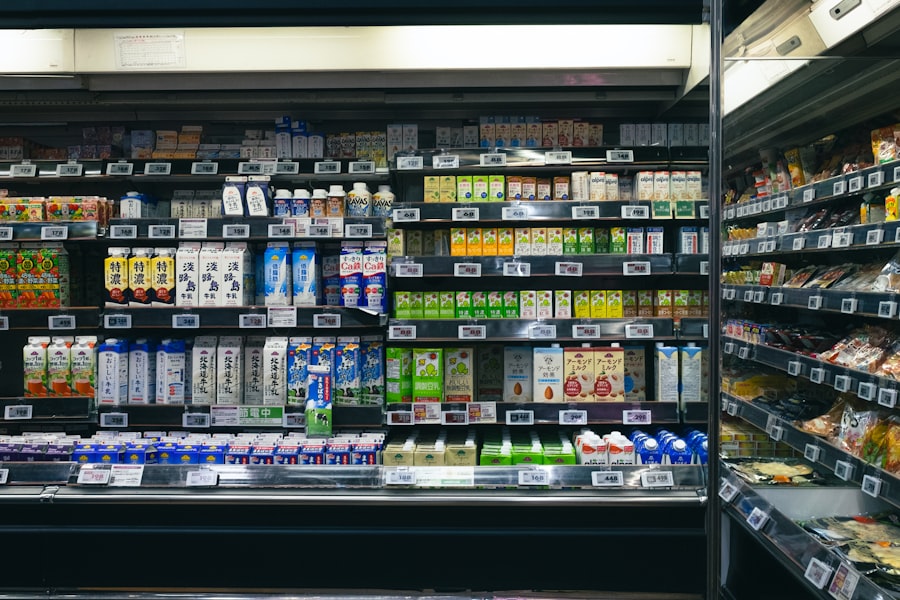
The industrial scale of corporate-dominated food production, while efficient in terms of output, often carries a significant environmental burden. You are consuming food that, in many cases, has been produced with a disregard for the long-term health of the planet.
Resource Depletion and Pollution: The Ecological Debt
The drive for maximum yield and efficiency, often prioritized by large corporations, places immense pressure on natural resources.
- Water Over-extraction: Large-scale irrigation for monoculture crops, heavily reliant on corporate seeds and fertilizers, can lead to severe depletion of aquifers and surface water sources. You are participating in a system that often treats water as an infinite resource.
- Soil Degradation: Intensive farming practices, including heavy reliance on synthetic fertilizers and pesticides, can deplete soil nutrients, reduce biodiversity, and increase erosion. The health of the soil, the very foundation of our food system, is often sacrificed for short-term gains. You are consuming food from earth that is increasingly fatigued.
- Pesticide and Fertilizer Runoff: The widespread use of agrochemicals can lead to runoff into waterways, polluting ecosystems, harming aquatic life, and even contaminating drinking water supplies. You are witnessing the ripple effect of industrial agricultural practices extending far beyond the farm gate.
- Greenhouse Gas Emissions: The entire corporate food supply chain, from fertilizer production and agricultural machinery to processing, transportation, and refrigeration, is a significant contributor to greenhouse gas emissions, exacerbating climate change. Your food’s journey leaves a carbon footprint that is often substantial.
Biodiversity Loss: The Monocultural Trap
The emphasis on a limited number of high-yield crop varieties, driven by corporate seed companies and processor demands, contributes significantly to global biodiversity loss.
- Genetic Erosion: As farmers increasingly adopt a narrow range of proprietary seed varieties, older, more diverse landraces and traditional crops are lost. This genetic erosion leaves our food system vulnerable to pests, diseases, and climate change. You are relying on an increasingly narrow genetic base for your food supply.
- Impact on Pollinators: The widespread use of pesticides, particularly neonicotinoids, has been implicated in the decline of pollinator populations, including bees, which are essential for the reproduction of many food crops. You are witnessing the unraveling of ecological processes critical for your very sustenance.
In recent discussions about the implications of corporate control over the food supply chain, an insightful article highlights the growing concerns regarding food security and sustainability. This piece emphasizes how large corporations influence agricultural practices and consumer choices, often prioritizing profit over public health. For a deeper understanding of these dynamics, you can explore the article on wealth growth and its impact on various sectors, including food, by visiting this link.
The Illusion of Choice: Marketing and Consumer Manipulation
| Metric | Description | Example Data | Source/Year |
|---|---|---|---|
| Market Share of Top 10 Agribusinesses | Percentage of global food supply controlled by the top 10 agribusiness corporations | 60% | Oxfam, 2022 |
| Seed Market Concentration | Percentage of global commercial seed market controlled by top 4 companies | 70% | ISAAA, 2021 |
| Fertilizer Market Share | Market share of top 5 fertilizer companies worldwide | 75% | CRU Group, 2023 |
| Food Retail Market Concentration | Percentage of grocery retail sales controlled by top 5 retailers in the US | 50% | USDA, 2022 |
| Global Meat Processing Control | Market share of top 4 meat processing companies globally | 85% | Food & Agriculture Organization, 2023 |
| Agrochemical Market Share | Percentage of global agrochemical sales by top 6 companies | 80% | Statista, 2023 |
| Percentage of Patented Seeds | Share of patented genetically modified seeds in total commercial seed sales | 65% | ISAAA, 2022 |
You walk into a supermarket aisle, confronted by a dazzling array of products, each promising health, convenience, or indulgence. Yet, beneath this veneer of choice, a powerful corporate marketing apparatus is at work, subtly shaping your preferences and desires.
Branding and Product Differentiation: The Art of Perception
Many seemingly distinct brands are, in fact, owned by the same few parent corporations. This creates an illusion of extensive choice where, in reality, you are often choosing between different facets of the same corporate entity.
- Market Segmentation: Corporations create different brands and product lines to appeal to various consumer segments, from budget-conscious shoppers to those seeking premium, “natural,” or “organic” options. This allows them to capture a wider market share and reinforce their dominant position. You are being catered to by an algorithm of branding tailored to your perceived demographic.
- Healthwashed and Greenwashed Marketing: Many products are marketed with claims of being “healthy,” “natural,” “sustainable,” or “eco-friendly,” often with minimal scientific basis or genuine environmental benefit. This “healthwashing” or “greenwashing” can mislead consumers and obscure the true environmental and nutritional impact of a product. You are being fed narratives designed to influence your purchasing decisions, rather than objective information.
- Psychological Pricing and Placement: Supermarket layouts, product placement on shelves, and pricing strategies are meticulously designed to encourage specific purchasing behaviors. “Loss leaders” draw you in, while higher-margin items are strategically placed for impulse buys. You are navigating a carefully constructed environment designed to maximize corporate profits.
Advertising and Media Influence: Shaping Desires
Corporate food companies invest billions in advertising, permeating every aspect of your media landscape, from television commercials and social media campaigns to product placements in films and games.
- Targeting Vulnerable Populations: Children are particularly susceptible to food advertising, leading to increased consumption of sugary drinks, processed snacks, and fast food. This contributes to rising rates of childhood obesity and related health issues. You are witnessing the commercialization of innocence.
- Cultivating Consumer Loyalty: Through consistent branding and repeated exposure, corporations aim to build long-term consumer loyalty, making you less likely to switch to competing products, even when presented with healthier or more sustainable alternatives. You are being conditioned to associate certain brands with comfort, quality, or convenience.
- Influencing Dietary Trends: Corporate marketing can significantly influence dietary trends, promoting specific ingredients, food categories, or consumption patterns. This can shift public discourse around food and subtly nudge societal eating habits in directions that benefit corporate bottom lines. You are participating in a grand experiment of synchronized consumer behavior.
Charting a New Course: Reclaiming the Food System
The picture painted above might seem daunting, suggesting an insurmountable corporate fortress. However, you are not powerless. Understanding the mechanisms of corporate dominance is the first step towards advocating for a more equitable, sustainable, and transparent food system.
Supporting Alternatives and Local Initiatives: Voting with Your Wallet
Your individual choices, when aggregated, can send powerful signals to the market. You can actively choose to support alternatives to the dominant corporate model.
- Farmers’ Markets and Community-Supported Agriculture (CSAs): By purchasing directly from farmers, you bypass intermediaries, ensure fairer prices for producers, and reduce the environmental footprint associated with long-distance transportation. You are forging a direct connection to your food and its producers.
- Independent Grocers and Cooperatives: Supporting locally owned stores and consumer cooperatives can foster community resilience and offer a greater diversity of products from smaller, regional producers. You are strengthening local economies and diversifying your food sources.
- Ethical and Sustainable Brands: When you do purchase from larger retailers, actively seek out brands that demonstrate genuine commitments to ethical sourcing, fair labor practices, and environmental sustainability. Research companies beyond their marketing claims to understand their true impact. You are exercising discernment and promoting responsible business practices.
Advocating for Policy Change: Raising Your Voice
Individual consumption choices are important, but systemic change requires collective action and political will. You have a role to play in advocating for policy reforms.
- Support Anti-Trust Legislation: Advocate for stronger anti-trust laws and enforcement to break up corporate monopolies and promote greater competition within the food sector. You are pushing back against the concentration of power.
- Promote Fair Trade Practices: Support policies that ensure fair prices for farmers and workers throughout the supply chain, both domestically and internationally. You are championing economic justice for food producers globally.
- Advocate for Stronger Environmental Regulations: Push for stricter regulations on pesticide use, water pollution, and greenhouse gas emissions in agriculture and food processing. You are demanding accountability for the environmental costs of your food.
- Demand Transparency and Labeling: Advocate for clear and comprehensive labeling requirements that provide consumers with information about the origin, ingredients, and production methods of their food. You are asserting your right to informed decision-making.
Education and Awareness: Shining a Light on the System
Perhaps the most crucial step is to continue learning and engaging with the complex realities of your food system. You can become an informed consumer and advocate by seeking out reliable information and sharing your knowledge with others.
- Read and Research: Educate yourself about food supply chains, corporate power, and the environmental and social impacts of different food systems. Independent journalism, academic research, and non-profit organizations offer invaluable insights. You are equipping yourself with the knowledge to make impactful choices.
- Engage in Dialogue: Discuss these issues with friends, family, and community members. Raising awareness is a powerful catalyst for change. You are fostering a collective understanding of the challenges and opportunities within the food system.
- Support Investigative Journalism: Acknowledge and support news organizations and journalists who investigate corporate power and expose injustices within the food industry. You are bolstering the watchdogs of democracy and transparency.
The food on your plate is more than just sustenance; it is a nexus of power, economics, and ecology. By understanding the pervasive influence of corporate dominance in food supply chains, you can move beyond being a passive consumer to become an active participant in shaping a fairer, healthier, and more sustainable future for food. The journey is long and complex, but your informed engagement is an essential ingredient for change.
FAQs
What is corporate control over the food supply chain?
Corporate control over the food supply chain refers to the dominance or significant influence that large corporations have over various stages of food production, processing, distribution, and retail. This control can affect pricing, availability, and diversity of food products.
Which companies typically have control over the food supply chain?
Major multinational corporations in agriculture, food processing, and retail sectors often have significant control. Examples include companies like Cargill, Archer Daniels Midland, Nestlé, and Walmart, among others.
How does corporate control impact farmers?
Corporate control can limit farmers’ choices regarding seeds, fertilizers, and buyers. It may lead to dependency on specific suppliers or buyers, potentially reducing farmers’ bargaining power and income stability.
What are the effects of corporate control on food prices?
Corporate control can lead to price setting that favors large companies, potentially resulting in higher prices for consumers or lower prices paid to producers. However, economies of scale can sometimes reduce costs.
Does corporate control affect food diversity?
Yes, corporate control can lead to a focus on a limited number of high-demand crops or products, reducing agricultural biodiversity and limiting consumer choices.
How does corporate control influence food safety and quality?
Large corporations often implement standardized safety and quality protocols, which can improve consistency. However, profit motives may sometimes lead to compromises or reduced transparency.
What are the environmental implications of corporate control in the food supply chain?
Corporate-driven agriculture may prioritize high-yield practices that can lead to environmental degradation, such as soil depletion, water overuse, and increased chemical inputs. Conversely, some corporations invest in sustainable practices.
Are there regulations addressing corporate control over the food supply chain?
Yes, many countries have antitrust laws and food safety regulations aimed at preventing monopolistic practices and ensuring fair competition and consumer protection in the food industry.
How can consumers influence corporate control over the food supply chain?
Consumers can support local farmers, choose products from diverse sources, advocate for transparency, and support policies promoting fair competition and sustainable practices.
What alternatives exist to corporate-controlled food supply chains?
Alternatives include local and regional food systems, farmers’ cooperatives, community-supported agriculture (CSA), and fair trade networks that emphasize equitable and sustainable food production and distribution.