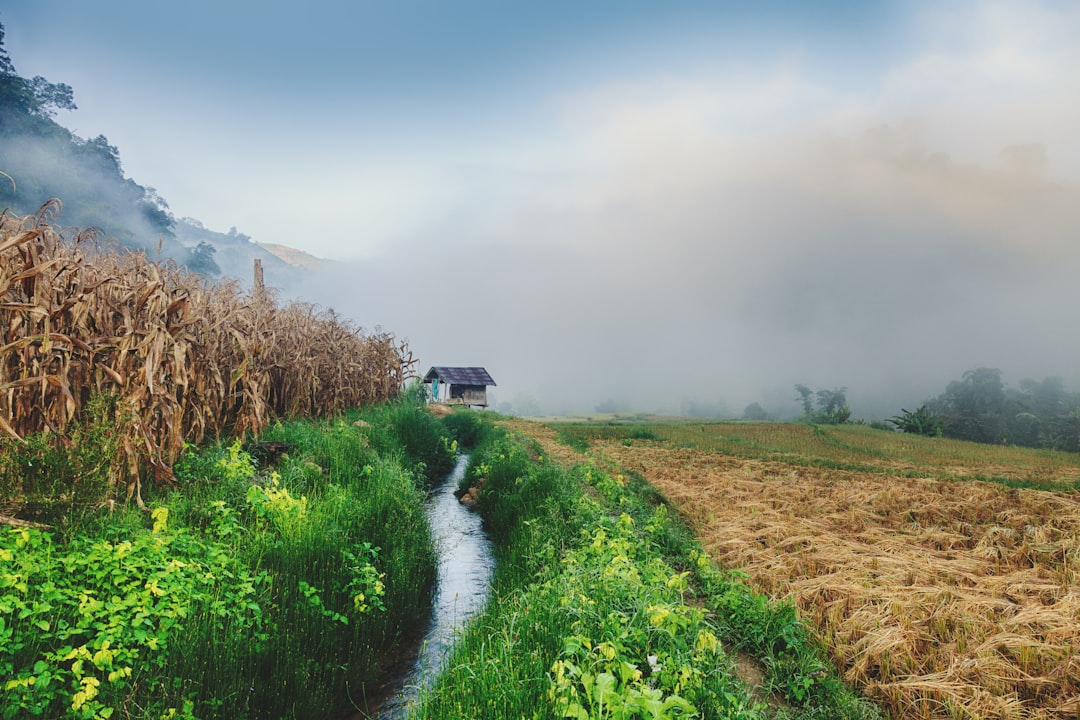
You stand at the precipice of a complex issue, one that touches every plate you consume and every landscape you traverse. Corporate farming, often depicted as the behemoth of modern agriculture, is a system of food production characterized by large-scale operations, industrial methods, and often, ownership by large corporations. While it promises efficiency and abundant food, its environmental footprint is the shadow it casts across our planet. This article will delve into the multifaceted ecological consequences of this agricultural paradigm, offering you a clearer understanding of its ramifications.
Land Transformation and Habitat Loss
Your dinner, in many cases, begins with a drastic alteration of the natural world. Corporate farming demands vast tracts of land, and this insatiable hunger for acreage has profound implications for biodiversity and ecosystems. Learn more about corporate control by watching this insightful video corporate control.
Deforestation and Wetland Drainage
Imagine sprawling forests, home to countless species, or vital wetlands acting as nature’s sponges. Corporate farming often views these ecosystems not as irreplaceable natural assets, but as potential farmland. You’ve likely seen images of cleared rainforests for cattle pastures or palm oil plantations, both driven by demand amplified by corporate agricultural operations. This conversion leads to:
- Biodiversity Deserts: As natural habitats are razed, the intricate web of life within them is systematically unravelled. Species, from apex predators to microscopic organisms, lose their homes, food sources, and breeding grounds. You are witnessing a direct reduction in the variety of life on Earth.
- Carbon Release: Forests and wetlands act as substantial carbon sinks, storing vast quantities of atmospheric carbon dioxide. Their destruction releases this stored carbon back into the atmosphere, directly contributing to climate change. This is akin to opening a CO2 tap, rather than turning it off.
- Altered Hydrology: Wetlands are crucial for water filtration and flood control. Their drainage disrupts natural water cycles, leading to increased flooding in some areas and water scarcity in others. You are effectively removing a natural regulator from the hydrological system.
Monocropping and Genetic Erosion
Walk through a corporate farm, and you’ll often find vast, uninterrupted fields of a single crop – corn, soy, wheat. This practice, known as monocropping, is a cornerstone of industrial agriculture, valued for its efficiency and ease of mechanized operations. However, it comes at a significant cost to genetic diversity.
- Increased Vulnerability: A uniform crop population is a sitting duck for pests and diseases. If a pest or pathogen adapts to attack one variety, it can rapidly devastate an entire crop, as there are no genetically diverse individuals to resist it. You are putting all your eggs in one basket, a risky strategy indeed.
- Reliance on External Inputs: To combat the inherent vulnerability of monocultures, corporate farms become heavily reliant on pesticides and herbicides. This creates a vicious cycle where chemical use is necessary to maintain the system it helped create. You become dependent on artificial interventions.
- Loss of Traditional Varieties: The focus on a few high-yielding crop varieties for corporate farming pushes traditional, often more resilient and diverse, landraces to the brink of extinction. This erosion of genetic diversity is an irreversible loss of nature’s evolutionary insurance policy.
Water Scarcity and Contamination
Water, the very essence of life, is simultaneously a crucial input and a significant casualty of corporate farming practices. The sheer scale of these operations places immense strain on freshwater resources and degrades water quality.
Excessive Water Consumption
Consider the vast quantities of water required to irrigate immense fields, especially for water-intensive crops or livestock. Corporate agriculture’s thirst can be insatiable.
- Groundwater Depletion: Aquifers, natural underground reservoirs of water, are being drawn down at unsustainable rates to meet agricultural demands. This is akin to constantly emptying a bank account without making deposits – eventually, it runs dry. You are witnessing the depletion of a vital, often non-renewable, resource.
- Surface Water Diversion: Rivers and lakes are often dammed and diverted to supply irrigation channels. This drastically alters natural river flows, impacting aquatic ecosystems and downstream communities. You are redirecting lifeblood away from its natural course.
- Competition with Other Users: As agricultural water demands soar, competition arises with urban populations and other industries, exacerbating water stress in already arid regions. You are contributing to a growing societal conflict over a finite resource.
Agrochemical Runoff and Pollution
The arsenal of pesticides, herbicides, and synthetic fertilizers used in corporate farming doesn’t stay confined to the fields. Rain and irrigation wash these chemicals into nearby waterways, creating a cascade of environmental problems.
- Eutrophication: Excess nitrogen and phosphorus from fertilizers act as superfoods for algae. This leads to algal blooms, which deplete oxygen in the water as they decompose, creating “dead zones” where fish and other aquatic life cannot survive. You are inadvertently fertilizing the wrong parts of the ecosystem.
- Pesticide Contamination: Pesticides are designed to be toxic, and their presence in water bodies can harm non-target organisms, including fish, amphibians, and insects crucial to the food web. Some pesticides accumulate in the food chain, posing risks to top predators, including humans. You are introducing a poison into the natural stream of life.
- Sedimentation: Tillage practices in large-scale farming expose soil to erosion, leading to increased sediment runoff into rivers and lakes. This sedimentation degrades water quality, harms aquatic habitats, and can clog irrigation systems. You are witnessing your topsoil, a valuable resource, being washed away.
Soil Degradation and Erosion
The foundation of agriculture is healthy soil, a living ecosystem teeming with microorganisms and nutrients. Corporate farming practices, however, often treat soil as a mere substrate, leading to its degradation and loss.
Intensive Tillage Practices
The pursuit of efficiency in corporate farming leads to the widespread use of heavy machinery and intensive tillage methods, such as repeated plowing with moldboard implements. While these methods prepare the seedbed effectively in the short term, they have long-term detrimental effects.
- Compaction: Heavy machinery compacts the soil, reducing porosity and hindering water infiltration and root penetration. This is like squeezing a sponge until it can no longer absorb water efficiently. You are effectively hardening the very medium where life is meant to flourish.
- Loss of Organic Matter: Regular, deep tillage exposes soil organic matter to oxygen, accelerating its decomposition and release as carbon dioxide. Organic matter is crucial for soil structure, water retention, and nutrient cycling. You are burning through the soil’s natural endowment.
- Disruption of Soil Microorganisms: Tillage disrupts the delicate balance of microbial communities within the soil, which are essential for nutrient availability and plant health. You are disturbing the hidden workforce that sustains the ecosystem.
Reliance on Synthetic Fertilizers
Corporate farming heavily leans on synthetic nitrogen, phosphorus, and potassium fertilizers to boost crop yields. While effective in the short term, their exclusive and often excessive use has drawbacks.
- Reduced Soil Biodiversity: The constant input of synthetic fertilizers can suppress the activity of beneficial soil microorganisms that naturally fix nitrogen and make other nutrients available. You are, in a sense, replacing the soil’s natural ability with an external input.
- Soil Acidification: Long-term use of certain synthetic nitrogen fertilizers can lead to soil acidification, making nutrients less available to plants and harming soil organisms. You are altering the very chemistry of the soil beneath your feet.
- Nutrient Imbalances: Exclusive reliance on synthetic fertilizers can create nutrient imbalances, as they often lack the full spectrum of micronutrients present in healthy, organically rich soil. This can lead to less nutritious crops. You are focusing on a few key building blocks, neglecting the full complexity.
Greenhouse Gas Emissions
The industrialization of agriculture is a significant contributor to global warming. From the energy required to produce fertilizers to the methane emissions from livestock, corporate farming has a substantial carbon footprint.
Fertilizer Production and Use
The creation of synthetic nitrogen fertilizers is an energy-intensive process, relying heavily on fossil fuels. Furthermore, their application leads to the release of potent greenhouse gases.
- Nitrous Oxide Emissions: When synthetic nitrogen fertilizers are applied to soil, a portion of the nitrogen is converted into nitrous oxide (N2O), a greenhouse gas with a global warming potential almost 300 times that of carbon dioxide over a 100-year period. You are effectively releasing a super-charged greenhouse gas.
- Carbon Dioxide from Production: The Haber-Bosch process, used to synthesize ammonia (a precursor to most nitrogen fertilizers), requires significant amounts of natural gas or other fossil fuels, releasing substantial CO2 into the atmosphere. You are consuming fossil fuels to fuel your food production.
Livestock Emissions
The large-scale animal agriculture characteristic of corporate farming is a major source of methane and nitrous oxide, two powerful greenhouse gases.
- Methane from Enteric Fermentation: Ruminant animals like cattle, sheep, and goats produce methane during the digestive process (enteric fermentation). When you scale this up to the millions of animals in corporate feedlots, the collective emission becomes immense. You are witnessing the collective exhalations of an entire food system.
- Methane from Manure Management: The storage and decomposition of vast quantities of animal manure in large lagoons or piles release significant amounts of methane. You are creating enormous biological reactors of greenhouse gases.
- Nitrous Oxide from Manure: Nitrous oxide is also emitted from manure through microbial processes. The sheer volume of waste generated by corporate livestock operations amplifies these emissions.
Pesticide Resistance and Human Health Concerns
The heavy reliance on chemical interventions in corporate farming creates a chemical treadmill, leading to increasingly resilient pests while raising concerns about human health.
Evolution of “Superweeds” and “Superbugs”
Nature is a persistent force, and the repeated application of the same pesticides and herbicides exerts strong selective pressure on pest populations.
- Resistance Development: Over time, individuals within a pest population that possess a natural resistance to a particular chemical survive and reproduce, passing on their resistance genes. This leads to the emergence of “superweeds” and “superbugs” that are increasingly difficult to control. You are inadvertently breeding stronger adversaries.
- Increased Chemical Use: As pests develop resistance, farmers are often compelled to use higher doses of existing chemicals, or switch to new, often harsher, chemicals, further escalating the chemical arms race. This is a perpetual cycle of escalation, with no clear end in sight.
- Harm to Beneficial Organisms: Broad-spectrum pesticides, while targeting specific pests, also kill beneficial insects such as pollinators (bees, butterflies) and natural predators of agricultural pests, disrupting ecological balance. You are throwing the baby out with the bathwater, harming allies in the process.
Potential Human Health Impacts
The ubiquity of agricultural chemicals raises legitimate concerns about their long-term effects on human health, both for agricultural workers and consumers.
- Occupational Exposure: Farmworkers directly handling and applying pesticides face elevated risks of exposure, which can lead to acute poisoning or chronic health problems. You are putting the health of frontline workers at risk.
- Residues in Food: While regulatory bodies set maximum residue limits (MRLs) for pesticides in food, concerns remain about the cumulative effect of consuming multiple pesticide residues over a lifetime, especially for vulnerable populations. You are consuming trace amounts of these chemicals in your daily diet.
- Impact on Water and Air Quality: Pesticides can volatilize into the air and become airborne, or leach into drinking water sources, exposing broader communities to their potential effects. You breathe or drink the faint echoes of the chemicals applied in fields far away.
In conclusion, the journey of corporate farming, while aimed at feeding a growing world, is fraught with environmental peril. You are witnessing a system that, in its pursuit of efficiency and scale, often prioritizes short-term gains over long-term ecological sustainability. The transformation of land, the depletion and contamination of water, the degradation of soil, the emissions of greenhouse gases, and the escalating chemical warfare against nature all paint a complex picture of environmental challenge. Understanding these impacts is the first step towards advocating for and implementing more sustainable agricultural practices, ensuring both food security and a healthy planet for future generations.
FAQs
What is corporate farming?
Corporate farming refers to large-scale agricultural operations owned and managed by corporations rather than individual farmers. These farms often use industrial methods and advanced technology to maximize production.
How does corporate farming impact the environment?
Corporate farming can impact the environment through increased use of chemical fertilizers and pesticides, large-scale monoculture practices, water overuse, soil degradation, and greenhouse gas emissions from machinery and livestock.
What are the effects of monoculture in corporate farming?
Monoculture, the practice of growing a single crop over a large area, can lead to reduced biodiversity, increased vulnerability to pests and diseases, and depletion of soil nutrients, which negatively affect ecosystem health.
How does corporate farming affect water resources?
Corporate farming often requires significant water for irrigation, which can lead to depletion of local water supplies, reduced water quality due to runoff of fertilizers and pesticides, and disruption of aquatic ecosystems.
What role do pesticides and fertilizers play in environmental impact?
The extensive use of chemical pesticides and fertilizers in corporate farming can contaminate soil and water, harm non-target species including beneficial insects and wildlife, and contribute to pollution and ecosystem imbalance.
Does corporate farming contribute to climate change?
Yes, corporate farming contributes to climate change through greenhouse gas emissions from heavy machinery, synthetic fertilizer production, and methane emissions from large-scale livestock operations.
Are there any environmental benefits associated with corporate farming?
Some corporate farms implement sustainable practices such as precision agriculture, conservation tillage, and integrated pest management, which can reduce environmental impact. However, these practices vary widely among operations.
How does corporate farming affect soil health?
Intensive farming practices can lead to soil erosion, loss of organic matter, compaction, and nutrient depletion, which degrade soil health and reduce long-term agricultural productivity.
What is the impact of corporate livestock farming on the environment?
Large-scale livestock farming can produce significant amounts of waste, leading to water pollution, emit methane (a potent greenhouse gas), and require large quantities of feed and water, contributing to resource depletion.
Can corporate farming practices be made more environmentally sustainable?
Yes, adopting practices such as crop rotation, reduced chemical use, improved waste management, water conservation techniques, and renewable energy integration can enhance the sustainability of corporate farming.