
You’re standing at a crossroads. The California minimum wage has just taken a significant leap, and now you, as a resident, a business owner, an employee, or simply an observer of the economic landscape, are tasked with navigating the ensuing discourse. This isn’t just about a number on a paycheck; it’s a pivot point, a lever pulled on a complex machine, and its reverberations are already shaping conversations across the state and beyond.
You’ve witnessed it happen. As of April 1, 2024, California has introduced a new, elevated minimum wage, specifically targeting the fast-food industry. This isn’t merely an incremental bump, a gentle rise in the tide. Instead, it’s a substantial upward adjustment that has immediately recalibrated the financial floor for hundreds of thousands of workers. For fast-food chains with at least 60 locations nationwide, the minimum hourly wage now stands at $20. You might be asking yourself, “Why this sector?” The specificity of this increase is a key facet of the policy, designed to address perceived wage stagnation in a high-growth, high-profit industry often characterized by low-wage labor. For other sectors, the general statewide minimum wage also saw an increase, though to a lesser extent, bringing it to $16 an hour. Learn more about the California fast food minimum wage law and its impact on workers and businesses.
Historical Context: Tracing the Upward Trajectory
To truly grasp the current situation, you need to look back. California has been a vanguard in the movement for higher minimum wages for decades. Recall the “Fight for $15” movement, which gained significant traction throughout the 2010s. California was one of the earliest and most prominent states to adopt legislation pushing towards that benchmark. This wasn’t a sudden surge; it was a sustained climb, a methodical ascent up a steep financial hill. Each increase, though often debated, has consistently moved the state’s economic floor higher than the federal minimum wage, which has remained static at $7.25 since 2009. You can see a clear pattern emerging: California often acts as a laboratory for progressive economic policies, and minimum wage increases are a prime example.
The Fast-Food Focus: A Targeted Intervention
Consider the strategic decision to target the fast-food industry. This isn’t an arbitrary choice. The rationale often cited by proponents centers on the industry’s significant revenue streams, its often-franchised business model, and the high proportion of low-wage workers it employs. Proponents argue that these businesses are better equipped to absorb wage increases without significant detriment, and that the sheer volume of workers in this sector means the impact on poverty reduction could be substantial. You might be pondering whether this sectoral approach sets a precedent, opening the door for similar, industry-specific minimum wage hikes in the future. It’s a question that echoes through policy circles.
Following the recent increase in California’s minimum wage, many businesses have had to reevaluate their operational strategies to accommodate the higher labor costs. This shift has sparked discussions about the broader economic implications, including potential price increases for consumers and the impact on employment rates. For a deeper understanding of how these changes are affecting the economy and wealth distribution, you can read a related article on this topic at How Wealth Grows.
The Economic Ripple Effect: A Stone in a Pond
When you toss a stone into a still pond, the ripples spread outward, touching every edge. So too with a significant minimum wage increase. This isn’t a localized event that will remain confined to fast-food kitchens or payroll departments. Its economic consequences are already radiating, touching consumers, employees, and businesses far beyond the immediate scope of the policy. You’re likely already experiencing or hearing about some of these effects.
Consumer Prices: The Pass-Through Phenomenon
One of the most immediate and hotly debated consequences is the potential for price increases. When labor costs rise for businesses, particularly those with thin margins in a competitive market, they often face a choice: absorb the costs, reduce other expenses, or pass them on to the consumer. For many fast-food establishments, the latter is a common strategy. You might have already noticed a slight uptick in the price of your favorite burger combo or coffee. This is often described as the “pass-through” effect. The question for you to consider is, how much of this increase will consumers tolerate before it impacts demand? It’s a delicate balance, a tightrope walk for businesses.
Business Adaptation: Innovation and Efficiency
Businesses are not static entities; they are dynamic organisms that adapt to their environment. When faced with increased labor costs, you’ll see a spectrum of responses. Some businesses might increase prices, as discussed, while others might explore greater automation, investing in technology that can replace or augment human labor. Think about self-ordering kiosks or robotic frying stations. You might also see a renewed focus on efficiency, optimizing scheduling, reducing waste, and streamlining operations to do more with less. For some smaller, independent fast-food operators, this could be a make-or-break moment, forcing them to innovate or risk closure.
Employment Levels: The Job Creation vs. Job Loss Debate
This is perhaps the most contentious area of discussion, dividing economists and policymakers alike. Opponents of minimum wage increases often argue that higher labor costs lead to job losses, as businesses are incentivized to reduce their workforce or slow hiring. They paint a picture of businesses making difficult choices, potentially cutting shifts or even closing locations. Conversely, proponents argue that modest minimum wage increases do not significantly impact employment levels and that the economic stimulus provided by increased consumer spending from higher wages can even lead to job growth. You’re presented with two competing narratives, two different lenses through which to view the same economic data. Understanding which narrative holds more weight often depends on the specific circumstances and the elasticity of labor demand in particular industries.
Addressing Poverty and Inequality: A Social Imperative?
For proponents, the primary justification for raising the minimum wage extends beyond economic theory to social equity. They view it as a moral imperative, a tool to lift individuals and families out of poverty and reduce economic disparities. You, as a citizen, are often asked to weigh these social benefits against potential economic drawbacks.
Improved Living Standards: More Than Just a Number
Consider the direct impact on minimum wage earners. A higher wage means more disposable income, which can translate into improved living standards. It might mean the difference between affording groceries and skipping meals, covering rent and facing eviction, or accessing healthcare and foregoing necessary treatment. You might imagine the relief, the breathing room that an extra few hundred dollars a month can provide for a family struggling to make ends meet in a high-cost-of-living state like California. This isn’t just about financial metrics; it’s about human welfare.
Reducing Reliance on Public Assistance: A Net Benefit?
One argument often posited is that higher wages can reduce the reliance of low-income workers on public assistance programs. If individuals are earning a “living wage,” they may need less support from welfare, food stamps, and other government-funded safety nets. From this perspective, the minimum wage becomes a mechanism for shifting support from taxpayers to employers. You could view this as a form of societal burden-sharing, where businesses contribute more to the welfare of their employees, potentially leading to a healthier overall economy.
Gender and Racial Equity: Closing the Gaps
Minimum wage increases are often framed as a tool for advancing gender and racial equity. A disproportionate number of minimum wage earners are women and people of color. Therefore, an increase at the bottom of the wage scale can have a particularly strong impact on these demographic groups, potentially helping to close existing wage gaps. You are invited to consider how this policy might contribute to a more equitable distribution of wealth and opportunity across different segments of society.
Industry-Specific Challenges: Navigating the Trenches
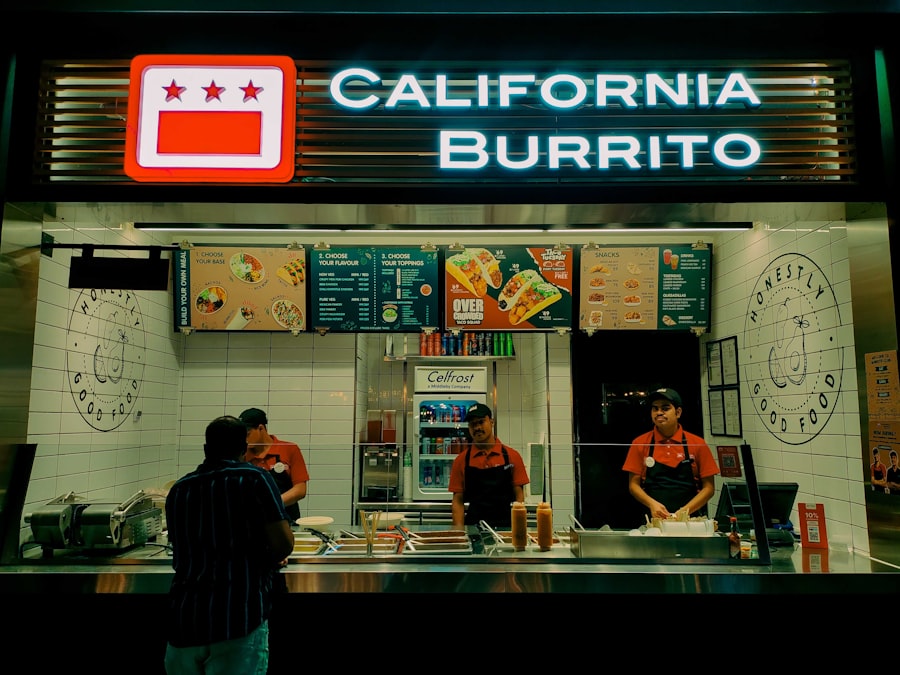
While the general principles of minimum wage increases apply broadly, the specific challenges posed by the California mandate vary significantly across different industries and business models. You need to look beyond the broad strokes and delve into the nuances.
Franchisee Struggles: The Small Business Owner’s Dilemma
Consider the fast-food franchisee. Often, these are small business owners, individuals who have invested their life savings into a brand, operating under strict corporate guidelines. They may not have the deep pockets of the corporate parent. For them, a significant wage hike can feel like a direct assault on their profitability, a sudden shift in the sands beneath their business. You might hear complaints of reduced profit margins, increased operational stress, and even the threat of closure. Their ability to absorb these costs is often far more constrained than that of the corporate entities controlling the brand.
Non-Fast Food Businesses: Spillovers and Competitive Edges
While the $20 minimum wage is specific to fast food, its effects don’t stop there. Other businesses with similar pay structures, but not falling under the fast-food classification, are now grappling with what’s known as the “spillover effect.” If a fast-food worker can earn $20 an hour, why would they choose to work in a different retail or service sector job paying $16 an hour? This creates upward wage pressure across the board, as non-fast-food businesses must raise their own wages to attract and retain talent. You might observe a kind of arms race for labor, where businesses compete not just on product, but increasingly on compensation.
Independent Restaurants: A Different Battleground
Independent restaurants, often operating on razor-thin margins and facing intense competition, also find themselves in a precarious position. While not directly subject to the fast-food mandate, the upward pressure on wages from the fast-food sector inevitably affects their own hiring and retention strategies. They must contend with patrons accustomed to higher prices at fast-food establishments while simultaneously managing their own unique cost structures, which often include higher quality ingredients and more personalized service. For you, observing this, it’s clear that the economic ripples affect the entire culinary ecosystem.
After the recent increase in California’s minimum wage, many businesses have had to adapt to the new economic landscape, leading to discussions about the broader implications for the state’s economy. A related article explores how these changes are impacting small businesses and their ability to thrive in a competitive market. For more insights on this topic, you can read the full article here. As employers adjust to the new wage standards, the ripple effects on employment rates and consumer spending are becoming increasingly evident.
Monitoring and Evaluation: The Unfolding Experiment
| Year | Minimum Wage (per hour) | Employment Change (%) | Average Hourly Earnings Growth (%) | Small Business Closures (%) | Inflation Rate (%) |
|---|---|---|---|---|---|
| 2017 | 10.50 | +1.2 | +3.5 | +0.8 | 2.7 |
| 2018 | 11.00 | +1.0 | +3.8 | +1.0 | 2.5 |
| 2019 | 12.00 | +0.9 | +4.0 | +1.2 | 2.3 |
| 2020 | 13.00 | -0.5 | +2.0 | +3.5 | 1.2 |
| 2021 | 14.00 | +0.3 | +5.0 | +2.0 | 4.7 |
| 2022 | 15.00 | +0.7 | +6.5 | +1.5 | 7.0 |
This isn’t a one-and-done policy. The California minimum wage increase is, in essence, a large-scale economic experiment, and its true impact will only become clear over time. You, as an engaged observer, will want to pay close attention to the data that emerges.
Data Collection: What Metrics Matter?
Policymakers, economists, and community groups will be scrutinizing a range of data points to assess the policy’s effectiveness. You should be looking out for changes in employment levels in the fast-food sector, shifts in consumer spending patterns, business closure rates, and, importantly, measures of poverty and income inequality. Are wages truly lifting families out of poverty? Are businesses adapting sustainably? These are the crucial questions that data will help answer. The story isn’t just about the immediate aftermath but the long-term trajectory.
Policy Adjustments: Flexibility in the Face of Evidence
No policy is perfect from the outset, and often, initial implementations reveal unforeseen consequences or areas for improvement. You might expect to see debates about potential adjustments to the policy in the future, based on the evidence that emerges. Could there be exemptions for very small businesses? Will the definition of a “fast-food establishment” be refined? How will the effects on specific geographic areas or demographics be addressed? The legislative body often acts as a gardener, tending to the policy, pruning where necessary, and fostering growth where possible.
The National Stage: Replicating or Rejecting the Model?
California often acts as a bellwether, a canary in the coal mine, for other states. The success or failure, the perceived benefits or drawbacks, of this minimum wage increase will undoubtedly influence policy discussions across the United States. You’ll observe other states watching closely, weighing California’s experience against their own economic realities. Will this become a blueprint for future sectoral wage mandates, or a cautionary tale? The answer you derive will depend on your interpretation of the unfolding data and the economic philosophies you choose to prioritize. You are, in essence, witnessing history in the making.
WATCH THIS! 🍔💰 California’s $20 Fast Food Wage: Big Paychecks or Big Layoffs?
FAQs
What changes occurred to the minimum wage in California recently?
California implemented a series of scheduled minimum wage increases, raising the state minimum wage incrementally to reach $15.50 per hour for all employers by 2023.
How did the minimum wage increase affect employment in California?
Studies show mixed results; some sectors experienced slight reductions in entry-level jobs, while others saw minimal impact or even job growth due to increased consumer spending from higher wages.
Did the minimum wage hike lead to higher prices for consumers?
Yes, some businesses, particularly in the food service and retail sectors, passed on increased labor costs to consumers through modest price increases.
What impact did the wage increase have on small businesses?
Small businesses faced challenges adjusting to higher labor costs, with some reducing employee hours or delaying hiring, while others adapted by improving efficiency or raising prices.
Were there any benefits observed from the minimum wage increase?
Benefits included improved earnings for low-wage workers, reduced employee turnover, and increased consumer spending power, which helped stimulate local economies.
How did the minimum wage changes affect poverty levels in California?
The wage increases contributed to reducing poverty for some workers, though the overall impact varied depending on factors like cost of living and employment opportunities.
Are there differences in minimum wage laws within California?
Yes, some cities and counties in California have enacted higher local minimum wages than the state level, reflecting regional cost of living differences.
What sectors were most affected by the minimum wage increase?
Sectors with a high concentration of low-wage workers, such as hospitality, retail, and food service, were most directly impacted by the wage increases.
Did the minimum wage increase affect worker hours or benefits?
Some employers reduced worker hours to manage increased labor costs, while others maintained hours but adjusted benefits or job responsibilities.
What future changes are expected regarding California’s minimum wage?
California plans to continue indexing the minimum wage to inflation starting in 2024, ensuring wages keep pace with the cost of living.