Understanding the Building Blocks of Your Retirement Nest Egg
As you embark on the journey of planning for retirement, you’ll encounter a landscape filled with financial terms and concepts. Two crucial ones you’ll frequently see, and which are fundamental to understanding your financial progress, are share prices and account value units. While they sound similar and are intertwined, they represent distinct aspects of your investment portfolio. Grasping the nuances between them is paramount for making informed decisions, setting realistic goals, and ultimately, achieving the retirement security you desire. Think of share prices as the price tags on individual items you’re buying, and account value units as the total value of all the items you’ve collected. This article will guide you through the key factors influencing both, and how they collectively contribute to your retirement planning.
When planning for retirement, understanding the relationship between share prices and account value units is crucial for making informed investment decisions. A related article that delves into this topic can be found at How Wealth Grows, where you can explore insights on how fluctuations in share prices can impact your overall retirement savings and account valuations. This resource provides valuable information to help you navigate the complexities of retirement planning.
Decoding Share Prices: The Dynamic Pulse of Your Investments

Share prices are perhaps the most commonly discussed metric in the investment world. You see them quoted daily on financial news channels, in your brokerage statements, and online. Understanding what drives these prices, and how they fluctuate, is the first step in comprehending your investment’s potential.
The Fundamentals of Stock Valuation
At its core, a share price represents the value of a single unit of ownership in a publicly traded company. This value isn’t arbitrary; it’s determined by the forces of supply and demand in the stock market. When more investors want to buy a company’s stock than sell it, the price tends to rise. Conversely, when selling pressure outweighs buying interest, the price falls. But what influences this supply and demand?
Company Performance and Profitability
The most significant driver of a share price is the underlying performance of the company itself. Investors are primarily interested in a company’s ability to generate profits and grow its earnings. Key financial indicators such as revenue growth, profit margins, earnings per share (EPS), and return on equity (ROE) are closely scrutinized. A company consistently demonstrating strong financial health and robust growth is likely to see its share price appreciate over time, as investors anticipate continued success and higher future dividends or capital gains. Conversely, a company facing declining revenues, shrinking profits, or operational challenges will often see its share price suffer.
Industry Trends and Economic Conditions
Beyond individual company performance, broader industry trends and macroeconomic factors play a vital role. A company operating in a sector with high growth potential, such as renewable energy or artificial intelligence, may see its share price rise even if its individual performance is only moderate, due to investor optimism about the sector’s future. Similarly, the overall health of the economy can significantly impact stock markets. During periods of economic expansion, consumer spending and business investment tend to be high, leading to increased corporate profits and rising share prices. Conversely, economic downturns, recessions, or periods of high inflation can lead to widespread stock market declines. You need to consider how the industries your investments are in will fare in different economic scenarios.
Investor Sentiment and Market Psychology
While fundamental analysis focuses on tangible factors, investor sentiment and market psychology are equally potent forces. Fear and greed are powerful emotions that can drive stock prices beyond what fundamentals might suggest. During bull markets, optimism can lead to speculative buying, pushing prices higher. In bear markets, panic selling can cause prices to plummet, sometimes below their intrinsic value. Understanding that market sentiment can create both opportunities and risks is crucial. Your own emotional discipline, in not succumbing to these crowd behaviors, is a key factor in successful long-term investing.
Corporate Events and News
Specific corporate events can also cause immediate and significant swings in share prices. These include product launches, mergers and acquisitions, regulatory approvals or rejections, legal battles, and changes in management. Positive news, such as a successful new product launch or a favorable regulatory ruling, can send a stock price soaring. Negative news, like a major product recall or a significant lawsuit, can cause a sharp decline. Staying informed about these events, and how they might impact your holdings, is an ongoing aspect of managing your investments.
The Impact of Share Price Volatility on Retirement Goals
Share price volatility, the degree to which prices fluctuate, is an inherent characteristic of stock market investing. While it presents opportunities for higher returns, it also introduces risk, and this duality is a cornerstone of retirement planning.
Risk and Reward Trade-off
The fundamental principle of investing is that higher potential returns typically come with higher risk. Stocks, due to their potential for significant growth, are often considered a higher-risk, higher-reward asset class compared to bonds or cash equivalents. As you get closer to retirement, your tolerance for this risk may decrease, as you have less time to recover from potential losses. Understanding this trade-off helps you align your investment strategy with your risk profile.
Diversification as a Risk Management Tool
One of the most effective ways to manage the volatility inherent in individual share prices is through diversification. This involves spreading your investments across different companies, industries, and asset classes. By not putting all your eggs in one basket, you reduce the impact of any single stock’s poor performance on your overall portfolio. If one company’s share price plummets, the positive performance of others can help offset the loss. This principle of diversification is a cornerstone of prudent retirement planning, aiming to smooth out the ride and protect your capital.
Time Horizon and Investment Strategy
Your time horizon – the length of time until you need to access your retirement funds – is a critical factor in how you should approach share price volatility. If you have a long time until retirement, you can afford to ride out short-term market fluctuations. You have the time for your investments to recover from downturns and benefit from long-term growth trends. As you approach retirement, your strategy may shift towards more conservative investments with less volatility to preserve your capital.
Exploring Account Value Units: The Sum of Your Financial Efforts
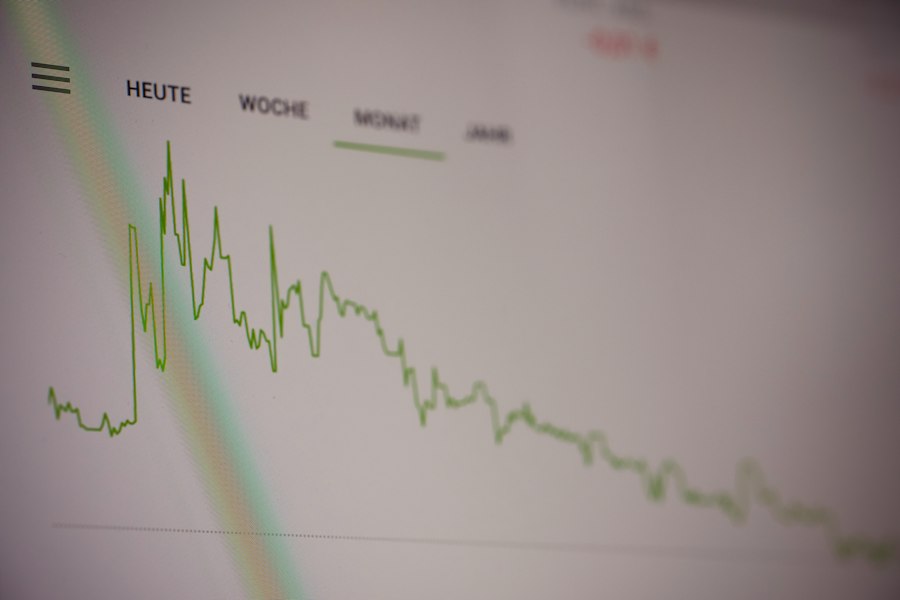
While share prices tell you the value of individual components, account value units represent the aggregate worth of your entire retirement account. This is the number you’ll look at to gauge your overall progress towards your retirement goals.
The Components of Account Value
Your retirement account’s value is a composite of various elements, each contributing to its overall size and growth. Understanding these components is key to managing your account effectively.
Investment Holdings and Their Market Value
The primary driver of your account value is the market value of the investments held within it. This includes not only stocks but also bonds, mutual funds, exchange-traded funds (ETFs), and potentially other assets like real estate or commodities, depending on your account type and investment choices. The fluctuating share prices of the stocks within these holdings directly influence their market value, and in turn, the overall account value. For example, if you hold shares of Company X, and its share price increases, the value of that specific holding increases, contributing to a higher account value.
Contributions and Their Impact
Your ongoing contributions are a direct and predictable way to increase your account value. Whether you’re making regular contributions to a 401(k), an IRA, or another retirement savings plan, these injections of capital directly add to the total sum. The frequency and amount of your contributions are within your control and represent a powerful tool for accelerating your retirement savings. Consistent, disciplined saving is a non-negotiable element of successful retirement planning.
Reinvested Dividends and Capital Gains
Many investment vehicles, particularly mutual funds and ETFs, offer the option to reinvest dividends and capital gains. Dividends are a portion of a company’s profits distributed to shareholders, while capital gains arise from the sale of an investment for a profit. When you choose to reinvest these distributions, they are used to purchase more shares or units of the underlying investment. This creates a compounding effect, where your earnings themselves begin to generate further earnings, significantly boosting your account value over time. This “power of compounding” is a fundamental principle that you should leverage to its fullest.
Fees and Expenses: The Hidden Drains
It’s crucial to be aware that fees and expenses can and will erode your account value. These can include management fees for mutual funds and ETFs, trading commissions for buying and selling securities, administrative fees for retirement plans, and advisory fees if you work with a financial advisor. While some fees are unavoidable, understanding them allows you to make choices that minimize their impact. High fees can significantly drag down your long-term returns, so seeking out low-cost investment options and being aware of all associated costs is essential.
Tracking Your Progress: The Significance of Account Value Units
Your account value units are more than just a number; they are a tangible representation of your financial progress and a critical benchmark for your retirement planning.
Setting and Monitoring Retirement Goals
The most important function of tracking your account value is to set and monitor your retirement goals. You likely have a target amount you aim to have saved by your retirement date. By regularly reviewing your account value, you can see how close you are to achieving this target. If you’re falling short, it signals the need to adjust your savings rate, investment strategy, or perhaps even your retirement timeline. Conversely, if you’re on track or ahead, it provides confidence and allows for potential adjustments to enjoy a more comfortable retirement.
Adjusting Your Investment Strategy
As your account value grows, and as you move closer to retirement, your investment strategy may need to evolve. A growing account value might allow you to consider slightly more aggressive investments if your risk tolerance permits and your time horizon is still considerable. Conversely, a stagnant or declining account value might necessitate a review of your investment choices, perhaps shifting towards more conservative assets to protect your principal. Your account value serves as a vital indicator for making these strategic adjustments.
The Psychological Impact of Account Growth
Witnessing your account value grow over time can be incredibly motivating. It reinforces your disciplined saving and investing habits and provides a sense of accomplishment. This positive feedback loop can encourage you to stay committed to your long-term financial plan. Conversely, seeing your account value decline can be disheartening. However, understanding that market fluctuations are normal and focusing on the long-term growth potential can help you maintain perspective and avoid making impulsive decisions based on short-term market movements.
The Interplay Between Share Prices and Account Value Units
The relationship between share prices and account value units is symbiotic. Share prices are the individual threads that weave together to form the tapestry of your account value.
How Share Price Changes Directly Affect Your Account
When the share price of an investment you hold increases, the market value of that specific holding rises. If you own 100 shares of a company trading at $50 per share, your holding is worth $5,000. If the share price rises to $60, your holding is now worth $6,000, an increase of $1,000. This increase directly contributes to a higher overall account value. Conversely, a decrease in share price has the opposite effect, reducing the value of your holding and consequently your total account value. This direct correlation means that the performance of the individual stocks you own is a primary determinant of your retirement savings growth.
The Power of Compounding Driven by Share Price Appreciation and Reinvestment
Compounding is where the magic of long-term investing truly happens, and it’s fueled by both share price appreciation and the reinvestment of earnings. When a company’s share price rises, the value of your existing shares increases. If you then reinvest dividends or capital gains, you are essentially buying more shares at the current market price. As these new shares also experience price appreciation, they contribute to further compounding. Over decades, this process can lead to exponential growth in your account value, far exceeding the sum of your initial contributions. This is why starting early and staying invested is so crucial for retirement planning.
Diversification’s Role in Smoothing Account Value Fluctuations
While individual share price volatility can cause your account value to fluctuate, diversification acts as a crucial buffer. If you hold a diversified portfolio, a decline in the share price of one company might be offset by an increase in the share price of another. This smoothing effect helps to reduce the dramatic swings in your overall account value, making the journey towards retirement more predictable and less stressful. It allows you to maintain a consistent investment strategy without being overly reactive to the ups and downs of individual stocks.
Understanding the dynamics between share prices and account value units in retirement is crucial for effective financial planning. For those looking to delve deeper into this topic, a related article can provide valuable insights and strategies. You can explore more about this subject by visiting this informative article, which discusses how fluctuations in share prices can impact your overall retirement portfolio and account values.
Key Factors Influencing Your Retirement Account’s Trajectory
| Year | Share Price (Units) | Account Value (Units) | Annual Growth Rate (%) | Comments |
|---|---|---|---|---|
| 2019 | 100 | 10,000 | 5 | Stable market conditions |
| 2020 | 110 | 10,500 | 7 | Market growth despite volatility |
| 2021 | 120 | 11,200 | 8 | Strong recovery post-pandemic |
| 2022 | 115 | 11,000 | -4 | Market correction |
| 2023 | 125 | 11,800 | 9 | Positive economic outlook |
Beyond the direct interplay of share prices and account value units, several overarching factors will profoundly shape your retirement savings journey.
Your Savings Rate: The Foundation of Growth
The amount you consistently save each month or year is arguably the single most important factor in determining your ultimate retirement nest egg. Even with exceptional investment returns, if your savings rate is too low, you may struggle to accumulate sufficient funds. Conversely, a high savings rate, even with modest investment growth, can lead to substantial wealth accumulation over time. Regularly assessing and, if possible, increasing your savings rate should be a top priority in your retirement planning. Consider automating your contributions to ensure consistency.
Investment Returns: The Engine of Wealth Creation
While you can control your savings rate, investment returns are influenced by market performance and your chosen investment strategy. Higher investment returns, generated by smart allocation and well-performing assets, will accelerate your wealth accumulation. However, it’s crucial to remember that higher returns typically come with higher risk. A balanced approach, considering your risk tolerance and time horizon, is essential for optimizing investment returns without exposing yourself to undue danger. Seeking out investments with competitive expense ratios also ensures that a larger portion of your returns stays in your account.
Inflation: The Silent Eroder of Purchasing Power
Inflation is the gradual increase in the prices of goods and services over time, and it has a significant impact on the purchasing power of your retirement savings. If your investments don’t grow at a rate that outpaces inflation, the real value of your money – what it can actually buy – will diminish. This means that simply having a large sum of money in retirement might not be enough if inflation has significantly eroded its purchasing power. Your retirement planning must account for inflation to ensure you have enough to maintain your desired lifestyle in the future. This is where investments that have historically outpaced inflation, like stocks, become particularly important.
Fees and Taxes: The Unseen Costs
As mentioned earlier, fees and taxes are often overlooked but can significantly impact your net returns. High investment management fees, excessive trading costs, and unfavorable tax treatments can chip away at your gains. Understanding the fee structures of your investments and the tax implications of your retirement accounts is crucial. Strategies like utilizing tax-advantaged retirement accounts (e.g., Roth IRAs, 401(k)s) and choosing low-cost investment options can help minimize these costs and maximize your long-term wealth accumulation. Planning for taxes in retirement, including withdrawal strategies, is also an integral part of the process.
Strategies for Maximizing Your Retirement Account Value
With a solid understanding of share prices, account value units, and the factors that influence them, you can implement strategies to optimize your retirement savings.
The Importance of a Long-Term Perspective
Retirement planning is a marathon, not a sprint. Cultivating a long-term perspective is paramount. Market fluctuations are inevitable, and short-term dips are normal. Instead of reacting emotionally to daily market movements, focus on your long-term goals and the historical tendency of markets to grow over extended periods. This means staying invested through market downturns and resisting the urge to sell during periods of panic. Your account value, influenced by share price movements, will inevitably see ups and downs, but a consistent long-term strategy is designed to capture the upward trend.
Regular Review and Rebalancing of Your Portfolio
Your retirement needs and market conditions change over time. Therefore, it’s essential to regularly review and rebalance your investment portfolio. This involves assessing your asset allocation – the mix of stocks, bonds, and other investments you hold – and making adjustments to ensure it aligns with your current risk tolerance, time horizon, and retirement goals. Rebalancing means selling some of the assets that have grown significantly and buying more of those that have lagged, bringing your portfolio back to its target allocation. This process helps to manage risk and can also enhance returns by selling high and buying low.
Seeking Professional Guidance When Needed
Navigating the complexities of retirement planning can be daunting. If you feel overwhelmed or unsure about your investment strategy, don’t hesitate to seek advice from a qualified financial advisor. A professional can help you assess your financial situation, set realistic goals, develop a personalized investment plan, and provide ongoing guidance. They can also help you understand the intricate relationship between share prices, account value units, and how to best position yourself for a secure retirement, ensuring you make informed decisions based on comprehensive analysis rather than guesswork.
By understanding the distinct yet interconnected roles of share prices and account value units, and by diligently implementing sound financial strategies, you are well-equipped to build a robust retirement nest egg that provides the financial security and peace of mind you deserve in your later years.

The 4% Retirement Mistake That’s Secretly Costing You Thousands
FAQs
What are share prices?
Share prices refer to the current market value of a single share of a company’s stock. It is determined by the supply and demand for that particular stock in the stock market.
What are account value units in retirement?
Account value units in retirement are a way to measure the value of an individual’s retirement account. It represents the total worth of all investments held in the account, including stocks, bonds, and other assets.
How do share prices affect retirement savings?
Share prices can directly impact the value of retirement savings, especially if the retirement account is heavily invested in stocks. When share prices increase, the value of the retirement account also goes up, and vice versa.
What is the difference between share prices and account value units in retirement?
Share prices are specific to individual stocks and fluctuate based on market conditions, while account value units in retirement represent the overall value of a retirement account, which may consist of various investments.
Should retirees be concerned about share prices or account value units in retirement?
Retirees should focus more on the overall performance of their retirement account, including account value units, rather than solely on share prices. Diversification and long-term investment strategies are key factors to consider for a secure retirement.