
Understanding the Impact of Your Spouse’s Early Social Security Claim on Your Survivor Benefits
You’ve worked hard, you’ve planned, and now you’re contemplating retirement. Perhaps your spouse has already started receiving their Social Security benefits, or they’re considering claiming them earlier than their Full Retirement Age (FRA). This is a common scenario, and it’s crucial you understand how their decision directly impacts your own future Social Security survivor benefits. As a surviving spouse, this benefit can be a vital lifeline, providing a crucial income stream when you need it most. Ignoring the nuances of your spouse’s early claim could leave you with significantly less financial security than you anticipate. This article aims to demystify this complex topic, equipping you with the knowledge to make informed decisions and secure your financial future. We’ll delve into the mechanics of how claiming early affects the survivor benefit, explore different scenarios, and offer practical advice to help you navigate this important aspect of retirement planning.
When considering the implications of claiming Social Security survivor benefits, it’s essential to understand how early claims by a spouse can affect the overall benefits received. For a deeper insight into this topic, you can read a related article that discusses the nuances of survivor benefits and the impact of early claims at How Wealth Grows. This resource provides valuable information that can help you navigate the complexities of Social Security and make informed decisions regarding your financial future.
The Mechanics of Survivor Benefits and Early Claims

When your spouse passes away, you may be eligible to receive Social Security survivor benefits. The amount of this benefit is directly tied to your deceased spouse’s earnings record and the age at which they began receiving their own benefits. This is where the decision to claim early becomes particularly impactful.
Calculating Your Potential Survivor Benefit
Your survivor benefit is typically calculated as a percentage of your deceased spouse’s primary insurance amount (PIA). The PIA is the average monthly earnings on which your spouse’s retirement benefit was calculated.
- If your spouse claimed benefits at or after their Full Retirement Age (FRA): You will generally be eligible to receive 100% of their PIA. This is the maximum possible survivor benefit.
- If your spouse claimed benefits before their FRA: Their monthly benefit amount was permanently reduced. Consequently, your survivor benefit will also be permanently reduced. The reduction is based on the number of months they claimed before FRA. For each month before FRA, their benefit was reduced by a fraction of a percent, and this reduction carries over to your survivor benefit. For example, if your spouse claimed at age 62 (4 years or 48 months before their FRA), their benefit would be reduced by approximately 25%. This means your survivor benefit would also be reduced by approximately 25% of their PIA.
- If you are also eligible for your own retirement benefit: You will receive the higher of your own calculated retirement benefit or the survivor benefit from your spouse. You will not receive both in full. If your survivor benefit is higher than your own retirement benefit, you’ll receive the survivor benefit amount, and the difference between the two will be made up by Social Security.
The Permanent Nature of Early Claiming Reductions
It is absolutely essential to understand that the reduction in your spouse’s benefit due to early claiming is permanent. This means that even if your spouse later decides to suspend their benefits or if they were to live to be 100, the reduced amount they received is the basis for your survivor benefit. There is no “true-up” or adjustment later on to compensate for the initial early claiming. This permanence underscores the gravity of the decision to claim early and its long-term financial implications for the surviving spouse.
Impact of Spousal Benefits on Survivor Benefits
If your spouse claimed spousal benefits based on your record before their FRA, and then later claimed their own retirement benefit before their FRA, this can also have a compounding effect on survivor benefits. Social Security rules aim to ensure you receive a benefit based on the highest earner’s record, but the timing of claims can complicate this. If your spouse’s benefit was reduced due to early claiming, and you are a survivor, your benefit will be based on that reduced amount. This highlights the importance of understanding the interplay between your individual earnings records and the claiming strategies employed by both partners.
Strategic Considerations for Your Spouse’s Claiming Decision

Given the significant impact on survivor benefits, your spouse’s decision about when to claim their Social Security retirement benefits is not just about their immediate income needs; it’s a shared financial decision that affects your future security.
Maximizing Your Combined Lifetime Benefits
The goal is often to maximize your combined lifetime Social Security benefits as a couple. This doesn’t always mean claiming as early as possible.
- Delaying Benefits: If you and your spouse can afford to delay claiming benefits, doing so will result in higher monthly payments for both of you during your lifetimes. For every year you delay past FRA, up to age 70, your benefit increases by a certain percentage (known as Delayed Retirement Credits). These credits also contribute to a higher survivor benefit for the surviving spouse.
- The “File and Suspend” Strategy (No Longer Available): It’s worth noting that in the past, a strategy called “file and suspend” was available, which allowed one spouse to claim benefits, which in turn allowed the other spouse to claim a spousal benefit, while the first spouse’s benefit continued to grow with delayed retirement credits. This strategy was eliminated for new claims in 2015. However, individuals who were already 62 or older by January 1, 2016, can still use this strategy. If your spouse falls into this category, it might be a valuable option to explore.
- The “Restricted Application” Strategy (Limited Availability): Individuals who reached age 62 by January 1, 2016, can also file a “restricted application” for spousal benefits once their spouse has claimed their own benefit. This allows them to receive only the spousal benefit (which is half of their spouse’s PIA) while their own retirement benefit continues to grow with delayed retirement credits until age 70. If they do this, upon reaching age 70, they can switch to their own higher retirement benefit. If the spouse who filed the restricted application passes away first, the surviving spouse would then be eligible for the full survivor benefit based on the deceased spouse’s record.
The Importance of the Higher Earner’s Claiming Decision
In a marriage where there’s a significant difference in earnings history, the claiming decision of the higher earner is particularly critical for the surviving spouse. If the higher earner delays their benefits, their eventual benefit will be larger, thus providing a more substantial survivor benefit for the surviving spouse. Conversely, if the higher earner claims early and their benefit is reduced, the survivor benefit will also be reduced, potentially leaving the surviving spouse with a smaller income than anticipated.
Considering Individual Health and Longevity Expectations
While it’s impossible to predict the future with certainty, considering individual and family health histories and longevity expectations can inform the claiming decision. If one spouse has a significantly shorter life expectancy, claiming early might seem more advantageous for them to receive benefits sooner. However, this decision must be weighed against the potential impact on the surviving spouse’s financial security.
When You Become the Surviving Spouse: What to Expect
The process of claiming survivor benefits can be initiated once the Social Security Administration (SSA) is notified of your spouse’s death.
Notifying the Social Security Administration
The first step is to officially notify the SSA of your spouse’s passing. This is typically done by the funeral home, which will forward the death information to the SSA. However, it’s wise to confirm this has been done or to contact the SSA yourself shortly after your spouse’s death. You will need your spouse’s Social Security number and proof of death (a death certificate).
The Survivor Benefit Application Process
Once the SSA is aware of the death, they will likely contact you regarding your eligibility for survivor benefits. You will need to complete an application for survivor benefits. This application will require information about your marriage, your spouse’s earnings, and your own financial situation.
Receiving Your Benefit
If you are deemed eligible, your survivor benefit payments will begin. The amount will be determined based on your spouse’s claiming age and their PIA, as previously discussed. Remember, you will receive the higher of your own calculated retirement benefit or the survivor benefit from your spouse.
Potential Impact on Your Own Retirement Benefits
If you are already receiving your own Social Security retirement benefits, and your survivor benefit is higher, your monthly payment will be adjusted to the higher survivor benefit amount. If you have not yet claimed your own retirement benefits, and your survivor benefit is higher, you may choose to claim the survivor benefit immediately. If your own retirement benefit is higher, you may choose to delay claiming survivor benefits until you reach your FRA to allow your own benefit to grow further, or until age 70 to maximize it, while still receiving your own retirement benefit. It’s crucial to discuss these options with the SSA to understand how they interact.
Understanding the implications of claiming Social Security survivor benefits can be crucial, especially when a spouse has claimed early. For those navigating this complex landscape, it may be helpful to explore a related article that delves into the nuances of these benefits and how they can affect your financial planning. You can read more about this topic in the article found here, which provides valuable insights into optimizing your Social Security strategy.
Navigating Complex Scenarios and Special Circumstances
| Scenario | Spouse’s Claim Age | Survivor Benefit Percentage | Effect on Survivor Benefit | Notes |
|---|---|---|---|---|
| Spouse claims at Full Retirement Age (FRA) | FRA (66-67 depending on birth year) | 100% | Survivor receives full benefit based on deceased spouse’s FRA amount | Standard survivor benefit amount |
| Spouse claims early (before FRA) | As early as 62 | Reduced (varies) | Survivor benefit is reduced proportionally to the spouse’s early claim reduction | Reduction can be up to 25-30% depending on how early claimed |
| Survivor claims early | As early as 60 (or 50 if disabled) | Reduced survivor benefit | Survivor benefit is reduced if claimed before survivor FRA | Survivor FRA is same as original worker’s FRA |
| Spouse claims early, survivor claims at FRA | 62 (early), survivor at FRA | Reduced based on spouse’s early claim | Survivor benefit is based on reduced amount spouse received | Survivor benefit cannot exceed deceased spouse’s benefit at time of death |
| Spouse delays claiming beyond FRA | After FRA (up to age 70) | Increased | Survivor benefit is based on increased amount due to delayed retirement credits | Survivor benefit can be higher if spouse delayed claiming |
Social Security rules can be intricate, and there are several special circumstances that can affect survivor benefits, particularly when early claiming is involved.
Divorced Spouses and Survivor Benefits
If you were married for at least 10 years and are now divorced, you may still be eligible for survivor benefits on your ex-spouse’s record. The rules are similar to those for married couples: your benefit will be based on your ex-spouse’s PIA and the age at which they claimed benefits.
- Your Ex-Spouse Claims Early: If your ex-spouse claimed their benefits before their FRA, your survivor benefit will be reduced accordingly, just as it would be if you were still married.
- Remarriage: If you remarry before age 60, you generally cannot collect survivor benefits on your previous spouse’s record. However, if you remarry after age 60 (or after age 50 if you are disabled), you can still receive survivor benefits.
Widows, Widowers, and Children
Survivor benefits are also payable to unmarried children under age 18 (or under 19 if still a full-time student in elementary or secondary school) or disabled children. The benefit amount for children is a percentage of the deceased worker’s PIA, and there are family maximums that limit the total amount that can be paid to a family.
The “Widow’s” or “Widower’s” Credit
It’s important to understand that the benefit you receive as a survivor is not a “widow’s credit” added on top of your spouse’s benefit. Instead, it’s a benefit calculated based on your spouse’s record, and it can be up to 100% of their PIA if they claimed at or after FRA. The early claiming reduction directly impacts this potential maximum.
Seeking Professional Guidance for Informed Decisions
The intricacies of Social Security claiming strategies, especially when survivor benefits are a consideration, can be overwhelming. It’s wise to seek expert advice to ensure you are making the most advantageous decisions for your financial future.
Consulting with a Social Security Advisor
While the Social Security Administration provides valuable information, they cannot offer personalized advice tailored to your specific circumstances. Consider consulting with a fee-only financial advisor or a specialized Social Security strategist. These professionals can analyze your combined earnings history, your spouse’s claiming options, your individual retirement needs, and your projected life expectancies to help you develop a comprehensive strategy.
Utilizing Online Social Security Calculators and Resources
The official Social Security Administration website (ssa.gov) offers a wealth of information, including detailed explanations of survivor benefits, claiming strategies, and online calculators. While these calculators can provide estimates, they are not a substitute for personalized advice, especially in complex situations involving early claiming.
Planning for the Long Term: A Holistic Approach
Remember that Social Security is just one piece of your retirement puzzle. When making decisions about Social Security claiming, consider how it integrates with your other retirement savings, such as pensions, 401(k)s, and IRAs. A holistic approach to retirement planning will help you ensure that you and your spouse can maintain your desired lifestyle throughout your retirement years, regardless of unforeseen circumstances. By understanding the impact of your spouse’s early Social Security claim on your survivor benefits, you are taking a crucial step towards securing your financial well-being.
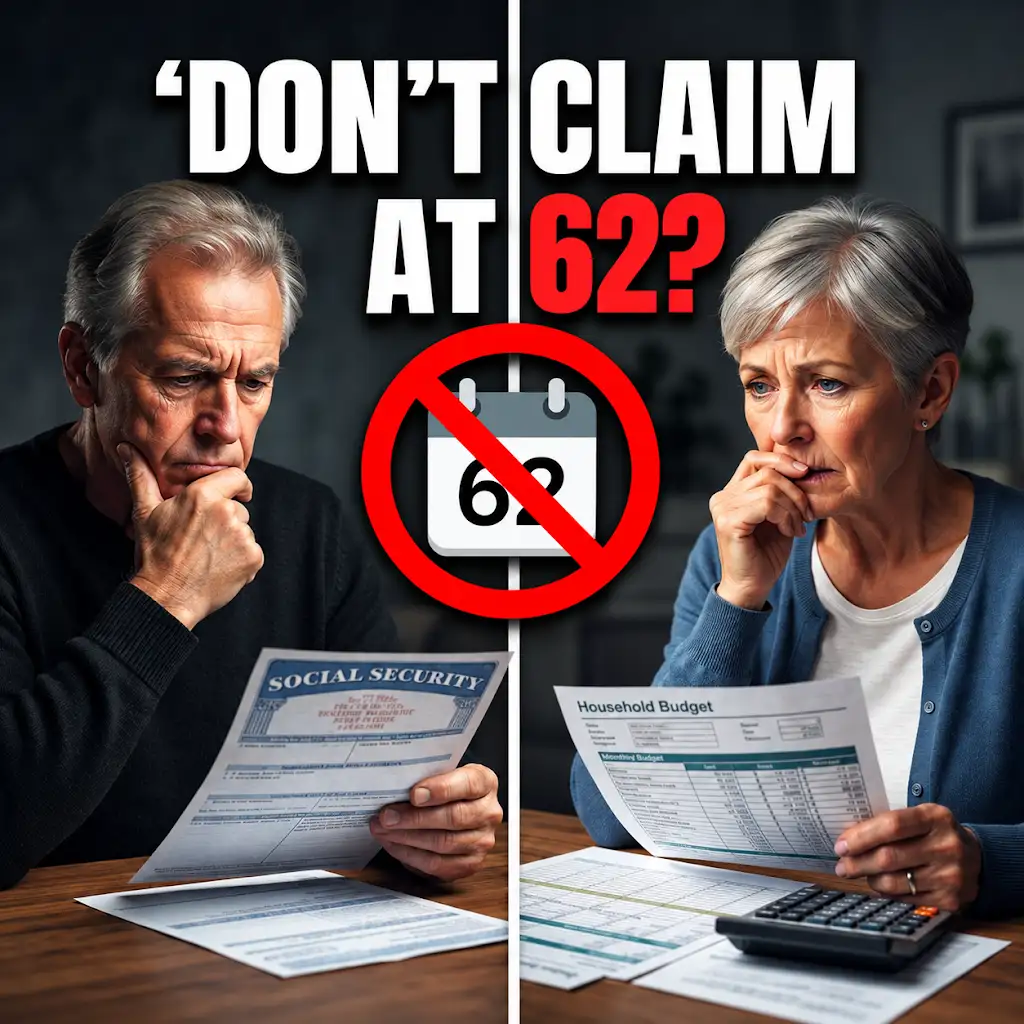
The Social Security Mistake At 62 That Could Ruin Your Spouse’s Retirement
FAQs
What is a Social Security survivor benefit?
A Social Security survivor benefit is a monthly payment made to the surviving spouse or children of a deceased worker who was eligible for Social Security benefits.
How does claiming Social Security benefits early affect survivor benefits?
If a spouse claims Social Security benefits early, their survivor benefit may be reduced. The reduction is based on the age at which the deceased spouse claimed their benefits.
Is there a difference in survivor benefits if the deceased spouse claimed benefits early?
Yes, if the deceased spouse claimed benefits early, the survivor benefit may be lower compared to if they had waited until full retirement age to claim their benefits.
Can a surviving spouse receive both their own Social Security benefits and survivor benefits?
Yes, a surviving spouse can potentially receive both their own Social Security benefits and survivor benefits, but the total amount may be subject to reduction based on certain factors.
Are survivor benefits affected if the surviving spouse remarries?
If a surviving spouse remarries before the age of 60, they are generally not eligible to receive survivor benefits based on their deceased spouse’s record. However, if they remarry after the age of 60, they can still receive survivor benefits.