
Understanding retirement tax rules is not just a good idea; it’s absolutely essential for securing your financial future. You’ve worked hard for decades, saving diligently, and now it’s time to enjoy the fruits of your labor. However, navigating the complex world of retirement taxation can feel like deciphering an ancient scroll. Without proper knowledge, you risk paying more in taxes than necessary, significantly reducing the amount of money you actually have to spend in retirement. This article is designed to equip you with the fundamental financial literacy you need to approach retirement tax rules with confidence. We’ll break down key concepts, explore common retirement accounts and their tax implications, and offer actionable tips to help you make informed decisions. Your retirement is a significant life chapter, and understanding its tax landscape is a crucial step in ensuring it’s a comfortable and prosperous one.
The Foundation of Retirement Taxation: Understanding the Basics
Before diving into specific account types, it’s important to grasp the core principles that govern how your retirement savings are taxed. This foundational knowledge will allow you to better understand the nuances of different investment vehicles and strategies. Think of it as learning the alphabet before you can read a book.
The Difference Between Taxable, Tax-Deferred, and Tax-Free
The primary distinction you’ll encounter in retirement accounts revolves around when and how taxes are applied. Understanding these three categories is paramount to making smart choices about where to put your money.
Taxable Accounts: The Immediate Impact
When you invest in a standard brokerage account, you’re typically dealing with a taxable account. This means that any earnings – be it interest, dividends, or capital gains from selling investments that have appreciated – are subject to taxation in the year they occur. For instance, if you receive $1,000 in dividends from your stock portfolio, you’ll owe taxes on that $1,000 in the same tax year. Similarly, if you sell a stock for a profit of $5,000, that $5,000 will be considered a capital gain and taxed accordingly. The advantage here is that you have complete flexibility with your money; you can withdraw it at any time without penalty. However, the constant tax burden can eat into your investment growth over time. This is why many people aim to max out their tax-advantaged accounts before contributing heavily to taxable accounts for retirement.
Tax-Deferred Accounts: The Power of Delayed Gratification
The most common type of retirement savings plan falls into the tax-deferred category. This includes vehicles like traditional 401(k)s and traditional IRAs. The key benefit here is that your contributions are often tax-deductible in the year you make them, meaning they reduce your current taxable income. More importantly, your investments grow without being taxed year after year. The taxes are postponed until you withdraw the money in retirement. This allows your earnings to compound more effectively because you’re not losing a portion to taxes each year. For example, if your investments grow by 7% in a tax-deferred account, that entire 7% contributes to your principal for future growth. In a taxable account, a portion of that 7% would be taxed away, leaving less to grow. The trade-off is that when you start taking distributions in retirement, they will be taxed as ordinary income. This is a crucial point to remember, as it means you’ll need to plan for these future tax liabilities.
Tax-Free Accounts: The Ultimate Retirement Windfall
The holy grail of retirement savings, at least from a tax perspective, is the tax-free account. The Roth IRA is the prime example. With a Roth IRA, your contributions are made with after-tax dollars – meaning you don’t get a tax deduction in the year you contribute. However, the magic happens in retirement: all qualified withdrawals, including your contributions and all the earnings your investments have generated, are completely tax-free. This means that if your Roth IRA grows to $1 million, and you withdraw it in retirement, you won’t owe a single cent in federal income tax. This is incredibly powerful, especially if you anticipate being in a higher tax bracket in retirement than you are during your working years. The tax-free growth and withdrawals can significantly increase your net spendable income during your golden years.
Understanding Tax Brackets and Their Impact
Your tax bracket is determined by your taxable income and filing status. It dictates the rate at which your income is taxed. For retirement planning, understanding tax brackets is crucial for several reasons.
Current vs. Future Tax Brackets: A Strategic Dilemma
One of the most significant decisions you’ll face is whether to take a tax deduction now (via a traditional account) or pay taxes now and benefit from tax-free withdrawals later (via a Roth account). This decision hinges on your prediction of your future tax bracket. If you believe you’re in a high tax bracket now and will be in a lower one in retirement, then a traditional account, with its upfront tax deduction, makes more sense. You’re getting a tax break when your tax rate is high. Conversely, if you’re in a lower tax bracket now and expect to be in a higher one in retirement (perhaps due to substantial retirement income from pensions, Social Security, and investments), then a Roth account becomes more attractive. You’re paying taxes now at a lower rate and securing tax-free income when your tax rate might be higher. It’s a strategic game of predicting your financial future and the tax landscape.
Taxable Income: The Driving Force
Your taxable income is the portion of your earnings that is subject to tax. This is the figure that determines which tax bracket you fall into. When planning for retirement, you’ll want to consider how your retirement withdrawals will impact your taxable income and, consequently, your tax bracket. For example, withdrawals from traditional 401(k)s and IRAs are added to any other income you might have in retirement (like Social Security or pensions), potentially pushing you into a higher tax bracket. This is why it’s essential to have a clear picture of all your potential retirement income sources and to factor in the tax implications of each.
Understanding financial literacy is crucial for effective retirement planning, especially when it comes to navigating tax rules that can significantly impact your savings. For a deeper dive into this topic, you can explore a related article that discusses essential strategies for maximizing your retirement funds while minimizing tax liabilities. Check it out here: How Wealth Grows. This resource provides valuable insights that can help you make informed decisions about your financial future.
Navigating Retirement Accounts: Tax Implications of Common Vehicles
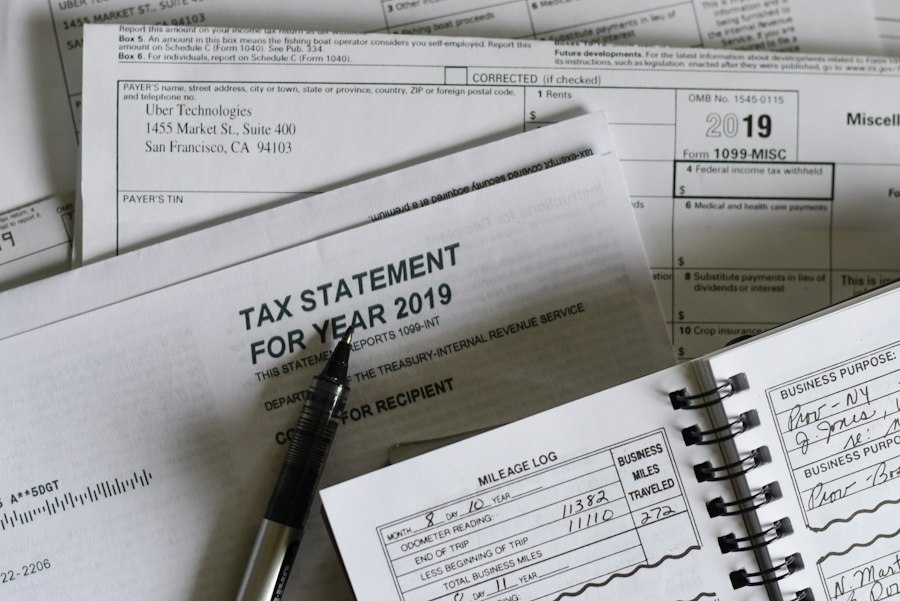
The specific types of retirement accounts you utilize will have distinct tax rules. Understanding these differences is key to optimizing your savings and minimizing your tax liability.
Traditional vs. Roth IRAs: A Deep Dive
Individual Retirement Arrangements (IRAs) are a cornerstone of retirement savings for many individuals. The choice between a traditional and a Roth IRA is a critical one with significant long-term tax consequences.
Traditional IRA: Upfront Deductions and Deferred Taxes
As mentioned earlier, traditional IRAs offer the benefit of tax-deductible contributions. This means you can reduce your current year’s taxable income by the amount you contribute, up to the annual limit. For example, if you contribute $6,000 to a traditional IRA and your marginal tax rate is 25%, you would save $1,500 in taxes for that year. Your investments then grow tax-deferred. However, when you withdraw money in retirement, those distributions are taxed as ordinary income. This is a significant consideration, as you’ll need to plan for this tax liability in your retirement budget. There are also required minimum distributions (RMDs) that begin at a certain age, meaning you’ll be compelled to withdraw and pay taxes on a portion of your account each year, whether you need the money or not.
Roth IRA: After-Tax Contributions and Tax-Free Withdrawals
Roth IRAs operate on the opposite principle. You contribute money that you’ve already paid taxes on. There’s no upfront tax deduction. However, the reward is substantial: qualified withdrawals in retirement are entirely tax-free. This is a powerful advantage, especially if you anticipate your income and tax rate being higher in retirement. The ability to access your money tax-free during your retirement years can provide significant financial flexibility. Unlike traditional IRAs, Roth IRAs do not have RMDs for the original owner, offering more control over when you access your funds. This flexibility can be very beneficial for estate planning as well.
Employer-Sponsored Plans: 401(k)s, 403(b)s, and More
Employer-sponsored retirement plans are a vital component of many individuals’ retirement savings strategies. These plans come with their own set of tax rules, often mirroring the traditional/Roth dichotomy.
Traditional 401(k)s and 403(b)s: Pre-Tax Contributions
Traditional 401(k)s and 403(b)s (for employees of public schools and non-profits) are the most common employer-sponsored plans. Contributions you make are typically pre-tax, meaning they are deducted from your paycheck before federal and state income taxes are calculated. This reduces your current taxable income, similar to a traditional IRA. Your investments grow tax-deferred. When you retire and begin taking distributions, these withdrawals will be taxed as ordinary income. Many employers also offer a matching contribution, which is essentially free money that can significantly boost your savings. The tax-deferred growth on employer matching funds is also a substantial benefit.
Roth 401(k)s and 403(b)s: After-Tax Contributions
More and more employers are offering Roth options for their 401(k) and 403(b) plans. With a Roth 401(k), your contributions are made with after-tax dollars. This means you don’t get an upfront tax deduction, but your qualified withdrawals in retirement will be tax-free. The decision between a traditional and Roth 401(k) should be based on your current income, anticipated future income, and tax bracket expectations. The key advantage of a Roth 401(k) is the certainty of tax-free income in retirement, which can be a huge relief in an unpredictable tax environment.
Other Retirement Savings Vehicles and Their Tax Nuances
Beyond IRAs and employer plans, other savings vehicles can play a role in your retirement. Understanding their tax implications is essential for a well-rounded financial plan.
Annuities: Tax-Deferred Growth and Income Streams
Annuities are insurance contracts that can provide a guaranteed stream of income in retirement. They offer tax-deferred growth, meaning your earnings aren’t taxed until you begin receiving payments. There are various types of annuities, each with different features and tax treatments. Some annuities can be purchased within tax-deferred retirement accounts (like IRAs or 401(k)s), offering an extra layer of tax deferral, while others are purchased with taxable funds. When you receive payments from an annuity, a portion of each payment typically represents a return of your original investment (which is not taxed) and a portion represents earnings (which are taxed). The tax implications of annuities can be complex, so it’s wise to consult with a financial advisor.
Brokerage Accounts: The Taxable Reality
As discussed earlier, standard brokerage accounts are taxable. Any dividends, interest, or capital gains you earn are taxed annually. While they offer the most flexibility, they are generally not the most tax-efficient vehicle for long-term retirement savings due to the ongoing tax burden. However, they can be a valuable tool for supplemental savings once you’ve maxed out your tax-advantaged options, or for holding assets you might need before traditional retirement age. Capital gains are taxed at different rates depending on how long you’ve held the asset: short-term capital gains (held for one year or less) are taxed at your ordinary income rate, while long-term capital gains (held for more than one year) are typically taxed at lower rates.
Strategic Tax Planning for Retirement: Maximizing Your Nest Egg

Simply saving for retirement isn’t enough; you need to save strategically to ensure that the money you’ve worked so hard for is protected from unnecessary taxes. This involves proactive planning and smart decision-making.
Withdrawing from Retirement Accounts: The Art of Distribution
The way you withdraw money from your various retirement accounts in retirement can have a significant impact on your overall tax bill. A well-thought-out withdrawal strategy can help you manage your taxable income and potentially reduce your tax liability.
Sequencing Your Withdrawals: A Tax-Savvy Approach
Many financial planners recommend a specific order for withdrawing from different types of retirement accounts. A common strategy is to:
- Withdraw from taxable brokerage accounts first. Since these have already been taxed, there are no further taxes on the principal. You’ll pay capital gains taxes on any appreciation.
- Next, draw from tax-deferred accounts like traditional IRAs and 401(k)s. These withdrawals will be taxed as ordinary income. By deferring these withdrawals, you give your tax-free Roth accounts more time to grow.
- Finally, tap into your tax-free Roth accounts (Roth IRAs and Roth 401(k)s). These withdrawals are tax-free and can be used to supplement income when you might otherwise be pushed into a higher tax bracket by drawing from your traditional accounts.
This sequencing aims to keep your taxable income as low as possible in the early years of retirement, potentially allowing you to avoid higher tax brackets and preserve your tax-free assets for later. However, this strategy needs to be personalized based on your specific financial situation, including Social Security income, pension payments, and any other income sources.
Understanding Required Minimum Distributions (RMDs)
For traditional retirement accounts (traditional IRAs, traditional 401(k)s, etc.), the IRS mandates that you begin taking Required Minimum Distributions (RMDs) once you reach a certain age (currently 73, but this is subject to change). These RMDs are calculated based on your account balance and life expectancy. The amount you withdraw is considered taxable income. Failing to take your RMD can result in a significant penalty. It’s important to be aware of when your RMDs begin and to factor them into your retirement income planning. The goal is to take these distributions in a way that minimizes your tax burden, perhaps by strategically donating RMDs to charity if eligible (qualified charitable distributions).
Tax Loss Harvesting and Other Investment Strategies
Even within your retirement planning, there are investment strategies that can help manage your tax exposure.
Tax Loss Harvesting in Taxable Accounts
While not directly applicable to tax-advantaged retirement accounts, tax loss harvesting is a valuable strategy for your taxable brokerage accounts. If you have investments that have lost value, you can sell them to realize a capital loss. These capital losses can then be used to offset capital gains. If your losses exceed your gains, you can use up to $3,000 of the excess loss to offset your ordinary income each year. Any remaining losses can be carried forward to future years. This strategy can help reduce your overall tax bill on your investment portfolio.
Asset Location: Where to Hold What
Asset location refers to the strategy of deciding which types of assets to hold in which types of accounts. Generally, you want to place assets that generate high taxable income (like bonds and dividend-paying stocks) in tax-advantaged accounts (IRAs, 401(k)s) where their growth can be sheltered from taxes. Conversely, assets that have favorable tax treatment (like growth stocks held for the long term, which qualify for lower long-term capital gains tax rates) might be more suitable for taxable brokerage accounts. This strategy aims to minimize your overall tax liability by leveraging the tax advantages of different account types.
The Role of Social Security and Pensions in Your Tax Picture
Your Social Security benefits and any pension income you receive will also factor into your overall retirement tax picture.
Taxing Social Security Benefits
Depending on your combined income (which includes your adjusted gross income, non-taxable interest, and half of your Social Security benefits), a portion of your Social Security benefits may be taxable. For individuals, if your combined income is between $25,000 and $34,000, up to 50% of your benefits may be taxable. If your combined income exceeds $34,000, up to 85% of your benefits may be taxable. For married couples filing jointly, if your combined income is between $32,000 and $44,000, up to 50% of your benefits may be taxable. If your combined income exceeds $44,000, up to 85% of your benefits may be taxable. This is another reason why careful planning of your other retirement income is crucial, as it can directly affect the taxation of your Social Security.
Pension Income and Its Tax Treatment
Pension plans can be either pre-tax or after-tax, which will determine their tax treatment in retirement. If your pension contributions were made pre-tax, then your pension payments will generally be taxed as ordinary income in retirement. If your contributions were made with after-tax dollars, then only the earnings portion of your pension payments will be taxed. Many pension plans allow you to choose how you receive your benefits (e.g., a lump sum or a monthly annuity), and this choice can have different tax implications.
Planning for the Unforeseen: Longevity and Healthcare Costs
Retirement planning isn’t just about maximizing your nest egg; it’s also about preparing for the realities of a longer lifespan and potentially significant healthcare expenses, both of which have tax implications.
The Impact of Longevity on Your Retirement Funds
Living longer than anticipated can strain even the most well-funded retirement plans. Understanding how this longevity affects your tax situation is vital.
Extending Your Tax-Deferred Growth Horizon
If you live a very long life, the tax-deferred growth of your traditional retirement accounts can continue to compound for many years. While this is a positive aspect of tax deferral, it also means that your taxable income in later retirement years could be quite high, especially with RMDs kicking in. This reinforces the importance of having a diversified mix of retirement accounts, including Roth options, to provide tax-free income later in life.
Strategic Use of Roth Accounts for Late-Life Income
Roth IRAs and Roth 401(k)s become incredibly valuable for those who live a long life. Because withdrawals are tax-free and there are no RMDs for the original owner, these accounts can provide a consistent, reliable source of income in your later retirement years without adding to your taxable income. This can be particularly helpful if you’re concerned about the tax bite from Social Security or large RMDs from your traditional accounts.
Healthcare Expenses: A Significant Retirement Cost with Tax Considerations
Healthcare costs are a major concern for retirees, and there are tax-advantaged ways to plan for and pay for these expenses.
Health Savings Accounts (HSAs): A Powerful Triple Tax Advantage
If you’re currently covered by a high-deductible health plan (HDHP), you may be eligible for a Health Savings Account (HSA). HSAs offer a remarkable triple tax advantage:
- Contributions are tax-deductible.
- Investments within the HSA grow tax-free.
- Qualified medical withdrawals are tax-free.
HSAs can be used to pay for a wide range of medical expenses throughout your life, and in retirement, they can function much like a supplementary retirement account. Once you reach age 65, you can withdraw funds from your HSA penalty-free for any reason, though withdrawals for non-medical expenses will be taxed as ordinary income. This makes HSAs an excellent tool for both current healthcare needs and future retirement healthcare expenses.
Medical Expense Deductions in Retirement
If your out-of-pocket medical expenses exceed a certain percentage of your adjusted gross income (AGI) in any given year, you may be able to deduct those expenses on your tax return. This threshold has varied over the years, so it’s important to stay informed about current tax laws. While this deduction can offer some tax relief, it’s often more beneficial to utilize tax-advantaged accounts like HSAs to cover these costs upfront.
Understanding financial literacy is crucial for effective retirement planning, especially when it comes to navigating the complexities of tax rules. For those looking to enhance their knowledge in this area, a related article can provide valuable insights. You can explore more about these essential concepts by visiting this helpful resource that discusses various strategies to optimize your retirement savings while minimizing tax liabilities.
Actionable Steps: Taking Control of Your Retirement Tax Future
| Metric | Description | Typical Value/Rule | Notes |
|---|---|---|---|
| Required Minimum Distribution (RMD) Age | Age at which retirees must start withdrawing from tax-deferred retirement accounts | 73 (as of 2024) | Applies to traditional IRAs, 401(k)s, and other tax-deferred accounts |
| Early Withdrawal Penalty Age | Age before which withdrawals from retirement accounts incur penalties | 59½ | Withdrawals before this age typically incur a 10% penalty plus income tax |
| Standard Deduction for Seniors | Additional standard deduction amount for taxpayers aged 65 or older | Approximately 1,850 (single), 1,500 (married filing jointly, per spouse) | Increases the standard deduction to reduce taxable income |
| Taxation of Social Security Benefits | Percentage of Social Security income subject to federal income tax | 0% to 85%, depending on combined income | Taxable amount depends on provisional income thresholds |
| Contribution Limit for 401(k) | Maximum annual employee contribution to 401(k) plans | 22,500 (under 50), 30,000 (50 and older) | Includes catch-up contributions for those 50 and older |
| Contribution Limit for IRA | Maximum annual contribution to Individual Retirement Accounts | 6,500 (under 50), 7,500 (50 and older) | Includes catch-up contributions for those 50 and older |
| Tax Rate on Qualified Dividends and Long-Term Capital Gains | Tax rate applied to qualified dividends and long-term capital gains in retirement | 0%, 15%, or 20% depending on income bracket | Lower than ordinary income tax rates |
| Penalty-Free Withdrawal Exceptions | Situations allowing early withdrawal without penalty | Disability, first-time home purchase, qualified education expenses, medical expenses | Income tax may still apply |
Now that you understand the fundamental principles and nuances of retirement taxation, it’s time to translate that knowledge into concrete actions. Proactive planning and consistent review are key to ensuring your retirement is financially secure and tax-efficient.
Regularly Review Your Retirement Accounts and Tax Strategy
The tax laws and your personal financial situation will evolve over time. Therefore, it’s crucial to make regular reviews of your retirement accounts and overall tax strategy a priority.
Annual Check-ins: Contribution Limits and Investment Performance
At least once a year, you should review your retirement account balances, contribution limits, and investment performance. Ensure you are contributing enough to take advantage of any employer match and are on track to meet your retirement savings goals. You should also assess how your investments are performing relative to your risk tolerance and long-term objectives. This is also a good time to confirm you are aware of any changes to contribution limits for IRAs and 401(k)s, which are often adjusted annually for inflation.
Periodic Strategy Adjustments: Based on Life Events and Tax Law Changes
Significant life events, such as a change in employment, marriage, divorce, or the birth of a child, can necessitate adjustments to your retirement savings and tax strategy. Similarly, changes in tax laws – such as new deductions, credits, or changes to tax rates – should prompt a review of your current approach. Consider consulting with a financial advisor or tax professional to ensure your strategy remains optimized for your evolving circumstances and the current tax landscape.
Seek Professional Guidance When Needed
Navigating the complexities of retirement taxation can be daunting. Don’t hesitate to seek assistance from qualified professionals.
Financial Advisors: Holistic Planning and Investment Guidance
A good financial advisor can help you create a comprehensive retirement plan that takes into account your income needs, risk tolerance, and tax situation. They can advise you on the best mix of investment accounts, withdrawal strategies, and asset allocation to help you achieve your retirement goals while minimizing your tax burden. Look for advisors who have experience with retirement planning and tax strategies.
Tax Professionals: Expert Advice on Tax Laws and Filings
A certified public accountant (CPA) or other tax professional can provide invaluable expertise on current tax laws, deductions, credits, and reporting requirements. They can help you optimize your tax filings, identify opportunities for tax savings, and ensure you are compliant with all relevant tax regulations. This is especially important as retirement approaches and when you begin taking distributions.
Educate Yourself Continuously
The world of finance and taxation is constantly changing. Committing to ongoing education is an investment in your own financial well-being.
Staying Informed About Tax Law Changes
Make it a habit to stay informed about changes in tax laws that could affect your retirement savings. Reputable financial news outlets, government websites (like the IRS.gov), and financial planning blogs can be excellent resources. Understanding how new legislation might impact your retirement income or investment choices will allow you to adapt your strategy accordingly.
Understanding Your Personal Financial Picture
Ultimately, the most important person responsible for your retirement tax future is you. Take the time to understand your own financial situation, your income, your expenses, and your tax bracket. The more you know about your personal finances, the better equipped you will be to make informed decisions and ask the right questions of your advisors. Your retirement is a significant financial undertaking, and by investing in your financial literacy, you’re investing in a more secure, prosperous, and less stressful future.

Your 401(k) Withdrawal Can Make More of Your Social Security Taxable
FAQs
What are the tax implications of withdrawing money from a retirement account before the age of 59 ½?
Withdrawing money from a retirement account before the age of 59 ½ may result in early withdrawal penalties in addition to regular income taxes. The early withdrawal penalty is typically 10% of the amount withdrawn.
How are withdrawals from a Roth IRA taxed in retirement?
Withdrawals from a Roth IRA in retirement are typically tax-free as long as certain conditions are met. Contributions to a Roth IRA are made with after-tax dollars, so withdrawals of contributions are not taxed. Earnings may be subject to taxes if withdrawn before age 59 ½.
What is the Required Minimum Distribution (RMD) and how does it affect retirement accounts?
The Required Minimum Distribution (RMD) is the minimum amount that must be withdrawn from a retirement account each year starting at age 72 (age 70 ½ for those born before July 1, 1949). Failure to take the RMD can result in a hefty penalty of 50% of the amount that should have been withdrawn.
Are Social Security benefits taxable in retirement?
Social Security benefits may be taxable in retirement depending on your total income. If your combined income (including half of your Social Security benefits) exceeds a certain threshold, a portion of your benefits may be subject to federal income tax.
How can one minimize taxes in retirement?
One can minimize taxes in retirement by utilizing tax-advantaged accounts such as 401(k)s, IRAs, and HSAs, planning withdrawals strategically to stay within lower tax brackets, considering Roth conversions, and taking advantage of tax credits and deductions available to retirees.