
The Allure of Unlimited PTO and Its Undoing
The concept of Unlimited Paid Time Off (PTO) swept through the corporate world like a refreshing breeze, promising employees unparalleled flexibility and autonomy. It was touted as a progressive perk, a sign of a trust-based culture, and a powerful tool for attracting and retaining top talent. Companies like Netflix, Google, and a host of innovative startups embraced it, believing it would lead to happier, more productive, and more engaged employees. The idea was simple: if you’re a responsible adult and you’ve earned your keep, you should be able to take time off when you need it, without the nagging worry of depleting a finite bank of vacation days. This liberation from the clock-watching drudgery of traditional PTO was intoxicating, painting a picture of a workplace where work-life balance wasn’t just a buzzword, but a tangible reality. The initial appeal was undeniable. For employees, it meant the freedom to attend to personal matters, pursue hobbies, travel spontaneously, or simply recharge without the guilt or administrative hurdles associated with requesting traditional vacation days. For employers, it was a signal of trust and a commitment to a results-oriented culture, where output mattered more than hours clocked. It was supposed to foster a sense of ownership and accountability, encouraging individuals to manage their time effectively and take responsibility for their workload. The narrative was powerful: employees who felt valued and trusted would, in turn, be more dedicated and perform better. This was the dream, the vision that propelled many companies to shed their rigid PTO policies and embrace the seemingly utopian world of unlimited time off.
Many companies have recently reevaluated their unlimited paid time off (PTO) policies, leading some to revert to traditional vacation structures. A related article discusses the implications of this trend and the reasons behind these decisions. For more insights on this topic, you can read the article here: How Wealth Grows. This shift highlights the complexities of managing employee benefits and the balance between flexibility and accountability in the workplace.
The Unforeseen Consequences of Boundless Time

However, the reality of unlimited PTO, as many companies have discovered, often falls short of the idealized vision. While the intention was to empower employees, the practical implementation has, in some instances, led to unintended negative consequences, prompting a re-evaluation and, in some cases, a reversal of these policies. The core of the issue lies in the inherent human psychology and the dynamics of workplace culture. Without a defined limit, the very concept of “taking time off” can become ambiguous. When there’s no defined number of days to track, employees may feel a subtle, or not-so-subtle, pressure to take less time off, fearing they might be perceived as slacking or not being dedicated enough. This is particularly true in highly competitive or demanding work environments where the visible presence of colleagues and the perceived urgency of projects can create an unspoken competition around who is working the hardest and longest hours. The absence of a clear metric can paradoxically lead to a sense of scarcity, where taking a vacation feels like a luxury that must be carefully justified, rather than a right. This can manifest as employees feeling guilty about taking time off, worrying about falling behind, or fearing that their absence will burden their colleagues. The fear of being perceived as less committed can be a powerful deterrent, leading individuals to err on the side of caution and simply not take the time they might truly need to rest and recuperate. Furthermore, in the absence of a defined PTO policy, the onus of managing time off often falls on the employee’s manager, who then has to make subjective judgments about when an employee’s absence is “appropriate.” This can lead to inconsistencies and inequities across teams and departments, further fueling uncertainty and anxiety. The well-intentioned policy, designed to foster trust, can inadvertently create a breeding ground for unspoken expectations and subtle pressures that undermine the very flexibility it was meant to provide.
The Erosion of Vacation Norms
One of the most significant drawbacks of unlimited PTO is its tendency to erode the societal norm of taking regular vacations. In traditional PTO systems, there’s an implicit understanding that employees are entitled to a certain amount of time off each year. This creates a cultural expectation that taking a vacation is normal, healthy, and even necessary for well-being. When that limit is removed, the cultural imperative to disconnect and recharge can weaken. Employees might look around and see colleagues who are rarely absent, and without a defined benchmark, they might feel compelled to emulate that behavior. The absence of a visible “quota” can lead to a situation where taking a week or two off feels like a significant, almost audacious, act. The psychological barrier to taking time off can become higher, even if theoretically, there are no limits. This can be exacerbated by the fact that many employees in unlimited PTO environments are often high-achievers who are deeply invested in their work. Their intrinsic motivation, while admirable, can also lead them to prioritize projects and deadlines over personal downtime. The fear of missing out on crucial developments or letting their team down can be a powerful deterrent, even when they are experiencing burnout. The flexibility, ironically, can become a cage of self-imposed expectations. The societal norm of “hard work” can become conflated with “always being present,” leading to a culture where taking time off is seen as a deviation from the norm, rather than a necessary component of sustainable productivity. This can be particularly insidious because it’s often driven by internal pressures rather than explicit company directives.
The Burden of Self-Management and the Rise of Burnout
Unlimited PTO places a significant burden of self-management on employees. Without a clear framework, individuals are expected to gauge their own needs for rest and recuperation against the demands of their roles and the expectations of their teams. This can be a difficult balancing act, especially for individuals who are naturally driven or who work in high-pressure environments. The fear of being perceived as less dedicated or falling behind can lead to employees taking less time off than they actually need, ultimately contributing to burnout. When there’s no concrete PTO to track, the decision to take a day off can become an internal debate: “Do I really need this? Will my team suffer? Will my manager think I’m not committed?” These questions, coupled with the constant demands of modern work, can lead to a perpetual state of low-level stress and exhaustion. The intended benefit of autonomy can, in practice, become a source of anxiety. Furthermore, the concept of “unlimited” can be misleading. While theoretically, there’s no ceiling, the practical reality of workload and team dependencies often impose unspoken limits. Employees might feel pressured to get approval from their managers or colleagues before taking time off, and these conversations can be fraught with anxiety. The result is often a workforce that is perpetually “on,” even when they are not physically at their desks. The constant connectivity, the expectation of immediate responses, and the blurred lines between work and personal life all contribute to a culture where genuine rest and recovery become increasingly rare. This is a far cry from the initial promise of flexibility and work-life balance, and it’s a significant reason why companies are starting to rethink their unlimited PTO policies. The inherent human tendency to avoid conflict or negative perception can outweigh the theoretical freedom of unlimited time.
Inequity and Perceived Unfairness
Another significant challenge with unlimited PTO is the potential for inequity and perceived unfairness among employees. When there’s no defined amount of PTO, it can become subject to individual interpretation, managerial discretion, and team dynamics. This can lead to situations where some employees take significantly more time off than others, while some, often those who are more hesitant to ask or who are in more critical roles, take very little. This disparity can breed resentment and a sense of unfairness within the workforce. The “have-nots” of PTO might feel that they are carrying a heavier burden or that the system is not equitable. This can be particularly pronounced in organizations with diverse managerial styles, where one manager might be very supportive of employees taking time off, while another might subtly discourage it. The lack of a standardized approach can create a system where access to rest and rejuvenation is determined by factors beyond an employee’s control, such as their manager’s personality or the perceived urgency of their team’s projects. This can undermine the trust and morale that unlimited PTO was intended to foster. Moreover, in some cases, employees might be hesitant to take time off for fear of appearing less committed or dedicated than their colleagues, especially in performance-driven cultures. This can lead to a situation where those who are most dedicated, and perhaps most in need of a break, are the ones who take the least amount of time off, creating a paradoxical outcome where the policy designed to support employee well-being inadvertently penalizes those who are already going above and beyond. This perception of unfairness can be a corrosive force, eroding team cohesion and overall job satisfaction.
The Return to Structure: Why Companies Are Reinstating Limits

The realization that unlimited PTO, while well-intentioned, was not delivering on its promises led many companies, including prominent ones like Netflix, to reconsider and, in some cases, revert to more traditional PTO structures. The primary drivers behind this shift are the tangible negative consequences observed in the previous sections, coupled with a desire to create a more equitable, predictable, and supportive work environment. The initial allure of unlimited PTO was its promise of freedom and trust. However, the practical outcomes revealed a more complex reality where the absence of structure bred ambiguity, anxiety, and inequity. Companies began to recognize that a well-defined PTO policy, with a clear accrual system and a reasonable number of days, could actually be more beneficial for both employees and the organization. This return to structure is not a step backward, but rather a thoughtful adjustment based on real-world experience and a deeper understanding of human behavior in the workplace. It signifies a move towards creating policies that are not only aspirational but also practical and effective in promoting employee well-being and organizational success. The pendulum swings back, not to a rigid past, but to a more nuanced understanding of what truly supports a healthy and productive workforce.
Rebuilding Predictability and Clarity
The most immediate reason for companies to reverse unlimited PTO policies is the desire to reintroduce predictability and clarity into the system. When PTO is unlimited, the amount of time an employee can take is often subjective and dependent on various factors, leading to uncertainty and potential anxiety. By reinstating a defined PTO policy, companies can provide employees with a clear understanding of their entitlements, fostering a sense of security and fairness. This structured approach allows employees to plan their time off with confidence, knowing exactly how many days they have available. It removes the guesswork and the implicit pressure to constantly justify taking a break. Furthermore, a defined PTO system simplifies administrative processes for both HR and managers. Tracking and managing accruals, rollovers, and payouts becomes more straightforward, reducing the potential for errors and discrepancies. This clarity extends to financial planning for the company as well, as it becomes easier to forecast leave liabilities. The return to a structured system is, in essence, a move towards greater operational efficiency and a more transparent employee experience, where the rules of engagement regarding time off are clearly defined and consistently applied. This predictability is crucial for building trust and ensuring that all employees feel equally valued and supported in their need for rest and rejuvenation.
Many companies have experimented with unlimited paid time off (PTO) policies, but some have recently decided to revert to traditional vacation structures. This shift often stems from concerns about employee burnout and the challenges of ensuring that employees take adequate time off. A related article discusses the reasons behind this trend and highlights the experiences of various organizations that have made the switch. For more insights on this topic, you can read the article here: related article.
Ensuring Equitable Access to Rest
A significant motivation behind the reversal of unlimited PTO policies is the commitment to ensuring equitable access to rest for all employees. As discussed, unlimited PTO can inadvertently lead to disparities, where some employees take ample time off while others, due to personal circumstances, managerial pressure, or fear of judgment, take very little. This inequity can breed resentment and a perception of unfairness. By implementing a structured PTO policy with a defined number of days, companies can establish a baseline of entitlement that applies to everyone. This ensures that all employees, regardless of their role, department, or manager, have access to a reasonable amount of paid time off. This standardized approach promotes a sense of fairness and inclusivity, reinforcing the company’s commitment to employee well-being. It shifts the focus from subjective interpretations of “unlimited” to objective entitlements, creating a more level playing field. This is particularly important in diverse workforces where individual needs and comfort levels with taking time off can vary significantly. A well-designed PTO policy can serve as a mechanism to proactively address these differences and ensure that everyone has the opportunity to recharge and maintain a healthy work-life balance. The goal is to create a system where taking time off is not a privilege earned through assertiveness or perceived indispensability, but a fundamental right afforded to all members of the organization.
Encouraging Proactive Planning and Leave Utilization
When companies reinstate a defined PTO policy, it often encourages employees to be more proactive in planning their leave and utilizing their entitled days. With unlimited PTO, the absence of a deadline or a finite pool of days can lead to procrastination, with employees putting off taking time off until they feel it’s “absolutely necessary” or until a specific event arises. This can result in a significant portion of employees not taking enough time off, leading to burnout and reduced productivity. A structured PTO policy, with clear accrual rates and potentially guidelines on maximum carryover, incentivizes employees to plan their vacations and personal days in advance. This proactive approach not only ensures that employees take the time they need to rest and recharge but also allows for better team coordination and project planning. Managers can more effectively schedule around planned absences, minimizing disruption to workflows. Furthermore, when employees are encouraged to use their PTO, it creates a culture where taking breaks is normalized and valued. This can lead to a workforce that is more refreshed, engaged, and ultimately, more productive. The shift from reactive “emergency” leave to proactive planned rejuvenation is a significant benefit of returning to a structured PTO model. It’s about fostering a mindset where taking time off is an integral part of a sustainable work rhythm, rather than an exceptional event.
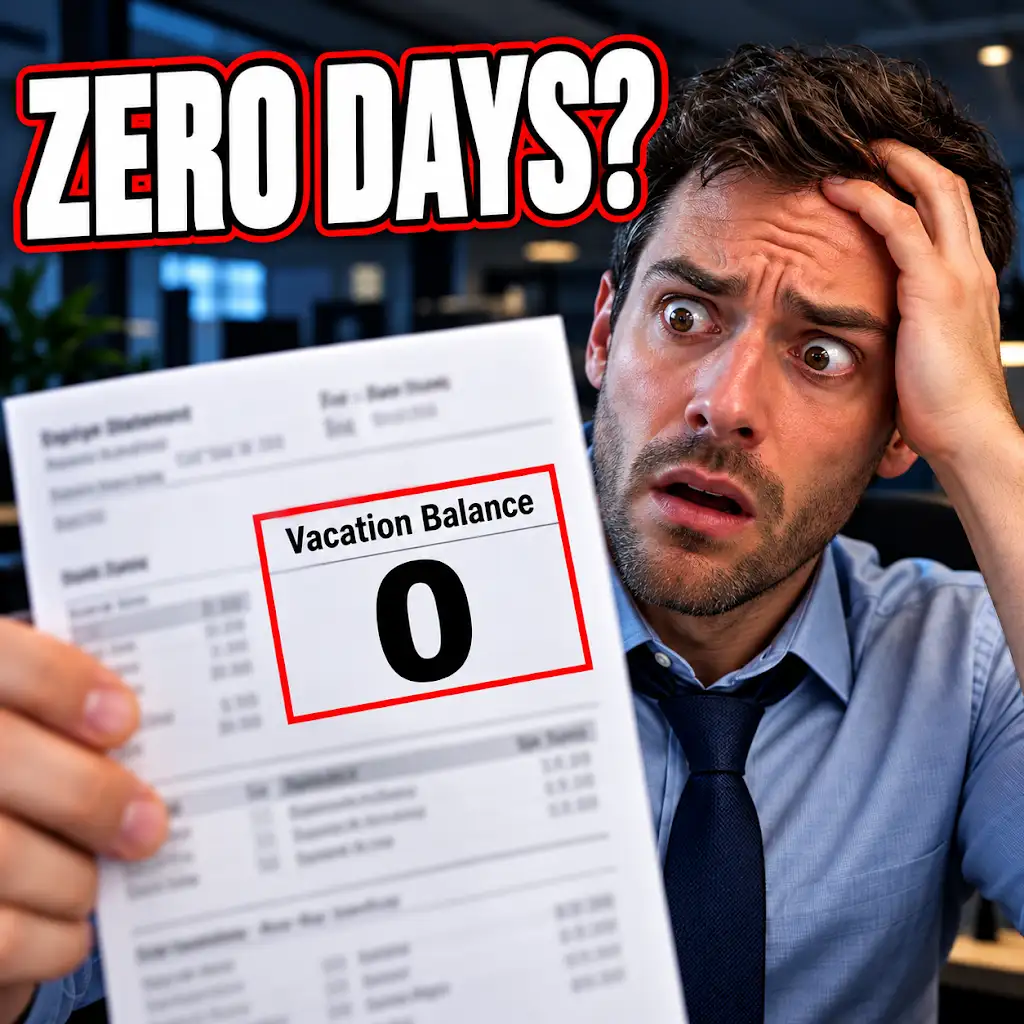
Unlimited PTO Sounds Generous—Until You Leave the Job
FAQs
1. Why did some companies decide to switch back from unlimited PTO policies?
Some companies found that unlimited PTO policies were being abused or not taken advantage of as expected. This led to a lack of clarity and consistency in time off, prompting them to revert to traditional PTO systems.
2. How did employees react to the switch back from unlimited PTO?
While reactions varied among employees, some were disappointed as they enjoyed the flexibility of unlimited PTO. Others welcomed the change, as it provided clearer guidelines and expectations for time off.
3. Did companies face any challenges when transitioning back to traditional PTO policies?
Transitioning back to traditional PTO policies posed challenges such as communicating the change effectively, addressing employee concerns, and ensuring a smooth adjustment period for all staff members.
4. What are the advantages of reverting to a traditional PTO system for companies?
Switching back to traditional PTO systems can provide companies with more control over time off allocation, better tracking of employee leave, increased predictability in scheduling, and reduced potential for abuse of time off policies.
5. Are there any companies that have successfully switched back from unlimited PTO policies?
Yes, several companies have successfully transitioned back to traditional PTO systems after experimenting with unlimited PTO. By carefully planning the switch and addressing employee feedback, these companies were able to make the transition smoothly and effectively.