
Unlocking Your Time Off: Decoding the PTO Section of Your Employee Handbook
You’ve likely skimmed it, perhaps even overlooked it entirely, but your employee handbook is a treasure trove of information crucial to your professional life. Among its many sections, the Paid Time Off (PTO) policy holds a special place in the hearts of most employees. It’s the key to your much-needed breaks, your ability to attend to personal matters without financial penalty, and your overall work-life balance. Yet, for many, the PTO section can feel like a dense legal document filled with jargon. This guide is here to demystify that section, empowering you to understand your rights, navigate the system, and maximize the benefits of your hard-earned time off.
Understanding the Paid Time Off (PTO) section of your employee handbook is crucial for maximizing your benefits and ensuring a healthy work-life balance. For a deeper dive into this topic, you can refer to a related article that provides insights and tips on navigating your company’s PTO policies effectively. Check it out here: Understanding Your Employee Handbook’s PTO Section.
## Why PTO Matters: More Than Just a Perk
Before diving into the nitty-gritty of accruals and requests, it’s essential to grasp why PTO is such a significant component of your employment. It’s not merely a generous offering from your employer; it’s a fundamental aspect of modern employment designed to foster employee well-being, reduce burnout, and ultimately contribute to a more productive workforce.
### The Foundation of Well-being
Think about it: life happens. You might get sick, a family member might need your care, or you might simply need a mental recharge to avoid the dreaded burnout that can cripple your productivity and enthusiasm. PTO provides the safety net that allows you to address these situations without the immediate stress of lost income. It acknowledges that you are a human being with a life outside of your job, and that tending to that life is not only beneficial for you but also for your employer in the long run. When you’re rested and your personal obligations are managed, you return to work with renewed focus and energy.
### Acknowledging Your Contribution
PTO is also a tangible recognition of your contributions to the company. The time you accrue is often directly tied to your length of service and hours worked, effectively rewarding your dedication. It’s a way for your employer to say, “Thank you for your hard work and commitment, here’s some time for you to enjoy.” Understanding how your PTO is earned can help you appreciate its value and motivate you to make the most of it.
### Navigating Different PTO Models
It’s important to realize that not all PTO policies are created equal. Your handbook will likely outline the specific model your company uses. Understanding this model is the first step to understanding how you earn and use your time. Common models include:
- Traditional Sick and Vacation Days: This is where separate buckets of time are designated for specific purposes. You might accrue a certain number of sick days and a separate number of vacation days annually. While this offers clarity on intended use, it can sometimes lead to “wasted” days if you don’t get sick but have vacation days left, or vice-versa.
- Combined PTO Bank: This is the most prevalent model today. All your paid time off, whether for illness, vacation, personal appointments, or other needs, is pooled into a single bank. This offers maximum flexibility. You don’t have to worry about whether a day off falls under “sick” or “vacation.” It’s all just PTO.
- Unlimited PTO: This is a less common, but increasingly discussed, model. In theory, employees can take as much time off as they need, provided their work is done and it’s approved by their manager. While appealing on the surface, it can sometimes lead to employees taking less time off due to peer pressure or unclear expectations.
Your handbook will explicitly state which of these, or any variations, your company employs. Knowing your model is crucial because it dictates how you request time, how it’s tracked, and what limitations, if any, might exist. For instance, a combined PTO bank offers greater freedom than a system with separate, rigidly defined sick and vacation days.
## The Mechanics of Earning Your Time: Accrual Explained
The concept of “earning” PTO can be a bit abstract, but it’s fundamentally about how your employer allocates this benefit based on your employment. Your handbook will detail the specific rules governing PTO accrual, and understanding these is key to managing your time off effectively.
### How PTO Accumulates
Most companies utilize an accrual system, meaning you earn a certain amount of PTO with each pay period, or it’s added to your balance at specific intervals (e.g., annually or on your anniversary date). Your handbook will specify:
- Accrual Rate: This is the amount of PTO you gain per pay period or per month. It might be a fixed amount (e.g., 4 hours per pay period) or a percentage of hours worked. Some policies tie accrual rates to your length of service, meaning you earn more PTO as you become a more tenured employee. For example, you might accrue 1.5 hours per pay period for your first three years, and then 2 hours per pay period thereafter.
- Maximum Accrual Cap: Many companies have a limit on how much PTO you can accumulate. Once you reach this cap, you stop earning more until you use some of your existing balance. This prevents employees from stockpiling excessive amounts of time, which can create financial liabilities for the company. Your handbook will state this cap clearly. Understanding this cap is important; if you’re approaching it, consider using some of your PTO before you stop earning it.
- Waiting Periods: Some employers may have a waiting period before you can start accruing PTO, or before you can use your accrued PTO. This is often for new hires, ensuring a certain period of employment before full benefits kick in.
### Factors Influencing Accrual
Several factors can influence how much PTO you accrue. Your handbook will clarify these:
- Employment Status: Full-time employees typically accrue PTO at a higher rate than part-time employees. The handbook will define what constitutes full-time and part-time employment for accrual purposes.
- Length of Service: As mentioned, many companies offer increased accrual rates based on your tenure. This is a common way to reward loyalty.
- Hours Worked: If your PTO accrual is based on hours worked, the amount you earn will fluctuate if your work schedule varies. Salaried employees usually have a fixed accrual amount per pay period, regardless of minor hour variations, while hourly employees’ accrual is directly tied to their time cards.
- Company Policy Changes: While not a factor you directly influence, be aware that companies can change their PTO policies. Your handbook will outline the process for such changes and how you will be notified. These changes are typically implemented at the start of a new fiscal year or calendar year.
Understanding these accrual mechanics allows you to accurately predict how much time you’ll have available and when. It can also inform your vacation planning and help you avoid the disappointment of not being able to take time off when you’d hoped because you haven’t accrued enough yet.
## Requesting and Using Your PTO: The Practicalities
Once you understand how you earn your PTO, the next crucial step is learning how to request and use it effectively. This involves understanding the process, adhering to timelines, and knowing your rights.
### The Formal Request Process
Most companies have a formal process for requesting PTO, usually involving a specific system or form. Your handbook will detail:
- How to Submit a Request: This could be through an HR portal, an email to your manager and HR, or a designated PTO request form. Familiarize yourself with the exact method required by your company.
- Required Notice Period: This is critical. Your handbook will specify how far in advance you need to submit your PTO requests. For example, it might require two weeks’ notice for vacations exceeding three consecutive days, but only 24 hours’ notice for a single sick day. Failing to adhere to the notice period can sometimes lead to your request being denied, even if you have the PTO available.
- Managerial Approval: PTO requests are almost always subject to manager approval. Your manager will consider factors like team coverage, project deadlines, and the requests of other team members. The handbook may or may not outline specific criteria for approval, but it will emphasize that approval is not guaranteed solely based on having accrued time.
- Minimum/Maximum Time Off: Some policies might have restrictions on the minimum or maximum amount of PTO you can take at once. For instance, you might be able to take a single day, but not more than two consecutive weeks without special approval.
### Using PTO for Various Needs
While the term “vacation” is often used, PTO typically covers a broader range of situations. Your handbook will clarify the acceptable uses of your PTO:
- Vacations and Holidays: This is the most common use, allowing you to take extended breaks for leisure or travel. Some companies may also designate certain paid holidays which are separate from PTO accrual, while others may require you to use PTO for these days if you are not scheduled to work.
- Illness: If you or a family member are ill and unable to work, PTO is used to cover these absences. It’s important to note that in some regions, specific sick leave laws may apply, and your PTO policy must comply with those.
- Personal Appointments: Doctor’s appointments, dentist visits, or other personal obligations that require you to be away from work during business hours can be covered by PTO.
- Bereavement: Many companies offer a specific number of paid days for bereavement. While this might be a separate category in some handbooks, it can also be covered under the general PTO umbrella.
- Jury Duty or Military Leave: While these are often covered by specific legal entitlements, your PTO policy might dictate how any excess time or pay differential is handled.
### Unused PTO: Carryover and Payout
What happens to your PTO if you don’t use it all? Your handbook will address this, and it’s a crucial detail:
- Carryover Policy: Most companies allow you to carry over a certain amount of unused PTO to the next year. However, there’s often a cap on how much can be carried over. If you exceed this carryover limit, the excess PTO may be forfeited.
- Use-It-or-Lose-It: Some policies, though less common now due to legal considerations in certain jurisdictions, may operate on a “use-it-or-lose-it” basis, meaning any unused PTO at the end of the year is automatically lost. Be sure to check if this applies.
- Payout Upon Termination: This is a critical point. Your handbook will clarify whether your company will pay you for any unused PTO balance when you leave the company. This is often dependent on state or local laws, and company policy. Some states mandate payout, while others do not. Understanding this can influence your decision to use PTO before leaving a position.
Understanding the PTO section of your employee handbook is crucial for maximizing your time off benefits and ensuring you are aware of your rights and responsibilities. For a deeper insight into how to navigate these policies effectively, you can refer to a related article that provides valuable tips and examples. This resource can help clarify any uncertainties you may have about your PTO entitlements and the procedures for requesting time off. To explore this further, check out this informative piece on employee benefits here.
## Navigating Special Circumstances and Potential Pitfalls
| Metric | Description | Example Value | Importance |
|---|---|---|---|
| PTO Accrual Rate | How much paid time off an employee earns per pay period or month | 1.25 days/month | High – Determines how quickly employees accumulate PTO |
| Maximum PTO Cap | The maximum amount of PTO hours/days an employee can accumulate | 30 days | Medium – Prevents excessive PTO accumulation |
| Eligibility Period | Time an employee must work before earning PTO | 90 days | High – Defines when PTO benefits begin |
| PTO Carryover Policy | Rules about unused PTO being carried over to the next year | Up to 5 days carryover | Medium – Affects employee planning and company liability |
| PTO Request Notice | Required advance notice for requesting PTO | 2 weeks | High – Helps with scheduling and coverage |
| PTO Payout on Termination | Whether unused PTO is paid out when an employee leaves | Yes, prorated payout | High – Impacts employee satisfaction and legal compliance |
| Types of PTO Covered | Categories included under PTO (vacation, sick, personal) | Vacation and Sick | Medium – Clarifies what time off is included |
While PTO is designed to be straightforward, life is rarely so. Special circumstances and potential misunderstandings can arise. Your handbook serves as your primary reference for navigating these complexities.
### Understanding Exceptions and Special Leave
Life throws curveballs, and your PTO policy might have provisions for specific, often unforeseen, situations:
- Extended Medical Leave: If you have a serious illness or injury that requires an extended absence, PTO might be used in conjunction with other leave policies like FMLA (Family and Medical Leave Act) or short-term/long-term disability. Your handbook will likely detail how PTO interacts with these other benefits.
- Maternity/Paternity Leave: Paid parental leave policies are increasingly common. Your handbook will specify if and how your accrued PTO can be used to supplement any paid or unpaid parental leave.
- Disability: For temporary disabilities, PTO may be used to bridge the gap until disability benefits kick in or to cover periods not fully covered by insurance.
- Company-Mandated Absences: On rare occasions, a company might need to close for reasons beyond an employee’s control (e.g., natural disaster, power outage). Your handbook should clarify how your PTO is affected in such scenarios, or if you will still be paid.
### Common PTO Pitfalls to Avoid
Being aware of common issues can save you a lot of frustration:
- Forfeiting PTO: As discussed, failing to use PTO before a carryover limit is reached or before it expires can lead to forfeiture. Mark your calendar for approaching deadlines.
- Denial of Requests: Understand that PTO is a benefit, not an absolute right to be absent at any time. Requests can be denied due to operational needs. However, if you consistently have requests denied without clear justification, it might be worth a conversation with HR.
- Misunderstanding Accrual: Not accurately tracking your accrual can lead to disappointment when you don’t have as much time as you thought. Regularly check your balance through the company’s HR system.
- Using PTO for Unapproved Purposes: While combined PTO offers flexibility, some policies might still have specific limitations. If you’re unsure if a particular reason for absence is covered, it’s always best to clarify with your manager or HR before taking the time off.
- Not Documenting: For certain types of leave, especially those involving illness or family emergencies, your employer may require documentation (e.g., a doctor’s note). Failing to provide this could result in the absence being treated as unexcused, or the PTO not being applied.
By proactively understanding these nuances and potential pitfalls, you can ensure a smoother experience with your PTO, making the most of this valuable benefit.
## Maximizing Your PTO and Understanding Company Culture
Your PTO is a valuable resource, and understanding how to leverage it effectively involves not just knowing the rules, but also appreciating the underlying culture of your workplace.
### Strategic PTO Planning for a Balanced Life
To truly benefit from your PTO, a proactive approach to planning is essential. Consider these strategies:
- Annual Planning: At the beginning of the year, or even at the end of the previous year, take a look at your calendar and map out potential vacation periods. Consider personal events, family commitments, and travel aspirations. Discuss these tentative plans with your manager early on to get a sense of feasibility and to secure your preferred dates.
- Leveraging Long Weekends and Holidays: Strategically use a PTO day or two to extend existing long weekends or holidays. This allows for more significant breaks without using a large chunk of your accrued time. For example, taking a Friday off before a long weekend transforms a two-day break into a three-day respite.
- “Staycations” and Local Exploration: Not every PTO break needs to involve expensive travel. Consider using PTO for “staycations” where you explore your local area, engage in hobbies, or simply use the time for personal projects and rest at home. These can be just as rejuvenating and are often easier to schedule.
- Mental Health Days: Don’t underestimate the power of a well-timed “mental health day.” If you’re feeling overwhelmed or on the verge of burnout, using a single PTO day to recharge can prevent a more significant dip in productivity and well-being later on.
- Communicating Your Needs: Don’t be afraid to communicate your need for time off. Your manager and HR are there to support your well-being, and often, they want employees to take their earned time. Clear and timely communication is key to getting your requests approved.
### Interpreting Company Culture and PTO
Beyond the written policy, the unwritten rules of your company culture can significantly impact how PTO is viewed and utilized.
- Managerial Attitudes: Observe how your direct manager approaches PTO. Do they encourage their team to take time off? Do they lead by example? A supportive manager is more likely to approve your requests. If your manager is hesitant or dismissive, it might indicate a culture where taking time off is discouraged.
- Peer Influence: Pay attention to what your colleagues do. Do they take regular vacations? Do they talk openly about their time off? If the general sentiment is that taking PTO is frowned upon or leads to a mountain of work upon return, this can create unspoken pressure.
- Workload Management: A company that genuinely values PTO will have systems in place to manage workloads so that employees can take breaks without feeling indispensable or creating undue burden for colleagues. If taking PTO consistently leads to a crisis upon your return, it might signal underlying workload management issues.
- The “Always On” Mentality: Be wary of a company culture that promotes an “always on” mentality, where employees are expected to be available outside of work hours, even on their days off. This can erode the purpose of PTO.
By understanding both the explicit rules in your handbook and the implicit cultural norms of your workplace, you can strategically use your PTO to maintain your well-being, prevent burnout, and foster a healthier, more sustainable work-life balance. Your PTO is a significant part of your compensation and a vital tool for your overall job satisfaction; make sure you’re using it to its fullest potential.
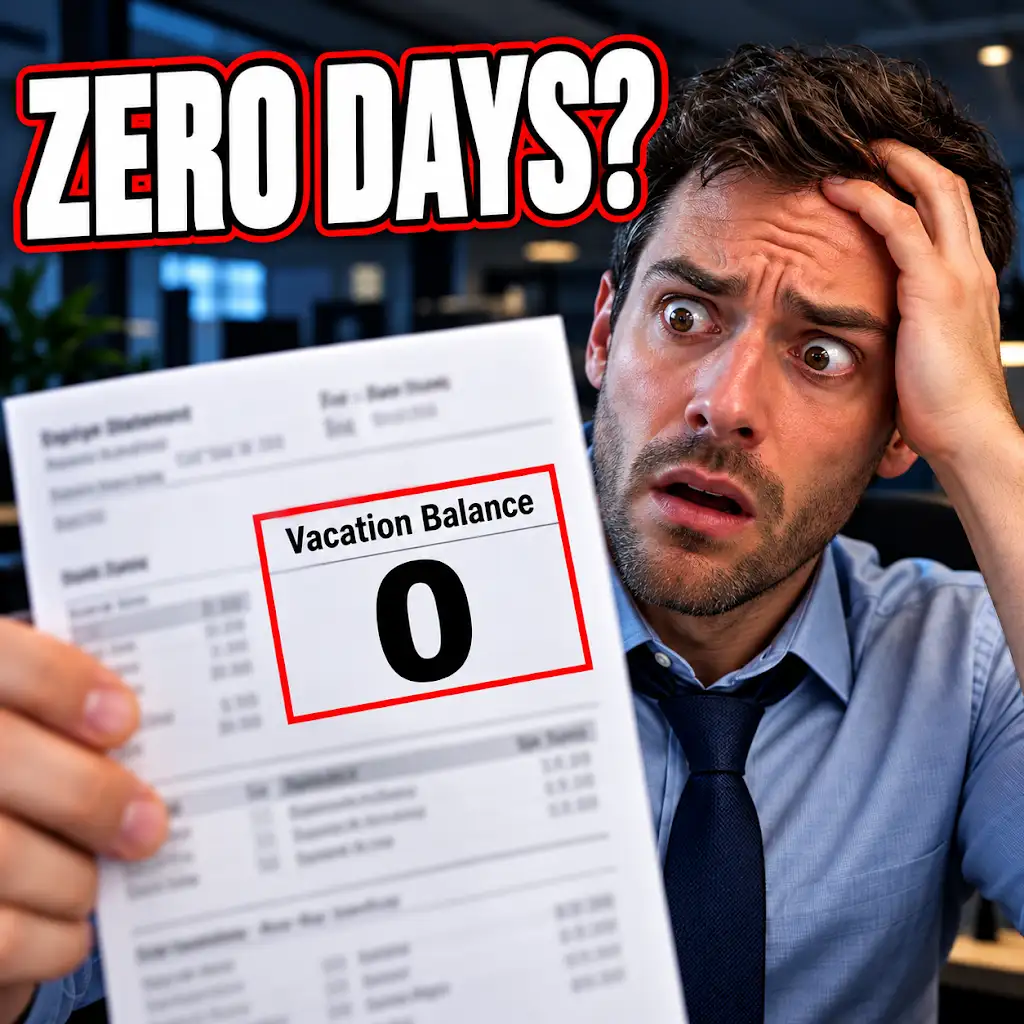
Unlimited PTO Sounds Generous—Until You Leave the Job
FAQs
What is PTO?
PTO stands for Paid Time Off, which is a policy that allows employees to take time off while still being paid.
How is PTO different from vacation days?
PTO typically combines vacation days, sick days, and personal days into one bank of time off that employees can use for any reason. Vacation days are usually specifically designated for time off for leisure or personal reasons.
How much PTO do employees typically accrue?
The amount of PTO an employee accrues can vary depending on the company’s policy. It is often based on the length of time the employee has been with the company and their employment status (full-time, part-time, etc.).
Can employees cash out their unused PTO?
Some companies allow employees to cash out their unused PTO, while others have a “use it or lose it” policy where unused PTO does not carry over into the next year. It is important to check the employee handbook for specific details on the company’s policy.
Are there any restrictions on when employees can use their PTO?
Companies may have restrictions on when employees can use their PTO, such as blackout dates during busy seasons or requirements to request time off in advance. It is important for employees to familiarize themselves with these restrictions outlined in the employee handbook.