
You’re earning a six-figure salary, a significant achievement that opens doors and provides financial security. One hundred thousand dollars a year sounds like a lot of money, and it is. But when that paycheck hits your bank account, you might be surprised by how much less it is than you initially imagined. This is where understanding your take-home pay becomes crucial. It’s the actual amount of money you have available to spend, save, and invest after all deductions are made. Calculating your take-home pay from a $100,000 salary involves navigating a complex web of taxes, benefits, and other withholdings. This guide will break down the process step-by-step, empowering you to accurately estimate your net income and make informed financial decisions.
Decoding the Gross vs. Net Income Equation
The first fundamental concept you need to grasp is the difference between gross pay and net pay. Your gross salary of $100,000 is the total amount your employer agrees to pay you before any deductions. This is the number you typically see in your job offer or annual salary review. However, this is not the money that will appear in your bank account. Net pay, also known as take-home pay, is the actual amount of money you receive after all mandatory and voluntary deductions have been subtracted from your gross pay. Think of it as your “spending money” or “disposable income.” The difference between these two figures can be substantial, and understanding why is key to managing your finances effectively.
The Anatomy of Deductions
Numerous factors contribute to the discrepancy between your gross and net pay. These deductions fall into several primary categories, each playing a role in how much you ultimately take home. It’s not just a single percentage being taken out; it’s a combination of federal, state, and local taxes, along with potential contributions to retirement plans, health insurance premiums, and other benefits. Familiarizing yourself with these categories will demystify the process and allow for more accurate estimations.
Federal Income Tax: The Biggest Slice
The federal government levies income tax based on your earnings. The amount of federal income tax you pay is determined by several factors, most notably your filing status (single, married filing jointly, head of household) and the number of dependents you claim on your W-4 form. The U.S. employs a progressive tax system, meaning that higher earners pay a larger percentage of their income in taxes. For a $100,000 salary, you’ll likely fall into one or more of the higher tax brackets. It’s important to remember that tax brackets are marginal; only the income within a specific bracket is taxed at that rate. Your employer will withhold federal income tax from each paycheck based on the information you provide on your W-4.
State and Local Income Taxes: A Geographical Variable
Beyond federal taxes, you’ll also be subject to state and, in some cases, local income taxes. This is where significant variation occurs. Some states have no income tax at all (e.g., Texas, Florida, Nevada), while others have very high rates (e.g., California, New York). Your city or county might also impose its own income tax. These taxes are also usually withheld by your employer. To calculate your take-home pay accurately, you must research the specific income tax rates for the state and locality where you live and work. This can significantly impact your final net income.
Payroll Taxes: Social Security and Medicare
Two mandatory federal payroll taxes are deducted from your earnings: Social Security and Medicare. These taxes fund essential government programs.
- Social Security Tax: This tax is a fixed percentage of your earnings up to a certain annual limit. For Social Security, the tax rate is 6.2% for both the employee and the employer, but there’s an annual wage base limit. Once your earnings exceed this limit, Social Security taxes are no longer withheld for the remainder of the year. The wage base limit is set annually by the Social Security Administration.
- Medicare Tax: This tax funds the Medicare program, which provides health insurance for individuals aged 65 and older and for younger people with certain disabilities. The Medicare tax rate is 1.45% for both the employee and the employer, and there is no wage base limit for this tax. High earners may also be subject to an Additional Medicare Tax of 0.9% on earnings above a certain threshold, which is $200,000 for single filers and $250,000 for married couples filing jointly. For a $100,000 salary, you will pay the standard 1.45% Medicare tax.
Retirement Plan Contributions: Investing in Your Future
Many employers offer retirement savings plans, such as a 401(k) or 403(b). Contributing to these plans is a voluntary deduction, but it’s a highly recommended one for long-term financial planning. Contributions to traditional 401(k)s are typically made pre-tax, meaning they reduce your taxable income for the current year, thus lowering your immediate tax bill. The amount you contribute is deducted directly from your paycheck. The maximum contribution limits are set annually by the IRS. If you opt into a retirement plan, this will be a significant deduction from your gross pay, but it’s an investment that pays dividends in the future.
When considering a salary of $100,000, it’s essential to understand how much you will take home after taxes, as this can significantly impact your financial planning. For a detailed analysis of this topic, you can refer to a related article that breaks down the various factors affecting your net income. By exploring the intricacies of tax brackets and deductions, you can gain a clearer picture of your financial landscape. To read more about this, check out the article on how wealth grows.
Health Insurance Premiums: Essential Coverage
If you elect to participate in your employer-sponsored health insurance plan, your share of the premiums will be deducted from your paycheck. These premiums can vary significantly based on the plan you choose, the number of dependents you cover, and your employer’s contribution to the plan. Like retirement contributions, health insurance premiums are often deducted on a pre-tax basis, which also reduces your taxable income. This is another crucial deduction to account for when calculating your take-home pay.
Other Deductions: A Catch-All Category
Beyond the major categories, there can be other deductions from your pay. These might include:
- Dental and Vision Insurance: Similar to health insurance, premiums for these plans are typically deducted from your paycheck.
- Life Insurance: Employer-provided life insurance may have a small premium deducted.
- Disability Insurance: Short-term or long-term disability insurance premiums can also be withheld.
- Flexible Spending Accounts (FSAs) or Health Savings Accounts (HSAs): Contributions to these pre-tax accounts for healthcare or dependent care expenses will also reduce your take-home pay.
- Union Dues: If you are part of a union, dues will be automatically deducted.
- Garnishes: In rare cases, court-ordered wage garnishments for debt repayment or child support may be deducted.
If you’re curious about how much a $100,000 salary translates to after taxes, you might find it helpful to explore related articles that break down this topic in detail. One such resource is available at How Wealth Grows, which provides insights into tax implications and net income calculations for various salary brackets. This can help you better understand your take-home pay and financial planning strategies.
The Calculation Process: Bringing It All Together
Now that you understand the individual components, let’s walk through the process of calculating your take-home pay. This requires a systematic approach, starting with your gross salary and subtracting each deduction.
Step 1: Determine Your Annual Gross Salary
Your annual gross salary is the starting point. For this example, we’ll use $100,000.
Step 2: Calculate Your Bi-Weekly or Semi-Monthly Gross Pay
Most employees are paid either bi-weekly (every two weeks) or semi-monthly (twice a month).
- Bi-weekly: There are 52 weeks in a year, so 52 weeks / 2 weeks/pay period = 26 pay periods per year. Your bi-weekly gross pay would be $100,000 / 26 = $3,846.15.
- Semi-monthly: There are 12 months in a year, so 12 months * 2 pay periods/month = 24 pay periods per year. Your semi-monthly gross pay would be $100,000 / 24 = $4,166.67.
For the remainder of this calculation, let’s assume you are paid bi-weekly.
Step 3: Estimate Your Federal Income Tax Withholding
This is where things get a bit more complex due to progressive tax brackets and personal circumstances. You’ll need to consult the IRS tax tables or use an online tax calculator. For a single filer with no dependents, a rough estimate for federal income tax on $100,000 in 2023 would involve applying the marginal tax rates.
- Taxable Income: For simplicity, let’s assume your deductions for retirement and health insurance reduce your taxable income slightly, but for initial estimation, we’ll use the full gross pay as a baseline before applying specific tax brackets.
- 2023 Federal Income Tax Brackets (Single Filer):
- 10% on income up to $11,000
- 12% on income between $11,001 and $44,725
- 22% on income between $44,726 and $95,375
- 24% on income between $95,376 and $182,100
Let’s calculate the tax for each bracket on $100,000:
- 10% of $11,000 = $1,100
- 12% of ($44,725 – $11,001) = 12% of $33,724 = $4,046.88
- 22% of ($95,375 – $44,726) = 22% of $50,649 = $11,142.78
- 24% of ($100,000 – $95,376) = 24% of $4,624 = $1,109.76
Total Estimated Federal Income Tax (Annual): $1,100 + $4,046.88 + $11,142.78 + $1,109.76 = $17,399.42
Estimated Bi-Weekly Federal Income Tax Withholding: $17,399.42 / 26 = $669.21
Note: This is a simplified estimation. Actual withholding depends on your W-4, tax credits, and other factors.
Step 4: Calculate State and Local Income Taxes
You’ll need to find the specific tax rates for your state and locality. For example, if you live in a state with a 5% income tax and no local income tax:
Estimated Annual State Income Tax: $100,000 * 0.05 = $5,000
Estimated Bi-Weekly State Income Tax Withholding: $5,000 / 26 = $192.31
Step 5: Calculate Payroll Taxes (Social Security and Medicare)
- Social Security Tax (6.2%): Assuming the 2023 wage base limit is $160,200, your entire $100,000 salary is subject to Social Security tax.
Annual Social Security Tax: $100,000 * 0.062 = $6,200
Bi-Weekly Social Security Tax Withholding: $6,200 / 26 = $238.46
- Medicare Tax (1.45%): There is no wage limit for Medicare tax.
Annual Medicare Tax: $100,000 * 0.0145 = $1,450
Bi-Weekly Medicare Tax Withholding: $1,450 / 26 = $55.77
Step 6: Account for Retirement and Health Insurance Contributions
Let’s assume you contribute 10% of your gross salary to your 401(k) and your health insurance premium is $100 per bi-weekly paycheck.
- Annual 401(k) Contribution: $100,000 * 0.10 = $10,000
Bi-Weekly 401(k) Contribution: $10,000 / 26 = $384.62
- Bi-Weekly Health Insurance Premium: $100.00
Step 7: Sum Up All Deductions and Subtract from Gross Pay
Now, let’s add up all the estimated bi-weekly deductions:
- Federal Income Tax: $669.21
- State Income Tax: $192.31
- Social Security Tax: $238.46
- Medicare Tax: $55.77
- 401(k) Contribution: $384.62
- Health Insurance Premium: $100.00
Total Bi-Weekly Deductions: $669.21 + $192.31 + $238.46 + $55.77 + $384.62 + $100.00 = $1,640.37
Finally, subtract the total deductions from your bi-weekly gross pay to arrive at your estimated take-home pay:
Estimated Bi-Weekly Take-Home Pay: $3,846.15 (Gross Pay) – $1,640.37 (Total Deductions) = $2,205.78
Estimated Annual Take-Home Pay: $2,205.78 * 26 = $57,349.28
This example demonstrates that your take-home pay on a $100,000 salary could be around $57,000-$65,000, depending heavily on your specific tax situation and benefit elections.
Optimizing Your Net Pay and Financial Planning
Understanding your take-home pay is not just about knowing the numbers; it’s about using that knowledge to your financial advantage. There are strategies you can employ to potentially increase your net pay or, more importantly, to make the most of the income you do receive. This involves careful consideration of your tax situation, benefit elections, and overall financial goals.
Maximizing Tax Advantages
The U.S. tax code offers various ways to reduce your taxable income.
- Retirement Contributions: As mentioned, contributing to a traditional 401(k) or IRA reduces your current taxable income. Consider increasing your contributions, especially if you’re not maxing them out.
- Health Savings Accounts (HSAs): If you have a high-deductible health plan, an HSA offers a triple tax advantage: contributions are tax-deductible, growth is tax-free, and qualified withdrawals are tax-free.
- Dependent Care FSAs: If you pay for childcare so you can work, you can contribute pre-tax dollars to a dependent care FSA, reducing your taxable income.
- Tax Credits and Deductions: Ensure you are taking advantage of all eligible tax credits and deductions when you file your annual return. This might include deductions for student loan interest, education expenses, or charitable contributions.
Smart Benefit Elections
Your choices regarding health insurance and other benefits can significantly impact your net pay.
- Review Your Health Plan: Understand the costs and benefits of different health insurance plans offered by your employer. Sometimes, a slightly more expensive plan with better coverage might be more cost-effective in the long run.
- Consider HSA vs. FSA: If eligible, weigh the benefits of an HSA versus an FSA. HSAs offer more flexibility and portability.
- Evaluate Voluntary Benefits: Carefully consider the necessity and cost of any voluntary insurance plans like critical illness or accident insurance.
Budgeting and Financial Goals
Once you have a clear picture of your take-home pay, it’s essential to create a realistic budget.
- Track Your Spending: Understand where your money is going. This will help you identify areas where you can cut back if needed.
- Prioritize Savings and Investments: Allocate a portion of your take-home pay to savings goals (emergency fund, down payment) and investments (retirement, other assets).
- Debt Management: If you have high-interest debt, prioritize paying it down to save on interest costs.
The Importance of a Pay Stub and Tax Forms
While this guide provides a framework for calculating your take-home pay, the most accurate information will always be found on your actual pay stub and through official tax documentation. Your employer is legally obligated to provide you with a pay stub detailing all deductions. Similarly, your W-2 form at the end of the year summarizes your annual earnings and the taxes withheld.
Deconstructing Your Pay Stub
Your pay stub is a treasure trove of information. It will typically show:
- Gross Pay: Your earnings before any deductions.
- Withholdings: Itemized lists of all deductions, including federal, state, and local taxes, Social Security, Medicare, retirement contributions, and insurance premiums.
- Net Pay: The final amount you are paid.
- Year-to-Date (YTD) Totals: How much you’ve earned and paid in taxes and deductions throughout the year.
Take the time to review your pay stub carefully after each paycheck. If anything looks incorrect or you have questions, don’t hesitate to ask your HR department or payroll specialist.
Understanding Your W-4 and W-2 Forms
- W-4 Form: This is the form you fill out when you start a new job (or update it as your circumstances change) to tell your employer how much federal income tax to withhold from your paychecks. Adjusting your W-4 can impact your take-home pay, but be mindful of owing a large sum at tax time if you over-adjust.
- W-2 Form: By January 31st each year, your employer must provide you with a W-2 form. This document reports your annual wages and the amount of taxes withheld. You’ll use this form when filing your federal and state income tax returns. It’s crucial to ensure the information on your W-2 is accurate.
By diligently reviewing your pay stubs and understanding your tax forms, you gain a complete and accurate picture of your financial situation. This knowledge is empowering, allowing you to make informed decisions about your spending, saving, and investing strategies, ensuring that your $100,000 salary works as hard for you as possible.

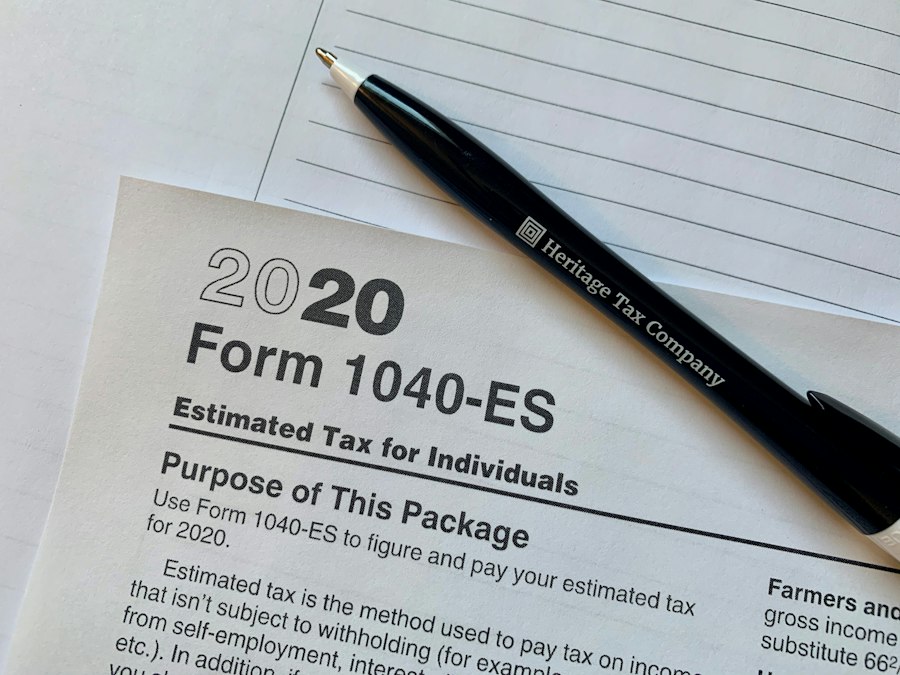
Your $100,000 Job Takes More Back Than You Think

FAQs
1. What is the average amount of taxes deducted from a $100,000 salary?
The average amount of taxes deducted from a $100,000 salary can vary depending on factors such as filing status, deductions, and credits. However, a rough estimate is that around 20-30% of a $100,000 salary may be deducted for federal and state taxes.
2. How much can one expect to take home from a $100,000 salary after taxes?
After taxes, a $100,000 salary may result in a take-home pay of approximately $70,000 to $80,000 per year. This amount can vary based on individual circumstances and tax laws.
3. Are there ways to reduce the amount of taxes paid on a $100,000 salary?
There are several ways to potentially reduce the amount of taxes paid on a $100,000 salary, such as contributing to retirement accounts like a 401(k) or IRA, taking advantage of tax deductions and credits, and exploring tax-efficient investment strategies.
4. How do state taxes impact the take-home pay of a $100,000 salary?
State taxes can significantly impact the take-home pay of a $100,000 salary, as different states have varying tax rates and regulations. Some states have no income tax, while others have high income tax rates, which can affect the overall amount of money received after taxes.
5. What other factors should be considered when calculating the take-home pay of a $100,000 salary?
In addition to federal and state taxes, other factors that can impact the take-home pay of a $100,000 salary include deductions for healthcare premiums, retirement contributions, social security and Medicare taxes, and any other withholdings specified by the employer. It is important to consider all these factors when calculating the net income from a $100,000 salary.