
You’re staring at that shiny new gadget, the one you’ve been coveting for months. The price tag makes your eyes water a little, but then you see it: “Buy Now, Pay Later. 0% Interest for 4 Payments.” Suddenly, the dream feels attainable. This isn’t just about a transaction; it’s about your psychology at play, and the burgeoning field of behavioral finance has a lot to say about why you’re likely to click “add to cart.”
The Siren Song of Immediate Gratification: Present Bias and BNPL
Your brain, in a nutshell, loves rewards now. This is the core of what behavioral finance calls present bias, or sometimes, hyperbolic discounting. Imagine two scenarios: receiving $100 today versus receiving $110 a month from now. For most people, the $100 today feels significantly more appealing, even though the $110 in the future is objectively a better deal. This is because the perceived value of future rewards diminishes rapidly as they move further into the future.
The Psychology of “Now”
When you encounter a Buy Now, Pay Later (BNPL) option, present bias kicks into high gear. The immediate acquisition of the desired item, coupled with the perceived ease of spreading payments, taps directly into this innate preference for instant gratification. The pain of paying is deferred, making the immediate pleasure of ownership far more potent.
- The Dopamine Hit of Ownership: Acquiring something new triggers a release of dopamine, a neurotransmitter associated with pleasure and reward. BNPL allows you to experience this dopamine hit immediately, bypassing the traditional friction of saving up or the larger immediate financial outlay.
- Minimizing the Pain of Payment: Behavioral economics posits that the act of parting with money is psychologically painful. BNPL segments this pain into smaller, more manageable chunks. Instead of one significant “ouch,” you experience several smaller “oohs” (of satisfaction with the item) interspersed with less jarring “ums” (of payment realization).
- The Illusion of Affordability: Because the upfront cost is reduced or eliminated, the item feels more affordable. Your brain doesn’t immediately grapple with the full sticker price; it focuses on the manageable initial payment, creating a sense of financial feasibility that might not exist with traditional payment methods.
BNPL as a Tool for Overcoming Inertia
Beyond present bias, BNPL also plays on your tendency towards status quo bias and inertia. These biases describe your preference for keeping things as they are and your resistance to making changes, even if a change would be beneficial. When faced with the option of saving for a purchase, a process that requires effort and discipline, BNPL offers a frictionless alternative.
- The Path of Least Resistance: Saving requires planning, budgeting, and often sacrificing immediate wants. BNPL, on the other hand, requires a few clicks. The cognitive load is significantly lower, making it the path of least resistance for many consumers.
- Avoiding the “Future You” Problem: The burden of saving is often pushed onto “future you.” You tell yourself, “I’ll start saving next month.” BNPL effectively allows “present you” to indulge, leaving “future you” to deal with the installment payments. This avoidance of present effort is a powerful psychological driver.
- The Momentum of Online Shopping: The online shopping experience is designed to be seamless and encourage impulse purchases. BNPL seamlessly integrates into this flow, removing a key barrier to immediate conversion.
Behavioral finance plays a crucial role in understanding consumer behavior, particularly in the context of Buy Now, Pay Later (BNPL) schemes. These financial products can lead to impulsive spending and a distorted perception of affordability, as consumers often prioritize immediate gratification over long-term financial health. For a deeper exploration of how behavioral finance influences spending habits and the implications of BNPL, you can read more in this insightful article at How Wealth Grows.
The Framing Effect: How BNPL Choices Are Manipulated
The way information is presented, or framed, can profoundly influence your decision-making, even if the underlying facts remain the same. BNPL services excel at framing their offerings in a way that highlights the benefits and downplays the potential downsides.
“Interest-Free” as a Powerful Anchor
The ubiquitous phrase “0% interest” is a masterclass in the framing effect. It acts as a powerful anchor, a piece of information that heavily influences your subsequent judgments. When you see “0% interest,” your mind immediately focuses on this perceived saving and may not adequately consider other associated costs or risks.
- Shifting the Focus from Total Cost to Payment Structure: Instead of thinking about the total amount you’ll eventually pay, your attention is drawn to the absence of interest charges. This can lead you to overlook the fact that you are still committing to a debt, even if it’s interest-free.
- The Halo Effect of “Free”: The word “free” or “interest-free” carries a strong positive connotation. It creates a halo effect, making the entire BNPL option seem more attractive and less risky than it might otherwise appear.
- Comparisons with Traditional Credit: When compared to traditional credit cards with potentially high interest rates, BNPL often appears as a more responsible and cost-effective choice, further reinforcing the positive framing.
The Psychology of “Small Payments”
Another effective framing technique used by BNPL providers is the emphasis on small, recurring payments. This taps into our tendency to perceive smaller amounts as less burdensome.
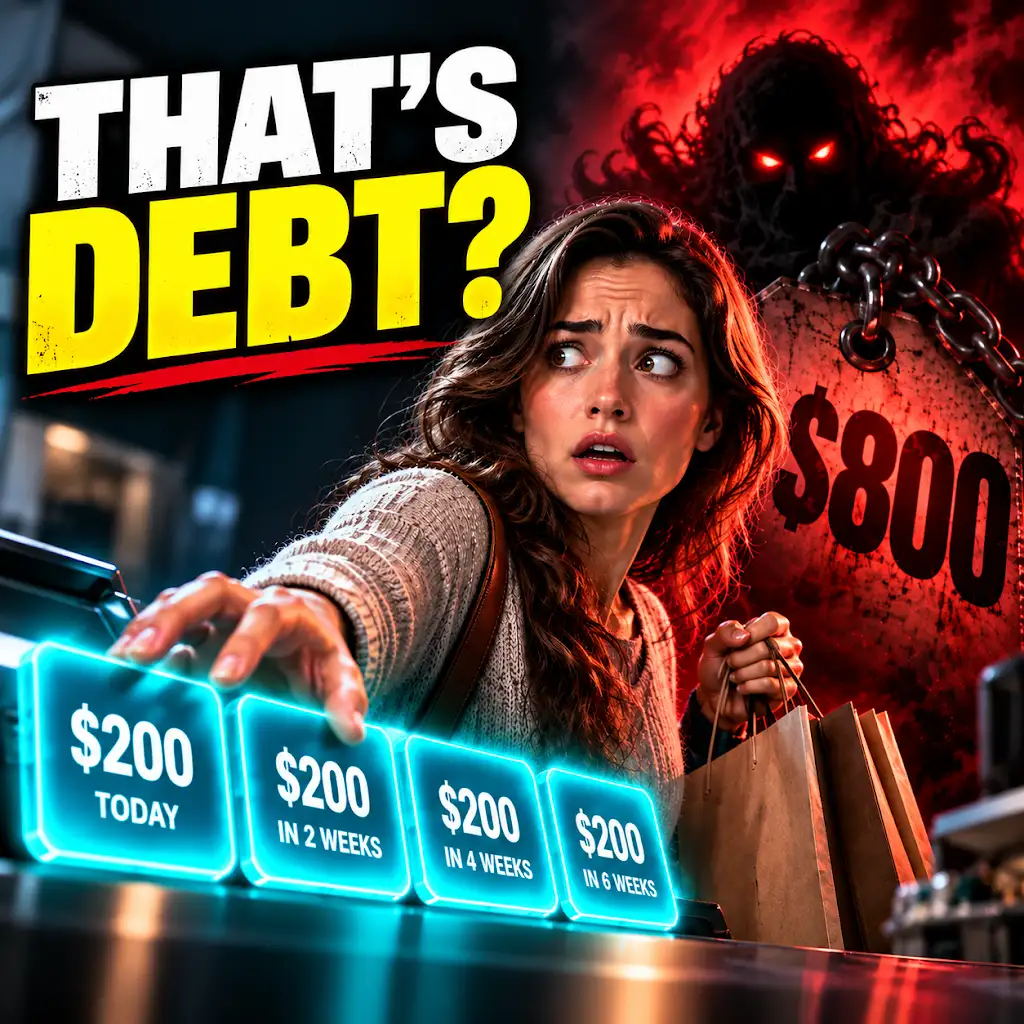
- The Decoy Effect in Action: Imagine a product costing $500. If presented as a single payment, it might seem too expensive. However, if framed as “four easy payments of $125,” it suddenly feels more manageable. The larger initial sum is replaced by smaller, more palatable installments.
- Minimizing the Perception of Debt: Breaking down a large sum into smaller payments can create the illusion that you are not accumulating significant debt. Each payment feels like a separate, smaller transaction, rather than part of a larger financial obligation.
- The “Just One More Payment” Trap: This framing can also lead to a “just one more payment” mentality, making it easier to accumulate multiple BNPL purchases without fully appreciating the cumulative financial impact.
Loss Aversion: The Fear of Missing Out (FOMO)
Behavioral finance also highlights the concept of loss aversion, which states that the pain of losing something is psychologically about twice as powerful as the pleasure of gaining something. This can manifest in your BNPL choices through the fear of missing out.
The Urgency of Limited-Time Offers
BNPL services often leverage limited-time offers or promotions to create a sense of urgency. This taps directly into your fear of losing out on a good deal.
- The Scarcity Principle at Play: When something is perceived as scarce or time-limited, its perceived value increases. You feel a stronger incentive to act quickly to secure the item before the opportunity disappears.
- The “Fear of Regret” Tactic: The idea of “missing out” can be a powerful motivator. You might not want to regret not taking advantage of a seemingly good deal, even if you don’t necessarily need the item at that moment.
- Encouraging Impulse Decisions: The urgency created by these offers often encourages impulse decisions, overriding more rational considerations about your budget and actual needs.
The Social Proof of Popular Choices
While not directly a “loss” in the traditional sense, the fear of being left out or not conforming to social norms can also influence your BNPL decisions. This is related to the concept of social proof, where you look to the behavior of others to guide your own actions.
- Seeing Others Use BNPL: If you see friends, family, or social media influencers using BNPL services and making purchases, it can normalize the behavior and make you feel like you should be doing the same.
- The Desire to Keep Up: There can be a subtle pressure to “keep up” with peers, especially when it comes to desirable goods or experiences. BNPL can make these purchases seem more accessible, reducing the perceived barrier to social participation.
- The “Everyone Else is Doing It” Mentality: This can lead to a subconscious feeling that if everyone else is availing themselves of BNPL, it must be a good and acceptable way to shop.
Mental Accounting: Compartmentalizing Your Finances
You don’t treat all your money as fungible. Instead, you create different mental “buckets” or accounts for different purposes, a phenomenon known as mental accounting. BNPL can fit neatly into some of these mental compartments, making it feel less impactful on your overall financial health.
BNPL and the “Discretionary Spending” Bucket
When you use BNPL for non-essential items, it often gets categorized within your “discretionary spending” or “fun money” mental account. This bucket is typically viewed with more flexibility than your “bills” or “savings” buckets.
- The Perception of “Earned” Money: Money you’ve earned from your salary is often mentally earmarked for different purposes. BNPL can feel like it’s drawing from a less critical, more flexible portion of this earned income.
- The Illusion of Separate Budgets: By dividing payments over time, you can mentally compartmentalize them. Each installment might feel like a separate budget item, rather than a piece of a larger debt.
- Justifying Purchases: When an item is purchased through BNPL, it can be easier to justify the expense within this discretionary bucket, especially if the payments are spread out and don’t immediately impact your core living expenses.
The “Future Income” Assumption
Closely related to mental accounting is the tendency to make implicit assumptions about future income. You might feel confident that you’ll earn enough to cover future BNPL payments, even if that future income is not guaranteed.
- The Optimism Bias at Work: You tend to be overly optimistic about your future financial situation. This optimism can lead you to underestimate the potential strain of future payments.
- The “I’ll Figure It Out Later” Approach: This approach to financial planning can be a hallmark of mental accounting. You create a purchase now based on an optimistic outlook, deferring the detailed planning of how to meet those future obligations.
- The Challenge of Long-Term Planning: BNPL, by its nature, encourages short-term thinking. It becomes harder to engage in robust long-term financial planning when your spending is fragmented across multiple installment plans.
Behavioral finance plays a crucial role in understanding consumer behavior, especially in the context of Buy Now, Pay Later (BNPL) schemes. These financial products have gained immense popularity, allowing consumers to make purchases without immediate payment, which can lead to impulsive buying decisions. A related article that delves deeper into this topic is available at How Wealth Grows, where you can explore the psychological factors influencing spending habits and the implications of BNPL on personal finance.
Anchoring Bias and the Discount Dilemma
The way prices are presented, especially when discounts are involved, can significantly impact your perception of value. This is where anchoring bias comes into play, influencing your judgment about whether a BNPL offer represents a good deal.
The “Original Price” as a Psychological Anchor
Many BNPL promotions are presented alongside the “original price” or a higher “full price.” This higher price acts as an anchor, making the discounted price, even with BNPL installments, appear more attractive.
- The Illusion of a Bargain: By showing a significantly higher original price, the BNPL offer, even with multiple payments, feels like a substantial discount. Your mind anchors to the higher figure and judges the BNPL option relative to it.
- Framing BNPL as a “Smart Choice”: This framing suggests that choosing BNPL is a financially astute decision because you’re availing yourself of a special offer that saves you money compared to the standard price.
- Downplaying the Cost of Time: The anchoring effect can also obscure the cost of time. While the installment price might seem lower, you’re committing to a longer payment period, which has its own implicit costs.
The Psychological Impact of Percentage Discounts
Percentage discounts, rather than absolute dollar amounts, can also be powerful anchors. A “20% off” offer can feel more significant than a “save $50” offer, even if the latter is numerically larger.
- The “Percentage Off” Halo: The percentage discount creates a positive halo effect, suggesting a significant reduction in price. This can lead you to focus on the perceived savings rather than the actual total cost of the item or the implications of the BNPL plan.
- BNPL as a Vehicle for Discounted Purchases: When a product is already discounted, adding BNPL can make it feel like an even more irresistible deal. You might perceive it as getting a great item at a fantastic price with the added convenience of flexible payments.
- The Devaluation of Full-Price Items: Constant exposure to discounted prices, especially when combined with BNPL, can lead to a devaluation of full-price items. You might start to feel that anything not offered with a discount and BNPL is overpriced.
In conclusion, your choices when faced with Buy Now, Pay Later options are rarely purely rational. They are deeply influenced by a complex interplay of psychological biases and cognitive heuristics. Behavioral finance provides the lens through which to understand why the allure of immediate gratification, the clever framing of offers, the fear of missing out, the compartmentalization of your finances, and the anchoring effect of discounts all combine to make BNPL a powerful force in your purchasing decisions. Recognizing these influences is the first step towards making more informed and financially sound choices in the modern retail landscape.
Why $800 Doesn’t Feel Like $800 Anymore
FAQs

What is behavioral finance?
Behavioral finance is a field of study that combines psychology and finance to understand how individuals make financial decisions. It explores how emotions, cognitive biases, and social influences impact financial choices.
What is BNPL?
BNPL stands for “Buy Now, Pay Later,” which is a payment option that allows consumers to make purchases and pay for them in installments over time, typically with no interest. Popular BNPL services include Afterpay, Klarna, and Affirm.
How does behavioral finance relate to BNPL?
Behavioral finance plays a role in understanding why consumers are drawn to BNPL services. Factors such as instant gratification, loss aversion, and social proof can influence individuals to choose BNPL options over traditional payment methods.
What are some risks associated with using BNPL services?
While BNPL can be convenient, it can also lead to overspending and accumulating debt if not managed responsibly. Missing payments can result in late fees and damage to credit scores. Additionally, some users may be tempted to make impulse purchases they can’t afford.
How can individuals make informed decisions when using BNPL?
To make informed decisions when using BNPL services, individuals should carefully review the terms and conditions, understand the total cost of the purchase including any fees, and consider their own financial situation before committing to a BNPL plan. It’s important to budget and plan for BNPL payments to avoid financial strain.