You might not think of your cozy home and the massive, humming buildings that power the internet as having much in common. But when it comes to electricity, you’re both major consumers, and your energy bills tell a story of stark contrasts. This analysis delves into the complex relationship between data centers and residential electricity rates, exploring why these two seemingly disparate entities operate under vastly different energy cost structures. You’ll learn how your monthly utility bill is shaped, and how the insatiable demand of the digital world impacts the energy landscape for everyone.
To grasp the disparity in electricity rates, you first need to understand the sheer scale and nature of energy consumption for both data centers and residential properties. The electricity that flickers your lights and charges your phone is a fundamental utility, but the way it’s used and the volume involved create vastly different economic realities.
The Residential Power Draw: Everyday Essentials
Your home’s electricity use is, by and large, about comfort, convenience, and daily living. Think about the appliances that populate your kitchen and living spaces: refrigerators that run 24/7, washing machines and dryers that cycle intermittently, televisions that entertain, and lights that illuminate your evenings. Beyond these, there are smaller but significant energy consumers like computers, chargers, and the ubiquitous smart home devices that are increasingly becoming standard.
Appliance Efficiency and Usage Patterns
The energy consumption in your home is a mosaic of individual appliance wattages and how frequently you use them. Older, less energy-efficient appliances can significantly inflate your bill, whereas newer models, often bearing ENERGY STAR labels, promise substantial savings. Your personal habits play a crucial role too. Do you leave lights on in empty rooms? Do you run the dishwasher only when it’s full? These seemingly small decisions accumulate into a noticeable impact on your monthly kilowatt-hour usage.
HVAC: The Silent Energy Giant
In many regions, your heating and cooling system—your HVAC—is the single largest energy hog in your home. Whether it’s an electric furnace, a heat pump, or an air conditioner, these systems work tirelessly to maintain your desired indoor temperature, especially during extreme weather. The efficiency of your insulation, the age and condition of your HVAC unit, and the thermostat settings you choose all contribute to its energy demand.
Peak vs. Off-Peak Consumption
Your residential electricity consumption isn’t constant. You likely use more power during certain times of the day, such as mornings when you’re getting ready for work or evenings when you’re winding down. This concept of “peak demand” is critical for utility companies, as they must have enough generation capacity to meet the highest possible demand at any given moment, even if that capacity sits idle for much of the day. This often leads to tiered pricing structures where you pay more for electricity used during peak hours.
The Data Center’s Relentless Thirst: A Digital Behemoth
Now, consider the energy demands of a data center. These facilities are not just buildings; they are sophisticated ecosystems designed to house and operate vast arrays of servers, storage devices, and networking equipment that form the backbone of the internet, cloud computing, and our digital lives. Their energy consumption is not about comfort; it’s about raw, unadulterated processing power and the constant need to keep that equipment running optimally.
Server Farms: The Core of the Operation
At the heart of every data center are rows upon rows of powerful servers. These machines crunch numbers, store data, and run applications for millions, if not billions, of users. They operate 24/7, 365 days a year, with little to no downtime. The sheer number of these servers, coupled with their high operational wattage, creates an immense and continuous power draw.
Cooling Systems: Battling the Heat
All that computing generates a tremendous amount of heat. To prevent hardware failure and ensure optimal performance, data centers employ sophisticated and energy-intensive cooling systems. This can include massive air conditioning units, chillers, and advanced airflow management techniques. Cooling can account for a significant portion, sometimes even half, of a data center’s total energy consumption.
Redundancy and Uptime: The Cost of Reliability
Data centers are built with extreme reliability in mind. They have backup power generators, uninterruptible power supplies (UPS), and often multiple utility feeds to ensure continuous operation. This redundancy, while essential for preventing catastrophic outages, adds to the overall energy infrastructure and, consequently, the power consumption.
As the demand for data centers continues to rise, understanding their impact on residential electricity rates becomes increasingly important. A related article that delves into this topic can be found at How Wealth Grows, where the interplay between energy consumption by data centers and the resulting effects on local electricity prices is explored. This analysis provides valuable insights for both consumers and policymakers aiming to balance technological growth with sustainable energy practices.
The Economic Drivers of Electricity Rates: Why the Discrepancy?
The vast difference in electricity rates between data centers and residential consumers is not arbitrary. It’s a complex interplay of volume, negotiation power, demand-side management, and the very infrastructure that delivers power.
Volume Discounts: The Power of Bulk Buying
One of the most significant factors is the sheer volume of electricity data centers consume. Imagine buying a single can of soda versus buying a pallet of 1,000 cans. The per-unit cost for the pallet will be considerably lower. The same principle applies to electricity. Data centers are massive, continuous consumers, often demanding megawatts of power, whereas a single home might draw only a few kilowatts at its peak. Utility companies are often willing to offer substantial discounts to these large industrial customers to secure predictable, high-volume revenue streams.
Negotiated Tariffs and Power Purchase Agreements
Unlike residential customers who are typically bound by standard, published rate schedules, data centers have the leverage to negotiate directly with utility providers. They can enter into long-term Power Purchase Agreements (PPAs) that lock in specific rates, often at a significant reduction compared to residential tariffs. These agreements are tailored to the data center’s specific needs and consumption patterns.
Industrial vs. Residential Rate Structures
Utility rate structures are designed with different customer classes in mind. Industrial rates are generally lower per kilowatt-hour than residential rates. This reflects the economies of scale enjoyed by large industrial users, as well as differences in service delivery costs. Residential customers, while individually small, collectively represent a diffuse and diverse load that can be more challenging and expensive for utilities to manage.
Demand-Side Management and Load Balancing
Data centers, with their predictable and continuous power demands, are incredibly valuable to utility companies for load balancing. They can provide a steady, baseline demand that helps to stabilize the grid. This predictability allows utilities to operate their generation assets more efficiently, reducing the need for expensive and inefficient peaking power plants that are only used during times of high demand.
Grid Stability and Predictability
A data center’s demand is often described as a “baseload” load. This means it’s relatively constant throughout the day and night. This is a golden ticket for utility companies because it helps them manage their generation and transmission infrastructure more effectively. They don’t have to worry about sudden, sharp drops or surges in demand from a data center, which can be destabilizing for the grid.
Off-Peak Usage Incentives
While data centers are often running 24/7, their specific energy needs might still align with utility incentives for off-peak usage. Some data centers are designed to shift non-critical workloads to times when electricity is cheaper, further optimizing their costs and benefiting the grid by absorbing excess capacity.
Infrastructure Costs and Service Delivery
The cost of delivering electricity to different types of customers also plays a role. The infrastructure required to serve a sprawling residential neighborhood with individual connections to hundreds or thousands of homes is different from the infrastructure needed to deliver high-voltage power directly to a single, centralized data center facility.
Dedicated Substation and Transmission Lines
Data centers often require dedicated substations and direct, high-capacity transmission lines to ensure they receive the reliable power they need. The investment in this specialized infrastructure by the utility company is factored into the rates, but the scale of the demand can make the per-unit cost of delivery lower than the distributed infrastructure for residential areas.
The Cost of Metering and Billing
While seemingly minor, the administrative costs associated with metering, billing, and customer service for thousands of individual residential accounts are considerable. These overheads are ultimately passed on to residential consumers in their electricity rates.
The Environmental Impact: A Shared Responsibility
The energy consumption of both data centers and homes has significant environmental implications, particularly in terms of carbon emissions. However, the scale and the potential for mitigation differ.
Data Centers and Carbon Footprints
The massive energy consumption of data centers directly translates into a substantial carbon footprint, especially if the electricity is generated from fossil fuels. The growing demand for digital services means that the energy needs of data centers are only projected to increase.
Renewable Energy Adoption in Data Centers
Recognizing this environmental challenge, many data center operators are actively pursuing renewable energy solutions. You’ll see major tech companies investing in solar farms, wind farms, and purchasing Renewable Energy Credits (RECs) to offset their carbon emissions. Some data centers are even located in regions with abundant renewable energy resources, such as hydroelectric power.
PUE (Power Usage Effectiveness) and Efficiency Gains
Data center operators are also focused on improving their Power Usage Effectiveness (PUE), a metric that measures the ratio of total facility energy consumed to the energy delivered to the IT equipment. A PUE closer to 1.0 indicates higher efficiency. Innovations in cooling technologies, server design, and data center architecture are constantly pushing PUE to new lows.
Residential Energy and Sustainability
Your individual energy consumption, while smaller in scale, also contributes to the overall environmental picture. However, you have the power to make choices that can significantly reduce your carbon footprint.
Energy Efficiency Upgrades at Home
Simple measures like switching to LED light bulbs, improving insulation, upgrading to energy-efficient appliances, and using smart thermostats can dramatically reduce your home’s energy consumption and, consequently, its environmental impact.
The Role of Distributed Renewable Energy
The rise of rooftop solar panels and community solar projects empowers homeowners to generate their own clean energy, further reducing their reliance on fossil fuel-based electricity and lowering their carbon footprint.
Policy and Regulation: Shaping the Playing Field
Government policies and regulations play a crucial role in dictating electricity rates and influencing energy consumption patterns for both data centers and residential customers.
Industrial Energy Policies
Governments often implement policies designed to attract and retain large industrial energy consumers like data centers. These can include tax incentives, streamlined permitting processes, and favorable electricity rate structures. The economic benefits, such as job creation and tax revenue, are often the driving force behind these policies.
Economic Development Initiatives
Many regions actively compete to attract data center investments. This competition can lead to utilities offering more attractive electricity rates and incentives to secure these large-scale developments.
Environmental Regulations and Mandates
While economic factors often drive favorable rates for data centers, environmental regulations are increasingly influencing their energy choices. Mandates for renewable energy procurement or carbon emission limits can push data center operators towards cleaner energy sources, even if it means higher upfront costs.
Residential Energy Regulations and Consumer Protection
Residential electricity rates are typically subject to greater regulatory oversight to ensure fairness and affordability for individual consumers. Utility commissions review and approve rate increases, and consumer advocacy groups work to protect residential interests.
Rate Case Proceedings and Public Hearings
When utility companies propose changes to residential electricity rates, they typically undergo a formal rate case process. This often involves public hearings where consumer groups can voice their concerns and present evidence to influence the outcome.
Consumer Protection Laws
Numerous laws and regulations are in place to protect residential electricity consumers from unfair practices, excessive charges, and unreliable service.
As the demand for data centers continues to rise, many are beginning to explore the impact of this growth on residential electricity rates. A recent article discusses how the increasing energy consumption of these facilities can lead to higher costs for homeowners, prompting a need for more sustainable energy solutions. For further insights on this topic, you can read more in this informative piece found here. Understanding the relationship between data centers and electricity pricing is crucial for both consumers and policymakers alike.
The Future Landscape: Trends and Considerations
| Location | Data Center Electricity Rate (cents per kWh) | Residential Electricity Rate (cents per kWh) |
|---|---|---|
| United States | 6.1 | 13.19 |
| Germany | 11.35 | 33.88 |
| China | 7.8 | 8.61 |
| India | 9.9 | 8.71 |
The relationship between data centers and residential electricity rates is dynamic and will continue to evolve. Several key trends and considerations will shape this landscape.
The Growing Demand for Digital Services
As our reliance on cloud computing, artificial intelligence, streaming services, and the Internet of Things (IoT) continues to grow, so too will the demand for the data centers that power them. This increasing demand will put further pressure on energy grids and necessitate innovative solutions for power generation and distribution.
AI’s Energy Appetite
The burgeoning field of artificial intelligence is particularly energy-intensive. Training large AI models requires massive computational power, leading to a significant increase in the energy consumption of data centers specializing in AI workloads. This could further exacerbate the demand for electricity and potentially influence rate structures.
Edge Computing and Decentralization
While large, centralized data centers will remain crucial, the rise of edge computing – where data processing occurs closer to the source of data generation – might lead to a more distributed energy demand. This could have different implications for local grid infrastructure and potentially impact residential rates in areas where edge facilities are deployed.
The Push for Sustainability and Decarbonization
The global imperative to address climate change will undoubtedly drive further innovation and investment in renewable energy and energy efficiency across all sectors, including data centers and residential power consumption.
Grid Modernization and Smart Grids
Investments in modernizing electrical grids, creating “smart grids” that can better manage distributed energy resources, and improve two-way communication between utilities and consumers will be essential. This could lead to more dynamic pricing and better integration of renewable energy sources.
Energy Storage Solutions
The development and widespread adoption of advanced energy storage solutions, such as utility-scale batteries, will be critical for balancing the intermittent nature of renewable energy and ensuring a stable power supply for both data centers and homes.
The Evolving Role of the Consumer
As consumers become more aware of their energy consumption and its environmental impact, their choices will increasingly influence the market. Demand for cleaner energy options and greater control over their energy usage will likely grow.
Empowering Consumers with Data and Technology
Smart meters, energy management apps, and home automation systems are empowering consumers with more data and control over their energy usage. This increased awareness can lead to more efficient consumption patterns and a greater demand for sustainable energy options.
In conclusion, the contrast between the electricity rates enjoyed by data centers and those paid by residential consumers is a multifaceted issue. It’s a story of scale, negotiation, infrastructure, and evolving environmental consciousness. While data centers benefit from volume discounts and specialized agreements, you, as a residential consumer, play a crucial role in shaping demand and advocating for sustainable and affordable energy solutions. Understanding these dynamics empowers you to make informed decisions about your own energy consumption and to better appreciate the complex energy landscape that powers our interconnected world.
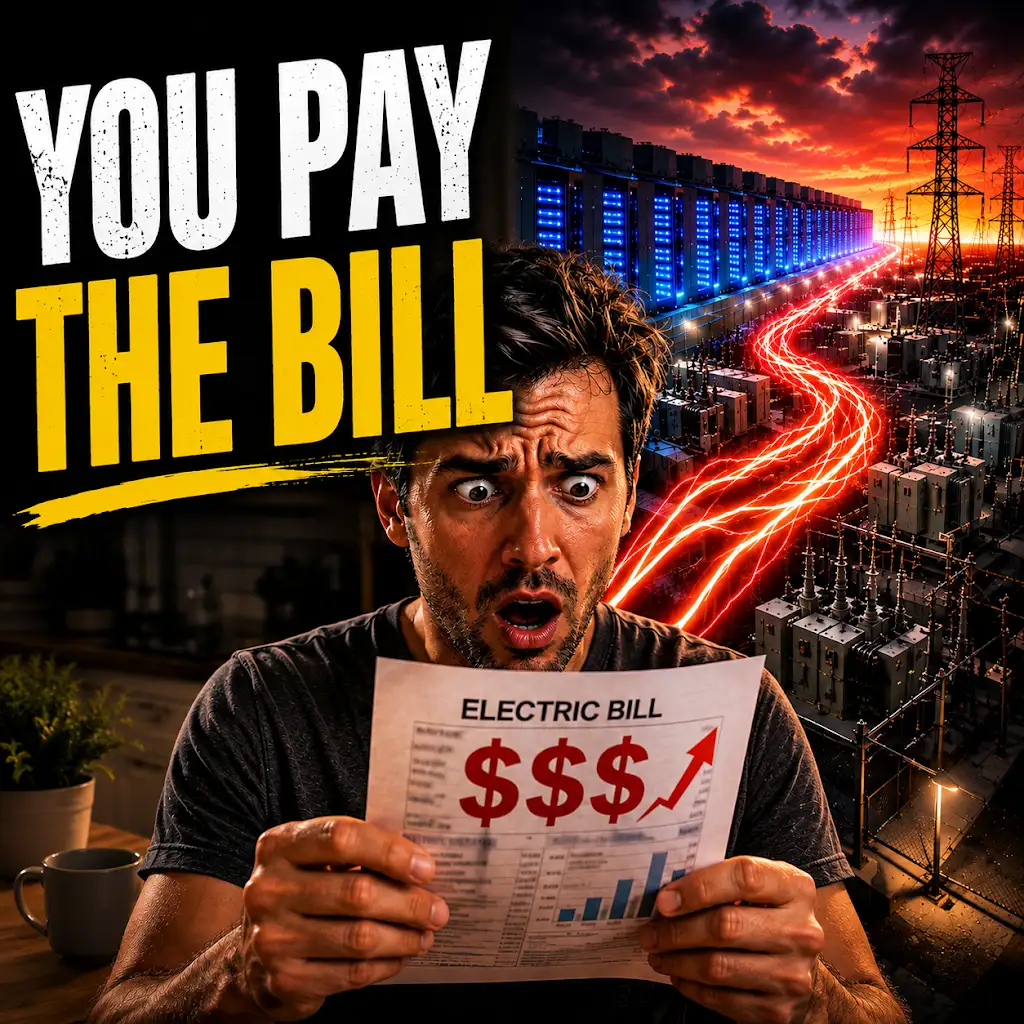
Is AI About to Make Your Electric Bill Even Higher?
FAQs
What are data centers?
Data centers are facilities that house computer systems and associated components, such as telecommunications and storage systems. They are used to store, process, and distribute large amounts of data for businesses and organizations.
How do data centers impact residential electricity rates?
Data centers can impact residential electricity rates by increasing the overall demand for electricity in a given area. This increased demand can lead to higher electricity prices for residential consumers, as the cost of supplying electricity to meet the increased demand is passed on to consumers.
What are some factors that contribute to the electricity consumption of data centers?
Factors that contribute to the electricity consumption of data centers include the power and cooling systems required to keep the servers and other equipment running at optimal temperatures, as well as the energy needed to power the servers and other hardware.
What are some strategies for reducing the electricity consumption of data centers?
Some strategies for reducing the electricity consumption of data centers include using energy-efficient hardware, implementing virtualization and consolidation techniques to optimize server usage, and utilizing renewable energy sources to power the data center.
How can residential electricity rates be managed in light of increasing data center demand?
Residential electricity rates can be managed in light of increasing data center demand through the implementation of demand response programs, energy efficiency initiatives, and the development of smart grid technologies. These measures can help to balance the increased demand from data centers with the needs of residential consumers, ultimately helping to manage electricity rates.