You stand at the precipice of a technological revolution, one powered by an insatiable hunger for electricity. AI, once a theoretical concept, is now a tangible force shaping our world, and at its core lie the massive, humming AI data centers. These behemoths, the neural networks of our digital age, demand colossal amounts of power, and this demand is, in turn, sending ripples through the global electricity market, influencing the prices you pay for every kilowatt-hour. Understanding this impact is no longer a niche concern for engineers and economists; it’s becoming essential for every consumer, every business owner, and every policymaker navigating our increasingly electrified future.
You might think of a data center as a room full of blinking lights and whirring fans, but AI data centers are a different breed. They are designed for an entirely different purpose: to process and analyze vast quantities of data at breakneck speeds, fueling the complex algorithms that underpin everything from your personalized recommendations to advanced scientific research. This computational intensity translates directly into an enormous and ever-growing appetite for electricity.
The Core of the Demand: Computational Power
At the heart of every AI data center are specialized processors – Graphics Processing Units (GPUs) and Tensor Processing Units (TPUs). These are not your typical computer chips. They are designed for parallel processing, capable of crunching numbers in ways that conventional CPUs can only dream of. This parallel processing capability is what makes them so effective at training and running AI models, but it also makes them incredibly power-hungry. Think of it like this: a regular CPU is a skilled artisan, meticulously crafting one piece at a time. A GPU or TPU is an entire factory, churning out thousands of identical components simultaneously. The energy required for that factory to operate is exponentially higher.
The Scale of AI Operations
The scale of AI operations is another critical factor. We’re not just talking about a few servers running some basic machine learning. We’re talking about training foundational models that encompass trillions of parameters, requiring days or even weeks of continuous, high-intensity computation. This involves massive datasets, complex neural network architectures, and iterative training processes. Each iteration, each pass through the data, consumes a significant amount of electricity. Imagine training a student for a national exam. Now imagine training an entire generation of students for every exam that will ever be conceived. The latter requires an unprecedented level of resources, and in the case of AI, those resources are primarily measured in watts.
The Interconnectedness of the Ecosystem
Furthermore, the AI ecosystem is not just about the processing units themselves. It includes the networking equipment that connects them, the cooling systems that prevent them from overheating (and which themselves consume a substantial amount of energy), and the storage infrastructure that houses the petabytes of data. All these components work in concert, and their combined energy consumption is what truly defines the footprint of an AI data center. You can’t have one without the others, and each plays a crucial role in the overall energy demand.
The Future Trajectory: Exponential Growth
The alarming part for electricity prices is the projected trajectory of this demand. As AI capabilities continue to advance and become more integrated into our lives and industries, the need for more powerful and numerous AI data centers will only escalate. Companies are investing billions in AI, and that investment invariably leads to a corresponding investment in the infrastructure required to support it. You are witnessing the early stages of a demand surge that experts predict will continue to grow exponentially in the coming years, placing increasing pressure on electricity grids and, consequently, on electricity prices.
The increasing demand for AI data centers has raised concerns about their impact on electricity prices, as these facilities consume vast amounts of energy to power and cool their operations. A related article that delves into this issue can be found at How Wealth Grows, where it discusses the implications of rising energy consumption by tech companies and the potential effects on consumers and businesses alike. Understanding these dynamics is crucial for navigating the future of energy markets and technology development.
The Strain on the Grid and the Price Hike
You may not directly manage the power lines that bring electricity to your home or business, but you are undeniably connected to the broader electricity grid. When demand for power surges, especially in concentrated areas, the grid can become strained. This strain, coupled with the increasing costs of generating and delivering electricity to meet this new, colossal demand, directly impacts the prices you will see on your utility bills.
Increased Demand for Power Generation
The most immediate impact of AI data centers on electricity prices is the sheer increase in demand for power generation. These facilities are not just intermittently using electricity; they are running at near-maximum capacity for extended periods. This necessitates existing power plants to operate at higher output levels, and in many cases, the construction of new power generation facilities to meet this growing need. The costs associated with building and maintaining these power plants, whether they are fossil fuel-based, renewable, or nuclear, are eventually passed on to consumers. You are essentially subsidizing this technological advancement through your electricity payments.
The ‘Peak Load’ Phenomenon
Electricity grids are designed to handle peak loads – the times of highest demand, usually during hot summer afternoons or cold winter evenings when everyone is using air conditioning or heating. AI data centers can significantly exacerbate these peak load periods, or even create new ones. When a massive data center fires up its thousands of GPUs simultaneously, it creates a localized, intense demand that can put immense pressure on the grid. Utilities must ensure they have enough generating capacity to meet these peaks, which often means relying on more expensive, less efficient ‘peaker plants’ that are brought online only when absolutely necessary. The cost of operating these peaker plants is significantly higher, and you bear the brunt of that expense.
The Cost of Grid Modernization and Expansion
To accommodate the substantial and often concentrated power needs of AI data centers, significant investments are required in grid modernization and expansion. This includes upgrading transmission lines, substations, and distribution networks. These infrastructure projects are complex, time-consuming, and expensive. The cost of these upgrades, necessitated by the burgeoning AI industry, will inevitably be factored into the overall cost of electricity, translating into higher prices for all users. You are essentially paying for the infrastructure upgrades that enable this new wave of technology.
The Challenge of Renewable Energy Integration
While the push for renewable energy is crucial for sustainability, the intermittent nature of sources like solar and wind presents a challenge for a constant, high-demand industry like AI. AI data centers require a stable and reliable power supply, and relying solely on renewables can lead to intermittency issues. To bridge this gap, grid operators often rely on dispatchable power sources, which can be ramped up or down as needed. These sources are often more expensive to operate, adding to the overall cost of electricity. You are seeing the ripple effect of this balancing act on your bills.
The Competition for Energy Resources
As AI data centers proliferate, they are entering into a competitive landscape for energy resources. In regions with already tight electricity supplies, the arrival of a large data center can increase demand to a point where it outstrips available supply. This can lead to price bidding wars among energy providers and data center operators, driving up wholesale electricity prices. These higher wholesale prices are then passed down to consumers. You are observing a market where a new, powerful player is entering and influencing the established dynamics.
Regional Disparities and Concentrated Demand

The impact of AI data centers on electricity prices is not uniform. You will observe significant regional disparities, with certain areas experiencing more pronounced price increases than others. This is primarily due to the concentration of AI infrastructure and the existing energy landscape of those regions.
AI Hubs and Their Energy Footprint
Certain geographical locations are emerging as hubs for AI development and data center deployment. These are often areas with access to abundant and affordable electricity, favorable regulatory environments, or a skilled workforce. As these hubs grow, so does their collective demand for electricity. You will notice that regions with a high concentration of AI data centers are more likely to experience a noticeable uptick in electricity prices. This is a direct consequence of localized, intensified demand.
The Influence of Existing Energy Infrastructure
The existing energy infrastructure of a region plays a crucial role in how it absorbs the demand from AI data centers. Areas with robust, modern grids and surplus generating capacity may be able to accommodate the increased demand with less impact on prices. Conversely, regions with older infrastructure or limited generating capacity will feel the strain more acutely, leading to steeper price hikes. Your local electricity market’s health directly influences your price experience.
The Cost of New Power Generation in Affected Regions
In regions where AI data centers are rapidly expanding, there may be a pressing need to build new power generation facilities. The capital costs associated with these new plants, particularly if they are not fully offset by renewable energy sources, will be a significant factor in driving up electricity prices for all consumers in that area. You are witnessing the economic reality of accommodating rapid industrial growth.
The Impact on Industrial and Commercial Consumers
While residential consumers will feel the effects, industrial and commercial consumers are often the first and most significantly impacted by rising electricity prices. Businesses that rely heavily on electricity for their operations, from manufacturing plants to small retail stores, may find their operating costs escalating dramatically. This can have a ripple effect on the prices of goods and services you purchase. You are indirectly affected by the operational costs of the businesses you interact with.
The Political and Regulatory Landscape
The political and regulatory landscape of a region can also influence the impact of AI data centers on electricity prices. Some regions may have policies in place that incentivize renewable energy development or offer subsidies for grid upgrades, which could help mitigate price increases. Others may have less proactive policies, leading to a more direct and pronounced price impact. You are experiencing the consequences of policy decisions made at various levels of government.
The Economic Domino Effect

The impact of AI data centers on electricity prices is not an isolated event. It sets off a cascade of economic consequences that will eventually touch many aspects of your life. You are not just paying for electricity; you are paying for the broader economic shifts that this new energy demand is creating.
Increased Operational Costs for Businesses
As mentioned, businesses are facing increased operational costs due to higher electricity prices. This can lead to reduced profitability, which in turn can stifle investment, slow job growth, or even result in businesses relocating to areas with lower energy costs. You may see the prices of goods and services rise as businesses pass on these increased operational expenses. This is the most immediate and tangible economic domino falling.
Investment in Energy Efficiency and Alternatives
The rising cost of electricity is also a powerful incentive for individuals and businesses to invest in energy efficiency measures and explore alternative energy sources. You might see a surge in demand for solar panels, electric vehicles with smart charging capabilities, and home energy management systems. This can lead to innovation and the development of new technologies, but also represents an upfront cost for you. You are being prompted to make choices that, while potentially beneficial long-term, require initial investment.
The Role of Inflation
The widespread increase in operational costs across various industries, driven by higher energy prices, can contribute to broader inflationary pressures. When the cost of producing and delivering virtually everything rises, the overall price level in the economy tends to increase. You are likely to experience this as a general increase in the cost of living. This is a complex economic phenomenon where the initial spark of AI energy demand contributes to a larger fire of inflation.
Shifting Economic Power and Investment
The areas that can effectively manage and supply the energy demands of AI data centers may see an influx of investment and economic growth. Conversely, regions struggling with high energy costs could experience economic stagnation or decline. This can lead to shifts in economic power and a redistribution of investment. You are witnessing the economic rebalancing of a nation or a global economy.
The Future of Energy Markets
The massive and sustained demand from AI data centers is fundamentally reshaping energy markets. Utilities and energy providers are being forced to rethink their generation strategies, grid management, and pricing models. This could lead to new market structures, innovative financing mechanisms, and a greater emphasis on energy storage solutions. You are observing the evolution of how energy is produced, distributed, and priced.
As the demand for artificial intelligence continues to surge, concerns about the impact of AI data centers on electricity prices have become increasingly prominent. A related article discusses how the expansion of these facilities could strain local power grids and lead to higher costs for consumers. For more insights on this topic, you can read the full article here. This exploration highlights the balance that needs to be struck between technological advancement and energy sustainability.
Navigating the Future: Your Role and the Path Forward
| City | Electricity Price Increase (%) | Year |
|---|---|---|
| New York | 3.5 | 2020 |
| San Francisco | 2.8 | 2019 |
| London | 4.2 | 2021 |
You are not merely a passive observer in this evolving energy landscape. Your choices, your awareness, and your engagement can influence the trajectory of electricity prices and the broader impact of AI data centers. Understanding your role is crucial for navigating this future.
The Importance of Energy Efficiency
For you, as an individual, embracing energy efficiency is paramount. Simple actions like upgrading to LED lighting, ensuring proper insulation, using smart thermostats, and choosing energy-efficient appliances can significantly reduce your household’s electricity consumption. This not only lowers your individual electricity bill but also contributes to reducing the overall demand on the grid, indirectly impacting prices. You are empowered to make a difference through your daily habits.
Advocating for Smart Energy Policies
Engaging with policymakers and advocating for smart energy policies is another critical avenue. Supporting investments in renewable energy, grid modernization, and energy storage solutions can help create a more sustainable and affordable energy future. You can voice your concerns and support initiatives that aim to balance the growth of AI with energy affordability and environmental responsibility. Your voice matters in shaping the future.
Understanding Your Energy Consumption
Taking the time to understand your own energy consumption patterns is a vital step. Many utility providers offer tools and resources that allow you to monitor your usage and identify areas where you can make savings. By becoming more aware of where your electricity is going, you can make more informed decisions about how to reduce it. Knowledge is power, especially when it comes to your electricity bill.
The Push for Innovation in Energy Technology
The challenges posed by AI data centers are also driving innovation in energy technology. You will likely see advancements in battery storage, more efficient cooling systems for data centers, and novel approaches to grid management. Supporting research and development in these areas can lead to long-term solutions that can help stabilize or even reduce electricity prices. You are indirectly benefiting from the push for innovation that is spurred by this new demand.
The Collective Impact of Conscious Choices
Ultimately, the impact of AI data centers on electricity prices is a complex issue with far-reaching consequences. However, by understanding the forces at play and by making conscious choices regarding your own energy consumption, advocating for sensible policies, and embracing innovation, you can play a significant role in shaping a future where technological advancement and energy affordability can coexist. You are part of a collective effort to navigate this transformative period.
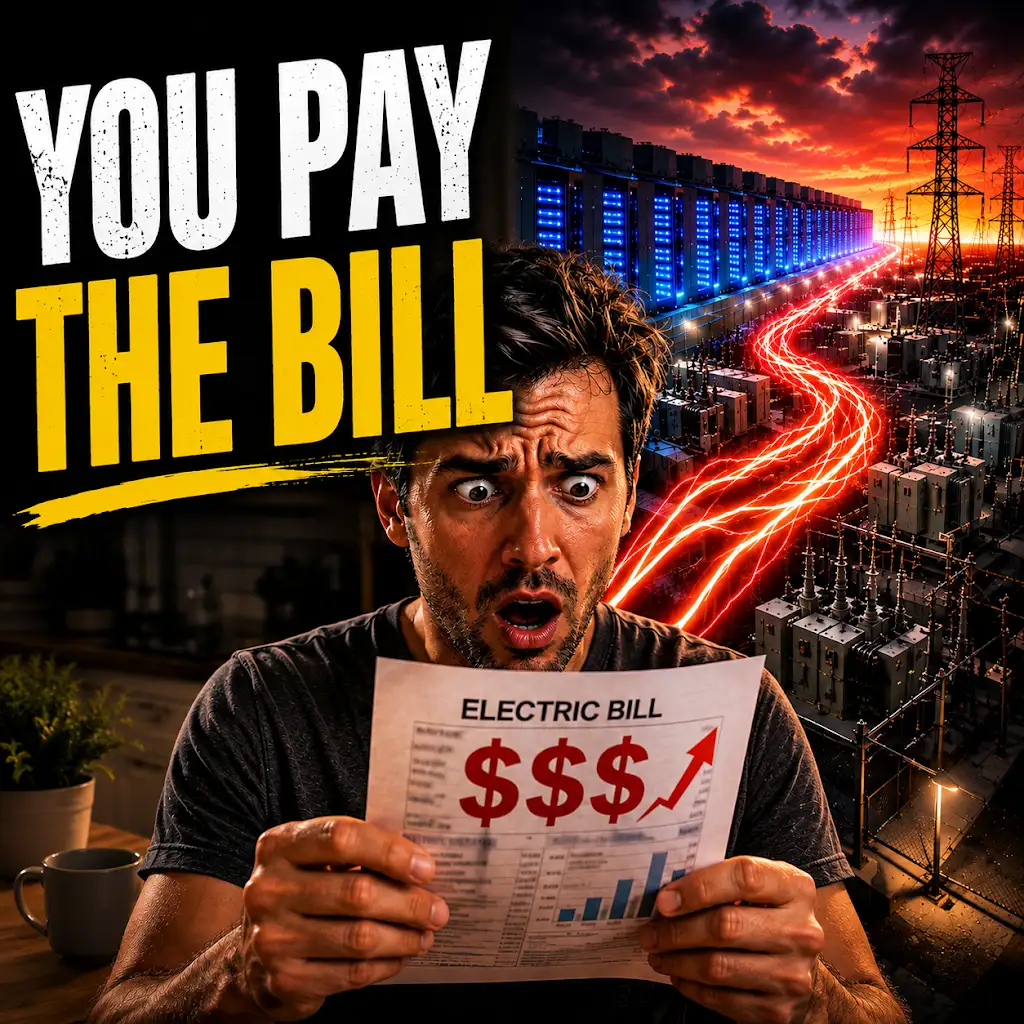
Is AI About to Make Your Electric Bill Even Higher?
FAQs
What are AI data centers?
AI data centers are facilities that house the infrastructure and equipment necessary to support artificial intelligence (AI) applications and processes. These centers typically require large amounts of computing power and storage to handle the complex algorithms and data processing associated with AI.
Do AI data centers consume a lot of electricity?
Yes, AI data centers consume a significant amount of electricity due to the high computational demands of AI applications. The processing of large datasets and complex algorithms requires a substantial amount of power to operate the servers, cooling systems, and other infrastructure within the data center.
How do AI data centers affect electricity prices?
The high electricity consumption of AI data centers can contribute to increased demand on the power grid, which may lead to higher electricity prices. Additionally, the construction and operation of these data centers can require significant investment in power infrastructure, which may also impact electricity prices for consumers.
Are there any efforts to mitigate the impact of AI data centers on electricity prices?
Some efforts are being made to mitigate the impact of AI data centers on electricity prices. This includes the development of more energy-efficient hardware and cooling systems, as well as the use of renewable energy sources to power these facilities. Additionally, advancements in AI technology may lead to more efficient algorithms and processes that require less energy.
What are the potential implications of rising electricity prices due to AI data centers?
Rising electricity prices due to AI data centers could have implications for both consumers and businesses. Higher energy costs may impact the affordability of AI technologies and services, potentially limiting their accessibility. Additionally, businesses that rely on AI data centers may face increased operational expenses, which could impact their competitiveness and profitability.