
You stand at the precipice, staring at the glowing screen. It’s a familiar feeling, isn’t it? That itch. That longing for something more. The latest software update, the shiny new phone, the cutting-edge gadget – they all beckon, promising a smoother, faster, more exciting digital existence. But for you, for so many of us, that upgrade often feels like trying to grasp smoke. It’s there, tantalizingly close, yet perpetually out of reach.
You’ve felt it. That gnawing sense that what you have, while perfectly functional yesterday, is somehow less today. It’s a carefully orchestrated campaign, isn’t it? The tech giants, masters of their craft, know exactly how to tap into your latent desire for progress.
The planned obsolescence playbook
They don’t necessarily make things that break immediately, oh no. That would be too obvious, too easily called out. Instead, they employ a more insidious strategy: planned obsolescence. It’s a subtle art of making your current device or software feel just… a little bit… behind.
The software slowdown
Your phone, once zippy and responsive, now chugs along like a molasses-laden tortoise. Apps take longer to load, menus stutter, and simple tasks feel like herculean efforts. This isn’t random; it’s often a direct consequence of newer, more demanding software designed for newer, more powerful hardware. Your perfectly good processor is now deemed inadequate by the very company that sold it to you.
The feature creep illusion
Then there are the new features. They’re always there, splashed across marketing materials and glowing reviews. Features you never knew you needed, features that promise to revolutionize your workflow or enhance your entertainment. But are they truly essential, or are they simply shiny distractions designed to make your current setup feel… lacking? You find yourself comparing your device to the latest model, and the gulf, real or perceived, begins to widen.
The curated obsolescence of the ecosystem
It’s not just about individual products; it’s about the entire interconnected web. You’re part of an ecosystem, whether you realize it or not, and that ecosystem is constantly evolving.
The dying embers of compatibility
That older, perfectly good printer you have? It might suddenly find itself without drivers for the latest operating system. That beloved app you rely on? It might cease to receive updates, gradually becoming a security risk or simply incompatible with newer versions of your phone’s OS. The threads that connect your devices, once so strong, begin to fray.
The subscription trap
And let’s not forget the shift towards subscription models. Your once-off purchase of software is now a monthly or annual fee. While this can offer ongoing updates and support, it also means that not paying means being left behind, unable to access the latest versions or features, creating a constant pressure to maintain a financial commitment to stay current.
In exploring the reasons why the dream of upgrading one’s home often seems to drift further away, it’s important to consider various economic factors and personal financial habits that contribute to this phenomenon. For a deeper understanding of these dynamics, you can refer to a related article that delves into wealth accumulation and homeownership challenges. This insightful piece can be found at How Wealth Grows, where it discusses the impact of rising property prices and the importance of financial planning in achieving homeownership goals.
The economic barricade
Even if you can resist the siren song of obsolescence, there’s the cold, hard reality of your wallet. Upgrades aren’t cheap, and the cost often feels disproportionate to the perceived benefit.
The ever-increasing price tags
You’ve noticed it, haven’t you? The price of that new smartphone, that laptop, that gaming console, seems to climb higher with each iteration. What was once a reasonable purchase has become a significant investment, a decision that requires careful consideration and often, sacrifice.
The premium for marginal gains
You pore over spec sheets, comparing megapixels and GHz, RAM and storage. And often, the differences between last year’s model and this year’s are, at best, incremental. Yet, the price difference can be substantial. You’re paying a premium for a few percentage points of improvement, a slightly faster processor, or a camera that’s marginally better in low light. Is it worth it? You grapple with the question.
The cost of the “ecosystem premium”
Buying into a particular ecosystem, whether it’s Apple, Google, or Microsoft, often comes with its own set of financial expectations. Accessories, software, and even cloud storage can all be more expensive when tied to a specific brand. You might find yourself paying more for a charger or a pair of headphones simply because they’re branded to match your existing devices.
The perceived devaluation of your current assets
The moment you purchase a new piece of tech, its value plummets. It’s a harsh truth, but one you experience keenly when you look at resale prices. This perceived devaluation makes the prospect of upgrading even more daunting. Why invest so heavily in something that will be worth significantly less in a short period?
The depreciation spiral
You’ve seen it. That device you spent a fortune on just a year or two ago is now worth a fraction of its original price on the used market. This rapid depreciation makes it hard to justify the initial outlay, knowing that the “upgrade tax” is so steep.
The trade-in trickle
Trade-in offers, while seemingly helpful, often provide a fraction of what your old device is truly worth. It’s a way for manufacturers to recoup some costs and entice you into the next purchase, but it rarely feels like a fair exchange.
The knowledge gap and the overwhelming choices
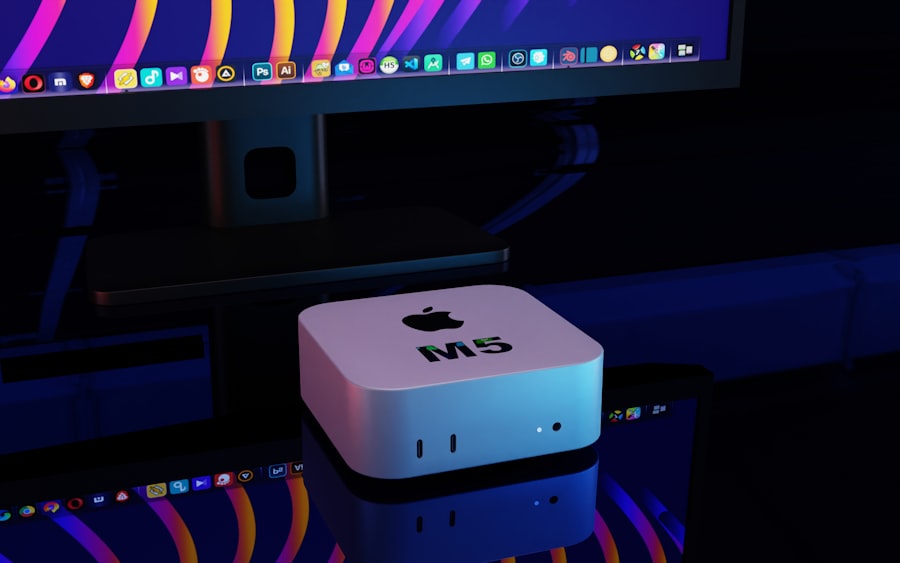
Even if you have the budget and the desire, the sheer complexity of the upgrade process can be a formidable barrier. It’s not as simple as walking into a store and picking something off the shelf anymore.
The paralyzing paradox of choice
You’re presented with an overwhelming array of options. Different brands, different models, different configurations – each promising a unique set of benefits. It’s a dizzying experience, and the fear of making the wrong choice can lead to inertia.
The spec sheet labyrinth
You find yourself lost in a sea of technical jargon. “Nits,” “cores,” “nanometers” – what do they all mean for your daily experience? Deciphering these specifications and understanding their real-world implications feels like learning a new language, a language that changes with every product launch.
The influencer-driven decision-making
Online reviews and influencer endorsements, while helpful, can also create a sense of urgency and pressure. You see someone rave about a new gadget, and suddenly, you feel like you need it, even if you haven’t fully evaluated your own requirements. This can lead to impulse purchases that don’t truly meet your needs.
The steep learning curve of new interfaces
You’ve finally made the leap. You have the new device, the new software. But then what? The interface is different, the shortcuts have changed, and the familiar workflow is now a tangled mess. The initial excitement can quickly give way to frustration.
The muscle memory reset
Your fingers have been trained for years to navigate your old system. The muscle memory is ingrained. Now, you have to consciously think about every tap, every swipe, every command. It’s like learning to drive a new car, only to find that the steering wheel is on the other side.
The hidden features and settings
Manufacturers love to bury useful features and settings deep within menus and sub-menus. Discovering these essential tools can feel like an archaeological dig, a frustrating process of trial and error that eats into your precious time.
The environmental and ethical quandaries

Beyond the personal inconvenience, there’s a growing awareness of the broader implications of our upgrade culture. The constant cycle of consumption is taking a toll.
The growing mountain of e-waste
You see the headlines. The ever-increasing landfills overflowing with discarded electronics. Each upgrade contributes to this growing problem, and the thought weighs on you.
The toxic legacy of discarded devices
Those old phones and computers aren’t just inert plastic and metal. They contain hazardous materials that can leach into the environment, posing risks to ecosystems and human health for generations to come.
The unfulfilled promise of recycling
While recycling programs exist, they are often insufficient to handle the sheer volume of e-waste. Many devices are not properly recycled, ending up in developing countries where they are dismantled in dangerous conditions, exposing workers to harmful substances.
The human cost of production
The shiny new devices you covet don’t just appear out of thin air. They are the product of complex global supply chains, often involving precarious labor conditions and ethical concerns.
The exploitation of labor
From the mining of rare earth minerals to the assembly lines, there are often reports of exploitative labor practices, long hours, and low wages. Knowing this can cast a shadow over your desire for the latest gadget.
The conflict minerals conundrum
Certain minerals essential for electronics production are sourced from regions affected by conflict and human rights abuses. The purchase of devices containing these minerals can, indirectly, contribute to ongoing violence and suffering.
As homeowners consider renovations and upgrades, they often find that the dream of a perfect home seems to drift further away. This phenomenon can be attributed to various factors, including rising material costs and labor shortages, which can inflate budgets unexpectedly. For a deeper understanding of how these economic factors influence home improvement projects, you can read more in this insightful article on wealth growth strategies. It provides valuable information on managing finances during home upgrades and can be found here.
The psychology of “enough”
| Reasons | Metrics |
|---|---|
| Cost of materials | Increased by 15% |
| Labour shortage | Extended project timeline by 30% |
| Regulatory delays | Added 3 months to the process |
| Supply chain disruptions | Delayed delivery by 2 months |
Ultimately, the elusive upgrade is as much a psychological battle as it is a technological or economic one. It’s about redefining your relationship with consumption and finding a sense of contentment.
The manufactured discontent
You’re constantly bombarded with messages telling you that you need more, that what you have is insufficient. This manufactured discontent is a powerful driver of consumer behavior, making it difficult to feel truly satisfied.
The FOMO (Fear Of Missing Out) factor
You see your friends, your colleagues, sporting the latest tech, and a pang of envy, or perhaps inadequacy, creeps in. The fear of being left behind, of not being “in the loop,” is a potent motivator.
The relentless pursuit of perfection
The idea that there’s always a better version, a more perfect solution, keeps you perpetually chasing a moving target. You’re so focused on the next big thing that you fail to appreciate the value and utility of what you already possess.
Cultivating contentment in a consumerist world
The key to breaking free from the cycle of the elusive upgrade lies in shifting your perspective and embracing a more mindful approach to technology.
The power of deliberate adoption
Instead of upgrading impulsively, learn to assess your actual needs. Does the new feature truly solve a problem for you? Will it genuinely enhance your life or your work? Or is it just a shiny new toy?
The appreciation of utility over novelty
Focus on the core function of your devices. Does your phone make calls, send messages, and access the internet effectively? Does your laptop handle your essential tasks? When you value utility over novelty, the need for constant upgrades diminishes significantly.
Embracing the “good enough” principle
The pursuit of perfection is often a losing battle. Learning to accept that “good enough” is often truly sufficient can be incredibly liberating. Your current device might not be the absolute pinnacle of technology, but it likely performs its essential functions more than adequately.
You stand at the precipice again, but this time, the view feels different. The glowing screen still beckons, but you’re no longer just staring. You’re assessing, questioning, and understanding. The elusive upgrade remains, a persistent whisper in the digital wind, but you’re learning to distinguish its true call from the manufactured clamor. You’re beginning to find your own definition of “enough,” and in that realization, you’ve already achieved an upgrade of a different, and far more profound, kind.

Your House Went Up $200K. You Didn’t.
FAQs
What are some common reasons why the upgrade home gets farther away?
Some common reasons why the upgrade home gets farther away include rising housing costs, stagnant wages, and increasing debt levels. Additionally, factors such as job instability, lack of affordable housing options, and high living expenses can also contribute to the difficulty of achieving homeownership.
How does rising housing costs affect the ability to upgrade to a new home?
Rising housing costs can make it increasingly difficult for individuals and families to afford a new home. As housing prices continue to climb, the gap between current home values and the cost of upgrading to a larger or more desirable property widens, making it more challenging for homeowners to achieve their upgrade goals.
What role do stagnant wages play in hindering the ability to upgrade to a new home?
Stagnant wages can limit individuals’ and families’ ability to save for a down payment or afford higher mortgage payments associated with upgrading to a new home. When wages fail to keep pace with the rising cost of living and housing expenses, the prospect of achieving homeownership becomes increasingly out of reach for many.
How does increasing debt levels impact the ability to upgrade to a new home?
Increasing debt levels, such as student loans, credit card debt, and personal loans, can hinder individuals’ and families’ ability to qualify for a mortgage or afford the additional financial responsibilities of upgrading to a new home. High levels of debt can negatively impact credit scores and increase financial strain, making it harder to achieve homeownership goals.
What are some potential solutions for overcoming the obstacles to upgrading to a new home?
Potential solutions for overcoming the obstacles to upgrading to a new home include exploring affordable housing options, seeking financial assistance programs, improving financial literacy, and working with a financial advisor to create a realistic savings and debt repayment plan. Additionally, increasing income through career advancement or additional sources of revenue can also help individuals and families move closer to their upgrade home goals.