You’re a homeowner, or perhaps you’re dreaming of becoming one. You’ve navigated the spreadsheets, crunched the numbers, and maybe even pictured yourself on the porch of that perfect place. But amidst the excitement and the practicalities, there’s a force that can dramatically reshape your financial landscape: mortgage rates. They’re not just abstract numbers on a screen; they’re tangible levers that can pull or push your future financial plans in entirely different directions. Understanding how mortgage rates impact your financial trajectory is paramount, whether you’re buying, selling, or just planning for the long haul.
Before you can grasp their impact, you need a solid grasp of what mortgage rates are and why they aren’t static. Think of a mortgage rate as the cost of borrowing a large sum of money to purchase a property. It’s expressed as a percentage of the loan amount that you pay back to the lender over the life of the loan. These rates are far from arbitrary; they are intricately tied to a complex web of economic factors.
Factors Influencing Mortgage Rates
Understanding these influences is like perception the weather before a big event. A sudden storm can ruin your plans, while a clear sky allows for smooth sailing. The same applies to your financial future and mortgage rates.
The Federal Reserve and Monetary Policy
The most significant influence on mortgage rates often stems from the policies enacted by the Federal Reserve, often referred to as “the Fed.” The Fed’s primary mandate is to maintain stable prices and maximize employment. They achieve this through various monetary policy tools, the most prominent being the federal funds rate.
The Federal Funds Rate
This is the target rate that commercial banks charge each other for overnight lending of reserves. When the Fed raises the federal funds rate, it becomes more expensive for banks to borrow money. This increased cost is then passed on to consumers in the form of higher interest rates on loans, including mortgages. Conversely, when the Fed lowers the federal funds rate, borrowing becomes cheaper for banks, often leading to lower mortgage rates.
Quantitative Easing and Tightening
Beyond the federal funds rate, the Fed can also influence interest rates through quantitative easing (QE) and quantitative tightening (QT). QE involves the Fed purchasing long-term securities, such as Treasury bonds and mortgage-backed securities, from the open market. This injects liquidity into the financial system and aims to lower longer-term interest rates, including those for mortgages. QT is the reverse process, where the Fed reduces its balance sheet by selling these assets or allowing them to mature without reinvestment, which can put upward pressure on interest rates.
Inflationary Pressures
Inflation, the rate at which the general level of prices for goods and services is rising, is a key determinant of mortgage rates. Lenders want to ensure that the return on their investment (your mortgage payments) keeps pace with or exceeds the erosion of purchasing power caused by inflation.
The Lender’s Perspective
If inflation is high, the money you repay in the future will be worth less in real terms than the money you borrowed today. To compensate for this anticipated loss of purchasing power, lenders will demand higher interest rates on mortgages during periods of high inflation.
Economic Growth and Inflation
Strong economic growth is often accompanied by inflationary pressures. As the economy expands, demand for goods and services increases, which can lead to rising prices. The Fed may then raise interest rates to cool down an overheating economy, which further impacts mortgage rates.
The Bond Market
Mortgage rates are also closely linked to the performance of the bond market, particularly the market for U.S. Treasury bonds. Lenders often bundle mortgages into mortgage-backed securities (MBS) and sell them to investors in the secondary market. The yields on these MBS are influenced by the yields on U.S. Treasury bonds, which are considered a benchmark for risk-free investments.
Yields on Treasury Bonds
When yields on Treasury bonds rise, it indicates that investors are demanding a higher return for lending their money to the government. This increased demand for higher yields in the broader market generally translates to higher mortgage rates, as lenders need to offer competitive returns to investors who purchase MBS.
Investor Demand and Risk Appetite
The demand for mortgage-backed securities from investors is also crucial. If investors are confident about the economy and have a higher risk appetite, they may be willing to invest in MBS, which can help keep mortgage rates lower. Conversely, economic uncertainty or a decrease in risk appetite can lead investors to pull back, increasing the cost of borrowing for mortgage lenders and thus raising rates.
Other Contributing Factors
While the Fed, inflation, and the bond market are major drivers, several other factors can influence mortgage rates.
Economic Outlook
The general perception of the economic future plays a significant role. If economists and policymakers predict a period of strong economic growth and stability, mortgage rates may remain relatively low. However, concerns about a potential recession or economic downturn can lead to increased uncertainty and potentially higher rates as lenders price in greater risk.
Housing Market Conditions
The health and demand within the housing market itself can also influence mortgage rates. In a hot housing market with high demand and limited inventory, lenders might feel more confident offering competitive rates. Conversely, a sluggish housing market might see lenders adjust rates to stimulate demand.
Lender Competition and Profit Margins
At a micro-level, competition among mortgage lenders can also affect rates. If there are many lenders vying for business, they may offer lower rates to attract customers. Additionally, lenders have their own profit margin expectations, which are factored into the rates they offer.
Understanding how mortgage rates affect your financial future is crucial for making informed decisions about homeownership. A related article that delves deeper into this topic can be found at How Mortgage Rates Impact Your Financial Future. This resource provides valuable insights into how fluctuations in mortgage rates can influence your monthly payments, overall budget, and long-term wealth accumulation, helping you navigate the complexities of the housing market effectively.
Your Monthly Payment: The Direct Impact on Your Budget
The most immediate and tangible impact of mortgage rates on your financial plans is on your monthly mortgage payment. This is the recurring cost that will be a significant line item in your budget for years, if not decades, to come. Even seemingly small differences in interest rates can translate into substantial long-term financial outcomes.
The Arithmetic of Interest
Understanding how interest works within your mortgage payment is crucial. Your payment is typically amortized, meaning it’s structured so that in the early years, a larger portion goes towards paying interest, and a smaller portion goes towards reducing the principal balance. As you progress through the loan term, this ratio gradually shifts.
Fixed vs. Adjustable Rates
The type of mortgage you choose, fixed-rate or adjustable-rate, drastically alters how interest rate fluctuations affect your payment.
Fixed-Rate Mortgages: Predictable Stability
With a fixed-rate mortgage, your interest rate remains the same for the entire duration of the loan. This offers immense predictability, making budgeting far simpler. Your principal and interest payment will never change. This stability is invaluable for long-term financial planning, allowing you to confidently forecast your housing costs.
- The Peace of Mind of Knowing Your Payment:
You know exactly what your principal and interest payment will be each month for the next 15, 20, or 30 years. This eliminates the anxiety of potential increases.
- Impact on Savings and Investment Goals:
With a predictable housing expense, you can more confidently allocate funds towards other financial goals like retirement savings, college funds, or investment portfolios, knowing your core housing cost is stable.
- Refinancing Opportunities:
While your rate is fixed, if market rates drop significantly, you have the option to refinance your mortgage to a lower rate, which can reduce your monthly payment and the total interest paid over the life of the loan.
Adjustable-Rate Mortgages (ARMs): Potential for Savings and Risk
Adjustable-rate mortgages, on the other hand, have an interest rate that can change periodically based on market conditions. Initially, ARMs often have a lower “teaser” rate than fixed-rate mortgages, making them attractive for borrowers who plan to sell or refinance before the rate adjusts, or who are confident that rates will fall.
- Initial Affordability Advantage:
The lower introductory rate of an ARM can make a more expensive home affordable in the short term, allowing you to purchase a larger property or take out a larger loan than you might with a fixed rate.
- The Uncertainty of Future Payments:
However, once the initial fixed-rate period ends, the interest rate will adjust, usually annually, based on a specific index. If market rates rise, your monthly payment will increase, potentially significantly, impacting your budget and discretionary spending.
- The Risk of Payment Shock:
This sudden increase in payments is known as “payment shock” and can be financially devastating if not anticipated. You must carefully consider your risk tolerance and ability to absorb higher payments when choosing an ARM.
The Total Cost of Your Home: Interest Over Time
Beyond the monthly payment, mortgage rates dictate the total amount of interest you will pay over the life of your loan. This is a staggering figure that can often be close to, or even exceed, the original principal amount.
Amortization Schedules Explained
An amortization schedule breaks down each payment, showing how much goes to interest and how much goes to principal.
The Power of a Lower Rate:**
Even a fractional decrease in your mortgage rate can lead to tens of thousands, or even hundreds of thousands, of dollars saved in interest over the life of a 30-year loan. This saved money can be redirected to other important financial goals.
The Cost of a Higher Rate:**
Conversely, a slightly higher rate can dramatically increase the overall cost of your home, impacting your ability to save, invest, or achieve other financial milestones.
Impact on Purchasing Power and Home Affordability
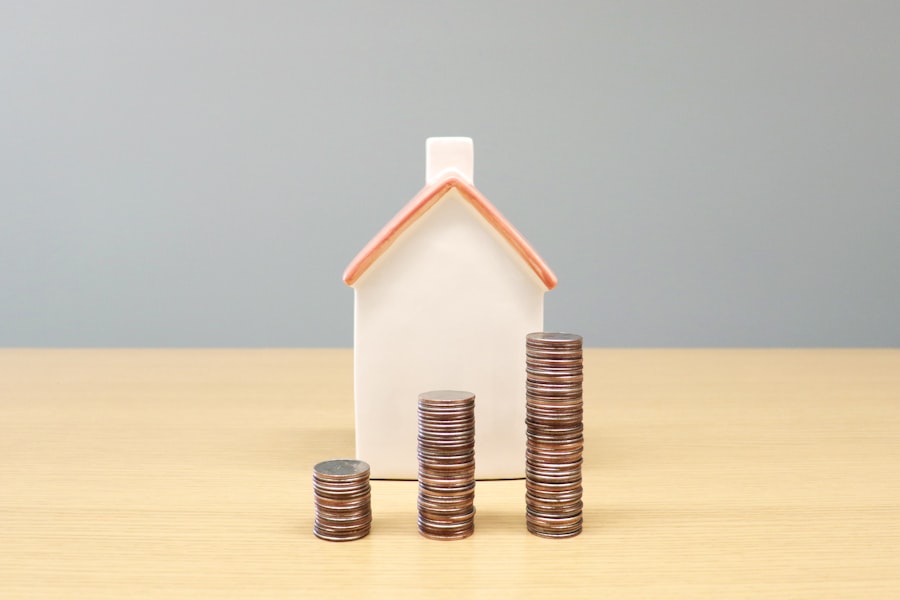
Mortgage rates haven’t just arrived; they’ve dictated the size of the home you can realistically afford and the down payment you might need. When rates are high, the cost of borrowing increases, which directly reduces your purchasing power.
The Affordability Equation
The affordability of a home is a function of income, down payment, home price, property taxes, insurance, and crucially, the mortgage interest rate.
How Higher Rates Shrink Your Budget
Imagine you have a set monthly housing budget you can comfortably afford. When mortgage rates are high, a larger portion of that budget is consumed by interest payments.
Reduced Loan Amount for the Same Payment:**
This means that for the same monthly payment you can afford, you’ll qualify for a smaller loan amount. Consequently, you’ll have to look at less expensive homes.
The Need for a Larger Down Payment:**
Alternatively, to afford the same priced home with higher interest rates, you might need a larger down payment to reduce the loan amount, which can be a significant hurdle for many prospective buyers.
How Lower Rates Expand Your Reach
Conversely, when mortgage rates are low, the cost of borrowing is reduced.
Increased Loan Amount for the Same Payment:**
This allows you to qualify for a larger loan amount, enabling you to afford a more expensive home or a larger property in your desired location.
Greater Flexibility with Down Payments:**
It can also provide more flexibility with your down payment, potentially allowing you to put down less and keep more cash for other investments or immediate needs.
The Psychological Impact on the Market
Beyond the mathematical impact, mortgage rates have a profound psychological effect on the housing market.
Confidence and Hesitation
When rates are low and stable, it fosters confidence among buyers, encouraging them to enter the market. Conversely, rapidly rising rates can create a sense of urgency for some to buy before prices climb further, while others may hesitate, waiting for rates to stabilize or fall.
Investor Behavior
Real estate investors also closely monitor mortgage rates. Low rates make it more attractive to borrow and invest in properties for rental income or appreciation, potentially driving up demand and prices. High rates can make these investments less appealing.
Long-Term Financial Planning and Wealth Building

The impact of mortgage rates extends far beyond the immediate purchase of a home; it influences your ability to build wealth over the long term and achieve your larger financial goals.
The Role of Equity and Appreciation
Your home is often your largest asset, and its value, built through principal payments and market appreciation, contributes significantly to your net worth. Mortgage rates play a role in both.
Faster Equity Buildup with Lower Rates
With lower interest rates, more of your monthly payment goes towards principal, meaning you build equity in your home faster. This faster equity accumulation can free up capital sooner for other investments or financial needs.
Impact on Home Appreciation
While home appreciation is largely driven by market forces, the affordability created by low mortgage rates can stimulate demand, potentially leading to faster price increases. Conversely, high rates can cool the market, slowing down appreciation.
Retirement and Investment Goals
Your mortgage payment is a fixed or variable outgoing expense. The size of this expense directly impacts your capacity to save and invest for retirement.
Freeing Up Capital for Investments
When your mortgage payment is lower due to favorable rates, you have more disposable income. This “found money” can be strategically allocated to retirement accounts (401(k)s, IRAs), brokerage accounts, or other investments, accelerating your wealth-building journey.
The Opportunity Cost of High Mortgage Payments
Conversely, a high mortgage payment driven by high interest rates can tie up a significant portion of your income, leaving less available for investments. This can delay your retirement timeline or necessitate a less comfortable retirement than you might have envisioned.
Future Financial Decisions
Your mortgage rate can also influence a host of future financial decisions.
The Decision to Refinance
If rates drop significantly after you’ve purchased your home, refinancing can be a powerful tool to reduce your monthly payments and the total interest paid. This decision is directly tied to current mortgage rates.
The Decision to Sell or Buy Another Property
If you’re considering selling your current home to buy another, the prevailing mortgage rates will influence the affordability of your next purchase. High rates might make you reconsider a move, while low rates could encourage it.
Understanding how mortgage rates affect your future is crucial for making informed financial decisions. Fluctuating rates can significantly impact your monthly payments and overall financial health, influencing everything from your budget to your long-term investment strategy. For a deeper dive into this topic, you can explore a related article that discusses the implications of mortgage rates on wealth accumulation and financial planning. Check it out here to gain valuable insights that can help you navigate your financial future more effectively.
Navigating the Mortgage Landscape: Strategies for Success
| Impact of Mortgage Rates on Your Future | Details |
|---|---|
| Higher Rates | Increased monthly mortgage payments |
| Lower Rates | Potential for lower monthly payments |
| Higher Rates | Reduced affordability for homebuyers |
| Lower Rates | Increased affordability for homebuyers |
| Higher Rates | Impact on refinancing options |
| Lower Rates | Potential for cost savings through refinancing |
Understanding the impact of mortgage rates is half the battle; the other half is knowing how to navigate this landscape to your advantage. Your financial well-being hinges on making informed decisions in a dynamic interest rate environment.
Proactive Rate Monitoring and Research
Don’t wait until you’re ready to buy to start paying attention to mortgage rates.
Stay Informed About Economic Trends
Keep an eye on economic indicators, Federal Reserve announcements, and news related to the housing market. This will give you a sense of where rates might be headed.
Shop Around for Lenders
When you are ready to apply for a mortgage, do your due diligence and shop around with multiple lenders. Different lenders may offer slightly different rates and terms.
Understanding Different Loan Products
Familiarize yourself with the various mortgage products available and how they might interact with your financial situation and the current rate environment.
Fixed vs. ARM: A Strategic Choice
As discussed, carefully weigh the pros and cons of fixed-rate mortgages versus adjustable-rate mortgages based on your risk tolerance, how long you plan to stay in the home, and your confidence in future interest rate movements.
Government-Backed Loans
Explore options like FHA or VA loans, which may have slightly different rate structures and eligibility requirements.
The Art of Negotiation and Locking Your Rate
Once you’ve found a loan product and lender, there’s still room for strategic maneuvering.
Negotiating Your Rate
Don’t be afraid to try and negotiate your interest rate with your lender, especially if you have a strong credit score and a good financial profile.
Understanding Rate Locks
A rate lock is an agreement with a lender to hold a specific interest rate for a set period while your loan application is processed. Understand the duration of the lock and any associated fees. In a rising rate environment, locking your rate can protect you from future increases.
The Power of a Strong Credit Score
Your credit score is one of the most significant factors in determining the mortgage rate you’ll be offered.
Improving Your Credit Score
If you’re planning to buy a home, take steps to improve your credit score in the months leading up to your application. This can include paying down debt, making all payments on time, and avoiding opening new credit accounts unnecessarily.
The Correlation Between Credit and Rates
A higher credit score demonstrates to lenders that you are a lower risk, which usually translates into a lower interest rate and a more favorable mortgage.
Long-Term Financial Discipline
Ultimately, your ability to manage your finances effectively, regardless of mortgage rates, is paramount.
Consistent Savings and Debt Reduction
Maintain a disciplined approach to saving and debt reduction. This will not only improve your borrowing power but also provide a financial cushion to weather any fluctuations in mortgage rates or your personal financial situation.
Regular Financial Review
Periodically review your mortgage and overall financial plan. Understand your current interest rate, the total interest paid to date, and whether refinancing or other strategies might be beneficial.
Mortgage rates are more than just numbers; they are fundamental pillars that support or challenge your entire financial structure. By understanding their origins, their direct impact on your budget, their influence on your purchasing power, and their long-term implications for wealth building, you empower yourself to make smarter, more strategic financial decisions. Whether you’re a seasoned homeowner or embarking on your first property journey, a vigilant and informed approach to mortgage rates will be your most valuable asset in achieving your financial aspirations.

The House You Can Afford—but Can’t Leave
FAQs
What are mortgage rates?
Mortgage rates refer to the interest rate charged on a mortgage loan used to purchase a home. The rate determines the amount of interest a borrower will pay over the life of the loan.
How do mortgage rates affect your future?
Mortgage rates can have a significant impact on your future financial situation. Higher rates can result in higher monthly mortgage payments and increased overall interest costs, while lower rates can lead to savings over the life of the loan.
What factors influence mortgage rates?
Mortgage rates are influenced by a variety of factors, including the overall economy, inflation, the Federal Reserve’s monetary policy, and the demand for mortgage-backed securities in the financial markets.
How can mortgage rates affect home affordability?
Higher mortgage rates can reduce the purchasing power of potential homebuyers, making homes less affordable. Conversely, lower rates can make homeownership more accessible by reducing monthly mortgage payments.
What steps can be taken to secure favorable mortgage rates?
To secure favorable mortgage rates, borrowers can improve their credit score, shop around for the best rates and loan terms, consider a shorter loan term, and make a larger down payment. Additionally, staying informed about economic trends and working with a knowledgeable mortgage lender can help in securing favorable rates.