
You’ve just witnessed the unveiling of The Wealth of Nations: An Economics Documentary, and your mind is buzzing. It’s not just a film; it’s a journey, a revelation, a profound unpacking of the invisible forces that shape your world, from the price of your morning coffee to the geopolitical landscape you navigate daily. You arrived with perhaps a vague understanding of economics, a collection of buzzwords and often-conflicting headlines. You leave with a framework, a lens through which to view the intricate dance of supply, demand, labor, and capital that orchestrates your very existence.
This documentary doesn’t just present facts; it weaves a narrative. It takes the abstract theories of Adam Smith and his intellectual descendants and renders them tangible, relatable, and, at times, startlingly relevant. You’ll find yourself nodding along, connecting the dots between historical events and contemporary challenges, and perhaps even questioning the assumptions you’ve held about how economies function. Prepare to have your economic literacy not just educated, but fundamentally transformed.
You’ve likely heard the phrase “invisible hand” before, perhaps bandied about in political debates or business news. The Wealth of Nations doesn’t just throw it out there; it dissects it, examines its origins, and probes its implications. You’ll see how Adam Smith, in his seminal work, proposed that individuals pursuing their own self-interest, in a free and competitive market, inadvertently contribute to the greater good of society. This idea, revolutionary for its time, forms the bedrock of much of modern capitalist thought.
Smith’s Vision: Harmony from Self-Interest
The documentary skillfully illustrates Smith’s core argument: that when individuals are free to produce and trade goods based on their own desires and needs, a natural equilibrium emerges. You’ll witness historical reenactments and expert analyses demonstrating how a baker, driven by the desire to earn a living, bakes bread that feeds the community. A farmer, seeking profit, cultivates crops that sustain a population. It’s a system, the film argues, where the pursuit of personal gain leads, almost miraculously, to the satisfaction of collective needs. You’ll ponder the elegance of this seemingly simple mechanism, the way it suggests that centralized planning isn’t always necessary for efficiency.
Critiques and Counterarguments: The Limits of Self-Interest
However, The Wealth of Nations isn’t a sermon; it’s an exploration. You’ll be presented with compelling critiques of the invisible hand. What happens when self-interest devolves into greed? What about monopolies that stifle competition? The film directly confronts these concerns, showcasing examples where the unchecked pursuit of profit has led to exploitation, environmental degradation, and widening income inequality. You’ll consider the documentary’s nuanced perspective: that while the invisible hand can be a powerful force for good, it requires a strong regulatory framework and ethical considerations to prevent its perversion. You might find yourself asking, where is the line between responsible self-interest and damaging avarice?
Market Failures: When the Hand Stumbles
This section of the documentary delves into the concept of “market failures,” situations where the free market, left to its own devices, fails to allocate resources efficiently or achieve socially desirable outcomes. You’ll encounter examples like the tragedy of the commons, where shared resources are depleted due to individual overuse. The environmental impact of industrial pollution, a classic case of externalities, is also vividly portrayed. You’ll learn how the invisible hand falters in the presence of such issues, and why government intervention, through regulation, taxation, or subsidies, might be necessary to correct these imbalances. You’ll see how the film presents these instances not as arguments against capitalism, but as evidence for its need for careful management.
For those interested in the intricate dynamics of wealth accumulation and economic growth, the documentary “The Ascent of Money” offers a compelling exploration of financial history and its impact on modern economies. To further enhance your understanding of these concepts, you can read a related article that delves into the factors influencing wealth creation and distribution by visiting this link.
The Division of Labor: The Engine of Productivity and Progress
You’ve surely experienced the benefits of specialization in your own life. Think about the complex device you’re using to consume this content – it represents the collective efforts of countless individuals, each master of a specific skill. The Wealth of Nations elevates this concept to an economic principle, demonstrating how the division of labor is a fundamental driver of increased productivity and, consequently, national wealth.
Smith’s Pin Factory: A Masterclass in Specialization
The documentary vividly recreates the famous pin factory example from Smith’s book. You’ll see how a single worker attempting to make a pin from start to finish is incredibly inefficient. Then, you’ll witness the transformation as the work is divided: one worker draws the wire, another straightens it, a third cuts it, a fourth sharpens the point, and so on. The sheer increase in output, the doc argues, is astounding. You’ll understand how this simple illustration highlights the power of focused effort, how breaking down complex tasks into smaller, repetitive ones allows for greater speed, precision, and innovation.
The Rise of Expertise and Innovation
Beyond mere efficiency, the film explores how the division of labor fosters the development of expertise. When individuals focus on a single task, they become highly skilled, leading to improvements and innovations within that specific domain. You’ll see historical examples of how this led to breakthroughs in manufacturing, craftsmanship, and even intellectual pursuits. The documentary suggests that this specialization is not just about producing more but also about producing better, driving technological advancement and raising the overall standard of living. You’ll begin to appreciate how a society’s capacity for complex problem-solving is directly linked to its ability to divide and conquer tasks.
The Downside of Monotony: Alienation and Deskilling
However, The Wealth of Nations doesn’t shy away from the potential downsides. You’ll be confronted with the human cost of extreme specialization. The documentary presents a stark portrayal of workers performing repetitive, monotonous tasks, leading to a sense of alienation and a potential loss of valuable, broader skills. You’ll hear from social commentators and perhaps even simulated interviews with historical figures discussing the psychological impact of being a cog in a giant machine. You might leave contemplating the balance between economic efficiency and the dignity and fulfillment of the individual worker. Is there a point where productivity comes at too great a human cost?
The Role of Capital: Fueling Investment and Growth
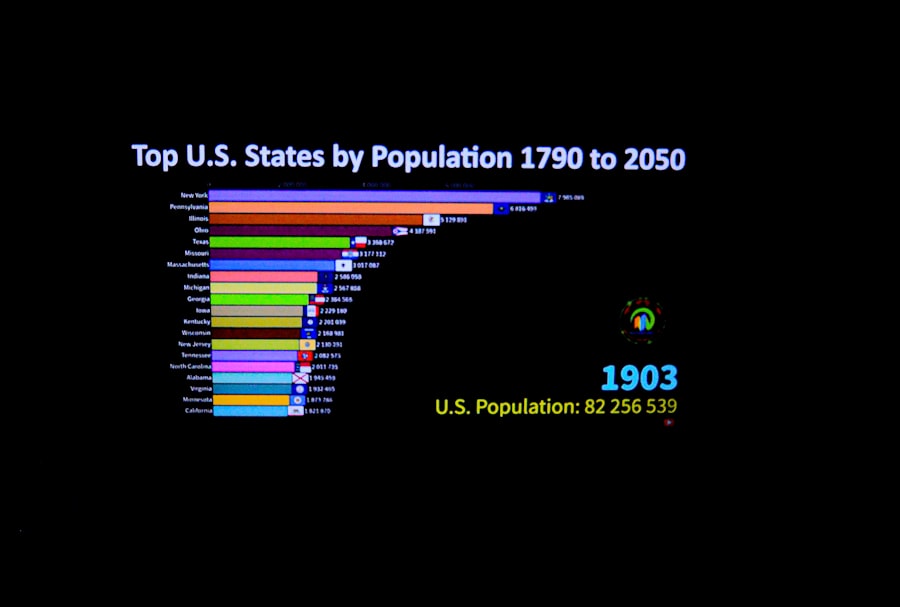
You are likely a consumer of capital in various forms, whether through savings accounts, investments, or even by benefiting from businesses that have attracted capital. The Wealth of Nations illuminates the pivotal role of capital in driving economic growth. It’s not just about money; it’s about the tools, machinery, and infrastructure that enable production and innovation.
Investment: The Seed of Future Prosperity
The documentary emphasizes that capital accumulation is essential for economic progress. You’ll learn how individuals and businesses reinvest their profits, or attract external investment, to expand their operations, purchase new equipment, and develop new technologies. This cycle of investment, the film argues, is the engine that powers long-term economic growth, creating more jobs and generating greater wealth for society. You’ll perhaps see how nations that foster a climate conducive to investment tend to prosper more significantly.
The Impact of Technology and Innovation
You will witness firsthand how advancements in technology, often born from capital investment in research and development, have dramatically reshaped economies. From the steam engine to the internet, the documentary showcases how capital has been the enabler of transformative innovations. You’ll understand that investing in new technologies isn’t just about efficiency; it’s about creating entirely new industries and possibilities, leading to unprecedented wealth creation. You’ll consider how past investments are the foundation of your present economic realities.
Financing Growth: The Banking System and Financial Markets
The Wealth of Nations also sheds light on the crucial role of financial institutions like banks and stock markets. You’ll explore how these entities facilitate the flow of capital from savers to investors, effectively channeling resources to where they can be most productively used. You’ll learn about the mechanisms of borrowing, lending, and equity financing, and how these financial instruments are vital for businesses to acquire the capital they need to grow. You might leave with a newfound appreciation for the intricate workings of the financial system and its impact on your daily life.
Globalization and Trade: An Interconnected World Economy
The products you buy, the news you consume, the very ideas you encounter often come from distant lands. The Wealth of Nations masterfully illustrates the profound impact of globalization and international trade on our interconnected world economy. You’ll see how the exchange of goods and services across borders has become a defining feature of modern economic life.
Comparative Advantage: A Win-Win Proposition
A core concept you’ll grasp is that of comparative advantage, building upon Smith’s ideas. The documentary explains how countries can benefit from specializing in the production of goods and services where they have a lower opportunity cost, and then trading with other nations. You’ll analyze examples where this principle leads to greater overall efficiency and lower prices for consumers worldwide. You’ll understand that it’s not about being the absolute best at something, but about being relatively better, allowing for mutually beneficial exchanges.
The Benefits of Increased Choice and Competition
You’ll experience how globalization expands your choices as a consumer, offering a wider array of products and services at potentially lower prices due to international competition. The film showcases how businesses are forced to innovate and become more efficient to compete on a global scale, ultimately benefiting society. You’ll consider how the availability of goods from different climates and cultures enriches your life and stimulates economic activity.
Challenges and Criticisms: Inequality and Dependency
However, the documentary is not a utopian portrayal of globalization. You’ll be confronted with the complexities and challenges, including concerns about rising inequality between and within nations, the exploitation of labor in developing countries, and the potential for economic dependency. You’ll see how the film explores the arguments for protectionism and the debates surrounding fair trade practices. You might leave pondering the ethical considerations and the need for responsible globalization that benefits all. You’ll question whether the gains from trade are always equitably distributed.
In exploring the intricate dynamics of wealth accumulation, the economics documentary sheds light on various factors influencing financial growth. For those interested in delving deeper into this topic, a related article offers valuable insights into the mechanisms behind wealth creation. You can read more about it in this informative piece, which complements the themes presented in the documentary and enhances understanding of economic principles.
The Future of Economics: Adapting to New Realities
| Title | Director | Release Year | IMDb Rating |
|---|---|---|---|
| Inside Job | Charles Ferguson | 2010 | 8.2 |
| The Corporation | Mark Achbar, Jennifer Abbott | 2003 | 8.0 |
| Freakonomics | Seth Gordon | 2010 | 6.4 |
As you absorb the lessons presented in The Wealth of Nations, you’ll inevitably start thinking about the future. The documentary doesn’t conclude with neat, definitive answers; instead, it prompts you to consider the evolving landscape of economics and the challenges that lie ahead.
The Digital Revolution and the Gig Economy
You’ll witness how the digital revolution is fundamentally reshaping how we work, consume, and interact economically. The rise of e-commerce, artificial intelligence, and the gig economy are explored in detail. You’ll grapple with questions about the future of work, the need for new skills, and how economic systems can adapt to these rapid technological shifts. You might find yourself contemplating the impact of automation on traditional industries and the potential for new economic models.
Sustainability and Environmental Economics
The documentary underscores the growing urgency of integrating sustainability into economic thinking. You’ll learn about environmental economics and the challenges of balancing economic growth with ecological preservation. You’ll consider the economic implications of climate change, resource depletion, and the need for a transition to a greener economy. You’ll begin to understand that true wealth might encompass more than just financial metrics.
The Role of Government and Policy in a Changing World
Finally, The Wealth of Nations prompts a critical examination of the role of government and policy in navigating these complex future challenges. You’ll see how the principles laid out by Smith and his successors are being debated and adapted in response to new realities. You’ll consider the ongoing dialogue about regulation, social safety nets, and the balance between free markets and collective well-being in the 21st century. You’ll leave with a deeper understanding that economics is not a static science but a dynamic, ever-evolving discipline that demands continuous critical engagement. You now have the tools to be an informed observer, and perhaps even a participant, in shaping our economic future.

Why It Feels Like You Need More Than $150K to Get Ahead
FAQs
What is an economics documentary?
An economics documentary is a film or video production that explores and explains various economic concepts, theories, and real-world applications. These documentaries often feature interviews with economists, business leaders, and policymakers, as well as visual representations of economic data and trends.
What are some popular economics documentaries?
Some popular economics documentaries include “Inside Job,” which examines the 2008 financial crisis, “Freakonomics,” based on the best-selling book of the same name, and “The Ascent of Money,” which traces the history of money and finance.
How can economics documentaries benefit viewers?
Economics documentaries can benefit viewers by providing them with a deeper understanding of economic principles, policies, and their impact on society. These documentaries can also help viewers make more informed decisions about personal finance, investments, and public policy.
Where can I watch economics documentaries?
Economics documentaries can be found on streaming platforms such as Netflix, Amazon Prime Video, and Hulu. They may also be available for purchase or rental on platforms like iTunes and Google Play. Additionally, some documentaries may be available for free on websites like YouTube.
Are economics documentaries biased?
Like any form of media, economics documentaries can be influenced by the perspectives and biases of their creators. It’s important for viewers to critically evaluate the information presented and seek out multiple sources to gain a well-rounded understanding of economic issues.