You stand at a precipice, looking back at an evolving landscape of how you earn your living. For generations, the rhythm of work was dictated by a physical space, a commute, and set hours. You clocked in, you clocked out, and your life was largely compartmentalized by the office walls. But something has shifted, a seismic change that has fundamentally reshaped your professional existence. You are witnessing, and actively participating in, the evolution of employment, a journey from the firmly rooted traditions of yesterday to the increasingly fluid frontiers of remote work.
Imagine it: the alarm blares, the aroma of coffee fills your kitchen, and you embark on a familiar journey. This was the bedrock of your working life for so long. The traditional employment model was a monolith, a well-understood system that provided structure and a sense of community, albeit one tethered to a physical location. You knew your colleagues, you navigated office politics, and you understood the unspoken rules of the corporate ladder.
The Office as the Hub
For decades, the office was more than just a place to work; it was the nucleus of your professional identity.
Communal Spaces and Collaboration
Think about the water cooler chats, the impromptu brainstorming sessions by the whiteboard, the shared lunches in the breakroom. These were the organic breeding grounds for ideas and camaraderie. You learned from observing seasoned professionals, you built rapport through face-to-face interactions, and you fostered a sense of belonging within a shared environment. The physical proximity facilitated a certain type of collaborative synergy, where a quick question could be answered across a desk or a complex problem could be untangled through a group huddle.
The Commute: A Daily Ritual
The journey to and from work, while often bemoaned, was also an ingrained part of your routine. It offered a buffer between your personal and professional lives, a time for reflection, listening to podcasts, or simply preparing your mind for the day ahead. You navigated traffic, you squeezed into crowded public transport, and you mentally transitioned from the demands of domestic life to the expectations of your employer. This daily pilgrimage reinforced the separation between ‘work’ and ‘home’.
The Nine-to-Five Framework
The standardized workday, typically from 9 AM to 5 PM, provided a predictable cadence. It allowed for a clear demarcation of your time, making it easier to plan social engagements, family commitments, and personal pursuits outside of working hours. This rigid structure offered a sense of stability and order, a predictable rhythm to your week.
The Benefits of Physical Presence
There were undeniable advantages to being physically present in the workplace.
Immediate Feedback and Mentorship
You could gauge your boss’s reaction to your ideas in real-time. A nod of approval, a furrowed brow – these subtle cues provided immediate feedback that helped you adjust your approach. Mentorship often happened organically, with senior colleagues readily offering guidance and sharing their experiences informally. You could observe their techniques, ask clarifying questions on the spot, and learn through osmosis in a way that is more challenging to replicate remotely.
Building Professional Networks
The office was a fertile ground for building your professional network. You met people from different departments, attended company events, and fostered relationships that could extend beyond your immediate team. These connections could prove invaluable for future career opportunities, collaborations, or simply for gaining different perspectives on your work.
Company Culture and Identity
Being part of a physical workplace allowed you to immerse yourself in the company culture. You understood the unwritten rules, the shared values, and the overall ethos of the organization. This shared experience could foster a strong sense of identity and loyalty, making you feel like a true member of the team.
The evolution of employment over time has been significantly influenced by various economic, technological, and social factors. For a deeper understanding of this transformation, you can explore the article on how wealth has changed alongside employment trends. This insightful piece discusses the historical shifts in job markets and the impact of automation and globalization on workforce dynamics. To read more, visit this article.
The Seeds of Change: Early Forays into Flexibility
Long before the widespread adoption of remote work, there were whispers of change, early explorations into making work more adaptable. These weren’t radical overhauls, but rather subtle shifts that began to chip away at the monolithic traditional model. You might have experienced these yourself, perhaps through staggered start times or occasional opportunities to work from home.
The Rise of Flextime
Flextime, an arrangement that allowed you some control over your working hours, began to gain traction. This offered a degree of autonomy, enabling you to adjust your schedule to accommodate personal appointments or peak productivity times. You could start earlier and finish earlier, or vice versa, without necessarily impacting your output.
The Dawn of Telecommuting
Telecommuting, the precursor to robust remote work, emerged as a niche offering. Primarily for specific roles or during times of need, it allowed you to perform your duties from a location outside the traditional office. This was often viewed as a privilege rather than an expectation, a solution for specific circumstances.
Technology’s Subtle Influence
Even in these early stages, technology played a crucial role. Dial-up internet, early VPNs, and basic mobile phones, while rudimentary by today’s standards, laid the groundwork for asynchronous communication and remote access to company systems. You started to see the potential for working beyond the confines of the office, even if it was limited.
Acknowledging Work-Life Balance
The growing awareness of the importance of work-life balance began to fuel the demand for more flexible arrangements. You started to question the societal norm of sacrificing personal well-being for professional advancement and began to seek ways to integrate both aspects of your life more harmoniously.
The Great Accelerant: The Pandemic’s Transformative Impact
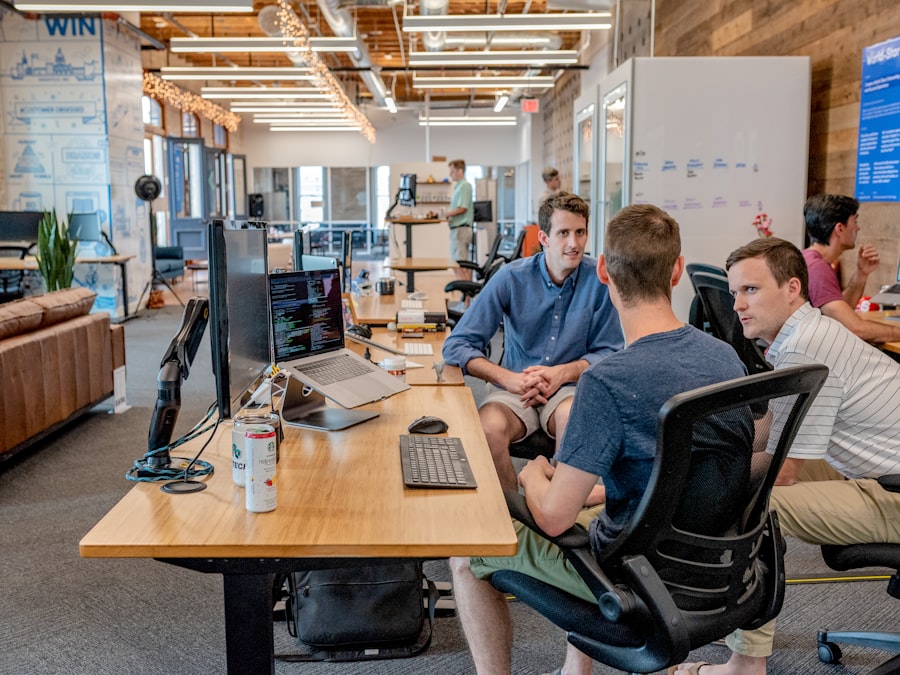
And then, the world shifted. A global health crisis forced a monumental, almost overnight, transformation in how you work. What was once a fringe concept became a necessity, and in doing so, it irrevocably altered the landscape of employment. You experienced firsthand the feasibility and, for many, the desirability of working from anywhere.
The Unprecedented Shift to Remote
Suddenly, the office doors were closed, and your home became your new workstation. This wasn’t a gradual transition; it was a seismic jolt that compelled you and millions of others to adapt almost instantly. You scrambled for reliable internet, you set up makeshift desks, and you learned to navigate a new professional reality.
The Ubiquity of Virtual Meetings
Zoom calls, Microsoft Teams, Google Meet – these platforms became your new conference rooms. You learned to express yourself through a webcam, mute and unmute your microphone with practiced ease, and master the art of the virtual background. These tools, once supplementary, became indispensable.
The blurring of Lines (and the subsequent redefining)
The physical separation between work and home dissolved. You found yourself answering emails during dinner, participating in a work call while your children played in the background, or handling domestic chores between tasks. This blurring necessitated a conscious effort to redefine boundaries and create new routines.
A Global Experiment in Distributed Work
The pandemic turned the entire world into a massive, involuntary experiment in distributed workforces. Companies that had previously resisted remote operations were suddenly forced to embrace it. This forced adoption proved the viability of remote work on a scale previously unimagined.
Innovation in Collaboration Tools
The necessity spurred incredible innovation in collaboration tools. Features that were once considered novel became standard, enabling more seamless communication, project management, and document sharing across dispersed teams. You saw the rapid development of features aimed at replicating the spontaneity of in-person interaction.
Redefining Productivity and Performance
The traditional metrics of productivity, often tied to physical presence, had to be re-evaluated. Companies began to focus more on output and results rather than hours spent at a desk. This shift in focus opened up new possibilities for evaluating employee performance.
The New Normal: Embracing the Remote Work Revolution

The initial shock of the pandemic has subsided, and you are now navigating a landscape where remote and hybrid work models are no longer anomalies but established norms. You are actively shaping what this “new normal” looks and feels like, and it’s a departure from the traditions you once knew.
The Rise of Remote-First Companies
You’re seeing a growing number of companies that are built from the ground up with remote work as their primary mode of operation. These organizations are designed for distributed teams, with a focus on asynchronous communication, digital collaboration, and fostering a strong virtual culture.
Asynchronous Communication as a Skill
The ability to communicate effectively without needing an immediate response has become paramount. You’re learning to craft clear and concise messages, document your thoughts thoroughly, and provide context that minimizes the need for constant back-and-forth. This shifts the focus from real-time interaction to well-considered communication.
Building Virtual Culture and Connection
The challenge of maintaining a strong company culture in a remote environment is a central focus. Companies are investing in virtual team-building activities, online social spaces, and intentional onboarding processes to foster a sense of community and belonging among remote employees. You’re actively participating in these efforts.
Hybrid Models: The Best of Both Worlds?
For many, the future lies in hybrid models, where you split your time between working from home and coming into a physical office. This approach aims to offer the flexibility of remote work while retaining the benefits of in-person collaboration and social connection.
The Office as a Collaboration Hub
In hybrid models, the office often transforms from a place of individual work to a dedicated space for collaboration, meetings, and team events. You might go into the office for specific projects, brainstorming sessions, or to connect with colleagues you haven’t seen in a while.
Navigating the Logistics of Hybridity
Managing a hybrid workforce presents unique logistical challenges. You’re figuring out how to schedule in-office days, ensure equitable access to resources, and maintain a sense of fairness between those who are on-site and those who are remote.
The evolution of employment over time has been a fascinating journey, reflecting shifts in technology, economy, and societal values. For a deeper understanding of how these changes have shaped the workforce, you can explore a related article that delves into the historical context and future trends of employment. This insightful piece highlights the impact of automation and globalization on job markets, making it essential reading for anyone interested in the dynamics of work. To learn more about these developments, visit this article that provides a comprehensive overview of how employment has transformed throughout history.
The Future of Your Work: Opportunities and Challenges Ahead
| Year | Employment Rate (%) | Unemployment Rate (%) |
|---|---|---|
| 2010 | 65 | 8 |
| 2011 | 63 | 9 |
| 2012 | 67 | 7 |
| 2013 | 68 | 6 |
| 2014 | 70 | 5 |
As you continue to evolve, the world of work is not static. The remote work revolution has opened up a vista of new possibilities, but it also presents a fresh set of hurdles that you’ll need to navigate. Understanding these will be crucial for your continued success.
Expanded Talent Pools and Global Opportunities
The removal of geographical barriers means you can now tap into a global talent pool. This offers businesses unprecedented access to diverse skills and perspectives. For you as an individual, it means you are no longer limited by your local job market, opening doors to opportunities across continents.
Inclusivity and Diversity as a Driving Force
Remote work has the potential to foster greater inclusivity and diversity. Individuals who may have faced barriers to traditional employment, such as those with disabilities or those in remote locations, can now participate more fully in the workforce. This is a powerful ripple effect.
The Rise of the Digital Nomad
You’re seeing the emergence of the “digital nomad,” individuals who leverage remote work to travel the world while maintaining their careers. This lifestyle represents the ultimate expression of flexibility and autonomy, allowing you to combine work and personal exploration.
The Imperative of Digital Dexterity and Self-Discipline
The shift to remote work places a greater emphasis on your ability to manage yourself and your workload effectively. You need to be technologically proficient and highly self-disciplined to thrive in this environment.
Mastering Digital Tools and Platforms
Your proficiency with various digital tools – communication platforms, project management software, cloud-based document sharing – is no longer a bonus; it’s a fundamental requirement. You are continuously learning and adapting to new technologies.
The Art of Self-Motivation and Time Management
Without the direct oversight of a manager in the same physical space, your ability to self-motivate, manage your time effectively, and meet deadlines becomes critical. You are responsible for structuring your day, prioritizing tasks, and maintaining focus without external pressure.
The Evolving Role of Leadership
Leadership itself is undergoing a transformation in the remote work era. You’re seeing leaders who are skilled at managing distributed teams, fostering trust and psychological safety, and empowering their employees to work autonomously.
Empathy and Trust as Pillars of Remote Leadership
Effective remote leaders prioritize empathy, understanding the unique challenges and opportunities their team members face. They build trust by focusing on outcomes and providing support, rather than micromanaging.
Fostering a Culture of Accountability and Autonomy
The challenge for leaders is to create an environment where individuals feel accountable for their work while also having the autonomy to manage their processes and schedules. This balance is key to a high-performing remote team.
The Future is Fluid
The evolution of employment is an ongoing narrative. You have witnessed a significant shift from the rigid structures of traditional work to the dynamic and flexible landscape of remote and hybrid models. This journey has brought new opportunities for global connection, inclusivity, and personal autonomy. However, it also demands continuous adaptation, digital fluency, and a strong sense of self-discipline. As you continue to chart your professional course, remember that the future of work is not a fixed destination, but a fluid and ever-evolving experience that you are actively shaping, one virtual meeting and one successful project at a time.

The Middle-Class Playbook Stopped Working — Here’s Why
FAQs
1. How has the nature of employment changed over time?
The nature of employment has shifted from primarily agricultural and manual labor to a more service-based and technology-driven economy. There has been a significant increase in the number of jobs in the service sector, as well as a rise in remote and flexible work arrangements.
2. What impact has technology had on employment over time?
Technology has significantly impacted employment by automating many routine tasks, leading to the decline of certain jobs while creating new opportunities in fields such as information technology, data analysis, and digital marketing. Additionally, technology has enabled remote work and flexible schedules for many employees.
3. How has the gig economy changed the landscape of employment?
The gig economy has provided opportunities for individuals to work independently and on a freelance basis, often through digital platforms. This has led to a rise in non-traditional work arrangements and has given workers more flexibility in choosing their projects and schedules.
4. What role has globalization played in the evolution of employment?
Globalization has led to the outsourcing of certain jobs to other countries, particularly in manufacturing and customer service. It has also created new opportunities for international trade and collaboration, leading to the growth of multinational corporations and the need for employees with cross-cultural skills.
5. How has the concept of job security changed over time?
Job security has become less certain for many workers, as companies have shifted towards more flexible employment arrangements and the gig economy has grown. However, there are still industries and professions that offer stable, long-term employment opportunities.