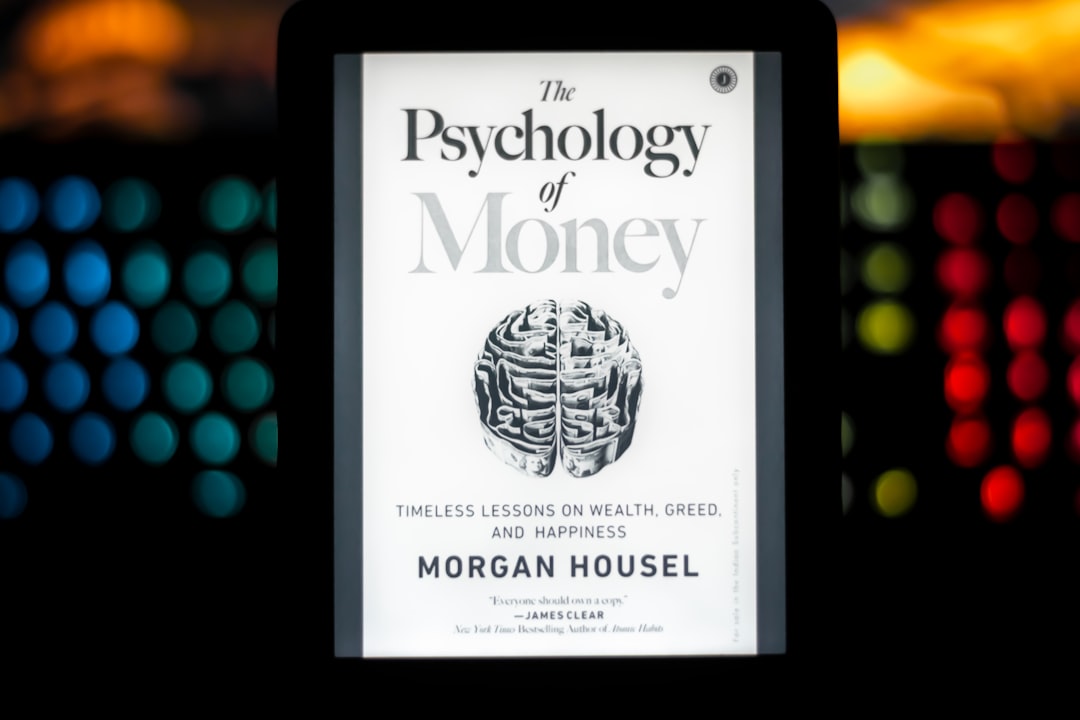
You’ve climbed the ladder. You’ve honed your skills, navigated corporate politics, and earned your stripes. You’re a professional, and likely, you’re financially comfortable. But have you ever stopped to consider the intricate dance between your mind and your money? As a professional, your relationship with wealth isn’t just about spreadsheets and investments; it’s a deeply psychological landscape, one that can either propel you toward greater security and fulfillment or subtly undermine your progress. Understanding this psychology is no longer a nice-to-have; it’s a crucial element of your professional success.
The Illusions of Control: Why Professionals Overestimate Their Financial Prowess
You’re an expert in your field. You can dissect complex problems, strategize for market shifts, and command respect in your domain. This inherent confidence, this mastery, can bleed into your financial life, creating a potent illusion of control. You might believe that because you’re intelligent and successful in your career, you’re automatically a shrewd investor or a perfectly rational financial decision-maker. This is a dangerous assumption.
The Dunning-Kruger Effect in Finance: When Competence Breeds Overconfidence
The Dunning-Kruger effect, the cognitive bias where people with low ability at a task overestimate their ability, often manifests in reverse for professionals. You possess genuine expertise in your profession, leading you to believe this expertise translates seamlessly to financial matters. You might skim financial reports, rely on your gut, or dismiss advice from seasoned financial planners because you feel you already ‘get it.’ This overestimation of your financial literacy can lead to impulsive decisions, under-diversified portfolios, and a failure to recognize your actual blind spots. Your professional success can, ironically, make you less open to learning and admitting when you don’t know something, a critical trait for financial wisdom.
Confirmation Bias: Seeking Data That Validates Your Beliefs
You’ve made a significant investment, and it’s not performing as you’d hoped. Instead of objectively analyzing the situation, your mind, driven by confirmation bias, will seek out information that supports your initial decision. You’ll focus on the few positive indicators, downplay the negative news, and convince yourself that it will ‘turn around.’ This is your brain protecting your ego, but it’s actively hindering your ability to make sound financial adjustments. As a professional, you’re accustomed to gathering evidence, but when your money is involved, that same analytical process can become a tunnel vision, shutting out crucial dissenting opinions or market realities.
The Sunk Cost Fallacy: Clinging to Past Investments
You’ve poured a considerable sum into a speculative venture. It’s clearly not working. Yet, you remain attached, telling yourself, “I’ve already invested so much, I can’t possibly pull out now.” This is the sunk cost fallacy in action, and it’s a powerful psychological trap. Your professional life is often about forward momentum and strategic pivots. However, when your emotional attachment to past financial decisions clouds your judgment, you risk throwing good money after bad, further eroding your financial security. Recognizing when an investment is no longer viable, regardless of the capital already deployed, is a sign of financial maturity, not failure.
Understanding money psychology is crucial for professionals in various fields, as it influences decision-making and financial behaviors. For those looking to delve deeper into this topic, a related article can be found at How Wealth Grows, which explores the psychological factors that affect wealth accumulation and financial success. This resource provides valuable insights that can help professionals better navigate their financial landscapes and understand their clients’ behaviors.
The Emotional Rollercoaster of Wealth: Navigating Fear and Greed in Your Financial Decisions
Money is not just numbers; it’s deeply intertwined with our emotions. For professionals, the stakes can feel particularly high, amplifying the impact of fear and greed on your financial choices. Your ambition, drive, and the pressure to maintain your status can create a volatile emotional landscape around your wealth.
Fear of Missing Out (FOMO): The Siren Song of Speculative Bubbles
You see the market roaring, your colleagues boasting about their new tech stock gains, and suddenly, a prickle of anxiety emerges. The fear of missing out, or FOMO, can be a potent driver of irrational behavior. As a professional, you’re used to being at the forefront, not being left behind. This can lead you to chase hot trends, invest in assets you don’t fully understand, and take on excessive risk in a desperate attempt to keep pace. The allure of quick gains, fueled by FOMO, can easily override your well-researched strategies and long-term plans.
Understanding money psychology is crucial for professionals seeking to navigate the complexities of financial behavior and decision-making. A related article that delves deeper into this topic can be found at How Wealth Grows, which explores the emotional and cognitive factors that influence our relationship with money. By examining these psychological aspects, professionals can better assist their clients in achieving financial well-being and making informed choices.
Greed as a Motivator and a Destroyer: The Double-Edged Sword of Ambition
Your ambition is the engine of your professional success. You strive for more, for better, for greater achievement. This same drive, when applied to your finances, can morph into greed. Greed can manifest as an insatiable desire for more wealth, leading you to take on unnecessary risks, engage in unethical practices, or continually ‘up the ante’ on your investments. While ambition is essential, unchecked greed can blind you to the true value of what you have and push you towards ruin. Learning to distinguish between healthy ambition and destructive greed is a critical step in managing your financial psychology.
Loss Aversion: The Pain of Losing Is Magnified
Research shows that the pain of losing $100 is psychologically about twice as powerful as the pleasure of gaining $100. As a professional, the tangible representation of your hard-earned money makes losses feel particularly acute. This loss aversion can lead you to be overly cautious, missing out on valuable growth opportunities. Conversely, it can also lead to a desperate effort to avoid losses, causing you to hold onto losing investments for too long, hoping they’ll recover, rather than cutting your losses and reinvesting elsewhere. Your professional resilience often involves weathering setbacks, but when it comes to finances, this resilience can sometimes become stubbornness, leading to perpetual losses.
The Behavioral Biases That Sabotage Long-Term Planning: Unconscious Habits Undermining Your Future
Your professional life is built on planning, foresight, and strategic execution. Yet, in the realm of personal finance, unconscious behavioral biases can quietly sabotage your long-term goals, even when you’re making conscious efforts to save and invest. These biases are often subtle, operating beneath the surface of your rational thought processes.
Present Bias: Prioritizing Immediate Gratification Over Future Rewards
You’ve worked hard all week, and that expensive dinner or the latest gadget feels like a well-deserved reward. This is present bias, the tendency to favor immediate rewards over larger future rewards. As a professional, you’re driven by long-term goals, but the instant gratification offered by consumer spending can be incredibly tempting. This bias makes it challenging to consistently save and invest, as the tangible enjoyment of present spending often outweighs the abstract promise of future financial security. Overcoming present bias requires developing the discipline to delay gratification.
Anchoring Bias: Getting Stuck on the First Piece of Information
You see a stock priced at $50, and it drops to $30. You might think it’s now a ‘bargain,’ anchored to the initial $50 price. This is anchoring bias. As a professional, you’re skilled at evaluating information, but anchoring can make you fixate on the first number you encounter, regardless of its true relevance. This can lead you to overpay for assets or underestimate the true value of a potentially good investment because it’s not priced at a perceived ‘ideal’ historical level. It’

The Day You Realize You’re Rich… But Not Free
FAQs

What is money psychology for professionals?
Money psychology for professionals refers to the study of how individuals in professional settings think, feel, and behave in relation to money. It explores the psychological factors that influence financial decision-making, such as attitudes, beliefs, emotions, and behaviors.
Why is understanding money psychology important for professionals?
Understanding money psychology is important for professionals because it can help them make better financial decisions, manage money-related stress, and improve their overall financial well-being. It can also enhance their ability to negotiate, communicate about money, and understand the financial needs of their clients or colleagues.
What are some common money psychology challenges faced by professionals?
Some common money psychology challenges faced by professionals include fear of failure, imposter syndrome, perfectionism, and difficulty setting boundaries around money. Professionals may also struggle with issues related to self-worth, comparison with peers, and managing the financial demands of their profession.
How can professionals improve their money psychology?
Professionals can improve their money psychology by increasing their financial literacy, seeking support from financial professionals or therapists, practicing mindfulness and self-reflection, and setting clear financial goals. They can also benefit from developing healthy money habits, such as budgeting, saving, and investing.
What resources are available for professionals to learn more about money psychology?
Professionals can learn more about money psychology through books, articles, workshops, and online courses focused on financial psychology, behavioral economics, and money mindset. They can also seek out financial advisors, coaches, or therapists who specialize in addressing the psychological aspects of money.