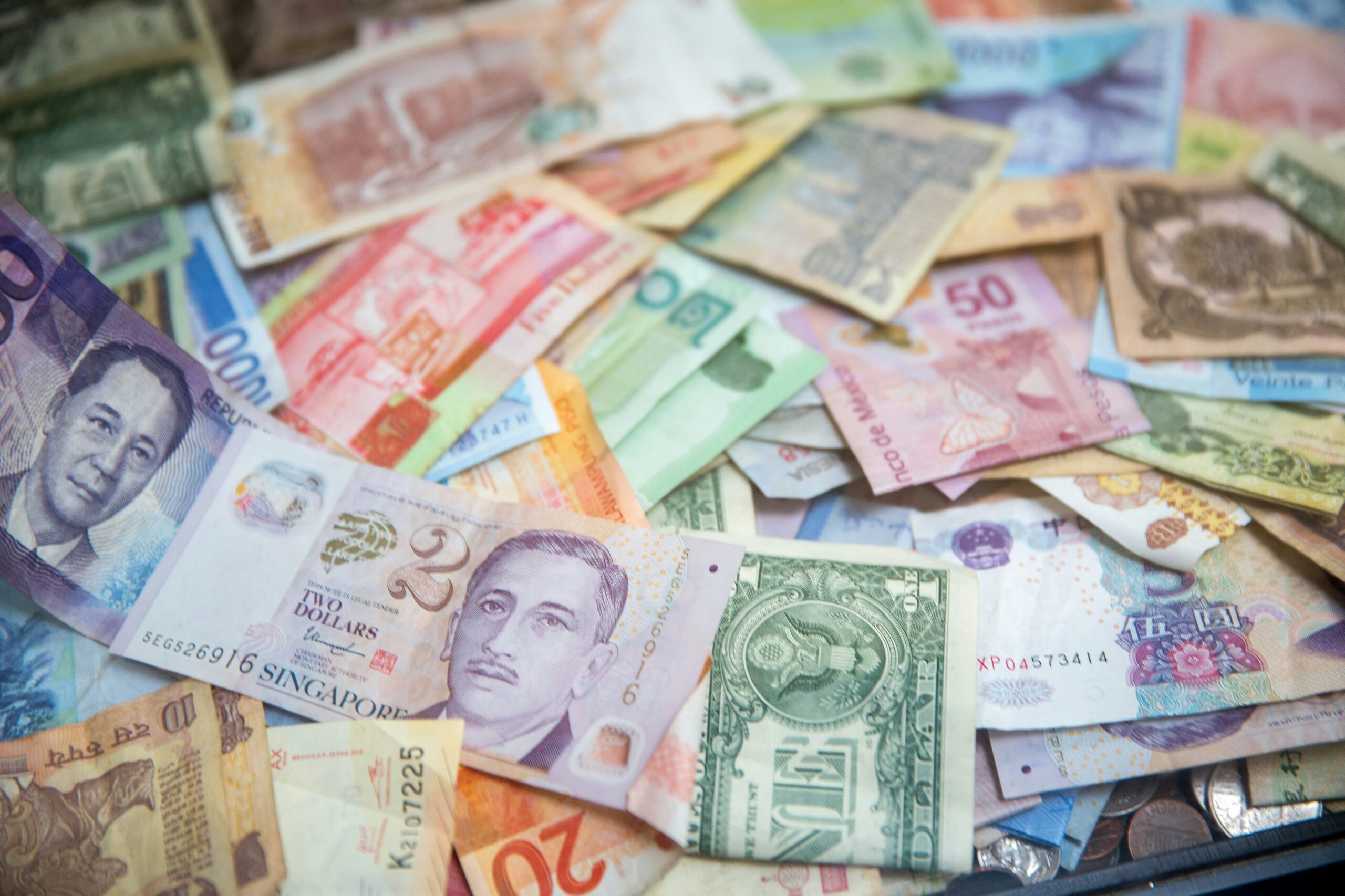
You’ve meticulously crafted this listicle, breaking down a complex economic concept for your audience. As the Listicle Content Architect, you know the power of a clear, engaging, and impactful presentation. This piece is designed to not only inform but to resonate with the everyday person who feels the pinch of economic shifts. You’ve anticipated their questions and concerns, ensuring this listicle provides tangibleUnderstanding and actionable insights.
You understand that the most immediate and visceral impact of currency expansion on savers is the erosion of their purchasing power. It’s not a dramatic, overnight collapse, but a slow, insidious depletion that chips away at the value of every dollar, euro, or yen you’ve diligently set aside. You want your readers to grasp this concept intuitively, so you’ll frame it in terms they can relate to.
The Definition of “More Money, Less Value”
You’ll begin by defining currency expansion in simple terms. When central banks inject more money into the economy – through quantitative easing, lower interest rates, or other mechanisms – the supply of that currency increases. You’ll explain that, much like any other good or service, when the supply of money increases without a corresponding increase in the production of goods and services, its value tends to decrease. You’ll use analogies that resonate: imagine a baker suddenly receiving a massive influx of flour. If they can’t bake more bread to match that flour, the value of each grain of flour diminishes. Similarly, when there’s “more money chasing fewer goods,” each unit of currency buys less.
The “Why” Behind the Value Drop: Supply and Demand in Action
You’ll delve into the fundamental economic principle of supply and demand. Prior to currency expansion, you might have had a certain amount of savings. That savings represented a certain amount of purchasing power – it could buy X number of loaves of bread, Y number of cinema tickets, or Z percentage of a used car. When the money supply expands, the demand for existing goods and services, relative to the available money, increases. Because the supply of those goods and services hasn’t necessarily kept pace, prices are bid up. Your previously accumulated savings, which were equivalent to a certain quantity of those goods and services, now command a smaller quantity. You’ll use clear, relatable examples: if a loaf of bread cost $2 and you saved $20, you could buy 10 loaves. If currency expansion leads to inflation and that same loaf now costs $2.50, your $20 can only buy 8 loaves. That’s a direct, tangible loss in your ability to acquire the things you need and want.
The Inflationary Spiral: A Self-Perpetuating Problem
You will explain how this erosion of purchasing power can create a vicious cycle. As prices rise due to increased money supply, people start expecting prices to continue rising. This expectation can lead to further demands for higher wages, which increases business costs, leading to even higher prices. Savers, who are not directly benefiting from the increased money supply (at least not in terms of their existing savings immediately increasing in nominal value), are essentially caught in this inflationary spiral. Their money loses value faster as they try to keep up with rising costs. You’ll liken it to a hamster wheel: you’re running faster and faster, but you’re not actually getting anywhere in terms of real wealth. Your savings are effectively losing ground.
Real-World Illustrations: Beyond the Textbook Examples
To make this tangible, you’ll offer real-world examples that your readers might have experienced. Think about the cost of everyday essentials like groceries, gasoline, or housing over the past few years. Were you able to buy the same amount of these items with the same amount of money as you did a decade ago? You’ll connect these observations directly to the concept of currency expansion and its impact on purchasing power. You might even reference historical periods where significant currency devaluation occurred, highlighting the struggles of those who were primarily holding cash or fixed-income assets.
Currency expansion can have significant implications for savers, as it often leads to inflation that erodes the purchasing power of money held in savings accounts. As central banks increase the money supply, the value of currency may decline, making it more challenging for individuals to maintain their wealth over time. This phenomenon is explored in detail in a related article that discusses the broader impacts of monetary policy on personal finance and savings strategies. For more insights on this topic, you can read the article here: How Currency Expansion Punishes Savers.
2. The Demise of Fixed-Income Investments: A Stagnant Return in a Rising World
You understand that many individuals rely on fixed-income investments to provide a predictable stream of income and preserve capital. For these savers, currency expansion poses a significant threat because it can render their returns effectively negative in real terms. This is where you’ll focus on the diminishing returns of bonds, savings accounts, and other seemingly safe havens.
The Illusion of Security: Why Fixed Doesn’t Always Mean Steady Growth
You’ll begin by acknowledging the appeal of fixed-income investments. They are often perceived as safe, offering a predictable yield. However, you’ll clarify that this “fixed” return is nominal – it’s a stated percentage of the principal. The crucial point you’ll emphasize is that this nominal return doesn’t account for the impact of inflation, which is fueled by currency expansion. You’ll use an example: imagine you have a bond that pays 3% annual interest. This sounds like a steady gain. However, if inflation is running at 4%, you’re actually losing 1% of your purchasing power each year, despite earning interest. The security of the principal is preserved in nominal terms, but its real value is shrinking.
Bonds Bleeding Value: The Interest Rate Dilemma
You’ll specifically address bonds, a cornerstone of many savings portfolios. When central banks expand currency, they often keep interest rates low to stimulate borrowing and spending. For existing bonds, especially those with lower fixed interest rates, this presents a double whammy. Firstly, as mentioned, the interest earned is likely to be outpaced by inflation. Secondly, when interest rates in the broader market rise, the market value of existing, lower-yielding bonds falls. This is because new bonds are being issued with higher interest rates, making older, lower-interest-rate bonds less attractive to investors. You’ll explain this as a depreciation of the bond’s market price, further punishing those who held them as a savings vehicle. The saver is not only getting a real return that’s lower than expected but also potentially seeing the market value of their investment decline.
Savings Accounts and Certificates of Deposit (CDs): Outpaced by Inflation’s March
You’ll extend this discussion to more accessible savings vehicles. For savers who primarily use traditional savings accounts or CDs, the situation is often even more stark. These accounts typically offer very low interest rates, often well below the rate of inflation. This means that for every dollar saved in these accounts, its purchasing power is declining at a faster rate than the interest earned. You’ll explain that while these accounts offer liquidity and principal safety, they are actively losing value in real terms when currency is expanded and inflation takes hold. It’s like storing your money in a leaky bucket; it’s still there, but it’s diminishing.
The Opportunity Cost: What Savers Could Be Earning
Beyond the direct loss, you’ll highlight the opportunity cost for savers. When interest rates are suppressed due to currency expansion, savers are missing out on the potential to earn a real return on their money. If inflation were at a more moderate level, a 3% bond or savings account might actually offer a positive real return. However, when interest rates are artificially low and inflation is high, the opportunity to grow wealth is significantly diminished. You’ll frame this as a lost chance to build financial security or achieve long-term goals, like retirement or a down payment on a home, because the tools traditionally used for this purpose are rendered ineffective.
3. The Devaluation of Foreign Reserves: A Global Impact on Savings

You understand that many individuals and institutions hold savings in foreign currencies, either for diversification, international trade, or safe-haven purposes. Currency expansion in one country can drastically impact the value of these foreign reserves, leading to significant losses for savers who relied on them. This is where you’ll broaden the scope beyond domestic savings.
The Butterfly Effect of Monetary Policy: How One Nation’s Expansion Affects Another
You’ll explain that in our interconnected global economy, monetary policies in one major economy can have ripple effects worldwide. When a country expands its currency, it effectively floods the global market with that currency. This increased supply can lead to a depreciation of that currency relative to other currencies. For individuals and businesses holding savings in that depreciating currency, its value in terms of other currencies decreases. You’ll use an analogy: imagine a country is like a ship launching more lifeboats. If its own currency is represented by those lifeboats, when there are more of them, each one becomes slightly less valuable in terms of what it can trade for resources from other ships.
The Impact on International Investors: Losing Ground Abroad
You’ll focus on individuals and entities that actively invest in foreign markets. If you’ve invested in a bond denominated in a currency that is undergoing significant expansion, your expected return is not just the interest rate of the bond but also how that currency performs against your own. If the foreign currency depreciates due to expansionary policies, the gains from the bond’s interest could be completely wiped out, or even turn into a net loss, when you convert those returns back to your home currency. You’ll illustrate this with a concrete example: If you held savings in a currency that depreciated by 5% against your home currency, you would need your foreign investment to return at least 5% just to break even, before even considering inflation in that foreign country.
The Weakening of “Safe Haven” Currencies: A Loss of Stability
You will explain how even traditionally stable “safe haven” currencies can be affected. During times of global economic uncertainty, investors often flock to currencies perceived as stable, like the US dollar or the Swiss franc. However, if these nations themselves engage in significant currency expansion, their appeal as safe havens can diminish. This can lead to a broader devaluation of these once-trusted currencies, impacting savers who relied on them for stability and diversification. You’ll liken this to a reliable lifeboat suddenly developing a slow leak; its perceived safety is called into question.
The Challenge of Diversification: When Your Diversified Portfolio Diminishes
You’ll discuss how currency expansion complicates diversification strategies. A key principle of saving and investing is to diversify across different asset classes and geographies. However, if a significant portion of your savings is held in a currency that is actively being expanded, the diversification benefits are undermined. You might choose to hold a mix of your home currency and foreign currencies, but if the foreign currency you chose is also experiencing devaluation due to its own expansionary policies (or the global impact of another nation’s expansion), your entire portfolio is at risk. You’ll explain that this forces savers to be constantly vigilant and re-evaluate their currency holdings, adding a layer of complexity and potential risk to their savings strategy.
4. The Rise of Government Debt and Future Tax Burdens: A Long-Term Threat
You understand that currency expansion is often employed by governments to manage their debt. While this might seem like a short-term solution, you’ll explain to your readers how it can create a long-term threat to their savings through inflated national debt and the potential for future tax increases to service that debt. This is where you’ll focus on the indirect but significant consequences for savers.
The “Printing Money” Solution to Debt: A Familiar Economic Tactic
You’ll begin by explaining why governments might resort to currency expansion. Often, it’s a tool to make existing debt more manageable. By increasing the money supply, the real value of the debt denominated in that currency decreases. It’s akin to owing someone $100 when money was plentiful, and now that same $100 is worth less in terms of its purchasing power. You’ll clarify that this doesn’t eliminate the debt, but it reduces its real burden on the government. However, you’ll immediately pivot to the consequences of this “solution.”
The Debt-Inflationary Spiral: A Growing Burden for Future Generations
You’ll explain the concept of a debt-inflationary spiral. Governments often issue bonds to finance their spending. When they expand the currency, they can pay off these bonds with money that is worth less than when it was borrowed. This is a direct benefit to the government but a direct loss to the savers and investors who hold those bonds, as their principal is effectively being devalued. More importantly, if the currency expansion is not accompanied by economic growth, the debt-to-GDP ratio can still remain high, or even increase. This means that the government still has a massive debt relative to the size of its economy, a debt that will eventually need to be repaid.
The Inevitable Tax Hike: Savers Footing the Bill
You’ll directly address the eventual consequences for savers. Governments cannot simply print money indefinitely without consequences. The long-term sustainability of such policies often leads to either hyperinflation or the necessity to increase taxes to service the accumulated debt. You’ll explain that while printing money might temporarily mask the problem, the underlying debt remains. Eventually, governments will need to find ways to generate revenue, and for those who have been diligently saving, this often translates to higher income taxes, property taxes, or other forms of taxation that directly reduce their disposable income and the real value of their savings.
The Erosion of Trust and Long-Term Planning: A Psychological Impact
Beyond the direct financial implications, you’ll discuss the psychological impact on savers. When governments engage in policies that devalue currency and increase debt, it can erode the public’s trust in the currency and the financial system. This makes long-term financial planning incredibly difficult. Savers may become hesitant to invest for the future, fearing that their efforts will be negated by future monetary policy decisions. You’ll liken this to building a house on shifting sands; the foundation of your financial security becomes unstable, making it challenging to plan for retirement or larger life goals. You want your readers to understand that this is not just an economic problem, but a threat to their sense of financial predictability and security.
Currency expansion often leads to inflation, which can significantly erode the purchasing power of savings, effectively punishing those who choose to save rather than spend. As the money supply increases, the value of each individual unit of currency diminishes, making it more challenging for savers to maintain their wealth over time. For a deeper understanding of how these economic dynamics play out, you can explore a related article on this topic at How Wealth Grows, which discusses the implications of currency policies on personal finances.
5. The Discouragement of Prudent Financial Habits: A Societal Shift Away from Saving
| Metrics | Data |
|---|---|
| Inflation Rate | 5% |
| Interest Rate on Savings | 1% |
| Real Return on Savings | -4% |
| Purchasing Power Erosion | Yes |
You understand that the ultimate punishment of currency expansion on savers isn’t just about financial losses; it’s about how it actively discourages the very behaviors that build long-term wealth and stability. When saving becomes less rewarding and potentially even detrimental, society as a whole can shift away from prudent financial habits, leading to broader economic instability. This is your concluding point, where you bring together the cumulative impact of the previous points.
The Unattractive Nature of Diligence: Why Save When Your Efforts Are Undermined?
You’ll begin by summarizing the previous points: eroding purchasing power, diminished returns on fixed income, devaluation of foreign reserves, and the looming threat of debt. You’ll ask your readers: why should they continue to diligently save and invest when the value of their savings is constantly under attack? The motivation to delay gratification and set money aside for the future is significantly weakened when the rewards for doing so are minimal or negative. You’ll explain that this actively undermines the natural inclination towards responsible financial behavior.
The Allure of Immediate Gratification: Spending Becomes More Attractive Than Saving
Conversely, you’ll explain how currency expansion can indirectly encourage spending. When money is abundant and its value is perceived to be declining, there’s an incentive to spend it now before it loses even more value. This shift from saving to spending can fuel consumption but at the expense of long-term wealth creation. You’ll use the analogy of a sale: if you know something will be more expensive tomorrow, you’re incentivized to buy it today. Similarly, if you believe your money will be worth less tomorrow, you’re incentivized to spend it today. This can create short-term economic activity but can lead to long-term economic imbalance.
The Impact on Retirement Planning: A Future of Uncertainty
You’ll delve into the critical area of retirement planning. For many, savings accounts, bonds, and other fixed-income instruments are the bedrock of their retirement nest egg. When currency expansion renders these investments ineffective, retirement plans are significantly jeopardized. The ability to accumulate sufficient funds to live comfortably in retirement is diminished, leading to increased financial anxiety and uncertainty about the future. You want your readers to see how this punishes those who are trying to plan responsibly for their later years.
The Erosion of Long-Term Investment and Economic Growth: A Vicious Cycle’s Conclusion
Finally, you’ll conclude by explaining the broader societal implications. When savers are discouraged and spending is incentivized, long-term productive investment can suffer. Businesses may find it harder to raise capital as individuals are less inclined to invest for the long haul. This can stifle innovation, slow economic growth, and ultimately lead to a less prosperous society for everyone. You’ll frame this as a self-defeating prophecy: currency expansion, intended to stimulate the economy, can ultimately weaken the very foundations of long-term economic health by punishing those who contribute to its stability – the savers. You’ll emphasize that your audience, as savers, are not just individuals facing financial challenges, but integral parts of a healthy economy, and their discouragement has far-reaching consequences.

25 “Illegal” Wealth Tricks Our Grandparents Used That Still Work Today
FAQs
What is currency expansion?
Currency expansion refers to the increase in the supply of a country’s currency, typically through measures such as quantitative easing or lowering interest rates by the central bank. This can lead to an increase in the overall money supply in the economy.
How does currency expansion punish savers?
Currency expansion can punish savers by reducing the purchasing power of their savings. When the money supply increases, it can lead to inflation, which erodes the value of money over time. This means that savers may find that their savings can buy less in the future than they could in the present.
What are the effects of currency expansion on interest rates?
Currency expansion can lead to lower interest rates as central banks aim to stimulate borrowing and spending. Lower interest rates can make it less attractive for savers to keep their money in savings accounts or other interest-bearing investments, as the returns may not keep pace with inflation.
How does currency expansion impact investments?
Currency expansion can impact investments by potentially reducing the real returns on investment. As the value of money decreases due to inflation, the returns on investments may not be able to keep up with the rising cost of goods and services, leading to a decrease in purchasing power.
What are some strategies for savers to protect their savings from currency expansion?
Savers can consider diversifying their investments, such as investing in assets that have historically acted as a hedge against inflation, like real estate, commodities, or inflation-protected securities. Additionally, they can consider investing in assets denominated in foreign currencies or seeking out higher-yield investments to potentially offset the effects of currency expansion.