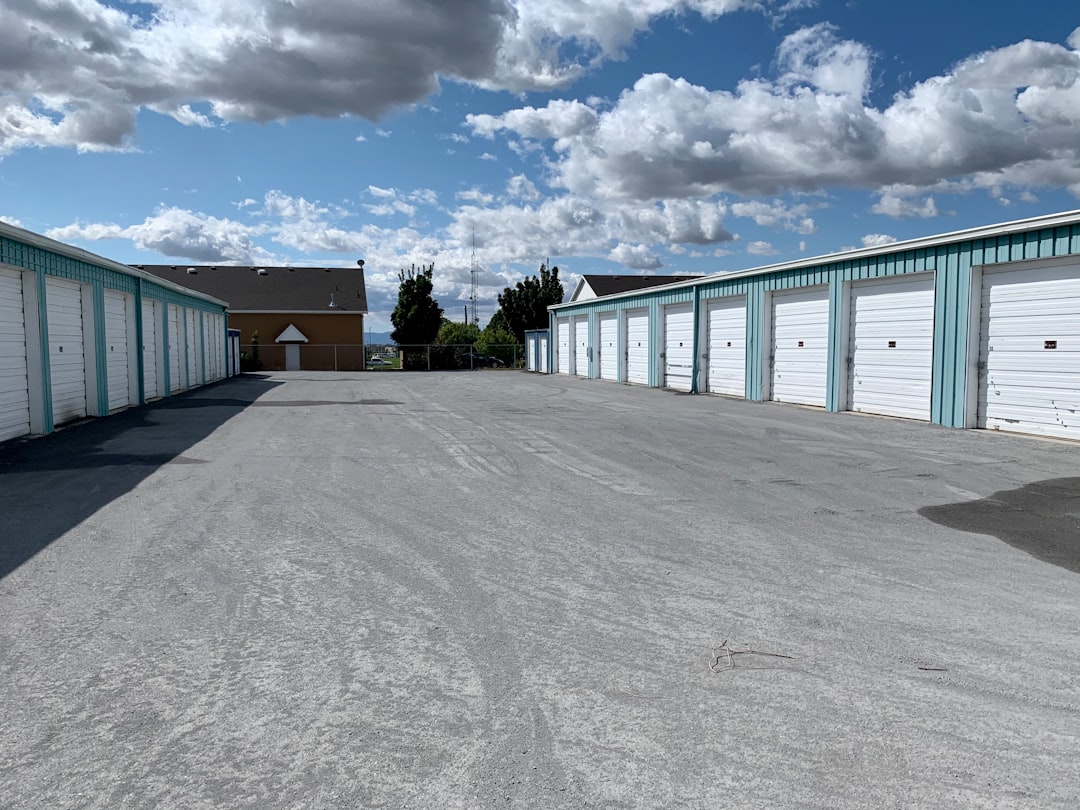
You’re standing on the cusp of a major shift in the real estate landscape, and it’s happening in a place you might not have initially considered a financial powerhouse: the self-storage unit. For years, self-storage was the unglamorous workhorse, a place for people to stash their overflow, their seasonal decorations, or the possessions accumulated during life’s transitions. But recently, this humble sector has caught the discerning eye of institutional investors, and their deep pockets are acting as a powerful engine, driving unprecedented growth. You’re witnessing a transformation, a metamorphosis from a niche service to a legitimate and increasingly attractive asset class.
The traditional image of a self-storage facility might conjure up a lone landlord managing a few rows of metal doors. This picture is rapidly becoming obsolete. The influx of institutional capital – money from pension funds, real estate investment trusts (REITs), private equity firms, and even sovereign wealth funds – has fundamentally altered the construction, management, and perception of self-storage. These aren’t just scattering a few dollars; they are deploying significant capital, often in the tens or hundreds of millions, to acquire, develop, and modernize facilities across the globe. You are seeing the deliberate hand of sophisticated financial architects at work, carefully designing a future for this once-overlooked sector.
The Allure of Predictability: Why Institutions Are Drawn to Self Storage
Institutions seek stability and predictable returns, and self-storage, in its essence, offers just that. Unlike more volatile sectors like retail or office space, which are subject to the vagaries of economic cycles and changing consumer habits, self-storage demand tends to be relatively inelastic. People need storage during good times (downsizing, moving) and bad times (job loss, divorce). This resilience makes it an attractive haven for capital seeking a steady, consistent income stream.
The “Recession-Resistant” Repertoire
The argument for self-storage as a recession-resistant asset is compelling. When economic downturns hit, consumers often downsize their homes to save money, leading to an increased need for off-site storage. Conversely, during periods of economic expansion and population growth, people often acquire more possessions, again fueling demand. This dual-demand driver creates a bedrock of stability that institutional investors find highly reassuring. Think of it as a sturdy ship that can weather various economic storms, offering a safe harbor for your investment.
Ancillary Revenue Streams: More Than Just Metal Doors
While rent from storage units forms the core revenue, institutional investors are adept at identifying and capitalizing on ancillary income streams. This includes the sale of locks, moving supplies, truck rentals (often through partnerships), and even insurance. These additional revenue sources act as sweeteners, boosting the overall profitability of a property and further solidifying its appeal to sophisticated investors.
Modernization and Expansion: The Institutional Touch on Facilities
Institutional investment isn’t just about buying existing facilities; it’s about transforming them. You’re observing a significant wave of modernization, as investors inject capital into upgrading older properties and developing state-of-the-art facilities. This includes enhanced security features like advanced surveillance systems, access control, and climate-controlled units, which cater to a growing demand for protecting sensitive items.
State-of-the-Art Development: Building for the Future
Private equity and REITs are actively involved in ground-up development projects. These new facilities are designed with efficiency, technology, and customer experience in mind. This often means larger, more accessible locations, greater integration of technology for bookings and access, and a more professional branding and marketing approach. You are witnessing the creation of a new generation of self-storage, built with a forward-thinking vision.
The “Smart Storage” Revolution
Technology is playing a pivotal role. Investors are driving the adoption of “smart storage” solutions. This includes features like app-based unit access, online rental and payment portals, and automated customer service. These technological advancements not only improve operational efficiency but also enhance the customer experience, making self-storage more convenient and accessible than ever before.
Scale and Consolidation: The Rise of the Self-Storage Giants
One of the most significant impacts of institutional investment is the drive towards consolidation. Large investment firms are acquiring multiple smaller operators and individual facilities, creating vast portfolios under single management. This consolidation leads to economies of scale in procurement, marketing, and operational management, driving down costs and increasing profitability. You’re seeing the landscape being reshaped, with larger players emerging and dominating.
The Power of Portfolio Diversification
For institutions, acquiring a diversified portfolio of self-storage facilities across different geographic locations and market segments offers a powerful way to mitigate risk. If one region experiences an economic downturn, strong performance in other areas can offset potential losses. This diversification strategy is a cornerstone of institutional investment philosophy.
Centralized Management and Operational Efficiencies
The consolidation facilitated by institutional capital allows for the implementation of centralized management systems. This means standardized operating procedures, consistent branding, and streamlined administrative functions. This professionalization of the industry leads to greater efficiency and a more predictable operational model, a key attraction for large-scale investors.
The Investor’s Toolkit: Strategies for Self-Storage Investments
Institutional investors employ various strategies to gain exposure to the self-storage sector. These range from direct property acquisitions to investing in publicly traded REITs that specialize in self-storage. Each approach offers distinct advantages and risk profiles.
Direct Property Acquisition: Owning the Bricks and Mortar
This involves large-scale purchases of existing self-storage facilities or portfolios of facilities. Institutions might also acquire land for new development. This offers direct control over the asset and its operational management.
Due Diligence: A Deep Dive into the Numbers and the Ground
Before any capital is deployed, rigorous due diligence is paramount. Investors scrutinize occupancy rates, rental income, operating expenses, market demographics, and competitive landscapes. They also assess the physical condition of properties and the potential for value-add through renovations or expansions.
Real Estate Investment Trusts (REITs): A Publicly Traded Pathway
Investing in self-storage REITs provides an indirect way to participate in the sector’s growth. These companies own and operate large portfolios of self-storage facilities and are traded on public stock exchanges. This offers liquidity and diversification for investors.
The REIT Advantage: Diversification and Liquidity
REITs allow you to gain exposure to a diversified portfolio of self-storage assets without the complexities of direct property ownership. Their public trading also provides liquidity, meaning you can easily buy and sell shares.
Private Equity Funds: Tailored Investment Vehicles
Private equity firms often raise capital from institutional investors to form dedicated self-storage funds. These funds then pursue specific investment strategies, such as acquiring distressed assets, developing new facilities, or consolidating smaller operators.
Fund Structure: Pooling Capital for Strategic Acquisitions
These funds pool capital from various institutional sources, allowing for larger transactions and more strategic investment approaches than an individual investor might undertake.
The Future Outlook: Continued Growth on the Horizon
The trends driven by institutional investment suggest that self-storage growth is far from over. The sector’s inherent resilience, coupled with the ongoing professionalization and modernization fueled by significant capital, positions it for sustained expansion. You can anticipate continued development, further consolidation, and an increasingly sophisticated operational landscape.
Demographic Shifts: A Growing Need for Space
Aging populations, smaller household sizes, and increasing urbanization all contribute to a greater demand for self-storage. As people downsize or move, their existing possessions need a new home.
E-commerce’s Unintended Consequences: The Storage Surplus
The boom in e-commerce has also had an indirect impact. While it has led to less need for physical retail space, it has also increased the volume of goods being manufactured and distributed. This can translate into a greater need for storage at various points in the supply chain, including by businesses that utilize self-storage for inventory management.
Inflation Hedging: A Tangible Asset in Uncertain Times
In an environment of economic uncertainty and inflation, tangible assets like real estate, including self-storage, can be seen as a hedge against declining purchasing power. Properties offer a physical asset whose value may appreciate over time.
In conclusion, the story of self-storage’s growth is no longer one of quiet accumulation but of strategic expansion, powered by the determined capital of institutional investors. You are witnessing a profound evolution, where a once-humble service has ascended to a significant player in the real estate investment arena. The steady hands of these financial architects are shaping a future for self-storage that is more professional, more technologically advanced, and poised for continued prosperity.
FAQs
What is institutional investment in self storage?
Institutional investment in self storage refers to the allocation of capital by large entities such as pension funds, insurance companies, and real estate investment trusts (REITs) into self storage facilities. These investors seek stable, long-term returns by owning or financing self storage properties.
Why is self storage attractive to institutional investors?
Self storage is attractive to institutional investors because it typically offers steady cash flow, low operating costs, and resilience during economic downturns. The sector benefits from growing demand due to urbanization, downsizing trends, and increased consumer mobility.
How do institutional investors typically invest in self storage?
Institutional investors may invest in self storage through direct property acquisitions, joint ventures, real estate investment trusts (REITs) specializing in self storage, or by providing debt financing to self storage operators.
What are the risks associated with institutional investment in self storage?
Risks include market saturation, changes in local zoning laws, economic downturns affecting occupancy rates, and competition from new developments. Additionally, operational risks such as management inefficiencies can impact returns.
How has institutional investment impacted the self storage industry?
Institutional investment has led to increased professionalization, larger-scale developments, and improved management practices in the self storage industry. It has also contributed to market consolidation and the expansion of branded self storage chains.