
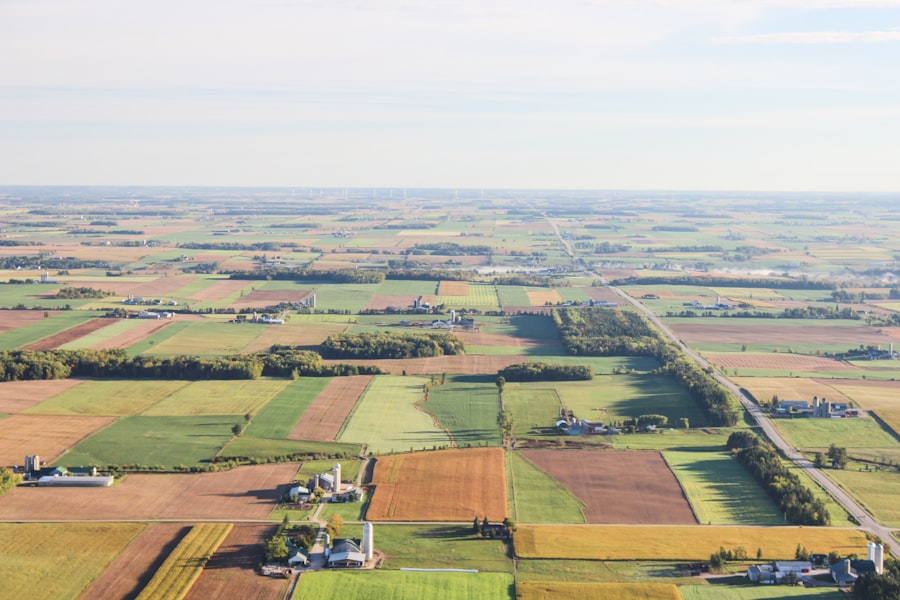
You stand at the edge of a vast, sun-drenched field, the soil beneath your feet a rich tapestry of life. This land, for generations, has been the bedrock of families, a source of sustenance, and a tangible connection to the earth. But a new force is entering this timeless landscape, one measured not in bushels and harvests, but in dollars and cents: the financialization of farmland. You might have heard whispers, seen headlines, or even felt a subtle shift in the air, a growing unease about who truly owns the breadbasket of nations. This is the story of Wall Street’s increasingly significant impact on the land that feeds you.
For centuries, farmland was primarily held by individuals and families. It was a legacy passed down through generations, a physical asset tied to tangible production. The farmer, with dirt under their fingernails and sweat on their brow, was the steward of the land. This model, while not without its challenges, fostered a deep understanding of the soil, the seasons, and the long-term health of the agricultural ecosystem. You could trace ownership back, understand its history, and feel a sense of continuity.
The Evolution of Agricultural Ownership
You can see the gradual transformation taking place. The rise of industrial agriculture, with its demand for larger scale operations and sophisticated machinery, began to put pressure on smaller family farms. This created opportunities for consolidation, drawing in external capital. The traditional image of the lone farmer working their land, while still prevalent, began to be supplemented by a more complex ownership structure.
The Rise of the Institutional Investor
Enter the world of high finance. Institutional investors – pension funds, sovereign wealth funds, endowments, and private equity firms – began to view farmland not just as a place to grow food, but as an alternative asset class. They saw its potential for stable, long-term returns, its resilience in inflationary periods, and its perceived stability compared to more volatile financial markets. For them, farmland became another stock in their portfolio, another piece on the global chessboard. You might wonder if their primary concern is yield in terms of crops or yield in terms of profit.
The financialization of farmland has become a significant topic of discussion as Wall Street increasingly turns its attention to agricultural investments. This trend raises questions about the implications for food security and local economies. For a deeper understanding of how these dynamics are evolving, you can read a related article that explores the intersection of finance and agriculture. Check it out here: How Wealth Grows.
The Mechanics of Financialization: How Wall Street Plows In
The integration of Wall Street into agriculture is not a simple matter of direct land purchase by individuals in suits. It’s a complex web of investment vehicles and strategies. These entities often operate through intermediaries, forming landholding companies, agricultural funds, and other specialized investment structures. Their capital provides a powerful engine, capable of acquiring vast tracts of land at speeds and scales that individual farmers often cannot match.
Agricultural Funds and Real Estate Investment Trusts (REITs)
You are likely to encounter terms like Agricultural REITs or farmland investment funds. These are essentially collective investment schemes. Investors pool their money, and the fund managers then use this capital to acquire and manage farmland. They might lease this land back to farmers, or they might employ farm management companies to operate the farms directly. This professionalization of land management can bring efficiencies, but it also introduces a layer of detachment between the day-to-day realities of farming and the ultimate financial goals.
Private Equity and Venture Capital in Agribusiness
Beyond land ownership, private equity and venture capital firms are also investing heavily in agricultural technology, supply chains, and other agribusiness segments. This broader financial influence can shape the entire agricultural landscape, from the seeds you see planted to the food that reaches your plate. It’s like the invisible hand of the market reaching into every corner of the food system.
Debt and Leverage in Farmland Acquisition
Financial institutions also play a crucial role through financing. They provide loans and other forms of credit for large-scale farmland acquisitions, further amplifying the capital available for these deals. This leverage allows for greater control and larger investments, but it also introduces the risk of defaults and the potential for financial distress to ripple through the agricultural sector. You can imagine the pressure this can put on farmers seeking to expand or maintain their operations.
The “Why”: Motivations Behind Financialization
So, why are these financial titans so eager to get their hands on your farmland? The motivations are multifaceted, driven by a confluence of economic factors and strategic considerations. Understanding these drivers is key to comprehending the broader implications for agriculture. You need to look beyond the surface and see the underlying currents.
Seeking Stable, Long-Term Returns
Farmland, in theory, offers a hedge against inflation and a relatively stable income stream through rent or crop sales. Unlike stock markets that can swing wildly, land is a tangible asset that generally holds its value and can appreciate over time. For investors with long time horizons, like pension funds managing money for future retirees, this stability is highly attractive. It’s a quiet, predictable promise of returns.
Diversification of Investment Portfolios
Institutional investors constantly seek to diversify their portfolios to mitigate risk. When traditional assets like stocks and bonds become correlated or experience downturns, alternative assets like farmland can offer a buffer. This diversification strategy can be seen as prudent financial management, but it also means that farmland’s fate can become intertwined with the volatile dynamics of global finance. You might be eating food produced on land whose rent is dictated by the price of oil or interest rates on Wall Street.
The Growing Global Demand for Food
The world’s population is growing, and with it, the demand for food. This demographic shift presents a long-term, fundamental driver for agricultural production. Financial institutions recognize this inexorable trend and see farmland as a way to capitalize on this sustained demand. It’s a bet on humanity’s perpetual need to eat.
Exploiting Perceived Inefficiencies
Some financial players may also see opportunities to exploit perceived inefficiencies in traditional farming practices. Through economies of scale, optimized resource management, and the application of technology, they believe they can increase productivity and profitability on farmland they acquire. This can lead to a focus on maximizing short-term gains, sometimes at the expense of long-term soil health or traditional farming methods. It’s like a surgical team entering to optimize, but you worry about the scalpel being too sharp.
Consequences and Concerns: Ripples in the Agricultural Pond

The influx of Wall Street capital into farmland is not a cost-free transaction. It creates a cascade of consequences, some beneficial, but many raising significant concerns for farmers, rural communities, and the future of food production. You need to consider the wider ecosystem.
Impact on Farmer Land Access and Affordability
Perhaps the most immediate concern for many farmers is the increased competition for land. Large institutional buyers have significant purchasing power, driving up land prices. This can make it incredibly difficult for new or young farmers to acquire land, perpetuating a cycle of reliance on renting or facing insurmountable debt. Access to land, the very foundation of farming, becomes a privilege rather than an accessible opportunity. It’s like the price of admission to the farmer’s club skyrocketing.
Shifting Farming Practices and Priorities
When the primary stakeholder is focused on financial returns, farming practices can shift. There might be an increased emphasis on monoculture, intensive use of inputs, and a reduced focus on biodiversity or long-term ecological sustainability. The land can become a profit-generating machine, rather than a living system understood and nurtured over generations. The gentle hum of the farm might be drowned out by the relentless ticking of financial targets.
Rural Community Dynamics and Displacement
The consolidation of farmland into large, often absentee-owned holdings can alter the fabric of rural communities. Local businesses that once supported a multitude of independent farmers might struggle. The sense of community ownership and shared responsibility can erode when land is primarily managed by distant corporations with no direct ties to the locality. You might see a hollowing out of the very heart of these places.
Food Security and Concentration of Power
A significant concern is the potential for increased concentration of power within the food system. When a few large financial entities control vast amounts of agricultural land, they gain considerable leverage over food production and pricing. This raises questions about food security and the potential for these entities to prioritize market forces over broader societal needs. It’s like handing the keys to the pantry to a select few.
The increasing influence of Wall Street on agriculture has sparked significant debate, particularly regarding the financialization of farmland. This trend sees large investment firms acquiring agricultural land, often prioritizing profit over sustainable farming practices. A related article discusses how this shift impacts local farmers and food production systems, highlighting the broader implications for food security and rural economies. For more insights on this topic, you can read the article on how wealth grows by following this link.
Navigating the Future: Towards a More Equitable Harvest
| Metric | Value | Year | Notes |
|---|---|---|---|
| Percentage of US Farmland Owned by Institutional Investors | 2.3% | 2023 | Includes pension funds, private equity, and real estate investment trusts |
| Total Value of Farmland Assets Managed by Wall Street Firms | 80 billion | 2023 | Estimated market value of farmland under financial management |
| Average Annual Return on Farmland Investments | 9.5% | 2020-2023 | Includes rental income and appreciation |
| Growth Rate of Farmland Investment Funds | 12% | 2018-2023 | Compound annual growth rate of farmland-focused investment funds |
| Percentage Increase in Farmland Prices Attributed to Financialization | 25% | 2010-2023 | Estimated impact of financial investment on farmland price inflation |
| Number of Farmland Investment Funds Launched | 15 | 2020-2023 | New funds focused on agricultural land acquisition |
The financialization of farmland is a complex phenomenon with no easy answers. However, acknowledging its existence and its potential impacts is the first step towards navigating a future where agriculture remains both economically viable and ecologically sustainable, serving the needs of all, not just the bottom line of financial institutions. It’s about finding a balance in the field.
Policy and Regulatory Considerations
You might consider the role of government policy in shaping this landscape. Regulations around foreign ownership of farmland, support for beginning farmers, and incentives for sustainable land management practices could all play a role in mitigating some of the negative consequences of financialization. It’s about establishing guardrails on this new frontier.
Strengthening Farmer Cooperatives and Community Land Trusts
Empowering farmers through strong cooperatives and exploring community land trust models can provide alternative pathways to land ownership and stewardship. These models can prioritize long-term sustainability and community benefit over shareholder profits, creating more resilient agricultural systems. It’s about building a different kind of harvest.
Consumer Awareness and Support for Sustainable Agriculture
As consumers, you have a role to play. By supporting farmers who prioritize sustainable practices, by understanding the origins of your food, and by advocating for policies that protect agricultural land for future generations, you can contribute to a more equitable and secure food system. Your choices at the grocery store, your voice in the community, can be powerful tools. It’s about tending to your own plot in this larger garden.
FAQs
What does financialization of farmland mean?
Financialization of farmland refers to the process by which agricultural land is increasingly treated as a financial asset. This involves investment firms, hedge funds, and other financial institutions buying farmland primarily for profit, often through mechanisms like farmland investment funds, rather than for traditional farming purposes.
How has Wall Street influenced the financialization of farmland?
Wall Street has influenced the financialization of farmland by channeling large amounts of capital into farmland investments. Institutional investors view farmland as a stable, long-term asset that can provide returns through land appreciation, rental income, and agricultural commodity prices, leading to increased farmland acquisitions by financial entities.
What are the potential impacts of financialization on farmers?
Financialization can lead to higher land prices, making it more difficult for small and family farmers to purchase or lease farmland. It may also shift land management priorities toward maximizing financial returns rather than sustainable farming practices, potentially affecting local communities and food production.
Is farmland investment considered a safe asset by investors?
Yes, many investors consider farmland a relatively safe and stable asset because it is a tangible resource with intrinsic value, often less volatile than stocks or bonds. Farmland can generate steady income through leases and tends to appreciate over time, making it attractive for portfolio diversification.
What regulations exist regarding financial investment in farmland?
Regulations vary by country and region but generally include restrictions on foreign ownership, land use, and environmental protections. In some places, governments monitor or limit the extent of financial ownership to protect local farmers and ensure food security, though regulatory frameworks are evolving in response to increasing financialization.