
You stand at a precipice, gazing into the chasm of an evolving economic landscape. The winds of change howl around you, carrying with them the faint, metallic scent of automation. This isn’t a distant phenomenon; it’s a encroaching tide, a force poised to reshape the very foundations of your professional world. You’ve heard the whispers, read the headlines, perhaps even dismissed them as sensationalism. However, a deeper examination reveals a more nuanced, and potentially more troubling, reality. The narrative of “automation creating new jobs” often overshadows the stark truth: many existing roles are in the crosshairs, and your complacency could leave you adrift in the wake of this technological revolution.
You might imagine robots as humanoid figures, clunky and easily distinguishable from your co-workers. This romanticized view, fueled by science fiction, obscures the more insidious and widespread nature of modern automation. It’s not just about a mechanical arm welding car parts; it’s about sophisticated algorithms analyzing data faster than any human, intricate software performing tasks with unerring accuracy, and interconnected systems optimizing processes you once considered uniquely human. Ensuring job security is a top priority for many employees in today’s economy.
From Assembly Lines to Algorithms: A Historical Perspective
Consider the Luddite movement, a historic resistance to textile machinery in the early 19th century. You might view their fear as antiquated, a knee-jerk reaction to progress. Yet, their concerns mirror, in essence, the apprehension felt today. Just as power looms displaced skilled weavers, advanced artificial intelligence (AI) is now poised to displace knowledge workers. The difference? The scope and speed of this transformation are unprecedented. You are not witnessing a gradual evolution, but a rapid acceleration.
The Rise of the Automated Office
Think of your own workplace. How many tasks are repetitive? How many decisions are made based on readily available data? These are the fertile grounds for automation. Software bots now handle invoice processing, customer service inquiries (via chatbots), data entry, and even basic legal research. You might find yourself collaborating with, or even being managed by, algorithms designed for efficiency and optimization. The human element, once considered irreplaceable, is increasingly being framed as a potential bottleneck.
As automation continues to advance, concerns about its impact on the job market are becoming increasingly prevalent. A related article discusses the potential consequences of automation replacing jobs, highlighting the need for workers to adapt to a rapidly changing landscape. For more insights on this critical issue, you can read the article at How Wealth Grows.
Professions Under Siege: A Disquieting Inventory
You may feel secure in your chosen profession, believing its complexities or human-centric nature render it immune to robotic intrusion. This perception, unfortunately, is often a mirage. Automation’s tentacles are long and adaptable, reaching into sectors you might least expect.
Blue-Collar Professions: The Initial Wave
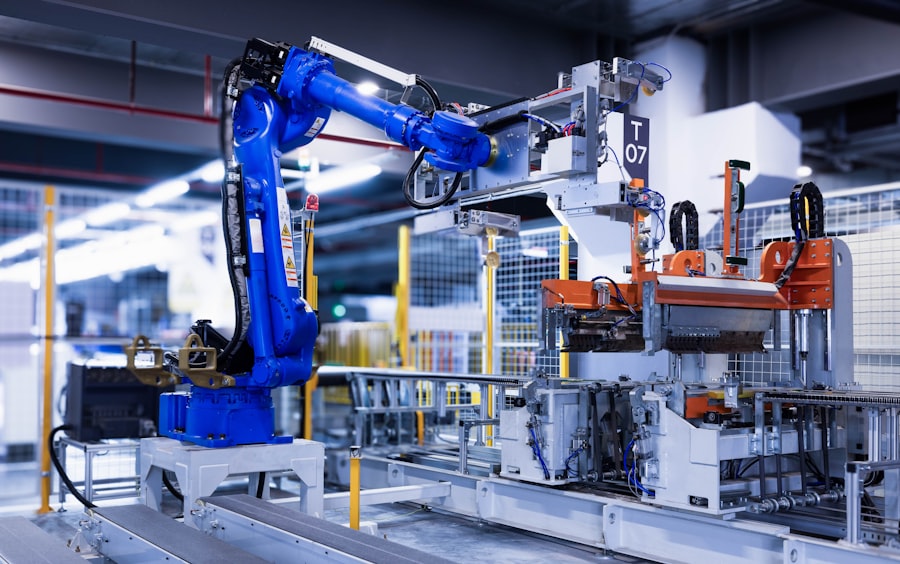
For years, you’ve witnessed the automation of manufacturing plants. Robotic arms meticulously assemble components, improving accuracy and speed while reducing labor costs. Beyond the factory floor, you see self-driving trucks and delivery drones on the horizon, threatening the livelihoods of professional drivers. Warehouse workers are increasingly finding their roles augmented, and eventually replaced, by intelligent sorting and retrieval systems. The physical demands of these jobs, once a barrier to mechanization, are now precisely why they are prime targets for robotic solutions.
White-Collar Professions: The Lesser-Known Front
This is where the paradigm shift becomes more unsettling for many. You may have scoffed at the idea of a robot replacing your accountant, your lawyer, or even your doctor. Yet, specialized AI is already performing tasks traditionally reserved for these highly skilled professions.
Legal Eagles and Automated Briefs
Legal document review, once a time-consuming and expensive endeavor for junior lawyers, is now significantly expedited by AI that can identify relevant precedents and clauses with remarkable speed and accuracy. While complex legal strategy still requires human intellect, many foundational tasks are ripe for automation, potentially narrowing the entry points for new legal professionals.
Financial Forecasting and Algorithmic Trading
In finance, algorithmic trading already dominates a significant portion of market transactions, executing trades based on complex algorithms and vast data analysis. Furthermore, AI-powered financial advisors are emerging, offering personalized investment recommendations at a fraction of the cost of human advisors. Your financial planner might soon find themselves competing with an algorithm.
Medical Diagnostics and Predictive Analytics
Even in medicine, a field built on human empathy and expertise, automation is making inroads. AI is proving adept at analyzing medical images (X-rays, MRIs) to detect anomalies, often with greater accuracy than human radiologists. Predictive analytics can identify patients at risk of certain diseases, allowing for earlier, more targeted interventions. While the human doctor-patient relationship remains crucial, the diagnostic and analytical components of medical practice are increasingly being augmented, and in some cases, supplanted, by AI.
The Economic Earthquake: Wealth Concentration and Displaced Workers
You might ponder the broader implications of such widespread displacement. The promise of increased productivity is undeniable, but at what cost to societal stability? The economic ramifications are profound, potentially exacerbating existing inequalities and creating new ones.
The Productivity Paradox and Jobless Growth
You’ve been told that technological advancements lead to greater prosperity for all. Historically, this has often been true, with new industries emerging to absorb displaced workers. However, the current wave of automation differs. Many of these new industries are inherently less labor-intensive, requiring specialized skills that a broad swathe of the workforce simply does not possess. This creates a “productivity paradox” where output increases dramatically, but without a corresponding growth in well-paying jobs for the majority. You risk being part of a growing class of citizens who are technologically redundant, struggling to find a foothold in a rapidly shifting economy.
The Widening Chasm: Skill Gaps and Retraining Challenges
As jobs requiring repetitive or predictable tasks disappear, the demand for roles involving creativity, critical thinking, complex problem-solving, and emotional intelligence will likely increase. This creates a significant “skill gap.” You may find yourself with a skillset that is increasingly obsolete, and the path to acquiring new, marketable skills can be arduous and expensive. The current educational and retraining infrastructure is often ill-equipped to handle the scale of this impending transformation, leaving you and millions like you vulnerable.
The Social Fabric Under Strain: From Purpose to Precarity
Beyond the purely economic implications, you must consider the deeper societal impact. Work, for many, is more than just a means to an end; it provides identity, purpose, and social connection. The erosion of meaningful work could have profound consequences for your community and your well-being.
The Dignity of Work and Its Erosion
Imagine a society where a significant portion of the population is unable to find meaningful employment. You might find your sense of self-worth diminished, your economic security precarious. The dignity often associated with contributing to society through labor could erode, leading to widespread disillusionment and social unrest. Historical precedents suggest that prolonged periods of high unemployment and economic inequality can lead to profound societal instability. You are not immune to these forces.
The Automation Anxiety: Mental Health and Social Cohesion
The anxiety surrounding job displacement is palpable. You might already feel it yourself, a low hum of worry about the future. This “automation anxiety” can manifest in mental health challenges, increased stress, and a diminished sense of control over your own destiny. Furthermore, as economic disparities widen, social cohesion can fray, leading to increased polarization and a breakdown of community trust. You are part of this interconnected web, and its integrity is at stake.
As the rise of automation continues to transform various industries, concerns about job displacement have become increasingly prominent. A recent article highlights the potential consequences of this trend, warning that many workers may find themselves replaced by machines in the coming years. For a deeper understanding of this issue, you can read more in the article available at this link, which discusses the implications of automation on the workforce and the economy.
Preparing for the Deluge: A Call to Action
| Metric | Value | Source/Year | Notes |
|---|---|---|---|
| Percentage of jobs at high risk of automation | 47% | Oxford University, 2013 | Study estimating nearly half of US jobs could be automated |
| Number of jobs potentially displaced by automation | 800 million | McKinsey Global Institute, 2017 | Global estimate of jobs that could be automated by 2030 |
| Annual job losses due to automation (US) | 1.5 million | Brookings Institution, 2019 | Estimated yearly job displacement in manufacturing and retail |
| Percentage of workers worried about automation replacing their job | 72% | Pew Research Center, 2021 | Survey of US workers’ concerns about automation |
| Increase in productivity due to automation | 20-30% | World Economic Forum, 2020 | Estimated productivity gains in automated industries |
| Jobs created by automation technologies | 97 million | World Economic Forum, 2020 | New roles in AI, robotics, and data analysis |
| Average time to reskill displaced workers | 6 months to 2 years | OECD, 2022 | Varies by industry and skill level |
You are not powerless in the face of this tidal wave. While the future is uncertain, proactive measures can mitigate the risks and position you for resilience. Complacency is the deadliest foe.
Lifelong Learning: Your Indispensable Compass
The concept of a static career, where you learn a trade once and practice it for a lifetime, is rapidly becoming an anachronism. You must embrace lifelong learning as a fundamental principle of your professional existence. This means actively seeking out new skills, engaging with emerging technologies, and being open to continuous reskilling and upskilling. Think of your knowledge as a constantly evolving garden that requires continuous tending, not a finished monument.
Cultivating “Human-Centric” Skills
While robots excel at repetitive and analytical tasks, they currently struggle with creativity, critical thinking, complex problem-solving, emotional intelligence, and interpersonal communication. These are the skills you must cultivate. They are the bedrock of human advantage in an automated world. Think of yourself as a strategist, a communicator, and an innovator – roles that are inherently resistant to algorithmic replacement.
Navigating the Digital Frontier
Understanding the fundamentals of how these automated systems work, even at a conceptual level, will be invaluable. You don’t necessarily need to become a programmer, but familiarity with data analytics, artificial intelligence principles, and digital literacy will provide you with a competitive edge. This knowledge empowers you to adapt and even leverage automation in your own work, rather than being solely a victim of its advancements.
Adapting and Innovating: Reshaping Your Professional Identity
You may need to fundamentally reimagine your professional trajectory. This might involve transitioning to entirely new industries, developing hybrid skillsets, or even creating your own opportunities.
Entrepreneurship in an Automated World
The rise of automation also presents opportunities for entrepreneurship. You might identify niches where human creativity and personalized service remain paramount. Developing solutions that augment automation, or cater to the specific needs of a highly automated society, could be your path forward.
The Gig Economy: A Double-Edged Sword
The gig economy, with its fragmented and often precarious employment, is both a symptom and a potential adaptation to automation. While it offers flexibility, it often lacks the stability and benefits of traditional employment. You must approach it with a pragmatic understanding of its advantages and disadvantages, focusing on building a diverse portfolio of skills and clients to maintain economic security.
The automation wave is not a hypothetical scenario; it is a present reality gathering momentum. You, as a member of the global workforce, stand at a critical juncture. To ignore the warnings is to blind yourself to the profound changes that will inevitably impact your career, your finances, and your place in society. The time for proactive preparation, for continuous learning, and for a fundamental rethinking of your professional identity is now. The future of work is not being created for you; it is being created by the collective efforts of humanity, and your active participation in shaping your own destiny within it is paramount. Don’t be a passive observer; be an active architect of your own adaptation.
WATCH THIS ⚠️💼📉 Is Your Job Safe? 12 Tell-Tale Signs Layoffs Are Coming
FAQs
What is automation in the context of jobs?
Automation refers to the use of technology, such as robots, artificial intelligence, and software, to perform tasks that were traditionally done by human workers. This can include manufacturing, data processing, customer service, and more.
How does automation threaten jobs?
Automation can replace human labor by performing repetitive, routine, or even complex tasks more efficiently and at a lower cost. This can lead to job displacement, especially in industries where tasks are highly standardized and easily automated.
Which types of jobs are most at risk from automation?
Jobs involving repetitive manual tasks, data entry, basic customer service, and some manufacturing roles are most vulnerable. However, advancements in AI are also putting some white-collar jobs, such as accounting and legal research, at risk.
Are all jobs at risk of being replaced by automation?
No, not all jobs are equally at risk. Roles that require creativity, complex problem-solving, emotional intelligence, and interpersonal skills are less likely to be fully automated in the near future.
What are the potential benefits of automation despite job risks?
Automation can increase productivity, reduce costs, improve safety by handling dangerous tasks, and create new types of jobs in technology development, maintenance, and oversight.
How can workers prepare for the impact of automation?
Workers can focus on developing skills that are less likely to be automated, such as critical thinking, creativity, and interpersonal communication. Continuous learning and adapting to new technologies are also important.
Is there evidence that automation has already replaced jobs?
Yes, automation has already replaced certain jobs, particularly in manufacturing and routine clerical work. However, it has also created new jobs and transformed existing ones.
What role do governments and organizations have in addressing automation-related job displacement?
Governments and organizations can invest in education and retraining programs, support workforce transitions, implement social safety nets, and encourage policies that promote job creation in emerging sectors.
Can automation lead to job growth in some areas?
Yes, automation can lead to job growth in sectors such as technology development, system maintenance, data analysis, and other fields that support or complement automated systems.
Is automation expected to replace all human jobs in the future?
No, while automation will continue to change the job landscape, it is unlikely to replace all human jobs. Many roles require uniquely human skills that machines cannot replicate fully.