You’ve likely encountered a tapestry of narratives surrounding modern agriculture, some woven with threads of truth, others with the gossamer of misconception. As a discerning individual in an era of information overload, you’re constantly sifting through claims, seeking clarity in a landscape often obscured by hyperbole and anecdote. This article aims to arm you with a robust understanding, dissecting common myths with the precision of a scientific instrument, and presenting you with the evidence, unadorned and unvarnished. Prepare to embark on a journey through the fields of modern agriculture, shedding light on the practices that feed billions, and often, fuel unfounded anxieties.
Learn more about corporate control by watching this insightful video corporate control.
You’ve probably heard the lament: monoculture, the practice of growing a single crop species year after year in the same field, laid bare as an ecological blight. It’s often painted as a destroyer of biodiversity, a supercharger of pests, and a drain on soil health. While uncontrolled, poorly managed monoculture can indeed contribute to these issues, to condemn all forms of monoculture as inherently detrimental is to oversimplify a complex agricultural strategy.
Understanding the Multifaceted Nature of Monoculture
When you consider monoculture, it’s crucial to acknowledge its historical context and its role in meeting the demands of a burgeoning global population. The Green Revolution, for instance, heavily relied on high-yielding monocultures of wheat and rice to avert widespread famine. This isn’t to justify practices without acknowledging their ecological footprint, but to frame the discussion with a broader understanding.
The Role of Crop Rotation in Mitigating Monoculture’s Risks
You might envision an endless field of corn, stretching to the horizon, year after year. However, modern agricultural practices frequently incorporate elaborate crop rotation schemes. These rotations, often involving legumes to fix nitrogen or other crops to break pest cycles, are specifically designed to counteract the negative impacts traditionally associated with strict monoculture. Think of it as a diversified investment portfolio for your soil, where different crops contribute distinct benefits over time.
Precision Agriculture and Sustainable Monoculture
New technologies are transforming how monoculture is managed. You’re no longer looking at broad-stroke applications of inputs. Precision agriculture, employing GPS-guided machinery and remote sensing, allows for highly localized management. This means you can apply specific fertilizers only where needed, or target pest control with surgical accuracy, minimizing environmental impact even within a monocultural system. This evolution suggests that “monoculture” is not a monolithic concept, but a spectrum of practices, some more sustainable than others.
In the ongoing discussion about the realities of modern agriculture, it is essential to address the various myths that often cloud public perception. A related article that delves into these misconceptions is available at How Wealth Grows, where the complexities of agricultural practices are explored. This resource provides valuable insights into the advancements in farming techniques and the importance of sustainable practices, helping to clarify the often misunderstood aspects of modern agriculture.
The Chemical Conundrum: Debunking the Pesticide Panic
The very word “pesticide” often evokes fear, conjuring images of invisible toxins seeping into your food and water. You’re bombarded with messages suggesting that modern agriculture is drenched in these chemicals, poisoning the planet and its inhabitants. While the judicious and responsible use of pesticides is paramount, and their unregulated application poses significant risks, the wholesale condemnation of all pesticides as universally harmful is a narrative that warrants scrutiny.
Understanding the Regulatory Framework
Consider the rigorous testing and approval process pesticides undergo before they ever reach a field. Regulatory bodies around the world, such as the Environmental Protection Agency (EPA) in the United States and the European Food Safety Authority (EFSA) in Europe, subject these substances to extensive toxicological studies and environmental impact assessments. You can think of this as a multi-layered security system, designed to prevent harmful compounds from entering the agricultural supply chain.
The Evolution of Pesticide Chemistry
The pesticides of today are not the pesticides of 50 years ago. You’re witnessing a continuous evolution in chemical design, moving towards compounds with greater specificity, shorter environmental half-lives, and lower mammalian toxicity. Modern solutions are often designed to target specific pests with minimal impact on non-target organisms, akin to a precisely aimed arrow rather than a scattershot blast. Integrated Pest Management (IPM) further minimizes reliance on broad-spectrum chemicals, prioritizing biological controls and cultural practices.
The Role of Pesticides in Food Security
Imagine a world without effective pest control. You’d face significantly higher crop losses, leading to reduced food availability and inflated prices. Pesticides, when used responsibly, act as a crucial shield against crop-destroying insects, diseases, and weeds, helping to ensure a stable and affordable food supply for billions. They are a tool, and like any tool, their utility and impact depend on how they are wielded.
GMOs: Unraveling the Genetic Engineering Enigma
Perhaps no other aspect of modern agriculture ignites more passionate debate than genetically modified organisms (GMOs). You’ve likely encountered headlines proclaiming them as “Frankenfoods,” unnatural creations with hidden dangers to your health and the environment. These fears, while understandable given the novelty of the technology, often stem from a misunderstanding of what genetic engineering entails and a lack of engagement with the extensive scientific consensus.
Demystifying Genetic Engineering
At its core, genetic engineering is not an inherently unnatural process. You’ve been engaging in genetic modification for millennia through selective breeding, cross-pollination, and hybridization. What modern biotechnology offers is a more precise and targeted approach, akin to using a scalpel instead of a blunt instrument. Scientists can directly transfer specific genes to introduce desired traits, such as disease resistance or enhanced nutritional content, without introducing extraneous genetic material.
The Scientific Consensus on GMO Safety
The overwhelming scientific consensus, after decades of research and billions of meals consumed, is that currently approved GMOs are as safe as their conventionally bred counterparts. Major scientific organizations worldwide, including the National Academies of Sciences, Engineering, and Medicine (NASEM), the American Medical Association (AMA), and the World Health Organization (WHO), have consistently reaffirmed this position. To dismiss this body of evidence is akin to ignoring the well-established laws of physics.
Environmental Benefits of GMOs
Beyond direct food safety, GMOs offer significant environmental advantages. Consider insect-resistant crops (Bt crops), which reduce the need for insecticide sprays. You’re effectively arming the plant itself against pests, thereby lessening the chemical burden on the environment. Similarly, herbicide-tolerant crops allow for reduced tillage, minimizing soil erosion and reducing fuel consumption, contributing to more sustainable farming practices.
Is Industrial Agriculture Inefficient? A Question of Scale and Specialization
You might hear criticisms that “industrial agriculture” is inherently inefficient, wasteful, and unsustainable. This often stems from a romanticized view of small-scale, diversified farms as the ideal, contrasting sharply with the realities of feeding a global population of eight billion-plus. While small farms undoubtedly play a vital role, especially in local food systems, dismissing the efficiency of modern, large-scale agriculture overlooks its crucial contributions and technological advancements.
The Economics of Scale and Modern Machinery
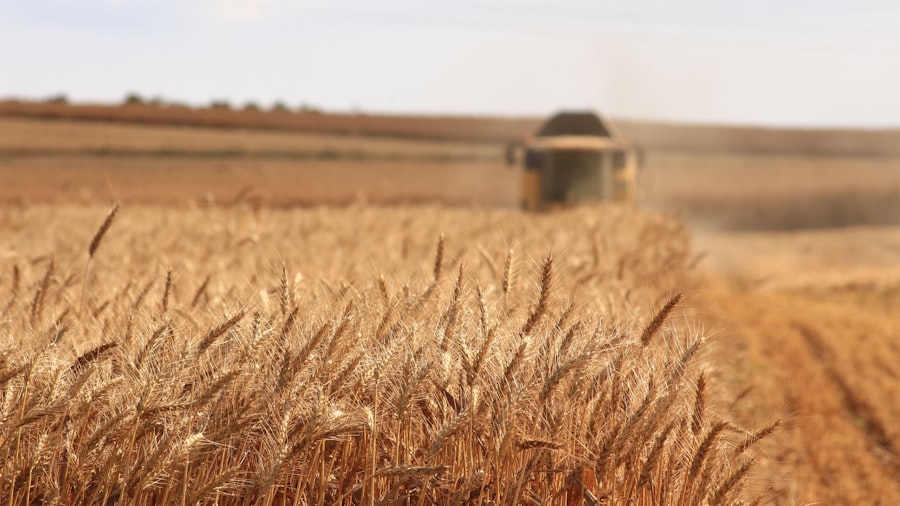
Imagine attempting to harvest thousands of acres of wheat with hand labor. The sheer manpower, time, and cost would be prohibitive. Industrial agriculture leverages economies of scale and advanced machinery – from high-efficiency tractors to automated harvesters – to produce vast quantities of food at a relatively low cost. This specialization and mechanization, while having its own set of challenges, drastically increases productivity per unit of land and labor. You’re witnessing an intricate ballet of technology and logistics, designed to maximize output.
Resource Optimization through Precision Technology
Far from being wasteful, modern industrial agriculture increasingly employs precision technologies to optimize resource use. Satellite imagery, drones, and soil sensors allow farmers to apply water and nutrients with unprecedented accuracy, minimizing waste and environmental runoff. This is not a scattergun approach; it’s a meticulously planned operation where every input is precisely monitored and adjusted. Think of it as a highly sophisticated manufacturing process, focused on efficiency and yield.
The Drive for Continuous Improvement
The narrative sometimes suggests that industrial agriculture is static and resistant to change. However, you’ll find a relentless pursuit of efficiency and sustainability within the sector. Research and development in areas like improved seed varieties, water management techniques, and nutrient delivery systems are ongoing. The imperative to feed a growing population with finite resources drives innovation, challenging the notion of a stagnant and wasteful system.
In recent discussions about sustainable farming practices, it is essential to address the misconceptions surrounding modern agriculture. Many people believe that large-scale farming is inherently harmful to the environment, yet a related article highlights how advancements in technology and farming techniques can actually promote sustainability and efficiency. For those interested in exploring this topic further, you can read more about it in this insightful piece on modern agricultural practices. By understanding the facts, we can better appreciate the role of agriculture in feeding the growing population while also protecting our planet.
The Soil Health Scare: Are Modern Practices Destroying Our Farmland?
| Myth | Claim | Reality / Data | Source |
|---|---|---|---|
| Modern agriculture is bad for the environment | Modern farming practices cause excessive pollution and soil degradation | Precision agriculture reduces chemical use by up to 30%, improving soil health and reducing runoff | FAO, 2022 |
| GMOs are unsafe to eat | Genetically modified crops pose health risks to consumers | Over 2,000 studies confirm GMOs are as safe as conventional crops | National Academy of Sciences, 2016 |
| Organic farming produces higher yields | Organic farms always outperform conventional farms in productivity | Organic yields average 20% lower than conventional, though gap varies by crop and region | Nature Plants, 2017 |
| Modern agriculture causes loss of biodiversity | Industrial farming eliminates wildlife and plant diversity | Integrated pest management and crop rotation can enhance biodiversity on farms | Environmental Science & Technology, 2019 |
| Modern agriculture is not sustainable | Current farming methods cannot be maintained long-term | Adoption of sustainable practices has increased soil carbon by 15% in some regions | USDA, 2021 |
A recurring theme in agricultural critique revolves around the supposed degradation of soil health under modern farming practices. You’ve likely heard warnings of depleted organic matter, increased erosion, and a “dead” soil devoid of microbial life. While these are legitimate concerns that require vigilant management, to attribute them solely and universally to modern agriculture, and to ignore the proactive measures being taken, presents an incomplete picture.
The Nuance of Soil Degradation
It’s undeniable that past agricultural practices, particularly high-intensity tillage without proper conservation measures, contributed significantly to soil erosion and organic matter loss. However, you must differentiate between historical practices and contemporary approaches. The “Dust Bowl” era, for example, serves as a stark reminder of what happens when soil is not properly protected, and that lesson has been widely internalized.
The Rise of Regenerative and Conservation Agriculture
You’re seeing a significant shift towards practices specifically designed to enhance soil health. Conservation tillage, no-till farming, cover cropping, and diversified rotations are becoming increasingly prevalent. These methods aim to minimize soil disturbance, keep the soil covered, and foster a thriving microbial community. Think of it as nurturing the “gut biome” of the soil, recognizing its vital role in nutrient cycling and plant health.
The Role of Technology in Soil Monitoring and Improvement
Modern technology offers unprecedented insights into soil health. You can now use spectroscopic analysis, drone imaging, and sophisticated modeling to understand soil composition, nutrient levels, and microbial activity in incredible detail. This data empowers farmers to make informed decisions, tailor nutrient applications, and implement targeted conservation strategies. It’s a far cry from the days of guesswork; it’s a science-driven approach to stewardship.
Fertilizers: Not All Bad
Artificial fertilizers often bear the brunt of the criticism for “killing” soil. While overuse and improper application can indeed have negative consequences, fertilizers are not inherently detrimental. They provide essential nutrients that plants need to grow, especially in areas where natural nutrient cycles might not meet the demands of high-yielding crops. The key, as with many aspects of modern agriculture, lies in responsible, science-based application, rather than a blanket condemnation.
In conclusion, you are navigating a complex culinary landscape, where the food on your plate is the culmination of intricate global systems. The myths surrounding modern agriculture, though often well-intentioned in their concern for health and environment, frequently oversimplify intricate realities. By critically evaluating claims, seeking evidence from scientific consensus, and recognizing the continuous evolution of agricultural practices, you can move beyond fear and misinformation. Equip yourself with knowledge, for an informed consumer is a powerful force in shaping a sustainable and food-secure future.
FAQs
What is modern agriculture?
Modern agriculture refers to the use of advanced technologies, scientific methods, and innovative practices to increase the efficiency, productivity, and sustainability of farming. This includes the use of machinery, genetically modified organisms (GMOs), precision farming, and improved irrigation techniques.
Are genetically modified crops unsafe to eat?
No, genetically modified crops that have been approved by regulatory agencies are considered safe to eat. Extensive research and testing have shown that GMOs are as safe as their non-GMO counterparts and can offer benefits such as increased yield and resistance to pests.
Does modern agriculture harm the environment?
While some traditional farming practices have had negative environmental impacts, modern agriculture increasingly incorporates sustainable practices. These include reduced pesticide use, conservation tillage, crop rotation, and precision agriculture to minimize resource use and environmental footprint.
Is modern agriculture responsible for declining soil health?
Soil health can be affected by farming practices, but modern agriculture promotes techniques like cover cropping, organic amendments, and reduced tillage to maintain and improve soil quality. Sustainable farming practices are key to preserving soil health.
Does modern agriculture rely heavily on chemical pesticides and fertilizers?
Modern agriculture does use chemical inputs, but there is a growing emphasis on integrated pest management, organic fertilizers, and precision application to reduce reliance on chemicals and minimize environmental impact.
Can modern agriculture feed the growing global population?
Yes, modern agriculture has significantly increased food production and continues to develop technologies to improve yield and efficiency, which are essential to meeting the food demands of a growing global population.
Are small-scale farmers negatively impacted by modern agriculture?
Modern agriculture presents both challenges and opportunities for small-scale farmers. Access to technology and markets can be limited, but initiatives and policies aimed at supporting smallholders help them adopt modern practices and improve productivity.
Is organic farming always better than modern agriculture?
Organic farming has benefits such as reduced chemical use, but it often produces lower yields compared to conventional modern agriculture. Both systems have advantages and challenges, and integrating sustainable practices from both can lead to better outcomes.
Does modern agriculture contribute to climate change?
Agriculture contributes to greenhouse gas emissions, but modern practices like precision farming, improved livestock management, and carbon sequestration techniques are being developed to reduce agriculture’s climate impact.
How does modern agriculture ensure food safety?
Modern agriculture follows strict regulations and employs technologies such as traceability systems, food safety protocols, and quality control measures to ensure that food products are safe for consumers.